


Metformin Hair Loss is a side effect of taking Metformin, but it is not a common or direct result of the medication. Metformin is used to treat type 2 diabetes by improving insulin sensitivity and lowering blood sugar levels. It is highly effective in managing blood glucose and reducing the risk of complications related to diabetes. Patients experience Metformin Hair Loss, which is related to the medication’s impact on the nutrient absorption of vitamin B12. Hair loss associated with Metformin is not a common side effect, but occurs due to deficiencies in essential nutrients, which disrupt the hair growth cycle.
Metformin Hair Loss is a type of type 2 diabetes hair loss, caused by stress on the body and hormonal changes related to diabetes treatment. It is more commonly seen in patients over 40 who have been using Metformin for extended periods, although it happens at any age. Around 10% of patients on Metformin report experiencing hair thinning or shedding. GLP-1 hair loss is involved if the patient is using other medications in combination with Metformin.
How Common Is Hair Loss when Taking Metformin Medicine?
Hair loss when taking metformin medicine is common when people do not get enough vitamin B12 in their bodies. There is little scientific evidence that metformin causes hair loss, but the medicine makes it harder for the body to absorb vitamin B12. Patients taking metformin demonstrated 9-52% lower levels of vitamin B12 than patients taking a placebo. The hair becomes weak and starts falling out when it does not have enough B12.
Patients with diabetes who take metformin notice hair loss more if they take the medicine for a long time or take higher doses. The likelihood of hair thinning at a 500 mg dose of metformin is minimal, with hair loss risk increasing with prolonged use and if nutrient deficiencies remain unaddressed. It is hard to know if the hair loss comes from the metformin or from having diabetes itself, since diabetes causes hair problems. Taking vitamin B12 supplements for Hair Loss due to Medication, helps prevent the hair loss from happening.
Why Is Hair Loss a Side Effect of Metformin?
Hair loss is a side effect of metformin because it changes how the body uses insulin, which affects hair growth. Metformin improves insulin sensitivity, but it alters hormone levels. High insulin and hormone levels make hair thin and cause it to fall out. Metformin changes testosterone production, and shifts in testosterone levels lead to hair loss.
Medications (metformin) trigger hair loss by altering hormonal balances, according to the research titled “Comorbidities of Primary Scarring Alopecias: A Retrospective Multi‐Site Cross‐Sectional Study, Hurtado, A., Gonzalez, S., & Elbuluk, N., 2025. The study highlights that drugs impacting insulin and androgen levels contribute to scarring alopecia. The findings suggest that metformin’s impact on metabolic pathways induces hair loss when other factors (pre-existing health conditions) are present. Side effects of metformin hair loss are possible, but the exact mechanisms remain complex.
Is Hair Falling Out a Side Effect of Using Metformin?
Yes, hair falling out is a side effect of using metformin. Metformin is used to manage type 2 diabetes by improving insulin sensitivity, but Metformin in insulin and hormone balance disrupt the normal hair growth cycle. The medication’s influence on insulin and androgen levels triggers hair thinning or shedding in patients who are sensitive to the changes. It results in conditions (telogen effluvium), where hair enters the resting phase prematurely and falls out.
Research does not directly link metformin to hair loss. A study Metformin as Anti-Aging Therapy: Is It for Everyone? by Soukas et al., 2019, examines metformin’s effects on metabolic and hormonal pathways. The study highlights how metformin, by regulating insulin and metabolism, indirectly influences hair follicle growth and shedding. Its impact on insulin and androgen levels acts as an ingredient that makes hair fall out in some patients. Hair loss becomes more noticeable when combined with factors (pre-existing conditions or high dosages). Monitoring the effects helps manage the risk of hair loss while using metformin.
How Does Metformin Cause Hair Loss?
Metformin does not directly cause hair loss, but hair loss leads to hair thinning in other ways. The medicine itself does not attack hair follicles or damage hair directly. Metformin is linked to causing hair loss because it affects the body’s functions that are important for healthy hair growth.
Metformin causes hair problems mainly by reducing the body’s ability to absorb vitamin B12. The hair becomes weak and starts falling out when they do not get enough vitamin B12. Metformin changes how the body uses insulin, which affects other hormones like testosterone. Patients experience hair thinning or a condition called telogen effluvium, which occurs when the hormone levels change, resulting in hair falling out faster than usual.
Research shows that metformin, which affects how the body processes sugar and hormones, leads to hair loss because it creates imbalances in nutrients or hormones. A medications affecting metabolic pathways lead to hair loss due to altered hormonal balances or nutrient imbalances, according to the Research Abstract 4142154: Risk of Suicide, Hair Loss, and Aspiration with Glucagon-like Peptide 1 Receptor Agonists: A Real-World Pharmacovigilance Study from the FAERS database, Nakhla et al., 2024. Diabetics who take metformin have health problems that affect their hair, and the medicine makes the problems worse. Doctors recommend taking vitamin B12 supplements when using metformin to help prevent hair loss.
How long does it take for Metformin to Cause Hair Loss? It takes 12 to 16 weeks for metformin to cause hair loss. The timeline is linked to the body’s adjustment to the medication, in which hormonal and metabolic changes lead to hair thinning. It influences androgen levels, as metformin affects insulin sensitivity, which contributes to hair loss or thinning in patients predisposed to the conditions.
How Does Metformin Cause Hair Loss in People with Diabetes?
Metformin causes hair loss in people with diabetes through nutrient deficiencies and hormonal changes. Metformin is a medication used to manage type 2 diabetes by lowering blood sugar (glucose) levels, which helps the body use insulin more effectively. But hair loss is not a common or direct side effect of metformin. The medication contributes to hair thinning by interfering with the body’s ability to absorb vitamin B12. A lack of vitamin B12 leads to hair loss over time.
Patients taking metformin have 9-52% lower vitamin B12 levels compared to patients not on the drug, which affects hair health. A study titled Insulin Resistance by Andrew M. Freeman, Luis A. Acevedo, and Nicholas Pennings (August 17, 2023) found that insulin resistance, which is linked to high blood sugar levels in diabetes and prediabetes, contributes to hair thinning. The findings of Diabetes Hair Loss suggest that the combination of metformin’s impact on nutrient absorption.
Why Does Metformin Cause Hair Thinning in Diabetic Patients?
Metformin causes hair thinning in diabetic patients by disrupting nutrient absorption and altering hormonal balance. One of the key nutrients impacted by metformin is vitamin B12, which plays a role in maintaining healthy hair. Metformin influences the levels of hormones when the body has difficulty absorbing vitamin B12. It leads to hair loss and thinning, including insulin, that are involved in regulating hair growth. The changes interfere with the normal hair growth cycle, resulting in hair shedding.
The disruption in hormonal balance affects the growth phases of hair, causing early shedding of hair strands. The impact is noticeable in patients who have been on metformin for extended periods, as the body accumulates nutrient deficiencies over time. The risk of metformin hair thinning is higher due to the condition’s impact on blood circulation in patients with diabetes. High blood sugar levels, a hallmark of diabetes, damage blood vessels, reducing the blood flow to hair follicles. The decrease in circulation limits the supply of oxygen and nutrients needed for hair growth, making hair more prone to thinning. The combination of metformin’s effects on nutrient absorption and the impact of diabetes hair thinning makes hair loss a concern for patients.
How does Metformin Cause Hair Loss in People with PCOS?
Metformin causes hair loss in people with Polycystic Ovary Syndrome (PCOS) through its effects on hormone regulation and insulin sensitivity. High levels of insulin trigger the overproduction of androgens, hormones that lead to symptoms (hair thinning or loss). It does not fully correct the hormonal imbalances, while metformin helps improve insulin sensitivity, leaving the excess androgens to continue contributing to metformin PCOS hair loss.
The body’s inability to regulate insulin properly is a key factor in hormone imbalance, but metformin helps lower insulin resistance. It does not address the high androgen levels that cause metformin PCOS hair loss. Managing PCOS symptoms through a combination of treatments is essential to reducing hair thinning, as metformin alone does not fully address the underlying hormonal issues. Long-term use of metformin leads to nutrient deficiencies, including vitamin B12, which contributes to hair loss. Hair thinning persists if the root causes of hormone imbalance are not addressed with other treatments, for some patients with PCOS. A holistic approach, including lifestyle changes and other medications, is needed to manage hair loss in PCOS Hair Loss effectively.
How does Metformin Trigger Telogen Effluvium?
Metformin triggers Telogen Effluvium through its impact on hormone regulation and nutrient absorption. Metformin causes disruptions in the normal hair growth cycle when the body experiences nutrient deficiencies (drop in vitamin B12 levels). It pushes more hair follicles into the resting phase (telogen), leading to increased hair shedding. The combination of insulin resistance management and the potential for nutrient imbalances contributes to Telogen Effluvium in patients using metformin, who have been on it long-term. The stress placed on the body from the factors results in temporary hair loss.
Telogen Effluvium is usually a temporary condition, and hair growth resumes once the underlying cause is addressed. The duration of Telogen Effluvium varies, but it lasts between three and six months before noticeable regrowth occurs. Studies show that it affects patients while metformin-related hair loss, leading to Telogen Effluvium, is not extremely common, with long-term usage. About 10-20% of patients on metformin experience some form of hair thinning, but the direct connection to Telogen Effluvium is not always clear. A study titled “The Effect of Metformin on Hair Loss: A Clinical Review” by H. Li 2021 found that long-term metformin use contributes to hair thinning, triggering Telogen Effluvium in patients. Hair shedding is mild and transient, but in some cases, it is more persistent, requiring additional treatment or lifestyle adjustments.
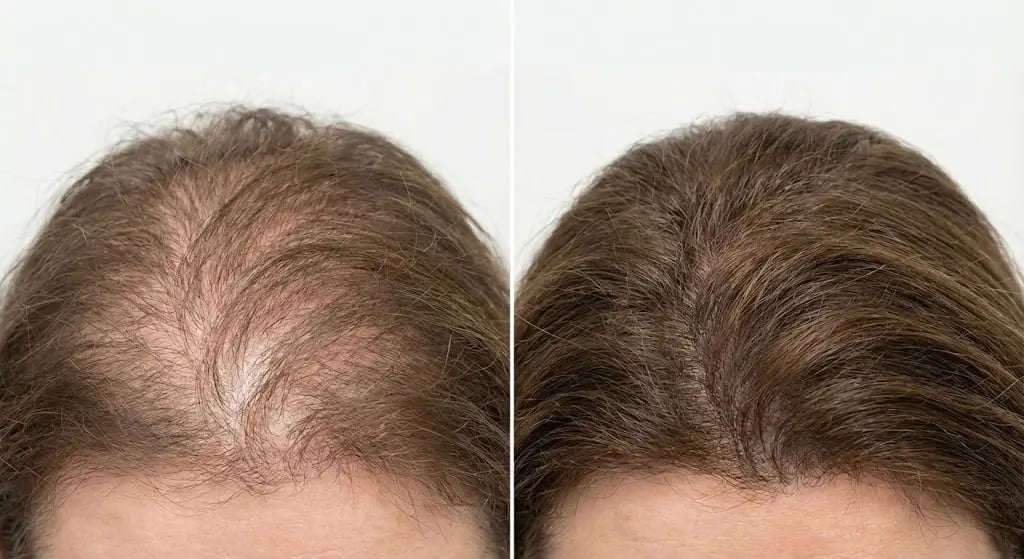
What does Hair Look like before and after Metformin Hair Loss?
Hair Looks Full and Healthy Before, but thins and becomes sparse after Metformin Hair Loss.
Before Metformin hair loss, the hair typically appears thick, complete, and well-maintained. The strands are healthy, and the scalp is not visible, as hair covers it evenly. The texture is smooth, and the hairline remains intact, showing no thinning or shedding. That is the regular appearance of their hair before any changes due to medications or health conditions (diabetes), for most patients.
Hair appears noticeably thinner and more fragile after Metformin hair loss. The scalp becomes more visible, around the crown and temples, where thinning is most noticeable. The hair feels finer and less dense, and some patients notice increased shedding. The hairline gradually withdraws, or hair becomes patchy, showing visible areas of sparse growth. The changes occur as a result of metformin’s impact on nutrient absorption and hormonal balance.

How to Stop Hair Loss from Metformin
To stop Hair Loss from Metformin, follow the ten steps listed below.
- Boost Vitamin B12 Levels. Restore vitamin B12 levels to combat deficiencies linked to Metformin use. Improve hair health by boosting essential nutrients, which reduce thinning over time. Expect to see noticeable results within 3 to 6 months.
- Take Biotin Supplements. Strengthen hair follicles by incorporating biotin into the daily routine. Encourage hair growth and reduce breakage by providing the vitamins for stronger hair. Results appear within 2 to 3 months with regular use.
- Apply Topical Minoxidil. Stimulate hair follicles and promote regrowth by applying Minoxidil to thinning areas. Improve hair density by using the treatment consistently as directed. Allow 3 to 6 months for full results, as continuous application is essential.
- Follow a Healthy Diet. Consume a balanced diet to support hair health and prevent nutrient deficiencies. Focus on foods rich in iron, zinc, and omega-3 fatty acids, which promote stronger, healthier hair. Notice improvements in 3 months as hair regains strength and vitality.
- Manage Stress. Reduce stress by incorporating relaxation techniques (yoga, meditation, or regular physical activity). Lowering stress levels helps prevent hair loss in patients using Metformin. Improvements are seen within a few months of consistent stress management.
- Address Hormonal Imbalances. Control hormonal imbalances that contribute to hair loss in patients with PCOS. Seek treatment for excess androgen levels, which are commonly associated with hair thinning in Metformin users. Expect results within 3 to 6 months after balancing hormones effectively.
- Adjust Hair Care Routine. Minimize hair breakage and thinning by using gentle hair care products. Choose sulfate-free shampoos and avoid excessive heat styling to protect the hair. It reduces shedding over time, with noticeable improvements in 3 months.
- Switch Medications. Consult with a healthcare provider to switch to an alternative medication if Metformin is causing hair loss. Replace Metformin with a drug that does not have the same negative impact on hair growth. Adjustments show results within a few months after changing the medication.
- Perform Scalp Massages. Stimulate blood circulation by massaging the scalp regularly. Use nourishing oils (coconut or castor oil) to promote healthier hair growth. Expect to see results in 2 to 3 months, as increased circulation helps boost hair vitality.
- Stay Consistent with Treatments. Commit to a consistent hair care routine that includes supplements, hair treatments, and gentle care. Follow through with the regimen for lasting improvement and better hair growth. Complete regrowth is expected within 3 to 6 months of consistent treatment.
How Effective is Hair Transplant for Treating Metformin Permanent Hair Loss?
Hair Transplant for treating Metformin permanent hair loss is effective by stabilizing the hair loss process. Hair transplant is an effective solution for treating permanent hair loss caused by Metformin, when hair loss has stabilized. Metformin-related hair loss is often temporary, but if it progresses to permanent thinning or bald spots, a hair transplant may be considered. It is crucial to wait until the medication-related hair loss has stabilized before opting for the procedure to ensure the transplant’s success. The hair transplant procedure involves transferring healthy hair follicles from one area of the scalp to another, restoring volume and coverage in thinning or bald spots.
Hair transplant is recommended for Metformin-related hair loss once other treatments have not been effective or if the hair loss has become permanent. Vera Clinic offers high-quality, affordable hair transplant services with excellent results, attracting international patients seeking permanent solutions to hair loss. Getting a Hair Transplant in Turkey has become a popular and cost-effective solution due to its advanced technology and skilled surgeons. The affordability of treatments supports Turkey’s reputation for top-tier hair transplant procedures compared to other countries. The Vera Clinic’s team and techniques ensure natural-looking results and minimal recovery time for patients opting for the procedure.
What to Expect Before and After a Hair Transplant for Metformin Hair Loss
Expect preparation before and recovery after a Hair Transplant for Metformin Hair Loss.
Patients expect a consultation to assess the extent of hair loss and determine the best course of action, before a hair transplant for Metformin-related hair loss. Doctors examine the scalp, discuss medical history, and ensure that Metformin-related hair loss has stabilized. The procedure itself involves a few days of preparation, where patients are advised to stop medications or follow specific instructions for scalp care. It is common for the area to be numbed with local anesthesia to ensure comfort in the procedure.
Expect initial swelling and redness, which subsides within a few days. Follow post-operative care instructions carefully, including avoiding touching or scratching the treated areas. Scabbing may occur within a few weeks, and hair shedding is normal as the follicles begin their growth cycle. Patients undergo a recovery period where the transplanted hair follicles begin to settle into their new positions after the Hair Transplant Before and After. Full results take a few months to appear, with new hair growing in thicker and fuller, blending easily with existing hair.
The hair before and after a Hair Transplant for Metformin Hair Loss are shown in the image below.
When to See a Dermatologist for Hair Loss due to Metformin
See a dermatologist for hair loss due to Metformin when the hair thinning becomes noticeable and persistent, if hair loss leads to patchy or bald spots. Medical attention is required if it continues despite stopping the medication or adjusting treatment, and if the thinning is accompanied by scalp irritation, redness, or increased shedding. Severe symptoms include noticeable receding hairlines, thinning around the crown, or scalp exposure. The signs indicate that the hair loss has progressed beyond temporary shedding and requires professional evaluation to address the underlying cause.
Seeking help is essential if Metformin-related hair loss reaches a point where it impacts daily life or causes emotional distress. A dermatologist helps identify if other underlying conditions are contributing to the hair loss and suggests appropriate treatments, including topical therapies or a change in medication. A Hair Transplant Consultation is recommended after the underlying cause is managed for patients considering a more permanent solution.
How to Prevent Hair Loss when Taking Metformin
To prevent Hair Loss when taking Metformin, follow the ten steps listed below.
- Take Metformin with Food. Take Metformin with meals to reduce its impact on nutrient absorption, and vitamin B12. It helps prevent deficiencies that contribute to hair thinning. Ensuring a balanced intake of nutrients while taking Metformin supports healthier hair.
- Monitor Vitamin B12 Levels Regularly. Schedule regular blood tests to monitor vitamin B12 levels while taking Metformin. A deficiency leads to hair loss, since Metformin reduces B12 absorption. Early detection allows for supplementation to maintain healthy hair growth.
- Manage Blood Sugar Levels Effectively. Maintain well-controlled blood sugar levels while taking Metformin. High blood sugar contributes to hair loss by damaging blood vessels that nourish hair follicles. Proper blood sugar management minimizes the risk of hair thinning associated with diabetes.
- Discuss Alternative Medications with the Doctor. Consult a healthcare provider if Metformin-induced hair loss becomes noticeable or severe. Switching medications alleviates side effects in some cases, including hair thinning. Research titled Metformin’s Mechanisms in Attenuating Hallmarks of Aging by FF Cheng, 2022, published by the NIH, found that switching to other diabetes medications helps reduce hair loss for patients.
- Stay Hydrated. Drink plenty of water to support overall health while taking Metformin. Dehydration worsens the appearance of hair loss and causes dryness, making hair more prone to breakage. Proper hydration ensures the scalp and hair follicles receive the nutrients they need for growth.
- Adjust the Diet to Prevent Deficiencies. Adopt a diet rich in vitamins and minerals that support hair health (iron, zinc, omega-3 fatty acids). The nutrients are essential for maintaining healthy hair while taking Metformin. A balanced diet helps prevent hair thinning caused by nutrient deficiencies.
- Use Gentle Hair Care Products. Avoid harsh chemicals and heat styling tools that worsen hair thinning while taking Metformin. Gentle shampoos, conditioners, and hair treatments prevent damage to weakened hair. Opt for sulfate-free products to minimize scalp irritation and hair breakage.
- Take Biotin Supplements. Incorporate biotin into the supplement routine to help strengthen hair follicles. Biotin improves the thickness and health of hair when taken alongside Metformin to combat thinning. Regular use shows visible improvements within a few months.
- Minimize Stress. Practice stress-reduction techniques (yoga, meditation, or regular exercise) to minimize hair loss. Stress is a known trigger for hair thinning when combined with the effects of Metformin. Lowering stress levels helps prevent hair loss and promotes healthier hair.
- Consider Professional Hair Loss Treatments. Consult a dermatologist or hair specialist for treatments (minoxidil or platelet-rich plasma) therapy if hair loss persists. The treatments stimulate hair regrowth and prevent thinning caused by Metformin. A healthcare professional recommends the most suitable option based on the patient’s needs.
What Are the Other Medications Commonly Causing Hair Loss Aside from Metformin?
The other medications commonly causing hair loss aside from Metformin include Ozempic Hair Loss, Wegovy Hair Loss, Optavia Hair Loss, and Zepbound Hair Loss. Each of the medicines causes hair loss, though the mechanisms differ. Hair loss occurs as a side effect due to the way the medications affect metabolism, hormonal balance, and nutrient absorption. The other medications cause hair loss through their impact on metabolism, weight loss, or nutritional deficiencies, while Metformin causes hair loss through vitamin B12 deficiency and insulin regulation.
- Ozempic Hair Loss: Ozempic causes hair loss due to its effects on metabolism and weight loss. The medication mimics a hormone that regulates blood sugar and appetite, which disrupts the body’s nutrient absorption, leading to thinning hair. The Ozempic Hair Loss is linked to metabolic changes or nutrient deficiencies, with rapid weight reduction.
- Wegovy Hair Loss: Wegovy is used for weight management, which triggers hair loss due to rapid weight loss. It experiences stress, as the body sheds weight quickly from Wegovy Hair Loss, disrupting the natural hair growth cycle and leading to shedding.
- Optavia Hair Loss: Optavia’s strict meal plans and rapid weight loss lead to hair loss by causing nutrient deficiencies. The body’s stress response to weight reduction pushes hair follicles into the shedding phase. The Optavia Hair Loss is due to inadequate nutrition, rather than Metformin’s effect on insulin and vitamin absorption.
- Zepbound Hair Loss: Zepbound is used for weight management, and causes hair loss as a result of metabolic changes and hormonal fluctuations in rapid weight loss. Hair follicles enter the shedding phase as the body undergoes weight changes. The Zepbound Hair Loss impact on hair loss is linked to the rapid shifts, which affect blood sugar and vitamin B12 levels.