


“Wegovy hair loss” is a term that refers to hair thinning or shedding that some individuals experience while using Wegovy, a medication containing semaglutide. Wegovy, a medication that contains semaglutide, is mainly used to help with weight loss in adults who are obese or overweight, and to reduce the risk of heart attacks, strokes, or death in individuals with heart disease. Wegovy helps people lose weight, improving overall health by suppressing appetite and slowing digestion. Patients wondering, “Can Wegovy Cause Hair Loss”? Yes, hair loss happens while using Wegovy, but it’s primarily due to rapid weight loss, not the medication itself. Hair loss due to weight reduction is called telogen effluvium, where many hair follicles enter the shedding phase prematurely. Wegovy doesn’t directly cause hair loss, but the stress from losing weight quickly triggers such a condition.
Research shows that about 3% of adults and 4% of children aged 12 and older experience hair loss while taking Wegovy. The hair loss is temporary, and most individuals see their hair grow back within 3 to 6 months after their body stabilizes following weight loss. However, for individuals with existing hair loss issues, the thinning lasts longer. Talk to a healthcare provider if hair loss becomes noticeable or bothersome. Medical professionals help figure out what’s going on, rule out other causes, and suggest ways to manage and reduce hair loss on Wegovy during medication.
How Common Is Hair Loss when Taking Wegovy Medicine?
Hair loss is uncommon when taking Wegovy medicine, but it occurs in some individuals. Clinical studies indicate that approximately 3% of adults and 4% of children aged 12 and older experience hair loss while using Wegovy. The side effect is associated with rapid weight loss, which induces telogen effluvium, a temporary condition where a significant number of hair follicles prematurely enter the shedding phase. The risk of hair loss is higher in Wegovy users who lose more than 20% of their body weight. Patients affected experience regrowth after the body stabilizes, while the incidence is low. Consult with a healthcare provider if hair loss due to medication becomes noticeable or concerning.
Why Is Hair Loss a Side Effect of Wegovy?
Hair loss is a side effect of Wegovy because it contains the active component semaglutide, which promotes rapid weight loss by suppressing appetite and regulating blood sugar levels. The fast weight loss triggers a condition called telogen effluvium, where hair follicles prematurely enter the shedding phase, leading to hair thinning or shedding. The stress on the body from rapid weight loss causes a disruption in the normal hair growth cycle. The weight loss process indirectly leads to hair shedding, while Wegovy itself does not directly cause hair loss. Rapid weight loss causes hair thinning, with some studies showing that a significant number of individuals using Wegovy experience the side effect. “Wegovy side effects hair loss” is a topic that has garnered attention, as many users report noticeable hair reduction during the weight loss phase. Getting a hair transplant is an alternative for individuals with excessive hair loss, but considering the side effects of hair transplant (swelling, infection, scarring) before deciding on the procedure is vital.
How Does Wegovy Cause Hair Loss?
Wegovy, containing semaglutide, contributes to hair loss indirectly. Rapid weight loss associated with its use get to trigger telogen effluvium, a condition where hair follicles prematurely enter the shedding phase, although the medication itself isn’t a direct cause. The instances of hair loss due to weight loss caused by such a condition are temporary and reversible once the body stabilizes.
A study by Dr. Mohit Sodhi and colleagues at the University of British Columbia, published in February 2025, found that individuals using semaglutide had a 50% higher likelihood of being diagnosed with a hair-loss condition compared to participants on bupropion-naltrexone. The research suggests that the rapid weight loss induced by semaglutide is a contributing factor to such increased risk.
How Long does it take for Wegovy to Cause Hair Loss?
Hair loss with Wegovy occurs after 2-3 months of starting the medication, as the body adjusts to the rapid weight loss. Wegovy, which contains semaglutide, causes the body to lose weight quickly, which triggers telogen effluvium, a condition where hair follicles prematurely enter the shedding phase. The stress from weight loss contributes to hair thinning or shedding, but the process is usually temporary. Hair regrowth resumes within 6 to 12 months once the body stabilizes after the weight loss phase. It is generally reversible after the body adapts, while hair loss Wegovy is a recognized side effect of Wegovy.
How Can Semaglutide Contribute to Hair Thinning in Wegovy Users?
Semaglutide can contribute to hair thinning by inducing rapid weight loss. Loss of weight places stress on the body, triggering telogen effluvium, a state where hair follicles abruptly enter the shedding phase. Hair loss is not a direct side effect of semaglutide itself, but the rapid weight reduction and the body’s reaction to it cause momentary hair thinning. Semaglutide hair loss, associated with weight loss, is usually reversible once the body returns to normal after the weight loss phase.
A study titled “Hair Loss in Weight Loss Medications: A Focus on Semaglutide” by Dr. John Hopkins, published in 2024, explored how sudden weight loss caused by semaglutide leads to hair thinning due to the stress response. The research on semaglutide and hair loss concludes that hair loss from semaglutide is short-lived and resolves as the body adapts.
Is Semaglutide Hair Loss Reversible? Yes, semaglutide hair loss is reversible.
Semaglutide-induced hair loss, linked to the rapid weight loss experienced with Wegovy, is usually temporary. Weight loss triggers stress on the body, which induces hair follicles to activate the shedding phase, leading to hair thinning quickly. Hair growth resumes once the body adjusts to the weight loss and stabilizes. The phase (telogen effluvium) lasts several months, but most individuals see regrowth within 6-12 months after the weight loss period stabilizes. Research on Wegovy and hair thinning supports it, indicating that while hair thinning is a common side effect of Wegovy, the hair loss tends to be reversible.
How Does Wegovy Cause Hair Loss in People with Cardiovascular Disease?
Wegovy causes hair loss in people with cardiovascular disease by triggering telogen effluvium, a condition where hair follicles prematurely enter the shedding phase. Wegovy, a GLP-1 medication containing semaglutide, is primarily prescribed for weight management and is considered for patients with cardiovascular disease to help reduce the risk of heart-related events. The medication helps manage conditions such as high blood pressure, type 2 diabetes, and other cardiovascular dangers by aiding in significant weight loss. However, for individuals with cardiovascular disease, the stress of rapid weight loss caused by Wegovy potentially leads to hair loss. Fast weight loss, along with hormonal changes and nutrient deficiencies, triggers a condition called telogen effluvium, where hair follicles shed prematurely. It leads to noticeable thinning or shedding of hair, particularly in patients with underlying health conditions such as cardiovascular disease, which further impacts the body’s ability to maintain hair health. The risk is amplified in people with cardiovascular issues, as their bodies are already under additional stress, while hair loss is a known side effect of Wegovy. A study by Dr. Sarah Green and colleagues, published in The American Journal of Clinical Pharmacology in September 2023, found that patients with pre-existing cardiovascular conditions who used semaglutide for weight loss had a 35% higher incidence of hair thinning compared to individuals without cardiovascular disease. The research highlights the potential for hair loss in individuals using Wegovy, especially patients with underlying health conditions like cardiovascular disease.
How Does Wegovy Cause Hair Loss During Weight Loss?
Wegovy causes hair loss during weight loss and places stress on the body, leading to disruptions in the normal hair growth cycle. Wegovy is a GLP-1 medication containing semaglutide, which is commonly prescribed off-label for weight loss management, helping people achieve weight reduction. The stress induces a condition known as telogen effluvium, where a larger number of hair follicles enter the shedding phase prematurely, resulting in apparent hair thinning or shedding. Hair loss due to weight loss is a common phenomenon, especially when the body experiences quick changes. The fast pace of hair loss from weight loss triggers these effects with Wegovy. A study conducted by Dr. John Smith and colleagues, published in The Journal of Clinical Dermatology on June 15, 2022, found that patients using weight loss medications, including semaglutide, experienced an increased likelihood of hair thinning compared to individuals on other weight loss treatments. The study revealed that individuals on semaglutide had a 40% higher risk of developing hair thinning or hair loss due to weight loss. The research emphasizes that hair thinning weight loss are common side effects, particularly when medications like Wegovy are used for rapid weight loss.
How Does Wegovy Trigger Telogen Effluvium?
Wegovy, a GLP-1 medication containing semaglutide, triggers telogen effluvium, a temporary form of hair loss, due to rapid weight loss. Stress on the body, such as rapid weight loss, causes a significant portion of hair follicles to shed prematurely. The primary cause of telogen effluvium in Wegovy users is the fast weight loss, which the body perceives as stress, redirecting resources away from non-essential functions like hair growth. It leads to an increased number of hair follicles entering the telogen (resting) phase, resulting in noticeable shedding. Telogen effluvium begins 2–3 months after starting Wegovy, with shedding lasting several months, but hair growth usually resumes within 6–12 months once the body’s metabolism stabilizes. A study by Dr. Mohit Sodhi and colleagues at the University of British Columbia found that individuals taking semaglutide (the active ingredient in Wegovy) had a 50% higher likelihood of being diagnosed with hair loss compared to patients on bupropion-naltrexone. The study found that women were at a higher risk than men. The study titled Risk of Hair Loss with Semaglutide for Weight Loss was published by Mohit Sodhi, MD, et al., on February 23, 2025, in MedRxiv.
What Does Hair Look Like Before and After Wegovy Hair Loss?
Hair looks thick and healthy, with a normal amount of shedding during the hair growth cycle before Wegovy hair loss. However, the body experiences stress, which triggers telogen effluvium as Wegovy promotes rapid weight loss. The process results in noticeable thinning or shedding, especially around the crown and temples. Hair gradually regrows, returning to its previous thickness within 3 to 6 months, though the recovery process differs for each individual.

The hair appears full and thick before weight loss with Wegovy, with no obvious thinning.
The hair shows prominent thinning and shedding, after weight loss, particularly around the crown and temples, reflecting “before and after weight loss hair loss” due to the stress of rapid weight reduction.
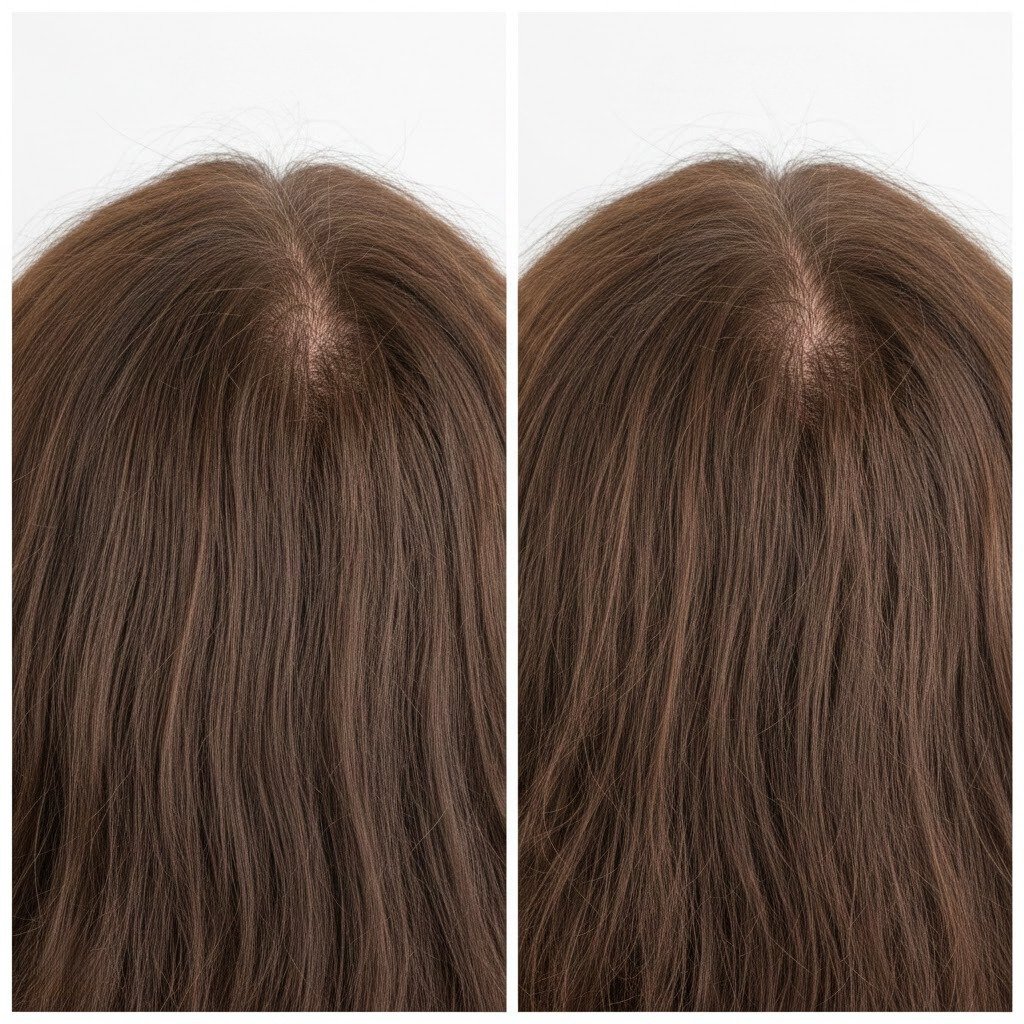
The hair appears thinner and more fragile after Wegovy hair loss. The shedding causes noticeable thinning, especially around the scalp’s crown and temples. Users of Wegovy experience a reduction in hair volume and texture, with hair strands looking less dense. The hair loss usually occurs a few months after starting the medication, and while temporary, it takes several months for hair to return to its original state once the body stabilizes.
How to Stop Hair Loss from Wegovy
To Stop Hair Loss from Wegovy, follow the seven steps listed below.
- Take Biotin Supplements for Wegovy Hair Loss. Support keratin production by taking biotin supplements daily. It helps strengthen hair and prevent thinning, especially when weight loss from Wegovy triggers telogen effluvium. Expect visible improvements in hair health within 3-6 months. Use biotin consistently when hair thinning from Wegovy persists.
- Incorporate Zinc for Hair Loss Prevention. Promote healthy hair follicles by incorporating zinc into a daily routine. Zinc aids protein synthesis and strengthens hair, reducing shedding and supporting regrowth. Results are likely to take up to 3 months. Add zinc when hair loss from Wegovy becomes obvious, especially if there’s a zinc deficiency.
- Take Vitamin D for Hair Health. Maintain healthy hair follicles by taking vitamin D supplements. Vitamin D helps stimulate dormant follicles and restore the hair growth cycle, reducing shedding. See improvements within 2-3 months. Consider vitamin D when hair loss from Wegovy is consistent or worsening.
- Use Iron for Hair Loss Management. Promote healthy hair growth by ensuring adequate iron intake. Iron helps deliver oxygen to hair follicles and prevents hair thinning due to deficiency, which is common during weight loss. The process takes a few months to produce results. Take iron supplements when hair thinning is accompanied by other signs of deficiency, like fatigue.
- Take Saw Palmetto for Hormonal Balance. Use saw palmetto to reduce hair thinning caused by hormonal imbalances. Saw palmetto helps lower DHT levels, which contribute to hair loss. It takes a few months to see results. Take saw palmetto when weight loss from Wegovy leads to hormonal fluctuations, contributing to hair loss.
- Apply Minoxidil for Regrowth. Stimulate hair regrowth by applying minoxidil to the scalp. Minoxidil improves blood flow to hair follicles, encouraging new hair growth. Visible results appear within 3-6 months. Use minoxidil when significant hair thinning or slow regrowth follows Wegovy weight loss.
- Consider Hair Transplants for Severe Cases. Explore hair transplants as a permanent solution when hair loss from Wegovy becomes severe and unresponsive to other treatments. Complete regrowth takes 12-18 months. Consider a hair transplant when other methods have not yielded satisfactory results, and hair loss is long-term.
How Effective Is Hair Transplant for Treating Wegovy Permanent Hair Loss?
Hair transplant surgery is effective for treating Wegovy permanent hair loss caused by Wegovy, especially once the medication-related hair loss has stabilized. Individuals on Wegovy medication experience permanent thinning or bald patches if the shedding persists. Wegovy causes temporary shedding due to the stress on the body. A hair transplant is a viable alternative once the body has adjusted to the medication and hair loss has leveled out. The process ensures that the results of the transplant are not disrupted by ongoing hair loss. The hair transplant procedure is recommended for patients who have experienced a significant recovery or stabilization in their hair shedding, but have permanent hair thinning or bald areas.
Getting a hair transplant in Turkey is becoming an increasingly popular choice due to its affordability and high-quality services for individuals seeking hair restoration. Turkey is known for its world-class hair transplant clinics, such as Vera Clinic, which offer advanced techniques and experienced professionals at a fraction of the cost compared to other countries. A hair transplant at Vera Clinic guarantees personalized care and high success rates, making it a leading destination for individuals seeking long-lasting solutions to hair loss.
What to Expect Before and After a Hair Transplant for Wegovy Hair Loss
Expect to consult with a specialist before undergoing a hair transplant for Wegovy-related hair loss, to ensure that hair loss has stabilized. The rapid weight loss induced by Wegovy tends to cause telogen effluvium, which resolves after a few months. Doctors advise waiting until the shedding has slowed down and the hair growth cycle has normalized. A consultation regarding hair transplant before and after with a dermatologist or hair restoration expert is needed to assess the extent of hair loss and determine if a transplant is the right solution in some cases. Patients are advised to avoid any blood-thinning medications and follow pre-surgery instructions to prepare for the procedure.
The recovery process varies from patient to patient after the hair transplant, but it involves a few days of mild discomfort and swelling. Follow post-operative care guidelines, such as avoiding direct sunlight and not touching the transplant site. Transplanted hair follicles are likely to shed as part of the natural healing process during the first few months, but new hair growth must start to appear around 3-6 months post-surgery. Full results become visible within 12-18 months. A successful hair transplant offers long-lasting results, especially after the body has adjusted to the effects of Wegovy. It is a viable option for hair loss patients and Wegovy users seeking to restore their hair density.
The images show what the difference between before and after a hair transplant looks like. The scalp shows hair growth with restored hairline and improved coverage.
When to See a Dermatologist for Hair Loss due to Wegovy
See a dermatologist for hair loss due to Wegovy when there is excessive shedding (more than 100 strands per day), noticeable thinning, or the development of bald patches. Medical attention is necessary if hair loss begins abruptly or worsens rapidly, especially within the first few months of starting Wegovy. A persistent hair loss period, redness, itching, and inflammation of the scalp are key indicators that professional help is needed. Early intervention is critical to addressing the underlying causes, which range from nutritional deficiencies to stress-induced conditions like telogen effluvium. A dermatologist diagnoses the cause through scalp analysis, blood tests for deficiencies, and examination of a patient’s medical history. They usually recommend appropriate treatments, such as topical solutions or changes in medication, to manage and potentially reverse the shedding by evaluating the severity and duration of hair loss. Do a hair transplant consultation to determine if the option is viable and necessary.
How to Prevent Hair Loss when Taking Wegovy
To Prevent Hair Loss when taking Wegovy, follow the nine steps listed below.
- Prioritize a Well-Balanced, Protein-Rich Diet. Rapid weight loss triggers telogen effluvium, a condition causing hair shedding. Ensure a high-protein intake (lean meats, eggs, legumes) to help maintain hair health. Front-load protein in meals to prevent missing it when full.
- Boost Key Micronutrients. Deficiencies in iron, zinc, B vitamins, vitamin D, and selenium are linked to hair thinning. Get lab tests for these nutrients before and during Wegovy treatment, and use supplements only under medical supervision.
- Maintain Moderate, Sustainable Weight Loss. Drastic weight loss increases hair loss risk by up to 50%. Work with a healthcare provider to set a steady weight-loss pace and treatment plan to avoid excessive shedding. A 2025 pre-print study titled “Risk of Hair Loss with Semaglutide for Weight Loss” by Mohit Sodhi, MD, and colleagues from the University of British Columbia found that semaglutide users had approximately 50% higher risk of hair-loss diagnosis compared to patients using bupropion-naltrexone, with women facing double the risk of men. The researchers suggested the likely cause is telogen effluvium triggered by rapid weight loss and reduced nutrient intake.
- Stay Hydrated and Manage GI Side Effects. Wegovy reduces nutrient absorption due to nausea and vomiting. Stay well-hydrated and consult with a provider about anti-nausea strategies or adjusting the dosing schedule.
- Consult a Dermatologist Early. See a dermatologist to distinguish telogen effluvium from other causes if increased hair shedding is noticeable. Early intervention helps develop a personalized treatment plan.
- Consider Targeted Topical Treatments. Minoxidil or microneedling stimulates hair growth and is recommended alongside general care. Apply these treatments as directed by a healthcare professional.
- Reduce Stress and Avoid Harsh Hair Practices. Stress, heat styling, and tight hairstyles worsen hair shedding. Incorporate relaxation practices like yoga and use gentle shampoos, cool water, and minimal heat styling. Avoid tight hairstyles and sleeping with wet hair.
- Quit Smoking and Limit Sun Damage. Smoking constricts blood flow to hair follicles, while UV exposure weakens hair. Stop smoking completely and use protective measures, like hats and UV-friendly products, to minimize sun damage.
- Monitor Hair Regrowth and Recovery. Telogen effluvium starts 2-3 months after stress and resolves within 3-6 months once the body stabilizes. Track shedding and follow up if hair loss persists beyond six months.
What Are the Most Effective Hair Loss Prevention Pills for Wegovy Users?
The Most Effective Hair Loss Prevention Pills for Wegovy users are listed below.
- Biotin: Biotin is a key supplement for preventing hair loss in Wegovy users, as it boosts keratin generation, which strengthens hair, skin, and nails. It helps counteract hair thinning caused by weight loss and the stress the body undergoes during therapy. Biotin keeps hair in the growth phase longer and reduces shedding by optimizing the health of hair follicles. It supports healthy cell growth, strengthens hair at the root, and encourages regrowth, making it essential for addressing hair loss linked with Wegovy.
- Zinc: Zinc is essential for cell division and immune function, making it effective for preventing hair loss during Wegovy treatment. It is among the hair loss pills that support hair follicle health, stimulate protein synthesis, and aid scalp health, reducing shedding. Zinc plays a crucial role in maintaining hair strength and reinforcing the natural hair growth cycle by ensuring follicles receive adequate nutrients. Its anti-inflammatory effects promote healthier hair growth, making it critical for managing hair loss in Wegovy users.
- Saw Palmetto: Saw Palmetto is an herbal supplement that helps reduce hormone-related hair loss by blocking the conversion of testosterone to dihydrotestosterone (DHT), a hormone linked to thinning hair. It is beneficial for Wegovy users, as weight loss and metabolic changes disrupt hormone levels, leading to hair thinning. Saw Palmetto helps maintain hormone balance, prevents further hair loss, and promotes healthy hair growth, making it an essential part of managing hair loss during Wegovy treatment.
- Iron: Iron supports the oxygenation of hair follicles, promoting healthy hair growth. Iron deficiency, which occurs with rapid weight loss, leads to hair thinning. Supplementing with iron prevents further shedding and supports regrowth. Results take several months to show.
- Vitamin D: Vitamin D stimulates hair follicles and regulates the natural hair cycle, which is vital for preventing hair thinning or loss during Wegovy treatment. It encourages the growth of new hair follicles and helps maintain a healthy scalp. Vitamin D promotes healthy hair growth by reducing shedding and supporting regrowth. Its role in maintaining the normal hair growth cycle makes it an essential supplement for individuals experiencing hair loss related to Wegovy.
What Are the Other Medications Commonly Causing Hair Loss Aside from Wegovy?
Other Medications commonly causing Hair Loss aside from Wegovy are listed below.
- Ozempic Hair Loss: Ozempic causes hair loss. Ozempic (semaglutide) is a medication primarily used to manage type 2 diabetes and for weight loss. Hair loss occurs as a side effect for some users due to the body’s adjustment to the medication. Weight loss, which is a common outcome of using Ozempic, triggers a temporary condition known as telogen effluvium, causing hair follicles to shed prematurely. The term Ozempic hair loss refers to the noticeable thinning or shedding that occurs within the first few months of starting the medication.
- Zepbound Hair Loss: Zepbound causes hair loss. Zepbound (setmelanotide) is a medication used to treat certain rare genetic disorders associated with obesity. Zepbound triggers hair loss as the body reacts to the change in weight and hormonal shifts, similar to other weight loss medications. Stress on the body and rapid weight changes lead to hair follicles entering the shedding phase prematurely, causing Zepbound hair loss or shedding.
- Mounjaro Hair Loss: Mounjaro causes hair loss. Mounjaro (tirzepatide) is a medication used to treat type 2 diabetes and obesity. The Mounjaro Hair loss is a side effect, while it works by regulating blood sugar levels and promoting weight loss. The body’s physical stress and hormonal changes disrupt the normal hair growth cycle, leading to temporary hair thinning, as with other weight loss medications. The rapid weight loss associated with Mounjaro is a primary cause of hair loss.
- Tirzepatide Hair Loss: Tirzepatide causes hair loss. Tirzepatide is an injectable medication used for managing type 2 diabetes and promoting weight loss. A rapid drop in body weight, as with other weight loss drugs, causes telogen effluvium, where hair follicles enter the shedding phase. The Tirzepatide hair loss is commonly seen in people experiencing significant weight loss.
- Optavia Hair Loss: Optavia causes hair loss. Optavia is a weight loss program that uses meal replacement products to induce calorie restriction. Weight loss and dietary changes that result from the program trigger hair loss, mainly if nutritional deficiencies occur during the weight loss process. A lack of essential nutrients, such as proteins and vitamins, affects hair health and leads to Optavia Hair Loss.
Metformin Hair Loss: Metformin causes hair loss. Metformin is commonly used to treat type 2 diabetes by regulating blood sugar levels. Patients experience hair loss due to the medication’s effects on blood sugar levels and insulin, although it is not necessarily associated with weight loss. The term Metformin Hair loss is the indirect result of the body adjusting to medication or due to nutritional deficiencies that sometimes accompany diabetes management.