


Mounjaro Hair Loss is a temporary hair shedding condition associated with rapid weight loss during treatment with tirzepatide, a prescription medication approved for type 2 diabetes and often used off-label for weight reduction. Mounjaro (tirzepatide) promotes weight loss by activating GLP-1 and GIP receptors, which help regulate blood sugar levels and suppress appetite. Clinical studies have shown that tirzepatide tends to lead to average body weight reductions of 15% to 20% over one year. The level of weight loss has made tirzepatide a popular choice among individuals seeking medically supervised weight management solutions.
Mounjaro Hair Loss (GLP-1 hair loss) is hair shedding from physiological stress caused by the medication’s impact on body weight. The connection between Mounjaro and hair loss involves a condition called telogen effluvium, in which a large portion of hair follicles prematurely enter the shedding (telogen) phase. Mounjaro’s ingredients do not cause it, but it is due to the stress that follows rapid changes in body weight and nutrition. Hair loss Mounjaro users include statistics ranging from 4.9% to 5.7%, with most cases appearing in users experiencing rapid fat loss. Adults in their 30s to 50s have a higher tendency to report hair thinning, but age alone is not a definitive risk factor.
Can Mounjaro cause hair loss? Yes, Mounjaro contributes to hair loss caused by weight loss through telogen effluvium, a stress-induced condition triggered by rapid changes in body composition. Clinical trials involving Mounjaro indicate that a small percentage of users experience hair shedding during treatment. The hair loss associated with Mounjaro results from indirect mechanisms such as nutritional deficiencies, hormonal shifts, and metabolic stress, rather than a direct pharmacological effect of tirzepatide. Discussions linking Mounjaro and hair loss have increased as more individuals use the drug for weight reduction purposes. Telogen effluvium resolves once the body’s metabolic and hormonal systems stabilize, in most cases. However, hair loss that persists for more than six months after using Mounjaro warrants further evaluation to rule out additional causes such as iron deficiency, thyroid dysfunction, or inadequate protein intake.
How Common Is Hair Loss when Taking Mounjaro Medicine?
Hair loss is an uncommon side effect of taking Mounjaro, with most clinical trials reporting it in a few patients. Mounjaro (tirzepatide) users reported hair shedding at about 4% to 5.7%, compared to 0.9% in the placebo group. It means that in a group of 10 people taking Mounjaro, fewer than 1 person is likely to experience the issue. Hair loss is not among the most common adverse reactions, but it is reported in a minority of patients and has drawn attention due to its impact on self-esteem and physical appearance.
Hair loss related to Mounjaro use has been linked to telogen effluvium, a temporary hair shedding condition caused by stress on the body. Rapid weight loss is one of the primary triggers, which is directly related to Mounjaro’s mechanism of action. Losing weight rapidly shocks the body, altering the hair growth cycle. The response leads to more hair follicles entering the resting phase and shedding at once. The condition improves after weight is stabilized and nutrition is restored.
Current reports suggest that hair loss affects adults more than children, though data on pediatric use of Mounjaro remains limited since the drug is not widely prescribed for younger age groups. Adults undergoing considerable weight reduction are increasingly prone to face metabolic shifts and hormonal changes that disturb normal hair growth. Adults tend to suffer from hair loss due to medication treatment if the medication results in rapid physical changes. The result is that adult users experience more hair loss than children. A healthcare provider must address the shedding if it continues for several months, including iron deficiency or thyroid function, and the provider must recommend appropriate support.
Why Is Hair Loss a Side Effect of Mounjaro?
Hair loss is a side effect of Mounjaro because the rapid weight loss it promotes places physical stress on the body, triggering a temporary condition called telogen effluvium that disrupts the normal hair growth cycle. Participants receiving tirzepatide (Mounjaro) at doses of 5 mg, 10 mg, and 15 mg reported alopecia (hair loss) at rates of 5.08%, 4.87%, and 5.71%, respectively, compared to 0.93% in the placebo group. The information is from the study entitled “Tirzepatide Once Weekly for the Treatment of Obesity – SURMOUNT-1 Trial” by Ania Jastreboff, Louis J. Aronne, W. Timothy Garvey, et al., published July 2022. Researchers concluded that hair loss is caused by rapid weight loss and changes in nutritional habits, rather than by direct pharmaceutical effects
The reports of hair loss are not among the most common adverse effects of the medication but have drawn attention among patients using it for weight management. The outcome is due to the development of telogen effluvium, a condition where hair follicles enter the shedding phase prematurely due to stress on the body. Telogen effluvium is triggered by rapid weight loss, which is a known effect of Mounjaro. Changes in body weight lead to hormonal shifts and nutritional imbalances that interfere with the normal hair growth cycle. Stress responses in the scalp result in noticeable hair shedding as the body adjusts to rapid weight loss. The process is temporary, and hair begins to regrow once the body stabilizes. Mounjaro does not chemically damage hair follicles, but the physical stress it causes contributes to shedding.
The Mounjaro side effects hair loss, which appears to stem indirectly from rapid weight reduction and nutritional changes rather than from the medication’s direct action. Similar reports have been observed with Wegovy, where the mechanism of action produces substantial weight loss in a short timeframe. Medications (Wegovy and Mounjaro) impact metabolism and appetite control, which leads to telogen effluvium in patients experiencing rapid changes in body composition. Hair loss linked to the medications (Wegovy and Mounjaro) is reversible, but must be monitored by a healthcare provider if it continues or worsens.
Is Hair Falling Out a Side Effect of Using Mounjaro?
Yes, hair falling out is a side effect of using Mounjaro, though it is not one of the most frequent reactions. Hair loss is a condition known as telogen effluvium, which occurs when a large number of hair follicles shift into the shedding phase due to physical stress. The stress associated with Mounjaro (tirzepatide) is triggered by rapid and significant weight loss. Women using semaglutide for weight loss have a 2.08 times higher risk of experiencing hair loss compared to those taking bupropion-naltrexone, according to the study “Risk of Hair Loss with Semaglutide for Weight Loss” by Mohit Sodhi, Ramin Rezaeianzadeh, Abbas Kezouh, Connor Frey, and Mahyar Etminan in February 2025. The study analyzed data from over 16 million patients. The authors suggest that rapid weight loss and nutrient depletion trigger telogen effluvium, especially in female users.
Mounjaro is not designed to affect hair follicles directly, and no ingredient that makes hair fall out is built into its formula. However, Mounjaro alters how the body regulates appetite and metabolism, which leads to calorie restriction, nutritional gaps, and hormonal imbalances. The changes increase the risk of hair shedding, especially if the diet lacks iron, zinc, protein, or biotin. Telogen effluvium linked to Mounjaro use is not permanent and usually corrects itself once the body stabilizes and nutrient levels are restored. Research into GLP-1 receptor agonists like tirzepatide has documented the indirect connection between treatment and temporary hair loss.
A balanced diet must be maintained during the treatment period to minimize the chance of continued shedding during the treatment period. Medical supervision is essential when symptoms last longer than expected or worsen over time. Mounjaro’s active ingredient supports weight loss, but the resulting changes in the body cause hair thinning during treatment.
How Does Mounjaro Cause Hair Loss?
Mounjaro causes hair loss by triggering a temporary condition called telogen effluvium, which occurs when rapid weight loss places stress on the body and interrupts the natural hair growth cycle. The condition forces many hair follicles into the resting phase, resulting in increased shedding. Hair loss was reported in approximately 4.9% to 5.7% of patients using Mounjaro, compared to 0.9% in the placebo group. The loss of hair is not due to the drug directly damaging hair follicles, but due to the rapid metabolic and nutritional changes that happen during treatment.
Mounjaro does not directly cause hair loss, as its function is to regulate blood sugar and support weight loss through the active ingredient tirzepatide. The indirect cause stems from the body’s response to sudden changes in weight, which include lower intake of essential nutrients and hormonal adjustments. Nutritional gaps (low levels of iron, zinc, and biotin) reduce the body’s ability to support normal hair production. These factors lead to temporary hair shedding as they interact with the body’s stress response to rapid fat loss. Alopecia occurred in 4.87% to 5.71% of tirzepatide users, compared to 0.93% in the placebo group, according to the SURMOUNT-1 trial published in “The New England Journal of Medicine” by Ania Jastreboff, Louis J. Aronne, and colleagues in 2022. The study suggests that hair shedding is not a direct pharmacologic effect of the drug but rather a secondary response to sudden physiological changes.
Hair loss caused by Mounjaro treatment is reversible. The regrowth of hair begins within a few months after weight stabilization and nutritional needs are met consistently. A medical evaluation is required if hair loss persists or worsens beyond six months to rule out other possible conditions (thyroid issues or prolonged deficiencies). The key factor in the side effect remains the stress placed on the body by weight reduction, not a direct chemical effect from the medication.
How Long does it take for Mounjaro to Cause Hair Loss? It takes about two to three months for Mounjaro to cause hair loss, which is a usual time frame for telogen effluvium to appear after a triggering event like rapid weight loss. Hair shedding begins when the body reacts to physical stress, nutrient shifts, or hormonal changes linked to fast fat reduction. The delay happens because hair follicles complete their growth phase before entering the shedding phase. Normal hair growth resumes once the stressor is addressed or the body stabilizes within several months.
How Does Mounjaro Trigger Telogen Effluvium?
Mounjaro triggers telogen effluvium by causing rapid weight loss that places physical stress on the body, disrupting the hair growth cycle, and pushing hair follicles into the premature shedding phase. Mounjaro (tirzepatide) does not directly damage hair follicles, but the physiological changes linked to fast fat reduction can lead to temporary hair shedding in some users. The temporary hair loss begins 2 to 3 months after starting treatment. A relevant study is “Tirzepatide after intensive lifestyle intervention in adults with overweight or obesity: the SURMOUNT-3 phase 3 trial” by Wadden et al., published in 2023, which reported hair loss in 7% of participants on tirzepatide versus 1.4% in the placebo group.
The trigger for telogen effluvium in a given context is the body’s response to sudden and significant weight loss. The body enters a state of physical stress that affects multiple systems, including hair growth, when large amounts of weight are lost in a short period. The stress leads to a shift in hair follicles from the active growth phase to the resting phase, causing noticeable hair shedding. Rapid weight loss reduces intake of essential nutrients (iron, zinc, and biotin) along with stress, which support healthy hair development. The deficiencies increase the severity of hair thinning.
Hair loss caused by Mounjaro is temporary and resolves once the body adjusts to its new weight and nutritional balance is restored. Hair follicles enter telogen effluvium prematurely when subjected to physical stress. Hair growth resumes within several months as the follicles return to their normal cycle. Medical evaluation is required if shedding lasts longer than six months or shows signs of worsening to rule out other conditions and to guide further care.
How Does Mounjaro Cause Hair Loss in People with Diabetes?
Mounjaro causes hair loss in people with diabetes by inducing rapid weight loss, which triggers telogen effluvium, a temporary hair shedding condition caused by physical stress on the body. Mounjaro (tirzepatide) is a medication used to manage type 2 diabetes by lowering blood sugar levels. GLP-1 and GIP are hormones that help regulate insulin secretion and glucose metabolism. The drug is effective in controlling blood sugar and promoting weight loss, yet some people have reported experiencing hair loss as a side effect of the treatment. The side effect is primarily connected to telogen effluvium, a temporary condition where hair follicles prematurely enter the shedding phase due to physiological stress. Hair thinning occurs in sufferers with prediabetes and hair loss concerns, particularly if weight loss happens quickly or if nutritional intake is reduced. Approximately 4.9% to 5.7% of participants using Mounjaro experienced hair loss, compared to 0.9% in the placebo group.
The primary trigger for telogen effluvium in the context of Mounjaro use is rapid weight loss. Stress is perceived, leading to a disruption in the normal hair growth cycle when the body undergoes significant weight loss. The disruption causes more hair follicles to enter the resting phase, resulting in increased shedding. Rapid weight loss leads to nutritional deficiencies (insufficient intake of iron, zinc, and biotin), which are essential for healthy hair growth. The shortcoming aggravates hair loss. Mounjaro-induced shedding occurs alongside diabetes hair loss, since blood sugar fluctuations and metabolic stress affect follicle health. Hair loss associated with Mounjaro is typically temporary and reversible. Hair growth usually resumes once the body stabilizes after weight loss and nutritional balance is restored. Consult a healthcare provider if hair loss persists or worsens beyond six months to rule out other underlying causes and discuss possible treatments.
How Does Mounjaro Cause Hair Loss During Weight Loss?
Mounjaro causes hair loss during weight loss by triggering telogen effluvium, a temporary condition where hair follicles prematurely enter the shedding phase due to physical stress caused by rapid fat reduction. The relationship between weight loss and hair loss is well-documented when weight reduction occurs too quickly. A sudden change in energy balance or nutrient intake causes the body to reallocate resources away from non-essential functions like hair growth to prioritize vital systems. Mounjaro (tirzepatide), while approved for type 2 diabetes treatment, is prescribed off-label for weight loss management. It works by activating GLP-1 and GIP hormones that reduce appetite and improve insulin activity, leading to significant calorie restriction and rapid weight loss. Mounjaro users lost up to 20% of their body weight in clinical trials over twelve months. The degree of weight loss introduces stress to the body’s systems, increasing the risk of temporary hair shedding.
Hair loss from weight loss occurs when the body’s rapid transformation disrupts the hair growth cycle. Telogen effluvium begins when more hair follicles shift from the growth phase into the resting phase, followed by shedding. Nutrient shortfalls (low levels of iron, biotin, zinc, and protein) are common during fast weight reduction and are direct contributors to hair weakness and loss. Mounjaro does not directly damage hair follicles, but it accelerates fat loss, which contributes to hair loss from weight loss.
Telogen effluvium occurs after intentional and unintentional weight loss, according to the study “Telogen Effluvium Associated With Weight Loss: A Single Center Retrospective Study” by Da-Hyun Kang, Soon-Hyo Kwon, Woo-Young Sim, and Bark-Lynn Lew in 2024. The researchers found that rapid weight loss, averaging 15.21% of body weight and 3.54 kg/month, was a leading trigger for hair shedding, with symptoms appearing about one month after hair loss due to weight loss began. Patients experienced spontaneous regrowth within five months, but the study emphasized that prolonged shedding indicates underlying conditions requiring medical evaluation.
Does Mounjaro Cause Hair Thinning After Weight Loss?
Yes, Mounjaro (tirzepatide) causes hair thinning after weight loss by triggering telogen effluvium, a temporary condition where hair follicles enter a resting phase due to physical stress. The effect happens when weight reduction occurs rapidly, disrupting the natural cycle of hair growth. Follicles stay in the active growth phase, while fewer remain in the shedding phase under normal conditions. However, many follicles shift into the telogen phase, resulting in visible shedding when the body reacts to sudden weight changes. The process begins two to three months after the initial stressor, such as an extreme weight reduction from medications like Mounjaro.
Mounjaro reduces body weight by suppressing appetite and improving insulin sensitivity. Clinical trials show that it leads to body weight reductions of 15% to 20% over one year. The decrease places stress on metabolic processes, creating a condition that results in mounjaro hair thinning. The shedding process appears alarming, but telogen effluvium does not permanently damage the hair follicles. Hair growth restarts once the body adapts to its new state and nutritional balance returns.
Hair regrowth begins after several months, depending on the patient’s health status and recovery pace. Slowing down weight reduction to 0.5 to 1 kilogram per week lowers the risk of stress-induced hair thinning. Eating meals that support follicle health helps reduce the severity of the condition. Nutrients such as iron found in red meat and spinach, zinc from seeds and nuts, protein from eggs and poultry, and B vitamins from whole grains support healthy hair. Hair loss that persists or worsens over six months requires a medical consultation to rule out other possible causes, like low thyroid hormone, iron deficiency, or hormonal shifts.
Mounjaro does not damage hair directly. The stress from rapid fat loss triggers hair thinning with weight loss, which resolves after the body regains its balance. Maintaining steady progress and proper nutrition supports long-term hair recovery.
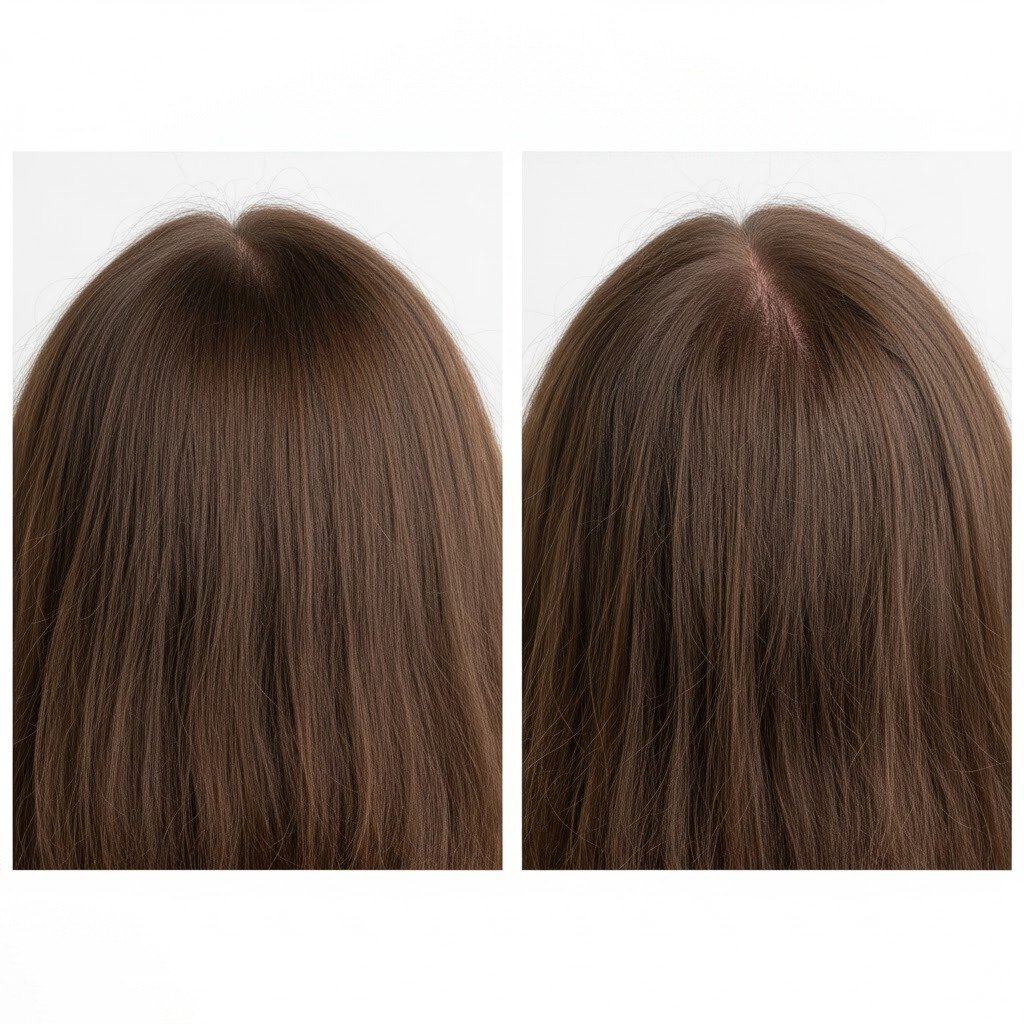
What Does Hair Look Like Before and After Mounjaro Hair Loss?
Hair looks like it is full, thick, and strong before Mounjaro Hair Loss. Each strand maintains a smooth texture and consistent density across the scalp. The appearance reflects stable hormone levels and proper nutrition, with no signs of thinning or excessive shedding. Hair remains firmly anchored and evenly distributed, creating a healthy look that defines the early stage of before and after weight loss hair loss.
Hair looks like it is thinning and shedding during Mounjaro Hair Loss. Telogen effluvium often develops as the body reacts to rapid weight reduction. Hair begins to fall out more noticeably around the crown and hairline within two to three months of starting treatment. The stage reflects a visible shift in the hair loss pattern before and after weight loss. Recovery begins when the body rebalances, and soft new strands emerge. Hair gradually thickens and returns to its original texture and volume. A medical evaluation becomes necessary if recovery stalls or if shedding lasts longer than six months. Most individuals experience regrowth that restores the hair’s original condition, reinforcing the temporary nature of the loss.
How to Stop Hair Loss from Mounjaro
To stop hair loss from Mounjaro, follow the seven steps below.
- Consult Healthcare. A doctor must diagnose hair loss if it becomes noticeable and cannot be directly attributed to Mounjaro. The approach ensures proper diagnosis and can prevent worsening of the condition. The success rate is high due to the fact that professional evaluation helps rule out other possible causes. The healing time depends on the cause. Results vary, but treatment begins immediately after consultation.
- Gradual Weight Loss. Slower weight loss reduces the stress placed on the body, lowering the risk of triggering telogen effluvium, a common cause of hair loss from rapid weight loss. Effective in preventing additional hair loss triggered by rapid weight reduction. High success rate if followed consistently. Healing time is an ongoing process, but it takes a few months for hair to start regrowing once the weight loss is slowed.
- Maintain a Balanced Diet. Ensuring the body gets adequate vitamins and nutrients such as iron, zinc, and biotin is crucial for hair health. Maintaining a nutrient-rich diet helps restore the health of hair follicles, supporting regrowth. Success rate is moderate to high, depending on how severe the hair loss is and whether there are underlying deficiencies. Healing time with nutritional support takes several weeks to start showing visible results, but it contributes to long-term recovery.
- Use Topical Treatments (Minoxidil). Minoxidil is a standard over-the-counter solution used to promote hair regrowth. It works by stimulating the hair follicle. Effective for many, though results vary. The success rate is around 40 to 60% as people experience regrowth with regular use. Healing time takes 2 to 3 months to see noticeable improvements in hair density and thickness.
- Monitor Stress Levels. Stress typically exacerbates hair loss, so managing it through relaxation techniques such as yoga, meditation, or regular exercise is helpful. Managing stress helps prevent additional hair loss and supports the body’s well-being. Success rate is moderate, but essential for health. Healing time varies among stress management techniques and has an immediate impact, but hair regrowth takes months.
- Consider Discontinuing or Adjusting Mounjaro Treatment. The doctor has the possibility to suggest altering the dosage or discontinuing Mounjaro if the loss of hair is severe or persistent. Effective if Mounjaro is directly causing the hair loss. The success rate is high when the cause of hair loss is addressed. Healing time improves when seen within a few months after discontinuing or adjusting the medication.
- Minimize Harsh Hair Treatments. Avoid using harsh hair care products, dyes, or excessive heat, which contribute to damage to thinning hair. Prevents additional breakage and damage, supporting the natural regrowth process. The success rate is high, as it prevents the worsening of hair loss. Healing time is immediate in terms of preventing additional damage, though regrowth takes several months.
How Effective Is Hair Transplant for Treating Mounjaro Permanent Hair Loss?
Hair transplant is a very effective way for treating Mounjaro’s permanent hair loss. Hair transplant offers a dependable solution for permanent hair loss caused by Mounjaro (tirzepatide) after the initial phase of medication-related shedding has stabilized. Mounjaro, used for managing type 2 diabetes and weight loss, triggers telogen effluvium due to rapid weight reduction, which causes temporary hair loss. The transplant becomes an option when shedding persists beyond six months, despite nutritional support or topical treatments. Evaluation by a specialist helps determine if the follicles have stopped shedding and if donor hair quality supports the success of surgery.
Turkey stands out as a global leader for Hair Transplant procedures, offering modern medical technologies and cost-effective treatment packages. Istanbul-based Vera Clinic remains one of the most reputable centers, delivering options such as Sapphire FUE, stem cell-assisted techniques, and exosome therapy for improved healing and natural regrowth. Hair Transplant procedures at Vera Clinic achieve graft survival rates of up to 95%, with visible new growth starting within the first three to six months. Full density and a more natural hair appearance are usually reached within 12 to 18 months, making Hair Transplant an effective long-term solution for restoring hair affected by Mounjaro-related loss.
What to Expect Before and After a Hair Transplant for Mounjaro Hair Loss
Expect a detailed evaluation and planning process before a hair transplant for Mounjaro Hair Loss. The evaluation begins with a full consultation that includes a review of scalp condition, severity of hair thinning, and the quality and availability of donor hair from areas like the back or sides of the scalp. The step allows the specialist to determine eligibility for the procedure and develop a strategy customized to the client’s hair restoration needs. Medical history is assessed, including the use of medications or underlying health conditions that influence hair growth. The surgeon outlines the number of grafts required, the technique to be used (Follicular Unit Extraction or Follicular Unit Transplantation), and the areas of the scalp that receive new hair. Pre-operative guidelines are provided, including dietary adjustments and temporary discontinuation of certain medications, to reduce the risk of complications and promote better healing conditions.
Expect a gradual recovery and hair regrowth journey after a hair transplant, with distinct phases that reflect the body’s natural healing response. Scalp swelling, scabbing, and redness occur within the first few days following transplantation, which subside within a week. Small scabs fall off naturally as the healing progresses. The newly transplanted hair follicles are temporarily shed after the second to third month of treatment, known as “shock loss.” The stage is normal and signals that the follicles are transitioning into a new growth cycle. The third month is when fine, soft new hair starts to emerge. The hair thickens for six to twelve months and takes on a more natural appearance and texture, blending seamlessly with existing hair. Hair density and consistency are achieved within twelve to eighteen months. The hair transplant before and after comparisons of hair transplants during the period show dramatic improvements in coverage, volume, and overall scalp appearance. Continued care, such as using dermatologist-recommended hair products, protecting the scalp from harsh sunlight, and maintaining a balanced diet with nutrients (biotin, zinc, and protein), supports long-term success and strengthens the health of the transplanted follicles.
When to See a Dermatologist for Hair Loss due to Mounjaro
See a dermatologist for hair loss due to Mounjaro when experiencing severe or persistent symptoms that go beyond the typical shedding associated with weight loss. Seek professional evaluation when losing more than 100 hairs per day or notice rapid, noticeable hair thinning or bald patches on the scalp. Hair loss that lasts longer than six months without regrowth or unexplained scalp irritation, redness, or pain indicates an underlying condition that requires attention. Other signs to watch for include nutritional deficiencies, such as a lack of iron, zinc, or biotin, which are needed for healthy hair, and symptoms of hormonal imbalances (thyroid issues). A Hair transplant Consultation is considered in some cases (prolonged hair loss lasting more than 6 to 12 months, visible scalp thinning despite medical treatment, or permanent damage to hair follicles), especially if hair does not recover after addressing the root cause.
How Mounjaro Hair Loss Diagnosed? Mounjaro Hair Loss is diagnosed by evaluating recent medication history, physical signs such as thinning or patchy shedding, and the timing of hair fall after starting treatment. A doctor checks for patterns that match telogen effluvium, including increased daily hair shedding and scalp health. Blood tests are used to rule out vitamin deficiencies, thyroid disorders, or other medical issues linked to hair loss. Diagnosis involves connecting the use of Mounjaro with symptoms, ruling out other causes, and observing whether hair growth returns after stopping the drug or adjusting the dose.
How to Prevent Hair Loss when Taking Mounjaro
To prevent hair loss when taking Mounjaro, follow the seven steps below.
- Maintain a Balanced Diet. Ensure the diet is rich in essential nutrients (proteins, iron, zinc, and B vitamins), which are vital for hair growth. Research has shown that deficiencies in iron and zinc significantly contribute to hair loss, while a diet rich in these nutrients helps prevent it. Nutritional deficiencies are a key factor in hair shedding and thinning, according to the study “Evaluation of Zinc, Vitamin B12, Folic Acid and Iron Levels and Thyroid Functions in Patients with Chronic Telogen Effluvium” by Pınar Ozuguz et al. in 2015.
- Lose Weight Gradually. Aim for steady and moderate weight loss, ideally 0.5 to 1 kg per week. Rapid weight loss increases the risk of telogen effluvium, as shown in a study “Telogen Effluvium Associated With Weight Loss: A Single Center Retrospective Study” by Da-Hyun Kang, Soon-Hyo Kwon, Woo-Young Sim, and Bark-Lynn Lew published online on June 10, 2024 in the Annals of Dermatology, The study found that rapid weight loss due to surgery or medication disrupt the hair growth cycle, leading to shedding.
- Take Supplement Wisely. Consider taking supplements (biotin, collagen, iron, and vitamin D), which have been linked to healthier hair growth. Research suggests that biotin deficiencies impair hair follicle function, and supplementation supports hair health. High-quality evidence supporting biotin’s efficacy for hair health is limited, especially in individuals without a diagnosed deficiency, according to the study “Biotin for Hair Loss: Teasing Out the Evidence” by Allyson Yelich, DO; Hannah Jenkins, BS; Sara Holt, DO; and Richard Miller, DO in 2024.
- Stay Hydrated. Proper hydration is crucial for maintaining a healthy scalp and hair. Dehydration can lead to brittle hair and scalp dryness, which exacerbates hair thinning. Scalp condition, including hydration, affects hair quality and retention, according to the review “Role of Scalp Health in Achieving Optimal Hair Growth and Retention” by Antonella Tosti, MD, and James R. Schwartz, PhD, in 2021.
- Manage Stress. High stress disrupts the hair growth cycle, triggering excessive shedding. Stress is a leading cause of telogen effluvium. Engaging in relaxation techniques (yoga and meditation) reduces stress and improves hair regrowth.
- Use Gentle Hair Care Products. Avoid harsh hair care products that damage the scalp and hair follicles. Using mild shampoos and conditioners and minimizing heat styling can preserve the integrity of hair fibers and reduce follicular stress, according to the article “Hair Cosmetics: An Overview” by Maria Fernanda Reis Gavazzoni Dias in 2015.
- Consult Your Healthcare Provider. Hair loss that persists or becomes severe must be discussed with a doctor. Hair experts are able to evaluate whether the shedding is a result of Mounjaro and recommend changes to the treatment or additional treatments. Professional intervention is needed when hair loss lasts longer than expected in the context of medication use.
What Are the Other Medications Commonly Causing Hair Loss Aside from Mounjaro?
Other medications commonly causing hair loss aside from Mounjaro are listed below.
- Ozempic (semaglutide): A GLP-1 receptor stimulant used to manage type 2 diabetes and promote weight loss. Ozempic Hair Loss occurs due to rapid weight loss or nutritional deficiencies, though it is not a direct listed side effect. A study by the University of British Columbia found that participants on semaglutide had a 50% higher chance of being diagnosed with an Ozempic Hair Loss condition, with women facing twice the risk compared to men.
- Wegovy (semaglutide): A GLP-1 receptor activator approved for weight management. Clinical trials reported that 3% of adults using Wegovy experienced hair loss, compared to 1% using a placebo. Wegovy hair loss is not listed as an official side effect, but some users have reported shedding, linking the experience to Wegovy hair loss during periods of rapid weight reduction.
- Optavia: A weight loss program that involves calorie restriction and meal replacements. Hair loss occurs due to rapid weight loss and nutrient deficiencies (lack of protein and iron). Experts suggest that Optavia Hair loss is noticed a few months after reducing calories and losing a significant amount of weight, and it is usually temporary.
- Zepbound (tirzepatide): A GLP-1 receptor agonist used for weight management. Hair loss has been reported in about 5% of people using Zepbound, making it a common side effect. The Zepbound Hair loss is temporary and is reversible by addressing nutritional needs.
- Metformin: Metformin is a medication used to treat type 2 diabetes. Long-term use leads to vitamin B12 deficiency, which contributes to hair loss. Conditions treated by metformin (diabetes and PCOS) list hair loss as a symptom. The cause of metformin hair loss is depletion of nutrients or hormonal imbalances related to the treated condition.