An eyebrow transplant is a medical procedure that moves hair follicles from one part of the body (usually the back of the scalp) to the brow area. It’s done to restore missing, thinning, or over-plucked eyebrows using your own natural hair.
The technique used is most often FUE (Follicular Unit Extraction) or Sapphire FUE. Doctors collect single grafts and implant them one by one to shape and fill the brows. Results are permanent. The new hairs grow, shed, and regrow like any other hair on your body.
Demand for eyebrow transplants has grown fast in the last five years. This is due to the rising trend in natural, full brows and the failure of temporary fixes like microblading or brow makeup.
Turkey has become a leading destination for eyebrow transplants. Clinics in Istanbul and other cities offer high medical standards and affordable prices. The average eyebrow transplant Turkey cost ranges from €1,500 to €2,500, often including hotel stays and aftercare support. That’s why so many choose eyebrow transplants in Turkey over local options that cost double or more.
What Are the Advantages of Getting an Eyebrow Transplant in Turkey?
Eyebrow hair transplant Turkey has become a global choice due to cost, doctor expertise, and accessibility. The benefits outweigh the limitations for most patients.
- Cost-efficiency: Eyebrow transplants in Turkey cost between €1,500–€2,500, while the same procedure costs over €4,000 in the UK. This price includes hotel, medication, and translator support. Turkey remains among the more affordable countries for the procedure, with clinics reporting consistently high patient satisfaction.
- High-volume surgical practice: Turkish surgeons often perform 200–300 eyebrow transplants per year, which is far above the global average. That volume leads to better hand-memory, refined angles, and consistency. Most EU-based surgeons rarely exceed 50 cases annually.
- Brow design experience for women and men: Over 70% of eyebrow transplant patients in Turkey are women. This forces clinics to invest in aesthetic design skills rather than just technical implantation.
- Graft origin control: Turkey eyebrow transplant clinics extract donor grafts from the retroauricular zone (area behind the ears) instead of the mid-occipital scalp. This area provides thinner, softer hairs, better matching natural eyebrow texture. Many global clinics still take standard scalp grafts, resulting in unnatural coarseness. This donor site selection method is often left out on major clinic websites.
- Sapphire blade micro-incisions: The best Turkish clinics like Vera Clinic commonly use sapphire blades to create tiny channels. This allows higher density in a compact space, critical in eyebrow transplants. Standard steel blades used elsewhere cause jagged incisions, affecting direction and healing. Sapphire incisions reduce tissue trauma compared with standard steel blades, which supports faster healing and cleaner channel placement in the compact eyebrow area.
- Integration with regenerative protocols: Top clinics include PRP or stem cell therapy during eyebrow transplants. PRP is injected immediately after graft placement to support blood vessel regeneration around the new follicles, a step some clinics report as aiding density over the following months.
- Cultural familiarity with brows as identity markers: In Turkey, eyebrows are seen as a key part of facial expression, especially in women. This makes local doctors more attentive to the social-emotional weight of brow reconstruction.
What are the disadvantages of getting an eyebrow transplant in Turkey?
Long-distance travel, limited in-person follow-up, and clinic quality differences are the disadvantages of eyebrow transplants in Turkey. Patients must research thoroughly, confirm surgeon credentials, and prepare for remote aftercare.
Why Choose Vera Clinic for Eyebrow Transplants in Turkey?
Vera Clinic is one of the top clinics for eyebrow hair transplant in Turkey. It offers medically proven results, natural aesthetics, and high patient satisfaction. The clinic is led by one of Turkey’s best eyebrow transplant surgeons, with over 1,000 successful eyebrow cases and a graft survival rate of over 95%.
Vera Clinic uses ultra-fine grafts from the retroauricular donor zone to match the soft texture of natural brows. This method improves visual harmony and is preferred for both male and female patients seeking realistic results. All procedures are performed with sapphire blades under high-magnification tools for precision.
The clinic provides full PRP integration, digital post-op follow-up, and personalized brow design based on each patient’s face structure. International patients receive translator support, private transfers, and structured aftercare.
Vera Clinic stands out in the field of Turkey eyebrow transplant for its technology, experience and its commitment to personalized, ethical, and artistic medical care.
Why Are Celebrities Choosing Turkey for an Eyebrow Transplant?
Celebrities choose eyebrow transplants in Turkey because they get high-level results at a lower price, with full privacy and expert care. A transplant that costs €5,000 in the US is done in Turkey for around €2,000 with the same, or even better, aesthetic outcomes. Surgeons in Turkey perform hundreds of eyebrow cases each year, especially in clinics known for facial design, not just hairline work. This gives them an edge in achieving symmetrical, camera-ready brows.
Tools like sapphire blades and PRP support help boost healing and reduce shock loss. Recovery is fast and discreet, thanks to luxury aftercare packages tailored for international clients and eyebrow transplant celebrity.
Public figures like Chrissy Teigen have spoken openly about their eyebrow transplants, driving global attention to the procedure. While Teigen had hers in the US, her experience pushed many to explore trusted Turkish clinics offering similar quality without the high cost. Influencers from the UK and Germany have shared videos of their own trips to Istanbul for brow restoration, often highlighting how simple and supportive the full process felt.
How Successful Are Eyebrow Hair Transplants in Turkey?
Eyebrow transplants in Turkey have a success rate of 90% to 95% when performed in accredited clinics by experienced surgeons.
The transplanted hairs begin to grow within 3–4 months and continue to thicken over 9–12 months. Final density and direction depend on both technique and healing. Most patients retain the majority of grafts permanently.
Eyebrow-region data from a Vera Clinic Academy cohort study offers additional detail. Among 22 patients treated with single-region Sapphire FUE, of whom 63.6% were female, 12-month graft survival averaged 90.6%. Naturalness ratings were at 81.8% good to very good. Patient satisfaction was the second-highest of the four regions at 4.4 out of 5, suggesting graft survival and naturalness did not fully predict how satisfied patients felt with their results. Complications (13.6%) were mild and transient, according to the Facial Hair Transplant Satisfaction Study (Vera Clinic Academy, 2026).
Top clinics often use sapphire blades and PRP-assisted implantation to support healing. PRP-assisted eyebrow FUE is commonly used to support follicle uptake and reduce shock loss, particularly in female patients undergoing higher-density designs, a factor that plays into the overall hair transplant success rate for this delicate region.
When done by skilled professionals, Turkish eyebrow transplants produce natural, long-term results with high patient satisfaction.
“I didn’t want ‘new eyebrows.’ I just wanted my face to look like it used to. Once they grew in, no one could tell anything was done, they just looked softer and more complete.”
- Falpreet Brar, Vera Clinic Patient
How Much Are Eyebrow Transplants in Turkey?
The average eyebrow transplant cost in Turkey ranges from €1,500 to €2,500 depending on several key factors. The final price is influenced by the clinic’s reputation, the surgeon’s experience, the technique used, and the number of grafts needed for the procedure.
Clinics with a strong international reputation and medical tourism infrastructure, especially those based in Istanbul, usually charge more than lesser-known centers. Surgeons with a high number of completed eyebrow cases and a proven success rate tend to set their rates higher, often reflecting the level of artistic precision required for natural-looking results.
The technique used plays a role in the overall eyebrow hair transplant Turkey cost. Standard FUE starts around €1,500, while Sapphire FUE or procedures that include PRP support usually range from €2,000 to €2,500. Some clinics charge per graft, which vary between €5 to €10. An eyebrow transplant requires 200 to 400 grafts, depending on the existing density and the shape being created.
The total cost remains significantly lower than in the UK or US, where the same procedure often exceeds €4,000. This makes Turkey a comparatively affordable option for eyebrow hair transplant procedures.
How Much Do Eyebrow Transplants Cost in Turkey Compared to Other Countries?
The cost of eyebrow transplants changes significantly depending on the country. In Turkey, the average price ranges from €1,500 to €2,500, including the full package, surgery, hotel, aftercare, transfers, and PRP. In most European countries such as Germany, France, and the Netherlands, the same procedure ranges between €3,500 and €6,000, with fewer clinics offering bundled packages. In the United States, eyebrow transplants often cost between €4,000 and €7,000, and some high-density or celebrity clinics charge over €9,000. In India, prices are lower, ranging from €1,000 to €2,000, but international clinic accreditation varies. Thailand remains a popular destination with modern clinics charging €2,000 to €4,000, while Mexico offers treatments from €2,000 to €4,000, depending on clinic location and service level.
Across all regions, the final cost depends on the number of grafts, the surgeon’s experience, the technique used (standard FUE, Sapphire FUE, or DHI), and whether travel services are included. Turkey remains a common choice for eyebrow hair transplants due to its affordable rates, experienced doctors, and all-inclusive medical tourism system.
| Country | Average Cost (€) |
|---|---|
| Turkey | €1,500 – €2,500 |
| Europe | €3,500 – €6,000 |
| India | €1,000 – €2,000 |
| Thailand | €2,000 – €4,000 |
| Mexico | €2,000 – €4,000 |
| USA | €4,000 – €7,000+ |
Turkey's affordable pricing reflects reduced overhead costs and bundled service inclusions, not a difference in medical quality.
How Does the Cost of an Eyebrow Transplant in Turkey Differ by the Technique Used?
Turkey offers three main techniques for eyebrow transplants. Each has a different method, cost, and result expectation.
- FUT: Strip method. FUT eyebrow hair transplant is less used for eyebrows. Leaves a scar and costs between €1,500 and €1,800.
- FUE: Follicles are taken one by one. FUE eyebrow hair transplant is common for eyebrows. No visible scar. Costs between €1,800 and €2,200.
- DHI: Uses a Choi pen for direct implantation. DHI eyebrow hair transplant is more precise but more expensive. Costs between €2,200 and €2,500.
Across all three methods, cost tracks precision and control more closely than it tracks graft count alone.
1. Eyebrow FUT Hair Transplant Cost in Turkey
FUT (Follicular Unit Transplantation) is a method where a strip of skin is removed from the donor area and dissected into grafts. It costs between €1,500 and €1,800. The main benefit is affordability and access to a high number of grafts. However, it leaves a visible scar and offers less precision, which is a disadvantage for small, detailed areas like eyebrows. It is considered in rare eyebrow restoration cases needing large follicle volume. The defining feature is bulk graft harvesting through linear excision.
2. Eyebrow FUE Hair Transplant Price in Turkey
FUE (Follicular Unit Extraction) removes follicles one by one using micro punches. It costs between €1,800 and €2,200. Its key advantage is natural brow shaping with no visible scarring. It allows better control over angle, depth, and direction. A minor downside is that the process takes longer and costs more than FUT. FUE is the most commonly used method for eyebrow hair transplants in Turkey due to its balance of precision, healing, and cost. Its key characteristic is follicle-by-follicle extraction and manual implantation.
3. Eyebrow DHI Hair Transplant Fee in Turkey
DHI (Direct Hair Implantation) uses a Choi implanter pen to extract and implant hair in one motion. It costs between €2,200 and €2,500. The main benefit is maximum control over graft angle and density without pre-made channels, which helps achieve high symmetry in brows. Disadvantages include higher cost and limited surgeon availability. DHI is ideal for patients who want the most natural, controlled eyebrow result. The standout feature is its direct, no-channel implantation method for ultra-precise results.
What Are the Factors to Consider When Choosing an Eyebrow Transplant Technique in Turkey?
Choosing the right eyebrow transplant technique in Turkey depends on your goals, budget, and physical needs. Below are the main factors to evaluate before deciding.
- Desired density and shape: For thick and sharp definition, DHI offers the highest precision. For softer, natural density, FUE is often enough. Sapphire FUE is perfect for both.
- Budget range: FUT is the most affordable. FUE offers balance. DHI is the most expensive due to advanced tools and time.
- Scar visibility tolerance: FUT leaves a linear scar. FUE and DHI are minimally invasive and leave no visible scarring.
- Skin and hair type compatibility: Patients with sensitive skin or thinner donor hair benefit more from FUE or DHI due to less trauma.
- Healing and downtime: DHI and Sapphire FUE heal fastest. FUE has moderate recovery time. FUT generally requires longer healing and carries a higher risk of inflammation.
- Clinic and surgeon availability: Not all clinics offer DHI. FUE is more widely available and standardized across Turkish clinics.
- Eyebrow design complexity: For high-arched or asymmetrical brow correction, DHI allows better angle and direction control. For general volume restoration, FUE is ideal.
Weighing these factors together, rather than focusing on any single one, tends to lead to the most satisfying choice among available hair transplant techniques.
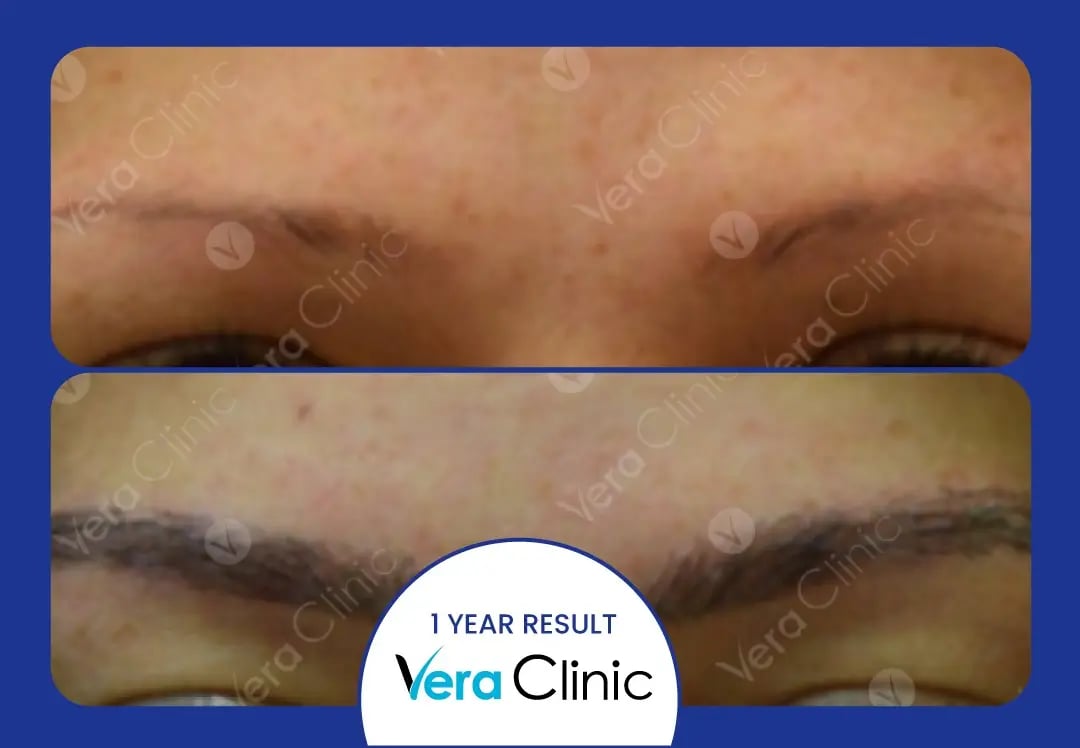
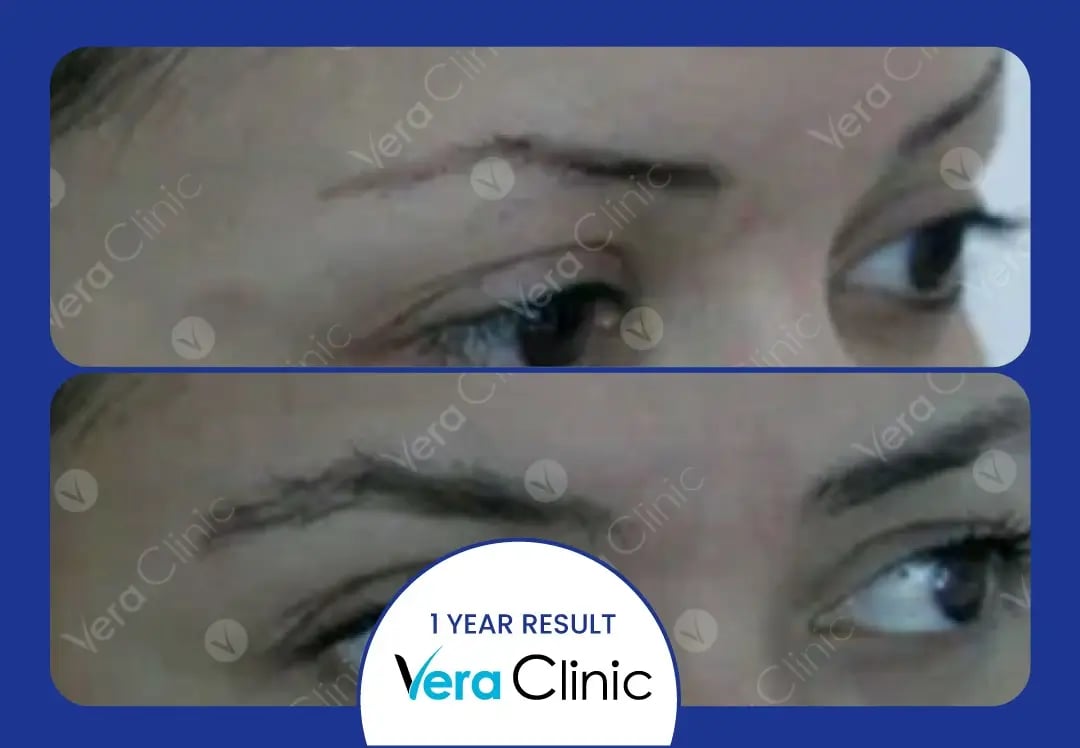
Before and After Eyebrow Transplant in Turkey
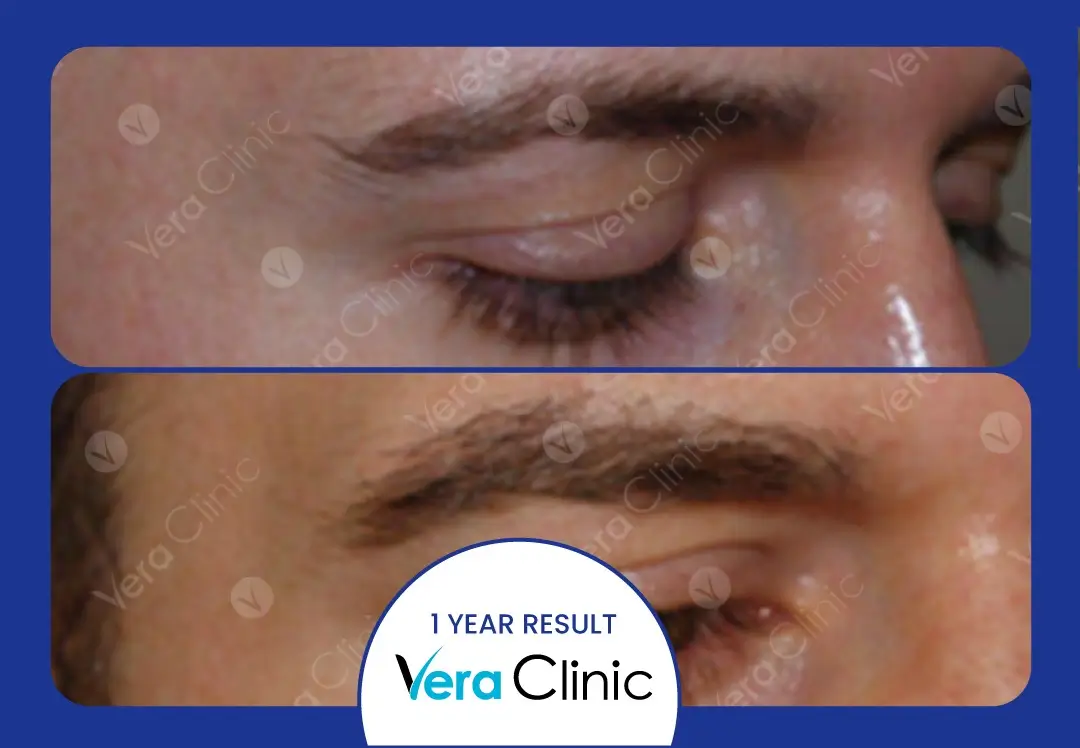
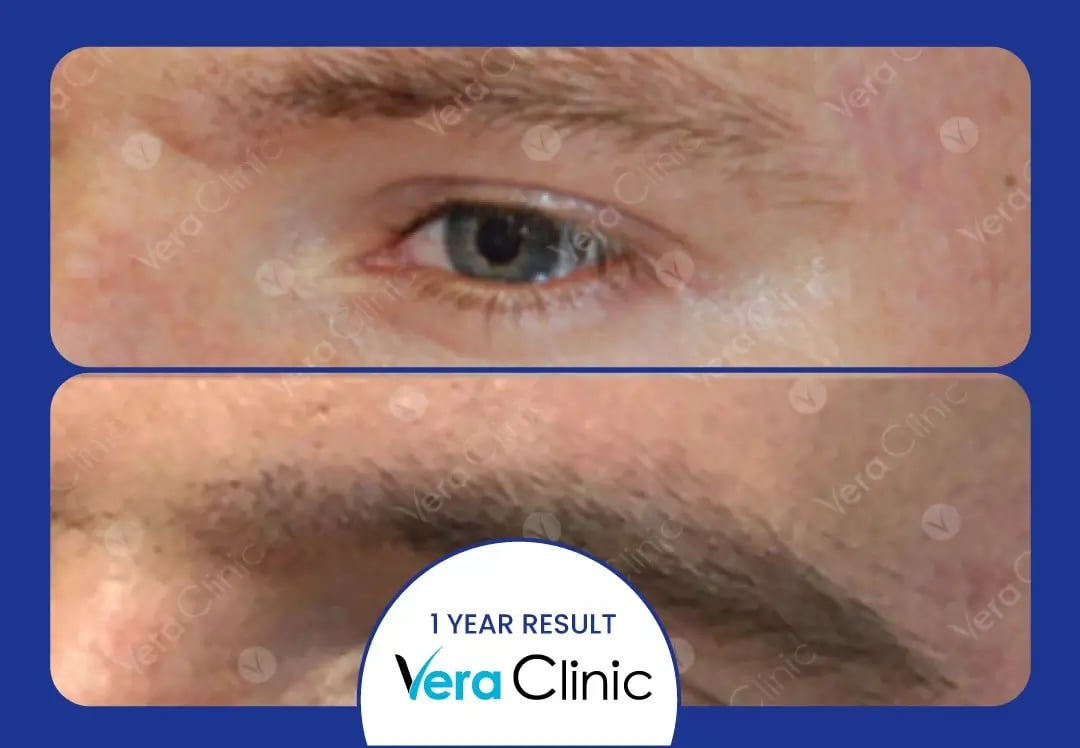
Thin eyebrows are thickened by transplanting more hair follicles on the eyebrow to achieve a natural look, a progression best judged through side-by-side hair transplant before and after comparisons.
What Is the Process for Eyebrow Transplants in Turkey?
The eyebrow transplant process in Turkey is structured, fast, and patient-friendly. It takes 1 day, with full results visible after 9–12 months.
- Consultation and brow design: Doctor evaluates your facial structure and sketches a custom brow shape based on symmetry, thickness, and personal preference.
- Donor area preparation: Hair follicles are usually taken from behind the ears or the back of the scalp, where hair is soft and matches eyebrow texture.
- Extraction of grafts: Depending on the technique, follicles are harvested individually (FUE/DHI) or via strip (FUT), using local anesthesia.
- Implantation into the brows: Follicles are placed one by one at specific angles to match natural brow direction. DHI uses a pen tool; FUE uses forceps and pre-made channels.
- Post-op cleaning and instructions: Scalp and brow area are cleaned. The patient receives medication, healing serum, and post-op care instructions.
- Recovery and regrowth monitoring: Crusting occurs in the first 5–7 days. Transplanted hairs fall out within 3 weeks. New hairs begin to grow by month 3 and mature by month 9–12.
From donor selection to final placement, each stage is designed to protect graft viability while keeping the brow's natural direction intact.
Who Is Eligible for an Eyebrow Hair Transplant in Turkey?
Healthy individuals with partial or total eyebrow hair loss, stable donor hair, and realistic expectations are eligible for an eyebrow transplant in Turkey.
Men and women who have lost brow density due to over-plucking, scars, genetic thinning, aging, or hormonal imbalance are eligible. Women often seek soft, curved brow shapes, while men usually aim to restore fuller, straight-lined brows.
Patients should be over 20, not pregnant or breastfeeding, and free of uncontrolled autoimmune or bleeding disorders. Conditions like alopecia areata, active skin infections, or diffuse unpatterned hair loss reduces eligibility.
Can every man or woman have a hair transplant in Turkey?
No, every person cannot have a hair transplant in Turkey. Successful results require stable health, compatible donor hair, and clear goals. A proper consultation is necessary to determine eligibility before committing to the procedure.
What Eyebrow Shapes Are Available Through Eyebrow Transplants in Turkey?
Eyebrow transplants in Turkey allow patients to choose from a variety of brow shapes tailored to their facial structure, style preferences, and gender. Explore the most common eyebrow shapes designed and performed worldwide.
- Soft Arched: The soft arched eyebrow creates a natural lift and smooth curve. It’s one of the most requested styles in Turkey, especially at Vera Clinic. It suits oval, heart-shaped, and diamond face types by softening angles and drawing attention to the eyes.
- Flat: Flat eyebrows have little to no curve and create a calm, modern expression. Popular in Korean-inspired aesthetics, this shape works best for long or rectangular faces, helping balance out facial length.
- Rounded: Rounded brows follow a continuous gentle curve without peaks. This shape is often chosen by women with round or soft-featured faces, as it adds a youthful, approachable appearance.
- Angled: The angled eyebrow features a sharp peak that creates definition and lift. It’s a top pick for women with square or heart-shaped faces who want a bold, structured brow line.
- S-Shaped: S-shaped brows curve upward and downward in a soft wave. Less common but visually striking, this style fits oval or diamond face shapes and creates a dynamic, editorial look.
- Straight: Straight brows run horizontally across the brow bone with minimal arch. This style is popular among younger patients, especially those with short or round faces. It adds a clean, symmetrical look without exaggerating facial angles.
The right shape ultimately comes down to matching the brow's curve and angle to the patient's existing bone structure and expression lines.
How Long Does the Eyebrow Transplant Procedure Take in Turkey?
An eyebrow transplant in Turkey takes between 2 to 4 hours. The total time is extended by several factors: custom-shaped or asymmetrical brows, thick donor hairs needing trimming, or extra steps in pre-design mapping. Some clinics spend an additional 30 to 45 minutes on facial analysis and brow planning to ensure a personalized and natural result.
Do different types of techniques have different procedure lengths for an eyebrow transplant?
Yes. FUE lasts around 3 to 4 hours because each graft is extracted and implanted manually. DHI, using a Choi pen, takes slightly less, usually 2.5 to 3.5 hours, as the extraction and implantation happen in one motion. FUT, though rarely used for eyebrows, takes about 2 to 3 hours and involves tissue dissection.
What Is the Recovery Timeline for Eyebrow Transplants in Turkey?
The recovery timeline for an eyebrow transplant in Turkey follows a clear, phased process. In the immediate post-procedure phase (first 24–48 hours), the brow area appears red, slightly swollen, and dotted with tiny scabs. Most patients return to light daily activities the next day but should avoid touching or washing the area.
During the early recovery phase (days 3 to 10), scabbing begins to fall off naturally. It’s essential not to pick at the scabs, as this damages grafts. Mild itching and sensitivity are normal, and gentle saline sprays or prescribed products help soothe the skin.
In the mid-recovery phase (weeks 2 to 4), the transplanted hairs fall out, a normal part of the process called “shock loss.” The skin returns to normal, and there is no visible sign of surgery by the end of this phase.
In the long-term healing and hair growth phase, new hairs start to grow gradually from month 3 onward. Full growth and final density are usually visible between 9 to 12 months after the procedure, consistent with the broader hair transplant recovery timeline seen across facial regions. The result is permanent and grows just like natural eyebrow hair.
What are the things to avoid in eyebrow transplant recovery phases?
Patients should avoid scratching, sweating, sun exposure, makeup, swimming, and exfoliating the area for the first few weeks. Sleeping face-down or applying pressure on the brows should be avoided to protect the new grafts during the early stages of the eyebrow transplant healing process.
How Long Does an Eyebrow Transplant in Turkey Last?
An eyebrow transplant in Turkey is designed to be permanent. Once the transplanted hair follicles take root and begin to grow, within 3 to 6 months, they continue to grow naturally for life. These hairs are taken from the scalp, which is genetically resistant to hair loss, making the result long-lasting.
However, in some cases, the results are not permanent. Graft survival is compromised by factors like poor post-op care, smoking, autoimmune diseases, or improper technique. If the grafts do not anchor well into the skin or if the patient has underlying hormonal imbalances, some hairs do grow or shed over time.
Eyebrow transplant results tend to remain stable in the large majority of patients after 12 months, particularly when the FUE method is combined with proper angle and depth control.
Long-term success depends on following aftercare instructions, avoiding trauma to the area during healing, and occasionally trimming the brows, since scalp hairs grow longer than natural eyebrow hairs, all of which support the long-term permanency of hair transplant results.
Are Turkish Eyebrow Transplants Better than Eyebrow Implants?
Yes, for most patients. Eyebrow transplants use the patient's own hair follicles, producing permanent, natural-growing results, whereas implants rely on synthetic fibers that do not grow and carry a higher risk of rejection.
Eyebrow transplants in Turkey are medically effective and affordable. Most clinics offer full treatment packages between €1,500–€2,500, while eyebrow implants require ongoing replacement costs and provide a less natural appearance.
Transplantation is considered the most reliable method for treating real eyebrow hair loss. It integrates with your skin, grows over time, and adapts to facial expressions. Clinics like Vera Clinic prioritize follicle matching, angle control, and brow design, advantages that synthetic eyebrow implants cannot match.