

Hair loss can feel like losing part of yourself. For people facing permanent baldness, a hair transplant is a medical solution that restores confidence and identity. Modern techniques like FUE and DHI allow surgeons to extract healthy follicles and implant them into thinning areas with survival rates above 90%.
A common concern after surgery is whether transplanted hair falling out. Patients sometimes panic when they see new hairs shedding weeks after the procedure, thinking the transplant has failed. This is not permanent hair loss. It is one of the common hair transplant side effects and a temporary reaction of the follicles adapting to their new environment.
Hair shedding differs from “shock loss”. In hair transplant shedding, only the hair shaft falls out while the follicle remains intact and healthy beneath the skin. In shock loss after hair transplant, surrounding native hairs (not the newly implanted ones) have potential to temporarily fall due to surgical trauma or inflammation. In both cases, the follicle recovers and regrows within a few months.
Transplanted hair shedding happens because the follicles enter a resting phase called telogen. It’s a self-defense mechanism triggered by the surgical process. Up to 80% of transplanted hairs shed within the first month post-surgery before entering a new anagen (growth) phase.
Can hair shedding affect hair transplant results?
No. Shedding does not damage the grafts. The follicles remain secure under the scalp and will grow new, permanent hairs once the healing phase ends.
How Common Is No Shedding After Hair Transplant?
Shedding after a hair transplant is 90% common among patients. Clinical data show that over 90% of patients experience some level of shedding within the first month post-surgery. This shedding is a normal part of the healing process as follicles temporarily enter a resting (telogen) phase before new growth begins.
Vera Clinic Academy data offers insight into shedding intensity. In a Vera Clinic Academy prospective observational cohort of 789 male patients with androgenetic alopecia (Norwood-Hamilton Stages III–IV, ages 25 to 55), shedding of transplanted grafts affected approximately 78% of implanted shafts, beginning at weeks 3–4 after surgery. Patients were assessed at baseline and at months 1, 3, 6, 9, and 12 using standardised photography and AI-assisted trichoscopic analysis (validated measurement accuracy 91.32%).
Hair Transplantation Growth Timeline ResearchCases where no shedding occurs represent less than 10% of patients, based on reports from transplant surgeons and observational studies. When it does happen, it is more commonly seen in women who undergo hairline procedures with fewer grafts or younger patients whose follicles adapt faster and bypass the visible shedding phase.
Avoiding shedding does not mean better or faster results. Both shedding and no-shedding patients achieve similar long-term hair density and survival rates above 90% according to a 2023 review in the International Journal of Trichology. No shedding after a hair transplant is rare and not a sign of success or failure, it’s simply a less common biological response.
Why Does the Hair Transplant Shedding Phase Happen?
The shedding phase happens because transplanted hair follicles enter a temporary resting state called telogen after surgery. During extraction and implantation, follicles experience mild trauma and reduced blood supply. As a protective response, they release the existing hair shafts while keeping the root intact beneath the scalp. This process is temporary and part of normal healing.
Research published in the Journal of Cutaneous and Aesthetic Surgery shows that up to 80–90% of transplanted hairs shed within 2–4 weeks post-surgery before shifting into the active growth phase (anagen). This cycle ensures that new, stronger hair strands emerge once the follicles fully adapt to their new location.
Is hair shedding a common side effect of hair transplant?
Yes. Hair shedding is a normal side effect of hair transplant, and it does not harm the survival of grafts. Academy data shows shedding affects approximately 78% of implanted shafts on average, and it is a predictable and essential step toward achieving final, permanent hair growth (Vera Clinic Academy, 2026)
What Happens to the Hair Follicles Under the Skin During the Shedding Stage?
During the shedding stage, the hair follicles remain alive and anchored under the skin while only the visible hair shafts fall out. After transplantation, follicles briefly enter the catagen (transition) phase and quickly shift into the telogen (resting) phase, causing temporary hair loss. The follicle’s root structures stay intact, continuing to receive nutrients and oxygen from surrounding tissue.
Once recovery progresses, the follicles re-enter the anagen (growth) phase, producing new hair shafts that are thicker and stronger than the shed hairs. Transplanted follicles maintain over 90% survival rates, even when shedding occurs, because the dermal papilla -the key growth center- remains undamaged according to “A Comparative Study on the Rate of Anagen Effluvium and Survival Rates of Scalp, Beard, and Chest Hair in Hair Restoration Procedure of Scalp” published in the Journal of Cutaneous and Aesthetic Surgery in 2019 by Gupta et al.
This cycle explains why post-transplant shedding is temporary and why full hair regrowth begins within 3–4 months.
Why Do Patients Confuse the Shedding Phase with Hair Transplant Failure?
Patients can confuse the shedding phase with hair transplant failure because they visibly lose hair just weeks after surgery and assume the implanted grafts have fallen out permanently. This reaction is based on appearance, not actual follicle health. Patients expect immediate, uninterrupted growth after the procedure. So when the newly implanted hairs shed, it creates panic and doubt.
The confusion stems from a lack of understanding about the hair growth cycle. During the telogen phase, transplanted hairs fall out while the follicles stay embedded and viable. Without this knowledge, patients interpret the visible shedding as graft rejection or failed hair transplant.
Another factor is the emotional investment involved. Patients undergo surgery to solve years of hair loss distress, so any sign of hair falling again, especially in the first month, triggers anxiety and fear of relapse.
Nearly 1 in 4 patients reported concerns about early hair loss post-op, even when doctors confirmed successful graft take as shown in “Patient-Reported Outcomes Following Hair Transplantation”, a 2017 study published in Dermatologic Surgery. The study emphasized that proper education before and after surgery significantly reduced misconceptions about the shedding phase.
Clear communication from clinics about this expected phase helps patients trust the process and avoid unnecessary stress.
Does Hair Falling Out After a Hair Transplant Mean the Surgery Failed?
No. Hair falling out after a hair transplant does not mean the surgery failed. This process, called transplanted hair shedding, happens because the follicles temporarily enter the resting (telogen) phase after implantation. The visible transplanted hair falling out is only the hair shaft detaching, while the follicle stays alive and secure under the scalp.
Over 90% of transplanted grafts survive and later produce new, healthy strands despite early hair transplant hair falling out episodes (“A Comparative Study on the Rate of Anagen Effluvium and Survival Rates of Scalp, Beard, and Chest Hair in Hair Restoration Procedure of Scalp” – Journal of Cutaneous and Aesthetic Surgery, Gupta et al., 2019.) Full regrowth starts within 3–4 months, confirming that shedding is a normal healing response, not a failed procedure.
Why Do Some Patients Experience More Shedding Than Others?
Some patients experience more shedding than others due to individual healing responses, graft handling, and biological factors. The amount of shedding varies based on scalp sensitivity, vascular supply, and how each follicle reacts to surgical trauma. Patients with a history of aggressive androgenic alopecia shed more because surrounding native hairs are weaker and more prone to temporary shock loss.
Patients with higher levels of scalp inflammation, slower healing rates, or larger graft sessions (above 3,000 grafts) showed up to 20% more visible shedding compared to smaller sessions according to “Factors Affecting Graft Survival in Hair Transplant Surgery: A Clinical Analysis”, International Journal of Trichology (2018). Younger patients with robust follicular health sometimes shed less because their follicles adapt faster to the new blood supply.
What can patients do to stay positive while experiencing shedding?
Patients should understand that shedding is part of the normal hair cycle and does not mean transplant failure. Staying in close communication with their surgeon, following aftercare protocols, and monitoring regrowth timelines help maintain confidence during this temporary stage.
When Does Shedding Start After Hair Transplant?
Shedding starts within 7 to 20 days after a hair transplant and lasts up to 8 weeks. Patients notice hair transplant shedding after 1 week, with peak hair loss around the 2–4 week mark. This timeline varies depending on healing speed, graft density, and technique used (FUE or DHI).
It is normal to see hair falling out after hair transplant during this period, including scenarios where shedding is visible 20 days post-surgery or even 3 months after hair transplant, though late shedding is less common. 80–90% of transplanted hairs enter the telogen phase within the first month, causing temporary loss before regrowth according to “A Comparative Study on the Rate of Anagen Effluvium and Survival Rates of Scalp, Beard, and Chest Hair in Hair Restoration Procedure of Scalp” published in the Journal of Cutaneous and Aesthetic Surgery (Gupta et al., 2019).
Cases of transplanted hair falling out after 2 years are unrelated to the initial shedding phase. Such late hair loss indicates progressive androgenic alopecia in untreated native hairs, not failure of transplanted grafts.
When Does Hair Shedding Peak After a Hair Transplant?
Hair shedding peaks between the 4th and 6th week after a hair transplant. This is when the transplanted hairs and adjacent native hairs temporarily fall out as they enter the telogen phase. Shedding starts around week 2 or 3, reaches its highest point near week 5, and gradually declines by the second or third month. Factors such as the surgical technique used, the number of grafts implanted, and individual healing responses slightly shift this peak. Despite this shedding phase, over 90% of grafts survive and begin producing new hair by month 3 or 4.
At Vera Clinic, peak shedding around weeks 4 to 6 is treated as an expected stage rather than a warning sign, and patients are told what to expect before surgery. Vera Clinic Academy’s observational cohort data supports this approach: shedding affected approximately 78% of implanted shafts, yet the cohort reached a mean graft survival of 92% (range 90–96%) by month 12, so the clinic does not consider early shedding a predictor of graft failure
How Long Does the Hair Transplant Shedding Phase Last?
The shedding phase after a hair transplant lasts between 2 and 8 weeks. Patients notice shedding starting in the second week, with visible loss continuing for about a month before slowing down. Over 80% of transplanted hairs enter the telogen phase within the first month and start new growth by the third or fourth month. (“Localized Telogen Effluvium Following Hair Transplantation”, Loh et al., Annals of Dermatology, 2018)
In rare prolonged cases, some shedding persists up to 12 weeks, particularly in patients with larger graft sessions or slower healing responses. Instances of transplanted hair falling out after 2 years are not part of this early shedding stage; they are caused by progressive hair loss in untreated native follicles or other scalp conditions, not by failed grafts.
Is the Timeline for Shedding Different in Hair Transplant Techniques?
Yes. The shedding timeline differs slightly between hair transplant techniques. In Follicular Unit Extraction (FUE), shedding starts around 2 weeks and peaks by week 4 to 6. In Direct Hair Implantation (DHI), some patients experience slightly delayed shedding because grafts are implanted with less handling and reduced trauma.
While overall graft survival rates are similar (>90%), the onset of shedding varies by 1–2 weeks between hair transplant techniques due to differences in follicular stress and vascular recovery.
What Are the Visible Signs that Indicate a Patient is in the Shedding Phase?
Patients in the shedding phase notice several visible signs. These indicators show that transplanted follicles have temporarily entered the resting phase and are releasing old hair shafts before regrowth begins.
- Hair Fall in Shower
- Residue on Pillow
- Excess in Brush or Comb
- Visible Thinning of Recipient Area
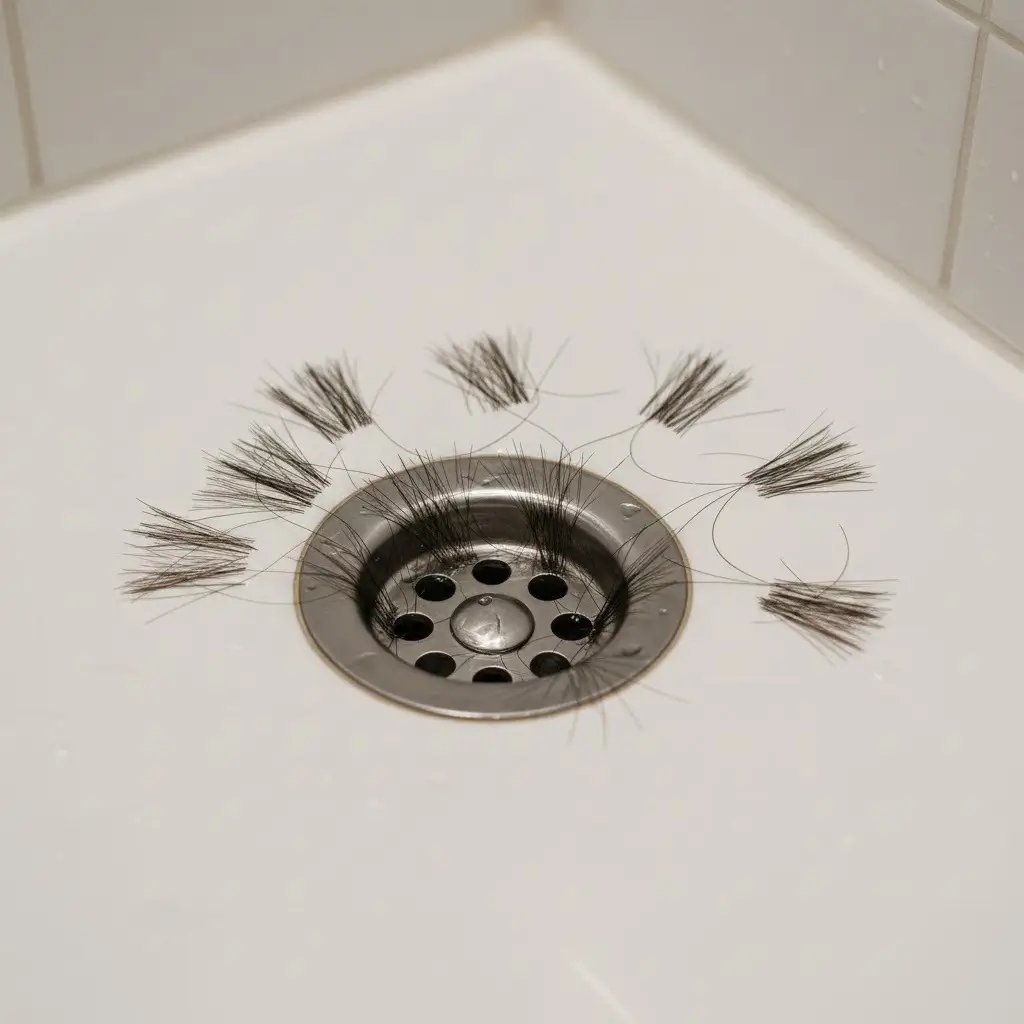
Hair Fall in Shower
One of the most common indicators is finding a significant clump of hair on the shower drain or floor after washing. While losing some hair is normal, a sudden increase that noticeably clogs the drain is a key sign of an active shedding phase.
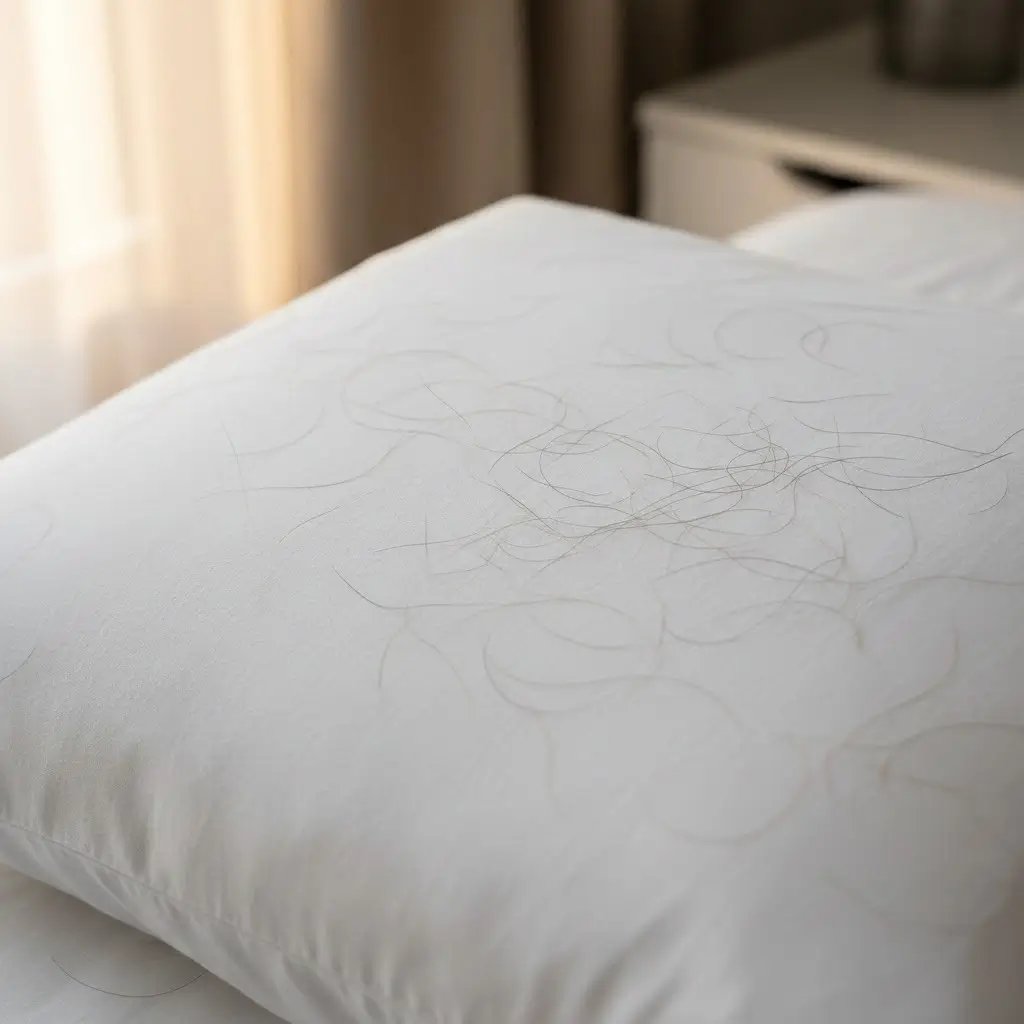
Residue on Pillow
Loose hair often appears on the pillow after sleep, especially within the first month post-surgery. This indicates shafts detaching naturally as follicles heal underneath.
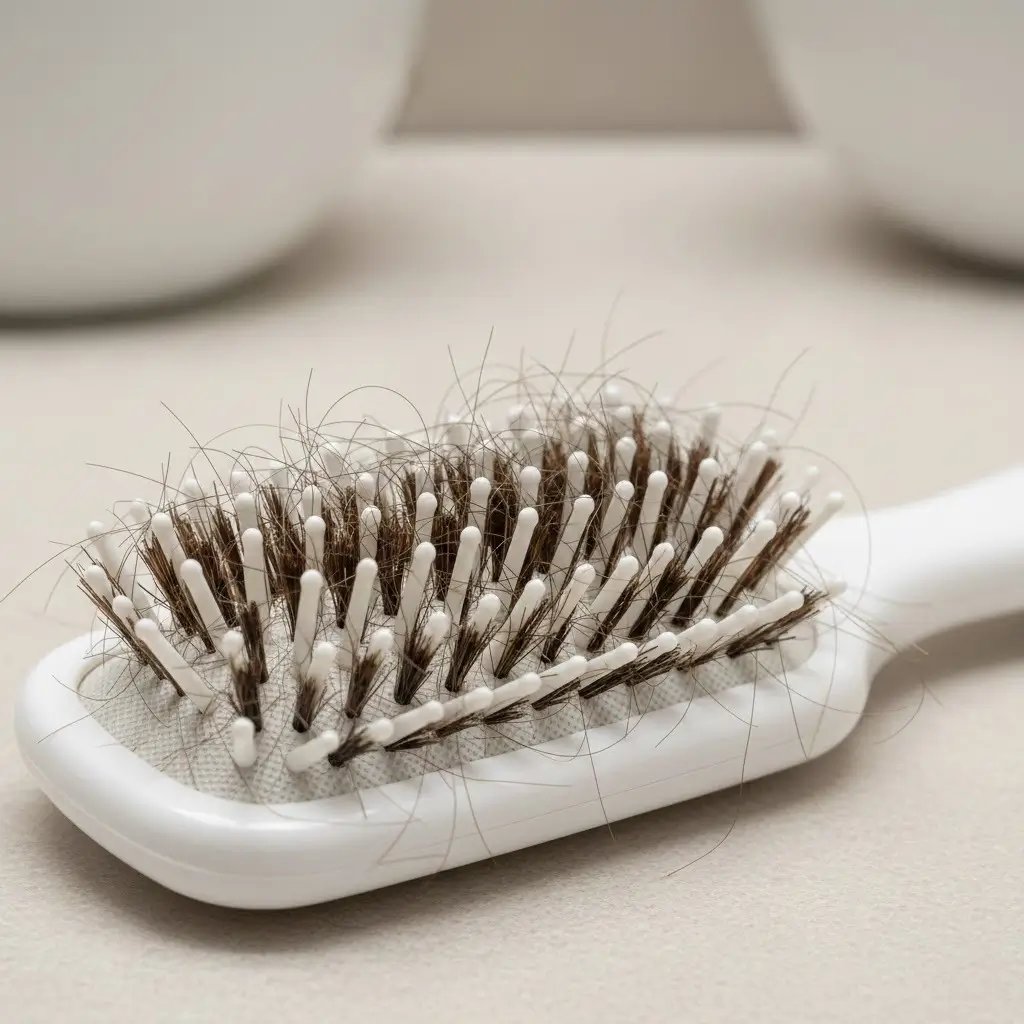
Excess in Brush or Comb
Patients notice an unusual amount of hair on their brush or comb when styling. This reflects temporary telogen effluvium and not graft failure.
Visible Thinning of Recipient Area
As shedding progresses, the transplanted area looks thinner or patchy. This is temporary and will improve once the follicles re-enter the growth phase.
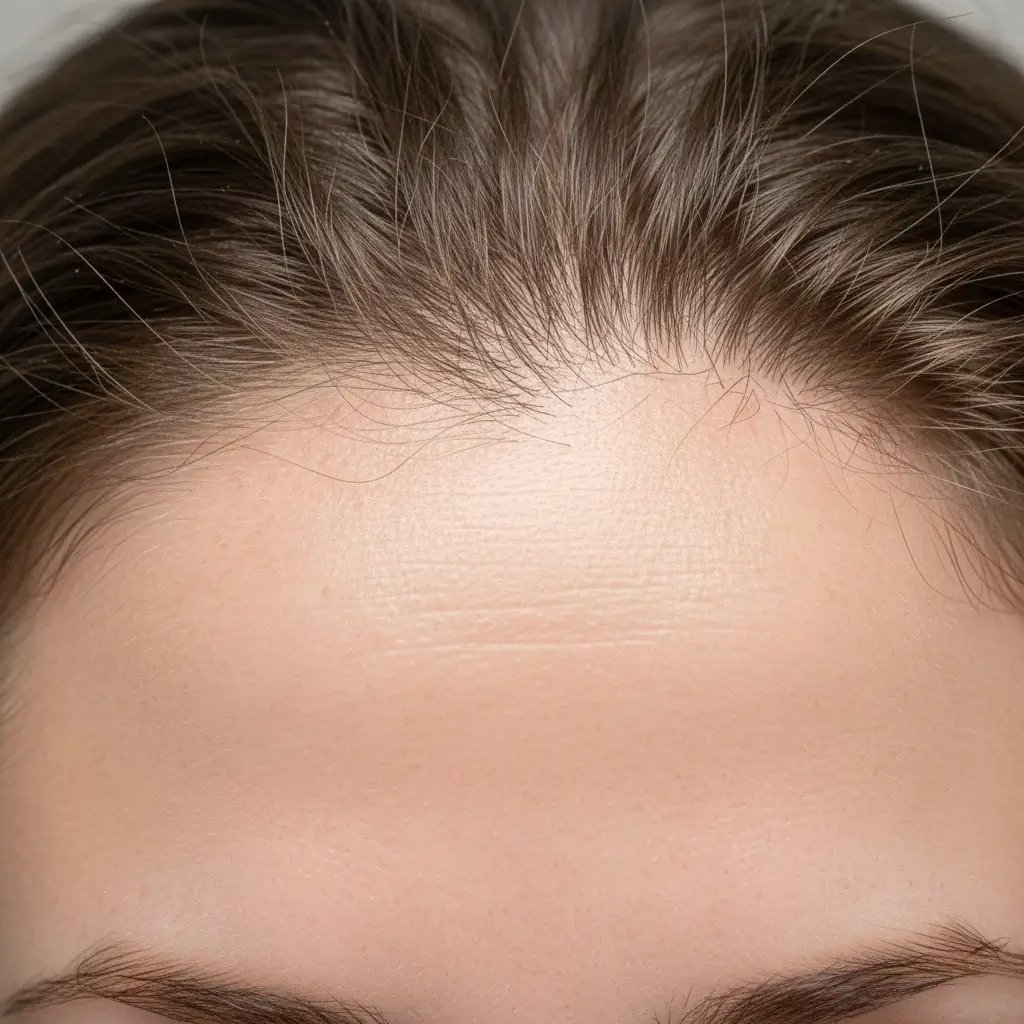
How Can Patients Differentiate Normal Shedding from Shock Loss?
While both involve hair falling out after a transplant, normal shedding refers to the implanted hairs temporarily losing their shafts as follicles rest and heal. Shock loss, on the other hand, affects surrounding native hairs near the recipient or donor area due to surgical trauma, inflammation, or disrupted blood flow.
In normal shedding, hairs fall 2–6 weeks post-op, and only the transplanted shafts are lost. The follicle remains intact under the scalp, and no scabs or follicular units come out. The area looks thinner, but grafts survive and regrow new hair within 3–4 months.
In shock loss, patients notice additional thinning of existing hair near the transplant area. It occurs within the first 2–8 weeks and sometimes results in temporary bald spots where native hairs were not transplanted. Unlike normal shedding, shock loss causes a mix of both native and transplanted hairs to fall.
Shock loss after hair transplant is triggered by perioperative stress and vascular trauma but resolves in 3–6 months, with native hair regrowing once inflammation subsides according to “Postoperative Telogen Effluvium (Shock Loss) Following Hair Transplantation” published in Dermatologic Surgery.
How can patients be sure their hair loss is normal shedding and not shock loss?
By observing whether only transplanted shafts fall without scabs or follicular tissue and noting if thinning spreads beyond the grafted zones. Surgeons confirm this during follow-up checks.
Does Shock Loss on Donor Area Affect Future Hair Growth?
No. Shock loss in the donor area does not cause permanent damage or prevent future hair growth. This temporary hair loss occurs when surrounding native hairs in the donor region experience surgical trauma, reduced blood flow, or inflammation during follicle extraction.
Donor area shock loss recovery happens within 3 to 6 months, with over 90% of affected hairs regrowing once the scalp heals and local circulation is restored. The transplanted grafts harvested from this area remain unaffected and continue to grow normally in the recipient zone.
Does Everyone Experience Shedding After a Hair Transplant?
No. While shedding is common, not every patient experiences it. Over 90% of patients shed transplanted hairs within the first month as follicles enter the telogen phase, but a small percentage (less than 10%) retain their implanted shafts without visible loss.
Surgeons report that patients with smaller graft sessions, stronger vascular supply, or faster healing (seen in younger individuals and some women) skip the noticeable shedding phase. Both shedding and non-shedding patients achieve similar long-term hair survival rates above 90%, meaning skipping shedding does not improve or worsen final results.
What Causes Hair Shedding After a Hair Transplant Surgery?
Hair shedding after a hair transplant is caused by transplanted follicles entering the telogen (resting) phase as a natural response to surgical trauma and healing. When follicles are extracted and implanted into a new location, they experience a temporary shock due to disrupted blood supply and inflammation. This reaction triggers the release of existing hair shafts while keeping the follicle root alive under the scalp.
Several factors influence the intensity of shedding. Larger graft sessions or denser packing increase trauma to the scalp and cause more visible shedding. Patients with heightened scalp sensitivity or delayed vascular recovery shed more. Medications such as finasteride or minoxidil sometimes reduce shedding by shortening the telogen phase.
Shedding is a form of localized telogen effluvium caused by temporary interruption of the follicle’s growth cycle according to “Localized Telogen Effluvium Following Hair Transplantation” (Annals of Dermatology, 2018). This hair loss is reversible and part of the healing timeline.
When does hair loss from hair shedding become permanent?
It rarely becomes permanent. Permanent loss occurs only if grafts fail to survive due to improper handling, infection, or poor blood supply. In successful transplants performed by skilled surgeons, shedding resolves and over 90% of transplanted hairs regrow within 3 to 4 months.
Which Factors Influence the Severity of the Shedding Phase?
The severity of the shedding phase depends on graft density, surgical technique, individual scalp health, and blood circulation.
High graft density procedures create more micro-incisions, leading to increased local trauma and inflammation. This temporarily disrupts surrounding hair follicles and intensifies shedding. Surgical techniques matter. Methods with greater follicle manipulation, such as large strip FUT sessions, trigger more shedding than minimally invasive FUE or DHI techniques.
Scalp health plays a role as well. Patients with pre-existing scalp inflammation, poor healing capacity, or underlying dermatological conditions like seborrheic dermatitis shed more hair. Adequate blood circulation is critical for follicle survival; slower vascular recovery after surgery prolongs the telogen phase, leading to more noticeable hair loss.
Patients undergoing high-density sessions (>3,000 grafts) and those with compromised scalp health experienced up to 20% more shedding than those with smaller, well-vascularized recipient areas according to “Factors Affecting Graft Survival in Hair Transplant Surgery: A Clinical Analysis” (International Journal of Trichology)
Despite these variations, over 90% of transplanted follicles survive, meaning even severe shedding leads to full regrowth within a few months.
Can the Shedding Phase Ever Lead to Permanent Hair Loss?
No. The shedding phase after a hair transplant cannot lead to permanent hair loss. During shedding, only the hair shafts fall out while the follicle root stays alive and anchored under the scalp. This process is temporary and part of normal follicular healing.
Permanent hair loss would only occur if the follicle itself were damaged or failed to survive, something rare in modern transplants with survival rates above 90%. Under proper surgical conditions and aftercare, follicles regrow healthy, permanent hair within 3–4 months.
What Biological Processes Cause Hair to Shed After a Hair Transplant?
Hair shedding after a transplant is primarily caused by telogen effluvium, follicular shock, and localized scalp trauma. These biological processes are part of the body’s natural response to surgical intervention and affect both transplanted and nearby native hairs.
Telogen effluvium is a temporary shift in the hair growth cycle. When follicles are extracted and implanted, they enter the telogen phase, a resting state where the hair shaft detaches. This is not permanent hair loss. The follicle remains intact and begins producing new hair once it re-enters the anagen (growth) phase; within 3 to 4 months.
Follicle shock refers to the physiological stress that each follicular unit undergoes during surgery. Even when handled carefully, removal from the donor area and reimplantation into the recipient zone causes temporary interruption in nutrient flow and cellular activity. This shock delays regrowth and triggers early shedding of the existing hair shaft.
Scalp trauma, including micro-incisions, local inflammation, and transient swelling, affect surrounding tissue and cause nearby native hairs (not just grafts) to shed temporarily. This is sometimes mistaken for transplant failure, but it’s part of the healing response.
Post-surgical shedding is the result of localized telogen effluvium triggered by procedural trauma according to “Localized Telogen Effluvium Following Hair Transplantation” published in the Annals of Dermatology (Loh et al., 2018). Biopsies showed that the density of follicles remained normal, supporting that shedding is temporary and regrowth is expected.
Which Facial Hair Transplant Types Are Prone to Hair Shedding?
Eyebrow Hair Transplant Shedding
How prone is eyebrow hair transplant to shedding?
Moderately prone. The eyebrow area is delicate and requires dense packing for a natural look, which increases trauma to surrounding follicles.
How long will the hair shedding last in an eyebrow hair transplant?
Regrowth begins after 2–4 months. The full effect is gradual, with hairs returning over the following several months.
What makes eyebrow hair transplant prone to hair shedding?
The primary factors affecting eyebrow hair transplant to hair shedding are surgical trauma from creating recipient sites in a sensitive area and the high density needed to mimic natural eyebrow fullness.
Sideburn Hair Transplant Shedding
How prone is this type of hair transplant?
Moderately to highly prone. The sideburn area is often transplanted with fine, single-hair grafts, which is more vulnerable to shedding.
How long will the hair shedding last in a sideburn hair transplant?
Lasts 2–3 months, with gradual regrowth starting from month 3 and thickening over the next 6 months.
What makes sideburn hair transplant prone to hair shedding?
Large surface area in beard hair transplant, dense packing, and the thicker caliber of beard hairs cause more pronounced initial shedding due to increased surgical handling and vascular demand.
Moustache Hair Transplant Shedding
How prone is this type of hair transplant?
Moderately prone. The moustache zone is small but requires precise angle control and dense implantation, which causes temporary follicular stress.
How long will the hair shedding last in a moustache hair transplant?
Shedding lasts 2–4 months, with initial regrowth visible by month 3 and fuller density by month 8–9.
What makes moustache hair transplant prone to hair shedding?
High-density placement and constant movement from speaking or eating slightly increase trauma to implanted follicles in a moustache hair transplant.
Beard Hair Transplant Shedding
How prone is beard hair transplant to shedding?
Highly prone when large areas are transplanted, as dense packing is common to achieve a natural beard thickness.
How long will the hair shedding last in beard hair transplant?
Generally lasts 2–3 months, with strong regrowth from month 3 onward and full density reached within 9–12 months.
What makes this type of hair transplant prone to hair shedding?
Frequent facial movement and thinner skin in the area increase surgical stress, while fine grafts are more sensitive to trauma and vascular disruption in beard transplant.
What Are the Types of Hair Shedding After Hair Transplant?
Hair shedding after a transplant happens in different ways depending on the method used and the patient’s biology. Each type has its own cause and timeline, but all are considered part of the healing process.
- Shock Loss Shedding: This occurs when native (non-transplanted) hairs fall out due to trauma or inflammation near the recipient or donor area. It is common in dense sessions or when blood flow is temporarily disrupted. Shock loss shedding is primarily associated with FUE and FUT procedures. It happens due to surgical trauma around existing follicles causing temporary telogen effluvium. It begins 2–3 weeks post-op and recovers in 3–6 months.
- Implanted Graft Shedding (Telogen Shedding): This is the primary and expected form of shedding. The visible part of the implanted hairs fall out within 2–4 weeks, but follicles remain healthy under the scalp. Telogen shedding is common in all techniques (FUE, DHI, FUT). It happens when follicles enter the telogen phase due to shock. Implanted graft shedding peaks around 4–6 weeks, regrowth starts by month 3.
- Delayed Shedding: Some patients, especially with DHI, experience shedding that starts later (4–6 weeks). Delayed shedding is predominantly observed in DHI techniques with lower trauma. It happens because minimal manipulation delays the follicle’s telogen response. Visible shedding lasts until week 8–10. (“A Comparative Study on the Rate of Anagen Effluvium and Survival Rates of Scalp, Beard, and Chest Hair in Hair Restoration Procedure of Scalp”, Journal of Cutaneous and Aesthetic Surgery.)
- Minimal or No Shedding: Rare cases show no visible shedding at all. This doesn’t mean better results, just a different biological response. Minimal or no shedding is primarily seen in women hair transplants, younger patients, or small graft sessions. It happens by faster vascular recovery or scalp resilience.Hairs continue to grow without entering telogen.
What to Do When Hair Shedding Occurs After a Hair Transplant
Hair shedding after a hair transplant is unsettling, especially when you don’t expect it. If you’re noticing hair fall in the weeks following your procedure, here’s exactly what to do:
- Stay Calm and Informed: Understand that hair shedding is a temporary and normal phase.
- Continue Prescribed Aftercare: Follow the clinic’s washing, moisturizing, and sleeping instructions without skipping.
- Monitor Your Progress: Take weekly photos to track changes. This helps verify expected recovery or catch complications early.
- Use Medications if Advised: Doctors recommend minoxidil or finasteride to support regrowth.
- Stay Hydrated and Eat Well: Good circulation and nutrients support healthy follicle recovery.
What not to do: Do not scratch, rub, or pick scabs. Avoid over-washing, sauna use, smoking, and self-medicating with unapproved treatments. Never panic and assume failure before your surgeon confirms it.
Which Post-Transplant Care Practices Help Minimize Shedding?
After a hair transplant, how you care for your scalp directly affects the amount of shedding you’ll experience. While some degree of shedding is expected, proper aftercare reduces its severity and supports faster follicle recovery. Below are key practices that help minimize unnecessary hair loss during the shedding phase.
- Gentle Washing Routine: Wash the scalp softly using lukewarm water and clinic-provided shampoos. Avoid rubbing or pressure.
- Sleep in a 45-Degree Position: This reduces swelling and improves blood flow to healing grafts.
- Avoid Heat and Intense Sweat: No saunas, steam rooms, or heavy exercise for at least 2 weeks.
- Stick to Medications: Use antibiotics, anti-inflammatory medications, and any topical agents as prescribed.
- Use Cooling Gel or Spray (if prescribed): Reduces scalp irritation and inflammation that trigger early telogen phase.
Can Medications Like Minoxidil or Finasteride Reduce Shedding?
Yes. Medications like minoxidil and finasteride can reduce shedding. Minoxidil shortens the telogen phase and speeds up the return to anagen (growth) phase, while finasteride reduces DHT levels, helping native hairs survive better (Efficacy of Finasteride and Minoxidil in Androgenetic Alopecia: A Meta-analysis, Journal of the American Academy of Dermatology, 2020.)
When Can I Use Minoxidil After Hair Transplant?
Minoxidil is used 2 to 4 weeks after a hair transplant, depending on scalp healing.
If there are no open wounds, scabs, or inflammation, patients start minoxidil as instructed by the surgeon. Early use can support faster regrowth, but using it too soon can irritate the scalp and delay healing. If redness, crusting, or itching persists beyond 3 weeks, delay usage. (Minoxidil Enhances Hair Regrowth in Patients After Hair Transplantation, Dermatologic Therapy, 2019.)
What Nutrition and Lifestyle Changes Support Healthy Regrowth After Shedding?
What you eat and how you live after a hair transplant directly impacts how strong, fast, and healthy your new hair grows. After the shedding phase, your follicles need internal support; from vitamins and minerals to good habits that promote circulation and healing.
- Protein-Rich Diet: Hair is made of keratin, a protein. Eating lean meats, eggs, fish, and legumes ensures your follicles have the building blocks for growth according to “Diet and Hair Loss: Effects of Nutrient Deficiency on Hair Structure” (Dermatology Practical & Conceptual, 2020.)
- Iron and Zinc Intake: Iron supports oxygen delivery to the scalp; zinc helps with follicle repair. Include spinach, lentils, pumpkin seeds, and red meat in your diet. (“The Role of Iron and Zinc in Hair Loss” published in International Journal of Trichology, 2013.)
- Biotin, Vitamin D, and B-Complex: Biotin helps keratin production. Vitamin D regulates the hair cycle, and B-complex vitamins support follicle metabolism according to “Biotin Deficiency and Hair Loss: The Truth Behind the Trend” (Skin Appendage Disorders, 2017) and “Vitamin D Deficiency and Chronic Telogen Effluvium” (Dermatology and Therapy, 2018.)
- Hydration: Drink at least 2–3 liters of water daily. Hydrated skin ensures better scalp elasticity and nutrient transport to follicles. (“Three Ways Drinking Water Improves Hair Growth” published in BayMed Hair, 2023.)
- Avoid Smoking and Alcohol: Smoking restricts blood flow to the scalp. Alcohol interferes with nutrient absorption and increases inflammation. Both delay healing and reduce graft survival. (“Cigarette Smoking and Hair Loss: A Clinical Study” published in Skinmed Journal, 2014.)
How to Prevent Hair Shedding After Hair Transplant
While patients do not always prevent the initial shedding completely (especially graft shedding), there are clear steps to take to reduce its severity and duration. The goal is to protect the grafts, stabilize surrounding hair, and support faster transition back into the growth (anagen) phase.
- Follow the Post-Op Care Instructions Exactly: Wash your hair only with clinic-approved shampoos. Pat dry gently. Sleep with your head elevated for the first 7–10 days. Avoid touching or scratching the grafts. Physical trauma or incorrect washing trigger shock loss in both transplanted and native hair.
- Use Prescribed Medications (Minoxidil or Finasteride): Minoxidil reduces telogen duration and help follicles re-enter growth faster. Finasteride stabilizes DHT levels and prevents native hair loss around the transplant area. Early use of these agents post-transplant improves hair density and reduces further loss. (“Efficacy of Finasteride and Minoxidil in Androgenetic Alopecia: A Meta-analysis”, JAAD, 2020)
- 3. Avoid Smoking, Alcohol, and Caffeine in the First 2 Weeks: These substances reduce blood circulation, delay healing, and disrupt nutrient delivery to the follicles. Poor blood flow slows graft adaptation and triggers excess shedding. (Skinmed Journal, 2014 – smoking increases follicular miniaturization and delays post-op recovery.)
- Boost Scalp Blood Flow with Gentle Massage (After Surgeon Approval): After the 2-week mark, light fingertip massages increase local blood circulation and oxygen delivery to grafts. Improved vascular supply supports faster shift to anagen phase. Gentle scalp massage increased hair thickness in 24 weeks by improving gene expression related to hair growth.
- Manage Stress and Sleep Quality: High cortisol levels (from stress) and poor sleep both increase the chance of prolonged telogen effluvium. Emotional stress directly influences the hair cycle. Chronic stress delays regrowth.
- Eat a High-Nutrient Diet: Include iron, zinc, biotin, vitamin D, and protein-rich foods. Deficiencies in these nutrients are associated with slower healing and increased hair fall.
Nutritional imbalance makes follicles more vulnerable post-surgery. Deficiencies in iron, protein, and vitamin D are linked to poor post-transplant outcomes. ( Dermatology Practical & Conceptual, 2020)