
Hair Loss in the Elderly is the progressive thinning or balding due to age-related alterations in hair follicles, hormones, and health. Addressing thinning early in the elderly is necessary because regrowth becomes limited or impossible without medical help once follicles shrink or scar.
Androgenetic alopecia remains the leading contributor, impacting up to 80% of males and 40% of females by age 70, according to “Female Pattern Hair Loss” by Elise A. Olsen in 2001. Signs include receding hairlines, diffuse thinning, patchy bald spots, and increased elderly scalp issues in the elderly, such as dryness or irritation that worsens shedding. Causes range from genetics, hormonal fluctuations after puberty, stress, poor nutrition, and chronic illnesses, to autoimmune conditions, which contribute to elderly hair loss.
Treatment options for aging hair loss and treatment plans include minoxidil, finasteride for men, low-level laser therapy, Platelet-Rich Plasma (PRP), and surgical transplants when advanced loss occurs. Early intervention protects follicles and improves density according to a randomized clinical trial of 5% topical minoxidil versus 2% topical minoxidil and placebo in the treatment of androgenetic alopecia in men by Elise A. Olsen in 2002. It showed positive results in three to six months. Early medical advice and proper scalp care help seniors manage aging hair loss and keep hair healthier longer.
How Much Hair Fall Is Normal for an Elderly Person?
About 50 to 100 hairs falling daily is normal for an elderly person. Losing over 100 hairs daily shows an elderly person has excessive hair loss, leading to visible thinning and bald spots. Aging slows hair follicle growth, keeps many follicles in the resting phase, and produces weaker strands. Hormonal changes, poor nutrition, chronic illness, medication side effects, and reduced scalp blood flow increase hair loss in an elderly person. Aging damages hair follicle stem cells, shrinks follicles, and lowers hair density, according to “Diminished hair follicle stem cell self-renewal during aging” by Amy Keyes in 2013. Healthy scalp care, balanced meals, and regular medical checks keep an elderly person’s hair fall within the normal range.
How Common Is Hair Loss in the Elderly?
Hair loss in the elderly is common, affecting more male adults than females. 8 out of 10 older males over 70 have significant thinning hair due to masculine pattern baldness caused by genetics and dihydrotestosterone (DHT), which shrinks hair follicles. An average of 4 to 6 out of 10 older females over 70 have apparent hair decline. Hair loss in older females happens after puberty, when lower estrogen levels remove protection for strands of hair. Women have less DHT, so hair loss is milder than in men. 80% of men over 70 and 53% of women over 80 have Alopecia areata, according to “Hair Density and the Onset and Progression of Androgenetic Alopecia in Women” by Mary P. Birch in 2001.
Why Do Scalp Issues Become More Common in the Elderly?
Scalp issues become more common in the elderly due to natural alterations in epidermis morphology and behavior. Aging skin, including the scalp, becomes thinner, drier, and less elastic. A weaker protective layer exposes the scalp to dandruff, redness, flaking, infections, and inflammation. Oil production drops in elderly skin, so the scalp loses moisture faster and develops cracks more easily. Blood flow in the scalp slows down, reducing nutrients for hair follicles and skin cells. Aging skin loses natural lipids and moisture, which increases dryness and irritation, according to “Intrinsic and extrinsic factors in skin aging” by Majella A. Farage in 2008.
Does Elderly Hair Loss Lead to Permanent Baldness?
Yes, elderly hair loss leads to permanent baldness in instances of genetic hair loss. Male and female pattern baldness causes hair shafts to shrink in time until hardly any strand is produced at all. Hair follicles in older adults do not regrow because aging weakens follicle stem structures and extends the resting phase. Follicles that shrivel or disappear lose the ability to develop hair, and regrowth does not occur naturally. Aging triggers damage to hair follicle stem cells, leading to permanent follicle shrinkage and irreversible hair loss, according to “Diminished hair follicle stem cell self-renewal during Aging” by Amy Keyes in 2013. Baldness remains permanent unless medical interventions like hair transplants and specific prescriptions are used.
What Are the Signs of Hair Loss in the Elderly?
The signs of hair loss in the elderly are listed below.
- Thinning Hair: Gradual reduction in hair volume on the crown, temples, or top of the head. A thinning of the hair is more gradual than excessive shedding, which results in rapid loss of hair strands. It reduces the overall density of the hair without sudden shedding.
- Receding Hairline: The hairline moves back along the forehead and temples, more common in men, and forms a distinct V-shape. A receding hairline shows a clearer pattern at the front of the head compared to general thinning, which reduces overall scalp volume.
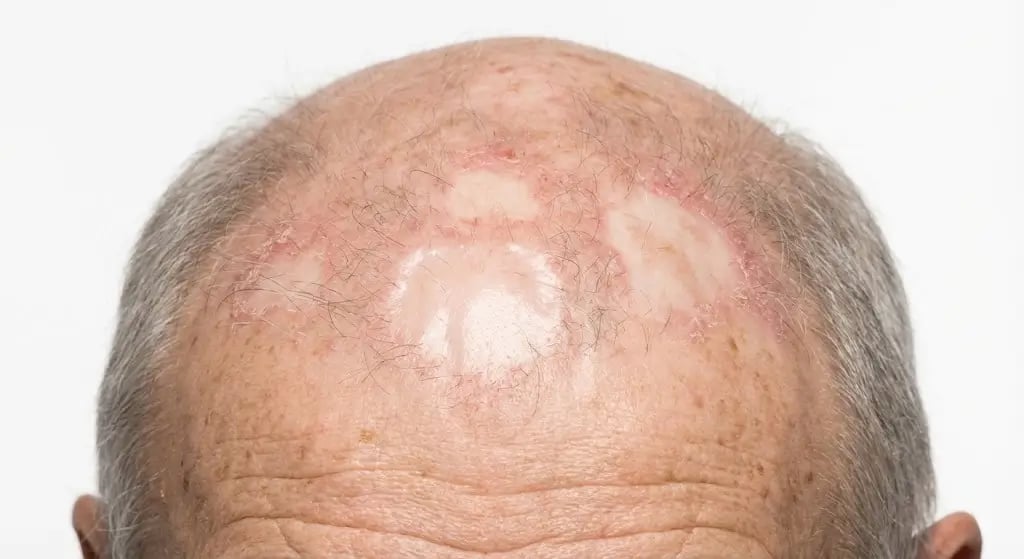
- Bald Spots: Smooth, shiny patches on the scalp where hair no longer grows. Patches appear on the crown or along the sides of the head. Bald spots are completely hairless areas, permanent once the follicles die, compared to thinning hair, which retains some coverage.
- Excessive Shedding: Noticeable shedding of hair when combing, washing, or styling, more than the usual 50 to 100 strands per day. Shedding refers to a rapid loss of hair, leaving strands behind in the brush or pillow, while thinning is a slow process that affects the density of hair over time rather than causing a noticeable, sudden loss.
- Visible Scalp: The scalp becomes more visible due to thinning hair, areas including the crown or part line. A visible scalp is a sign of localized thinning in specific areas, while thinning hair affects the entire scalp uniformly, leading to a gradual reduction in hair coverage.
- Brittle Hair: Hair becomes weaker, drier, and more prone to breaking. The texture change is caused by aging or environmental damage. Dry hair refers to a decrease in hair strength and moisture, making it more likely to break rather than fall out, compared to thinning or shedding.
- Flaky Scalp: A dry, irritated scalp that leads to dandruff-like flakes or itchiness is seen in conditions involving seborrheic dermatitis. Flaky scalp differs from typical hair loss, as it focuses more on scalp irritation, whereas hair loss is related to follicle health and hair growth cycles.
- Widow’s Peak: Noticeable deepening of the V-shape along the forehead, which is more common in men. A widow’s peak creates a pointed hairline at the front of the head, while receding temples show a more gradual loss along the sides of the forehead, which is distinct from diffuse thinning across the scalp.
Hair loss in men appears in receding hairlines, bald spots, and widow’s peaks. Women tend to experience more diffuse thinning across the scalp, accompanied by a widening part line. The thinning process in women is more gradual, with noticeable changes occurring after menopause due to hormonal shifts.
What Are the Early Signs of Hair Loss in the Elderly?
Early signs of hair loss in the elderly are listed below.
- Thinning Hair: A Gradual reduction in hair volume occurs on the crown, temples, or top of the head. Thinning hair is a slow process that decreases overall hair density without sudden or noticeable shedding, unlike excessive shedding, which causes rapid hair loss.
- Receding Hairline: The hairline recedes along the forehead and temples, creating a distinct V-shape, which is more common in men. A receding hairline displays a clearer pattern at the front of the head than general thinning, which tends to decrease overall scalp volume.
- Bald Spots: Smooth, shiny patches on the scalp where hair has stopped growing. These patches typically appear on the crown or along the sides of the head. Bald spots are completely hairless areas that are permanent once the follicles die, unlike thinning hair, which still has some coverage.
- Excessive Shedding: Notable hair shedding during combing, washing, or styling, exceeding the typical fifty to one hundred strands daily. Shedding indicates a quick loss of hair, with strands left on the brush or pillow, whereas thinning occurs gradually, reducing hair density over time rather than causing sudden, noticeable loss.
- Widening Part Line: The part line on the scalp widens over time, which is common in older women. A broader part reveals thinning along a narrow line, unlike bald spots that create completely bare patches elsewhere on the scalp.
Men often show early signs through receding hairlines and crown bald spots. Women have gradual diffuse thinning, widening part lines, and overall density loss after menopause, when hormone changes weaken follicles.
What Are the Late Signs of Hair Loss in the Elderly?
The late signs of hair loss in the elderly are listed below.
- Large Bald Patches: Bare areas expand and merge, leaving bigger smooth sections on the crown, temples, or sides. Large bald patches are more permanent than small, early bald spots and show advanced follicle loss.
- Severe Receding Hairline: The hairline moves far back toward the top of the head, exposing more of the forehead. A severe receding hairline is more defined than an early mild recession and connects with crown thinning to form an extensive bald area.
- Wispy Hair: Remaining hair becomes so fine and fragile that the scalp shows through easily. Thin hair strands break easily and fail to provide any real coverage compared to moderate thinning.
- Permanent Widening of Part Line: The part line becomes so wide that the scalp is visible, even with styling. A wide part line in later stages shows advanced diffuse thinning, unlike early signs when the part line only slightly widens.
- Shiny or Smooth Scalp: Areas with no hair regrowth develop a smooth, shiny look due to inactive or scarred follicles. A shiny scalp is distinct from areas of thinning, where tiny fine hairs remain.
Men show late-stage signs with severe receding hairlines, large bald patches at the crown, and shiny scalp areas. Women reach late-stage hair loss through advanced diffuse thinning, an almost transparent part line, and very wispy hair across the scalp, without forming large, isolated bald spots like men.
At What Age Does Hair Shedding Begin in the Elderly?
Hair shedding typically begins in the elderly age of 50 to 60, but starts earlier, depending on genetics and health. Noticeable hair loss in men begins around age 50, with about 50% showing some degree of male pattern baldness according to “Male pattern baldness: Classification and incidence” by O’Tar Norwood in 2004. Men around the age of 70, up to 80% have thinning or bald spots. Women develop diffuse thinning and a widening part line later, starting between 50 and 60, linked to menopause.
Around 40% of women over 70 show visible thinning according to “Hair Growth and Disorders” by Ulrike Blume-Peytavi in 2011. Age weakens hair follicles, slows growth cycles, and shifts more follicles into the resting phase. Miniaturized follicles gradually shrink and produce weaker strands, making hair loss more noticeable and long-lasting. Men see pattern hair loss earlier with clear receding hairlines or crown spots, while women experience more general thinning spread across the scalp.
Does hair loss in the elderly differ based on gender? Yes, hair loss in the elderly differs based on gender due to variations in hormonal changes and genetic patterns. Androgenetic alopecia (male-pattern baldness) in men leads to a receding hairline and thinning at the crown, beginning as early as their 30s and becoming more pronounced with age. Hair loss in women tends to be more diffuse, affecting the entire scalp without a receding hairline, and is linked to hormonal changes during menopause. Hair thinning occurs in men and women as they age, but the pattern, severity, and underlying causes vary significantly.
Is a Receding Hairline a Normal Sign of Aging in Seniors?
Yes, a receding hairline is a normal sign of aging in seniors. Aging unavoidably shrinks hair follicles and prolongs development periods in boys. Male pattern baldness causes the scalp to move back behind the earlobes and brow, creating an M- or V-shape. The process begins at age 50 and becomes evident with age. Women experience a receding scalp, but it is less common. Women experience diffuse thinning instead of a sharply diminishing front line. Biological factors, genetics, and follicle aging make the recession more noticeable in men. Mature hairlines shift gradually and do not regrow despite assistance. A declining hairline is among the most evident and common aging signs for senior men.
Is Hair Thinning a Sign of Permanent Hair Loss in the Elderly?
Yes, hair thinning is a sign of permanent hair loss in the elderly. Age-related thinning arises due to androgenetic alopecia, where hair shafts shrink and form finer fibers. Destruction of cells causes lasting density loss despite treatment. Long-term scalp issues, inadequate nourishment, or recurring illness weaken scalps and stop new hair formation. Follicles stop producing hair, and the loss remains irreversible, regardless of professional assistance or hair restoration. Temporary shedding resolves with time, while pattern balding progresses steadily and leaves thin, wispy strands or bald spots that never regrow.
Why Does a Sudden Bald Spot Appear in Elderly People?
A sudden bald spot appears in elderly people because hair follicles stop producing hair in a small area due to conditions including alopecia areata, scalp infections, or advanced pattern hair loss.
A bald spot in an older person indicates sudden follicle damage or an immune reaction where the body attacks its hair roots. Stress, illness, or medication triggers a sudden bald spot. Bald spots grow back with treatment if caused by alopecia areata or temporary conditions.
The bald spot stays permanent without medical intervention when follicles die from scarring or advanced miniaturization. Aging reduces follicle regeneration and increases resting phases, making recovery harder, according to “A Comprehensive Guide for the accurate classification of murine hair follicles in distinct hair cycle stages” by Gerd Müller-Röver in 2001. Sudden bald spots on the crown are more common in older males because male pattern baldness targets the crown first. Older females have diffuse thinning but develop round bald patches from alopecia areata or scalp disease.
Where is a sudden bald spot common? A sudden bald spot is most commonly seen in cases of alopecia areata, an autoimmune condition that can affect individuals of any age, but is particularly noticeable in older females. It presents as a round or oval patch of hair loss on the scalp and occurs abruptly without warning. Sudden bald spots appear in older males due to medical conditions, stress, or medication side effects, making it more important to identify the underlying cause promptly in either gender.
What Causes Hair Loss in the Elderly?
Hair loss in the elderly is commonly caused by androgenetic alopecia, nutritional deficiencies, and hormonal changes, while rarer causes include autoimmune diseases like alopecia areata, scalp infections, and certain medications. Common causes present a predictable and gradual pattern with lower health risks, linked to aging or genetic predisposition. In contrast, rare causes indicate underlying medical conditions and pose higher health risks, requiring prompt medical evaluation and targeted treatment.
Causes of hair loss in the elderly are listed below.
- Androgenetic Alopecia: The primary source of hair loss is in elderly males and females. Hair follicles shrink and generate finer hair until production stops entirely.
- Hormonal Changes: Shifts in progesterone and sperm levels weaken follicles in postmenopausal adolescent girls. Hormonal thinning develops gradually, compared to sudden shedding from severe disease problems.
- Nutritional Deficiencies: Lack of iron, protein, or basic nutrients reduces follicle growth. A low dietary intake is a rarer factor than genetic baldness, but it is more reversible with intervention.
- Chronic Illness: Conditions such as hypoglycemia or thyroid issues disrupt hair cycles and trigger shedding. Health-related loss depends on how well the condition is managed.
- Medications: Certain drugs for blood pressure, joint pain, or hepatitis treatment trigger shedding as a side effect. Medication-related loss is less predictable than pattern baldness.
- Scalp Conditions: Infections or inflammatory diseases damage follicles, creating bald patches. Scalp conditions carry a lower risk overall than age-driven pattern hair loss.
- Emotional Stress: Major stress events cause sudden, temporary shedding. Stress-related loss appears quickly and reverses when stress levels return to normal.
What Are the Most Common Causes of Hair Loss in the Elderly?
The most common cause of hair loss in the elderly is androgenetic alopecia. Androgenetic alopecia is characterized by the gradual miniaturization of hair shafts, shortening of growth phases, and the formation of finer, weaker strands until growth stops entirely. Pattern baldness afflicts about 80% of boys and nearly 50% of girls by age 70, according to “Male Pattern Baldness: classification and incidence” by O’Tar Norwood in 2004. Genetics plays the biggest role because a genetic heritage of baldness greatly increases the likelihood. Men tend to lose hair at the temples and crown, creating bald spots and a thinning hairline.
The hairline of women remains intact, but develops uneven thinning across the scalp. Hormonal fluctuations after puberty make women more prone to diffuse thinning than men. A few others causes include chronic illnesses, poor nutrition, and medication side effects. Different factors increase risk but do not cause hair loss as predictably as inherited pattern baldness. Demographics, including ethnicity, affect severity. Caucasian men show the highest rates of pattern baldness, while Asian and African populations usually have lower rates. Underlying health problems, including thyroid disorders, diabetes, or anemia, worsen shedding in both men and women, but these are less common than genetic causes.
What Are the Rare Causes of Hair Loss in the Elderly?
The rare causes of hair loss in the elderly are scarring alopecia, autoimmune diseases, severe scalp infections, and radiation damage. Damage from these conditions destroys hair follicles or replaces them with scar tissue, stopping regrowth permanently. Scarring alopecia ranks among the rarest causes, affecting fewer than 3% of hair loss patients, according to “Clinical Aspects of cicatricial alopecia” by Zsuzsanna Dallos in 2014.
Scarring alopecia inflames the scalp and forms scar tissue, which blocks new hair from growing. Autoimmune diseases such as lupus or lichen planopilaris target healthy follicles and create patchy baldness with redness or scaling. Severe fungal or bacterial infections damage follicles deeply, but appear in healthy seniors with good hygiene maintenance. Radiation therapy for cancer treatment produces permanent bald patches where follicles are destroyed.
Rare causes show little difference by gender but appear more in people with weakened immune systems or autoimmune conditions. Genetics plays a minor role in the typical pattern of baldness. Older adults with chronic diseases receiving chemotherapy or radiation face a higher chance of developing unusual types of irreversible hair loss.
What Are the Lifestyle Factors that Can Cause Hair Loss in Older Individuals?
The lifestyle factors that can cause hair loss in older individuals are listed below.
- Poor Diet: Lack of protein, iron, and essential vitamins reduces follicle strength and shortens growth phases. Malnutrition is a clear factor for hair loss in seniors, according to “The Role of Vitamins and Minerals in Hair Loss: A Review” by Heba M. Almohanna in 2019.
- Smoking: Smoking lowers blood flow to the scalp and damages hair follicle DNA. Smokers have a higher risk of moderate to severe hair loss, according to “Smoking and hair loss: is there an association?” by John G. Mosley in 1996.
- Excessive Alcohol Intake: Heavy drinking depletes nutrients and weakens the immune system, making hair follicles less resilient, according to “Effects of alcohol consumption on hair growth and loss” by Robert L. Richards in 1993. Long-term alcohol abuse has been linked to poor scalp health.
- Stressful Lifestyle: A Stressful lifestyle raises cortisol levels and pushes more follicles into the shedding phase. Emotional stress in older age triggers sudden diffuse hair shedding, according to the “Association between stress and hair loss in women” by Ralph M. Trüeb in 2009.
- Poor Scalp Care: Infrequent washing or excessive use of harsh products damages the scalp’s barrier, leading to inflammation and follicle damage.
- Sedentary Lifestyle. Low physical activity reduces circulation to the scalp, starving follicles of nutrients and oxygen needed for healthy growth, according to the “Association of Physical Activity with hair loss in adult men” by Akio Sato in 2012.
How Can Stress Lead to the Thinning of Hair in an Elderly?
Stress can lead to the thinning of hair in the elderly because of a syndrome called telogen effluvium, which forces large numbers of hair growth into the resting stage earlier. The sudden shift results in visible thinning and heavier daily scalping in elderly people’s hair that is increasingly fragile with age. Behavioral or emotional stress raises cortisol and other stress hormones, disrupting the normal hair cycle.
Continuing tension shortens the development period and extends the fallout period, contributing to visible thinning over weeks or months, according to the “Association between stress and hair loss in women” by Ralph M. Trüeb in 2009. Older adults are more vulnerable because aging follicles recover slowly and have limited capacity to return to complete development. Continuously neglecting the trigger prevents the hair from returning to normal density.
Can Stress Increase Sudden Hair Loss in Older Individuals?
Yes, stress increases sudden hair loss in older individuals by forcing an excessive number of hair shafts into the dormant state at the same time, causing a disorder called telogen effluvium.
Cognitive, emotional, or muscular tension floods the body with anxiety compounds that alter the natural hair process. Large clumps of hair then drop abruptly, from weeks to months after the upsetting occurrence.
Stress shortens the growth phase and prolongs shedding, which is severe in older people whose follicles are naturally weaker due to aging, according to “Association between stress and hair Loss in women” by Ralph M. Trüeb in 2009. Recovery for seniors is slower because aging follicles have limited capacity to return to normal growth. Prolonged adversity without remedy turns brief hair loss into more apparent shrinkage over time.
What Are the Medical Conditions that Cause Hair Loss in the Elderly?
The medical conditions that cause hair loss in the elderly are listed below.
- Thyroid disorders disturb hormone balance, which slows growth and causes diffuse thinning. Untreated thyroid disease increases shedding in seniors, according to “Thyroid Disorders and Hair Loss in the elderly” by Henry Völzke in 2005.
- Diabetes weakens blood flow to the scalp and damages small blood vessels, which starve follicles of nutrients and make hair break more easily, according to “Alopecia in patients with diabetes mellitus” Mohammad A. R. Khan in 2003.
- Anemia lowers iron levels, reducing oxygen supply to the scalp and leaving hair roots fragile and prone to falling out, according to “The Role of Vitamins and Minerals in Hair Loss: A Review” by Heba M. Almohanna in 2019.
- Autoimmune diseases such as alopecia areata or lupus lead the body’s immune system to attack healthy follicles, creating patchy bald spots or permanent scarring, according to “Alopecia Areata: Pathogenesis and Treatment, Vicki Kalabokes, 2014.
- Chronic infections, including severe fungal or bacterial scalp infections, damage the follicles directly and block regrowth if untreated, according to “Fungal infections of the scalp: diagnosis and management” by Lynne Goldberg in 2008.
- Cancer and chemotherapy harm fast-dividing cells, which causes sudden, extensive shedding that returns slowly or incompletely once treatment stops, according to “Chemotherapy-induced hair loss: pathophysiology and management” by Ralph M. Trüeb in 2009.
Can Hormonal Changes Cause Hair Thinning in Older Women?
Yes, hormonal changes cause hair thinning in older women by lowering estrogen levels and increasing the effects of androgens, which shrink hair follicles. Menopause triggers a sharp drop in estrogen as women age, which is a hormone that helps keep hair in the growing phase longer. Less estrogen allows androgens like dihydrotestosterone (DHT) to have stronger effects, shrinking follicles and producing shorter, finer strands. Many older women experience hair loss due to menopause, which appears as thinning hair in older females across the top and forehead instead of a receding scalp.
Menopause-related hair thinning develops gradually, but worsens if stress or poor nutrition weakens follicles further. Research in Dermato-Endocrinology shows hormone changes are the main driver behind this pattern after puberty, according to “Female Pattern Hair Loss and the role of hormones” by Agostino Rinald in 2010. Managing hormone balance and supporting scalp health helps slow thinning hair in older women and maintains better density.
What Are the Hair Loss Treatments for Seniors?
The hair loss treatments for seniors are listed below.
- Minoxidil remains a popular option for treating baldness. Applied straight to the skin, it boosts circulation and prolongs the active period of hair follicles. Daily use slows shedding and increases density, but results take three to six months, according to “A randomized clinical trial of 5% topical minoxidil versus 2% topical minoxidil and placebo in the treatment of androgenetic alopecia in men” by Elise A. Olsen in 2002. Minoxidil suits seniors with gradual thinning and early-stage pattern baldness.
- Finasteride works for aging hair loss and treatment in older men by blocking the hormone DHT, which shrinks follicles. Taken orally, it helps maintain hair volume, but it is less common for women. Visible results appear in three to six months according to “Finasteride in the treatment of men with androgenetic alopecia” by Kenneth D. Kaufman in 1998. Finasteride is given when male pattern baldness is advanced, but follicles are still active.
- Low-level laser therapy (LLLT) supports aging hair loss and treatment by using light energy to boost cell activity in weakened follicles. Improvement in hair density and thickness appears after four to six months of regular use, according to “Photobiomodulation of hair follicles: a review of the literature” by Pinar Avci in 2014. Seniors add LLLT to other hair loss treatments for mild to moderate thinning.
- Platelet-rich plasma (PRP) injections help treat hair loss and treatment by using the patient’s blood to stimulate dormant follicles. Growth factors encourage regrowth in thinning areas. Good results appear in three to six months when combined with other treatments, according to “Platelet-rich plasma for the treatment of androgenetic alopecia: A systematic review” by Jorge A. Alves in 2016. PRP is used when hair loss is early to moderate, and follicles remain alive.
- Hair transplants restore aging hair loss and treatment a permanent solution by moving healthy follicles from thicker areas to bald spots. Follicular unit extraction (FUE) is common. Recovery takes several months, and final results appear after six to twelve months, according to “Hair Transplantation: Basic Overview” by Bernard P. Nusbaum in 2014. Transplants are best when thinning is advanced and other treatments do not help.
Age affects how well the hair loss treatments work because older follicles grow more slowly and respond less fully. Early treatment keeps aging hair loss and makes treatment results more successful, and helps maintain thicker hair longer.
How Effective Is Hair Transplant as a Solution for Hair Loss in the Elderly?
Hair transplant as a solution for hair loss in the elderly is remarkably effective when good donor hair is available and overall wellness supports a successful operation. A transplant offers lifelong coverage because strong follicles moved to bald spots remain active for years. Hair transplants perform best after medication-related hair loss has stabilized, so new bald patches do not appear.
The surgeon takes strong follicles from dense regions at the rear of the epidermis and implants them underneath the thin layer. Results begin to show in three to six months and reach full thickness in about a year. Thousands of older patients choose elderly hair transplants in Turkey each year for cutting-edge technology and affordable packages. Vera Clinic is recognized as one of the leading hair transplant centers in Turkey by the European Awards in Medicine, based on its surgeon expertise, technique specialization, and consistent natural outcomes. The clinic offers customized treatment plans for seniors seeking permanent, natural results.
What to Expect Before and After a Hair Transplant in Seniors
Expect a clear plan for preparation to ensure safety and strong results before a hair transplant in seniors. Seniors undergo a full medical check to confirm healthy donor hair, stable health, and no hidden risks. Doctors review medicines, advise stopping smoking, and provide scalp care steps to help graft survival.
Expect a slight discoloration, blisters, and irritation to appear but heal in a few days after a hair transplant in seniors. Transplanted hair sheds progressively over weeks, and fresh development begins in about three months. Full progress develops within 6 to 12 months as new hairs grow thicker and blend naturally, showing clear hair transplant before and after progress. Regular care keeps the outcome strong and enduring.

When to See a Dermatologist for Hair Loss in the Elderly?
See a dermatologist for hair loss in the elderly when hair loss becomes sudden, severe, or shows unusual patterns. Seek medical attention if there is a rapid shedding that leaves bald patches within weeks, sudden patchy bald areas, or swelling and burning that indicate scalp disease. Expert help is vital if hair loss comes with pain, swelling, sores, or signs of bacteria. A dermatopathologist checks for hidden causes like glandular ailments, anemia, or inflammatory conditions that need treatment and recommends a hair transplant consultation if pattern baldness is advanced.
Are There Any Home Remedies to Stop Hair Loss in the Elderly?
Yes, there are home remedies to stop hair loss in the elderly that help minimize hair thinning in older adults, and the approaches work best alongside medical care rather than as a replacement. Natural oils, scalp massage, and herbal extracts do not fully stop aging hair loss but improve scalp health and reduce breakage. For example, coconut oil helps protect hair protein, rosemary oil mildly stimulates follicles, and saw palmetto lowers DHT levels linked to pattern baldness. Proven treatments, including medication or transplants for severe loss, must not be replaced.
Home remedies work best as support, not as a cure. The home remedies to stop hair loss in the elderly include several organic approaches that promote scalp wellness and minimize shedding. Scalp rubbing with base oils increases blood circulation and stimulates hair follicles when done daily. Rosemary essential oil mixed with carrier oil and applied a few times a week encourages mild hair growth. Coconut oil reduces protein loss from hair strands and keeps the scalp healthy, which limits breakage. Fresh aloe vera gel soothes the scalp and creates a healthier scalp environment, though direct proof for new hair growth is limited.
Pumpkin seed oil taken as a supplement or used on the scalp blocks hormones linked to thinning. Saw palmetto oil or supplements lower DHT levels, a factor in pattern hair loss. Onion juice applied to the scalp improves circulation and adds sulfur, which supports stronger hair. A green tea rinse supplies antioxidants that protect follicles and reduce hormone-related shedding. Diluted essential oils such as peppermint, lavender, cedar wood, or thyme used in a scalp massage stimulate follicles and improve hair thickness.
How to Prevent Extreme Hair Loss in Old Age
To prevent extreme hair loss in old age, follow the 8 steps below.
- Eat Well. Follow a balanced diet rich in protein, iron, zinc, and vitamins to strengthen hair roots.
- Wash Gently. Use mild shampoos and wash the hair with care to avoid breakage.
- Massage Scalp. Stimulate the scalp daily to boost blood flow and nourish follicles.
- Limit Damage. Reduce heat styling and tight hairstyles that stress hair strands.
- Protect Hair. Wear a hat outside to guard the scalp from harmful sun exposure.
- Manage Stress. Stress management, such as meditation or hobbies, helps prevent extreme hair loss triggered by prolonged stress.
- Check Health. Treat medical problems, including thyroid disorders or anemia, that cause extreme hair loss.
- Consult Early. See a dermatologist if hair loss worsens to get early care and solutions.
What Are the Common Types of Hair Loss in the Elderly?
The common types of hair loss in the elderly are listed below.
- Androgenetic Alopecia: Most common in older adults, caused by genetics and hormones. It leads to gradual thinning on the crown and receding hairline in men, while women experience diffuse thinning along the part.
- Telogen Effluvium: Temporary shedding triggered by stress, illness, or medication pushes hair follicles into the resting phase. Noticeable thinning appears a few months after the initial cause.
- Alopecia Areata: An autoimmune condition that creates patchy bald spots on the scalp or other areas. Patches appear suddenly and sometimes become long-term in seniors.
- Traction Alopecia: Hair loss resulting from repeated pulling or tension due to tight hairstyles or hair accessories. Fragile hair in older age increases the risk of traction damage.
- Scarring Alopecias: A rare but serious type involving inflammation that destroys hair follicles and replaces them with scar tissue, creating permanent bald areas.
1. Androgenetic Alopecia
Androgenetic alopecia is the most common type of hair loss in the elderly because it is driven by genetics and hormone levels that gradually affect hair follicles over decades. Androgenetic alopecia remains the leading cause of thinning hair in aging populations worldwide. Older men experience androgenetic alopecia more frequently than women, showing a receding hairline and thinning at the crown that progresses to complete baldness on top, while hair at the sides stays intact. 50% of men develop some degree of male pattern baldness by age 50, with rates climbing to nearly 80% by age 70, according to “Male Pattern Baldness: classification and incidence” by O’Tar Norwood in 2004.
Older women experiencing androgenetic alopecia look different. Most women keep the frontal hairline, but notice diffuse thinning across the crown and wider parting lines rather than a receding hairline. Around 40% of women over age 70 experience androgenetic alopecia, according to “Female Pattern Hair Loss” by Elise A. Olsen in 2001. Hormonal shifts during menopause make androgenetic alopecia more visible, but the pattern is less severe than in men. Male pattern baldness leaves clear bald patches and a defined shape, while the female version shows volume loss without complete bald spots.
2. Telogen Effluvium
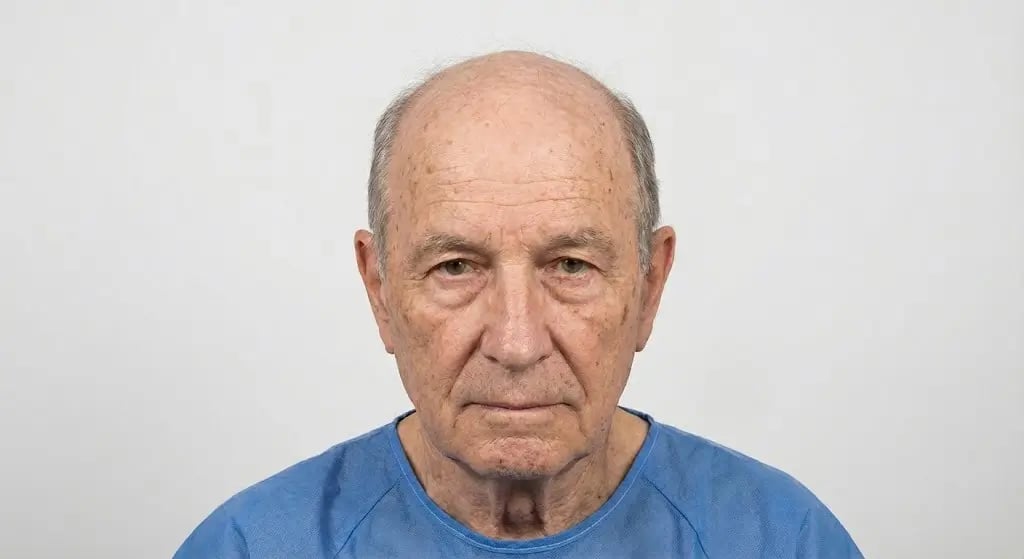
Telogen effluvium causes thinning hair in the elderly when many hair follicles shift into the resting state concurrently, leading to sudden losses across the scalp. Anxiety, major diseases, operations, or pharmaceuticals temporarily alter the hair cycle. Older boys and girls develop telogen effluvium, but women notice it more due to finer hair and hormonal shifts after menopause. Daily shedding reaches over 100–200 strands and lasts for several months before development normalizes.
Men shed hair evenly over the scalp, while women see wider part lines or reduced volume near the temples. Complete bald patches do not develop because telogen effluvium causes diffuse thinning rather than follicle destruction. Diffuse hair loss without scarring sets telogen effluvium apart from permanent conditions such as scarring alopecia.
3. Alopecia Areata
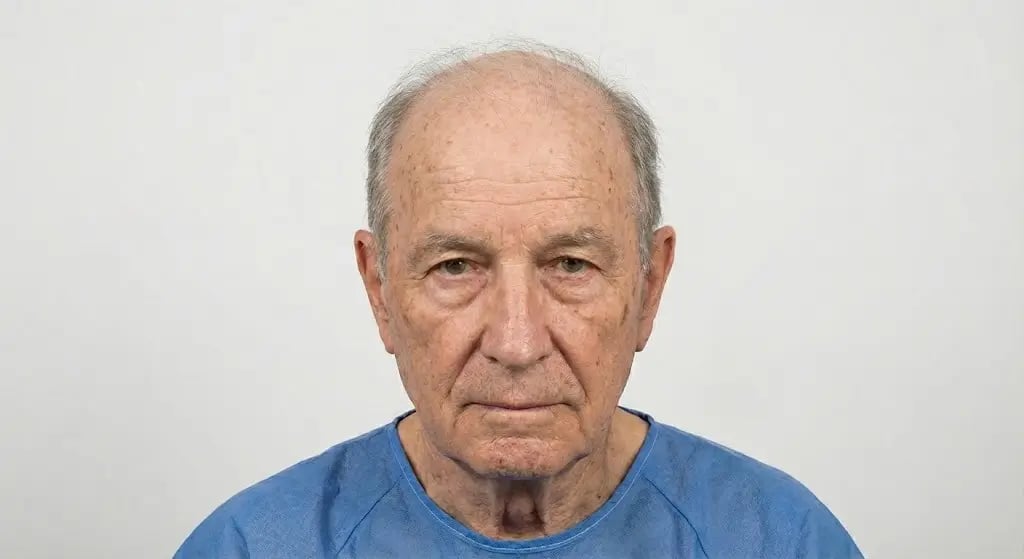
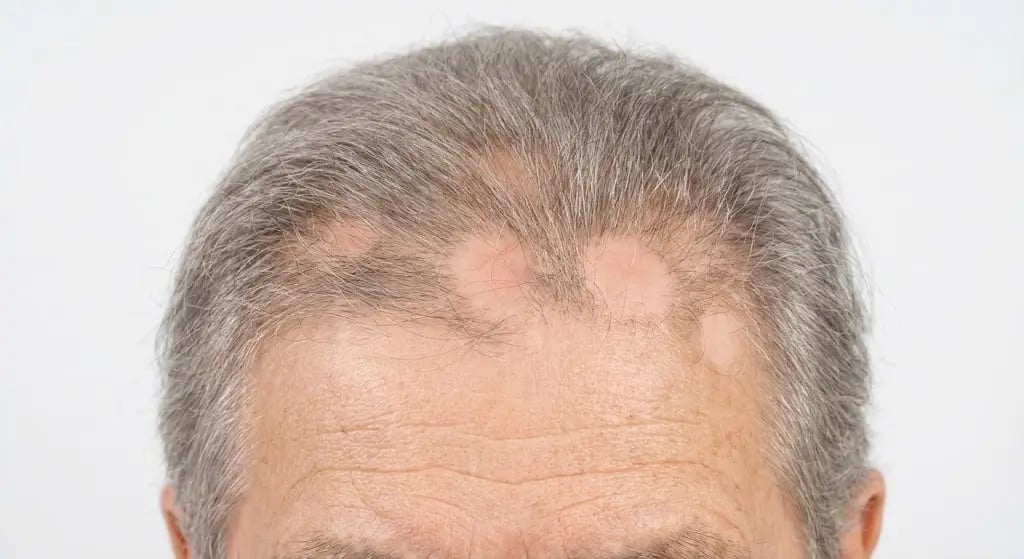
Alopecia areata is caused by the lymphatic gland invading active hair follicles and forcing them to stop growing. Small, rounded, hairless spots appear suddenly on the scalp or other body parts. Older women suffer from alopecia areata slightly more than older men because autoimmune disorders are more common in females after menopause. Sudden patchy bald spots stand out more on women with finer hair compared to men with shorter haircuts.
Men with alopecia areata develop clear, coin-sized bald patches on the scalp or beard area, while women notice scattered bald spots that break up otherwise thinning hair. Bald patches set alopecia areata apart from diffuse shedding caused by telogen effluvium or androgenetic alopecia. Roughly 2% of people develop alopecia areata in their lifetime, but among seniors, it remains less common than genetic pattern baldness or stress-related shedding. Older adults with thyroid disease or rheumatoid arthritis face a higher risk for thinning hair due to alopecia areata, according to “Autoimmune basis of alopecia areata” by Angela M. Christiano in 2013.
4. Traction Alopecia
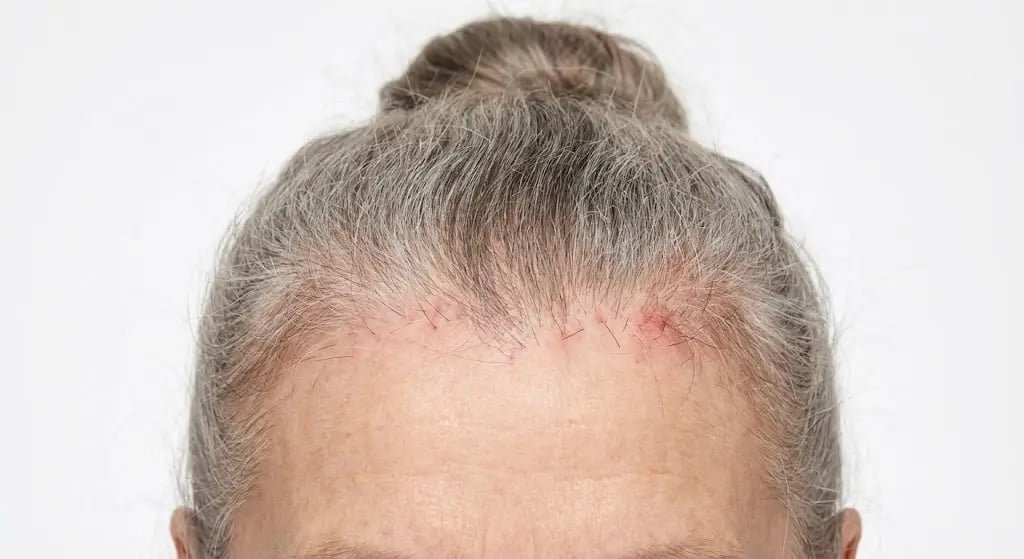
Traction alopecia is hair loss triggered by persistent tugging or pressure against the hair. Tight styles, wigs, or hairpieces damage roots and thin sides or brows. Older females get traction alopecia more than older men because of wearing pigtails, buns, or wigs on fragile hair. Men get it from tight hats or hairpieces, but less common. Edges recede and hair breaks at stress points, making traction alopecia distinctive from diffuse shedding like telogen effluvium. Consistent gripping destroys follicles and causes irreversible loss of hair over time, according to “Traction Alopecia: Clinical and Histologic Features” by Jerry Shapiro in 2002.
5. Scarring Alopecias
Scarring alopecias cause hair loss when inflammation destroys hair follicles and replaces them with scar tissue, making regrowth impossible. Older adults develop scarring alopecias because chronic scalp diseases and autoimmune conditions increase with age.
Older women have a higher risk than older men because autoimmune scalp disorders, such as lichen planopilaris, are more common after menopause. Men with scarring alopecia show clear bald patches with redness or scaling, while women see patchy hair loss with itching and burning on the scalp. Permanent bald spots and visible scalp damage set scarring alopecias apart from diffuse types like telogen effluvium.
Scarring alopecias account for about 3% of all hair loss cases but become more frequent in the elderly due to age-related immune changes, according to “Cicatricial Alopecia: An Approach to Diagnosis and Management” by Lynne J. Goldberg in 2010. Untreated cases lead to permanent thinning of hair in older people.