

Scarring alopecia is a group of rare disorders that destroy hair follicles, causing permanent hair loss and replacement with scar tissue. The origin of scarring alopecia causes involves inflammation that damages the follicle’s stem cells and surrounding scalp tissue. Common signs of scarring alopecia are redness, scaling, itching, and patchy bald spots with visible scarring. Severe scarring alopecia symptoms are pain, burning sensations, and widespread hair loss. Effective scarring alopecia treatment focuses on controlling inflammation, preventing hair loss, and transplantation.
Scarring alopecia symptoms lead to emotional distress and psychological impact due to permanent changes in appearance. Hair loss and visible scalp scarring reduce self-esteem and affect social interactions. Early diagnosis and management improve quality of life and slow progression. Scarring alopecia results in irreversible damage, unlike Non-Scarring Alopecia, where hair follicles remain intact and regrowth is possible. Prompt medical attention is essential to preserve remaining hair.
What Is Scarring Alopecia?
A scarring alopecia is a serious type of hair loss where the hair follicles are permanently destroyed and replaced with scar tissue. The term cicatricial alopecia originates from the Latin word cicatrix, meaning scar. The term cicatricial meaning “related to scarring,” inflammation attacks the hair follicle’s stem cells and sebaceous glands, causing irreversible damage that prevents hair from growing back. It impacts men and women and occurs at any age. The most common subtypes include lichen planopilaris, frontal fibrosing alopecia, and central centrifugal cicatricial alopecia.
Understanding scarring alopecia is essential because early diagnosis and treatment stop hair loss before it becomes permanent. The inflammation destroys the hair follicle if left untreated, resulting in visible bald patches that no longer grow hair. Characteristics of cicatricial alopecia include smooth, shiny scalp areas without visible follicles and symptoms like pain, burning, redness, swelling, or scaling. Dermatologists confirm the diagnosis through a scalp biopsy, and treatment options include anti-inflammatory drugs, antibiotics, or immunosuppressing medications to stop the inflammation. Early action is required to preserve the remaining hair since the damage is permanent.
What Does Scarring Alopecia Look Like?
Scarring alopecia looks like permanent patches of hair loss where the scalp shows visible scarring, inflammation, or tissue damage. The affected areas display smooth, shiny skin that lacks hair follicles, creating a bald appearance. Scarring alopecia pictures reveal characteristics, including red, inflamed patches that feel tender or painful to touch. The scalp surface appears different from normal balding patterns, showing actual scar tissue formation with a glossy, tight appearance. Types present with scaling, crusting, or pustules around the hair loss areas, while others show a complete absence of follicular openings.
Scarring alopecia varies depending on the specific type, but visual features include asymmetrical hair loss patterns, unlike male or female baldness. Scarring alopecia photos demonstrate how the condition affects hair density in irregular patches rather than following predictable patterns. The scarred areas feel firm and lack the normal texture of healthy scalp tissue. Advanced cases show destruction of hair follicles with visible fibrosis, making the affected regions appear permanently altered with no possibility of natural hair regrowth.
What Does Hair Look Like Before and After Having Scarring Alopecia?
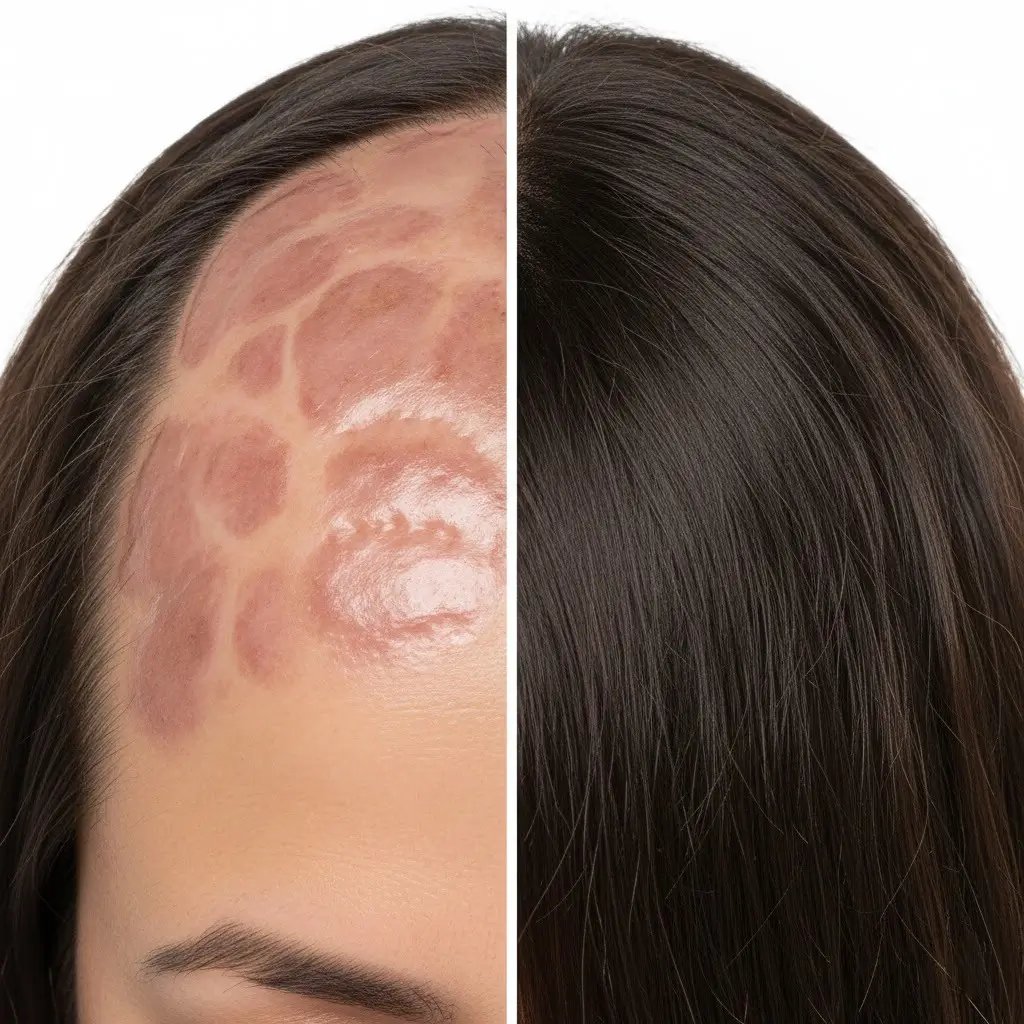
The hair looks different before and after having scarring alopecia due to the damage to hair follicles and the formation of scar tissue. The hair appears healthy and thick before the onset of scarring alopecia, with an expected growth pattern. Patients notice mild thinning in the early stages of scarring alopecia, characterized by inflammation or small bald patches that expand. Hair in the affected areas becomes sparse as the condition progresses, and the scalp appears red, inflamed, or covered with scales.
Hair in the affected areas no longer regrows after having scarring alopecia, leaving behind smooth, shiny, and scarred patches on the scalp. The skin appears fibrous or thicker as scar tissue replaces damaged follicles. Patients with scarring alopecia experience irreversible hair loss, and the once-thick, healthy hair is permanently replaced by scar tissue. The condition leads to complete bald patches in the areas affected by the inflammation and scarring process.
What Are the Stages of Scarring Alopecia?
The Stages of Scarring Alopecia refer to the steps in the condition, in which the scalp and hair follicles undergo visible and structural changes due to inflammation and tissue damage. The stages reflect the severity of follicular destruction, helping to guide treatment timing and expectations. The disease advances in three main stages. The active inflammation and irreversible scarring.
The stages of Scarring Alopecia are listed below.
- Inflammatory Stage of Scarring Alopecia: The first stage, where inflammation around the hair follicles becomes active and visible. Patients feel itching, burning, or tenderness on the scalp. Redness, scaling, and pustules appear in the stage as the immune system attacks the follicle.
- Destructive Stage of Scarring Alopecia: The hair follicles begin to break down and show signs of permanent damage. Inflammation continues, and noticeable hair shedding occurs in patches. The follicular structure starts to collapse, making hair regrowth unlikely in the affected areas.
- Burnt-Out Stage of Scarring Alopecia: The final stage, where inflammation stops, but the damage is already done. Hair follicles are replaced by smooth, shiny scar tissue. No hair regrows in the scarred areas, and treatment at the last stage focuses only on managing symptoms or cosmetic restoration.
End-stage scarring alopecia is when all follicles in the affected areas have been permanently destroyed and replaced by scar tissue, making hair regrowth impossible.
1. Inflammatory Stage of Scarring Alopecia
The Inflammatory Stage of Scarring Alopecia is the early and active phase of hair follicle destruction, marked by an immune system attack. It is classified under inflammatory alopecia. The stage begins when inflammation targets the hair follicle’s stem cells and sebaceous glands, disrupting the normal hair growth cycle. The onset is subtle, starting with symptoms like itching, burning, tenderness, or a tingling sensation on the scalp. Early visible signs are redness, scaling, and pustules around the hair follicles as the inflammation progresses.
Major changes, like patchy hair loss, inflamed areas, and scalp sensitivity, become visible later in the stage. The first stage is reversible if caught early, as the follicles are inflamed but not yet destroyed. Prompt treatment with anti-inflammatory medications like corticosteroids or antibiotics reduces inflammation and prevents damage. It progresses into permanent destruction and the destructive phase if left untreated. Early diagnosis and consistent treatment are important to preserving hair and preventing long-term scarring.
2. Destructive Stage of Scarring Alopecia
Destructive Stage of Scarring Alopecia is the phase where active inflammation leads to the breakdown and permanent damage of hair follicles. The second stage marks the transition from reversible inflammatory alopecia to irreversible scarring as the follicular structure begins to collapse. The onset follows untreated or poorly controlled inflammation from the earlier stage, where immune cells continue attacking the follicles without intervention.
Patients notice increased hair shedding, pain, and thinning in affected patches, with signs of inflammation still present. Visible changes include smooth bald areas, loss of follicular openings, and skin thickening. The stage is irreversible because the follicle’s regenerative cells have already been destroyed. Treatment focuses on halting the spread with immunosuppressive drugs or anti-inflammatory therapies, but regrowth in damaged areas is unlikely. Early control remains essential to limit follicular destruction.
3. Burnt-Out Stage of Scarring Alopecia
The Burnt-Out Stage of Scarring Alopecia is the final phase, in which all inflammation has ceased, but the damage to the hair follicles is permanent. The third stage begins after prolonged follicular destruction, resulting in complete loss of the hair-producing structures. The onset is gradual, following years of untreated or poorly managed inflammatory and destructive activity.
Early signs include stable areas of hair loss with no new symptoms, while late signs show smooth, shiny, and scarred patches on the scalp where hair no longer grows. The final stage is irreversible because the follicles have been replaced with fibrotic scar tissue, rendering them incapable of regrowth. Treatment at the last stage addresses cosmetic concerns, such as using wigs or considering hair transplantation, provided the surrounding tissue is healthy and intact. Managing psychological effects and patient education becomes the focus in the permanent stage.
What Are the Signs and Symptoms of Scarring Alopecia?
The Signs and Symptoms of Scarring Alopecia are listed below.
- Itching or Burning Sensation: An early symptom caused by inflammation around the hair follicles. The scalp feels irritated or uncomfortable before visible hair loss begins. It signals the onset of follicular damage.
- Redness or Discoloration: Inflammation increases blood flow to the scalp, leading to red, pink, or darker patches. The color changes are confined to affected areas. They appear in the early or active stages.
- Flaking or Scaling on the Scalp: Thick white or yellow flakes form near hair follicles. The flakes result from skin reacting to inflammation. They are more localized than common dandruff.
- Smooth, Shiny Patches with No Follicles: The bald areas where follicles have been replaced by scar tissue. The skin appears tight, pale, and without pores. It is a visible sign of scarring alopecia.
- Pain When Touching or Moving Hair: The scalp feels sore or tender, and the scalp hurts when moving hair or brushing. Inflammation impacts the nerve endings around the hair follicles. The symptom is common in active inflammatory stages.
- Patchy Hair Loss: Hair falls out in uneven sections of the scalp. The patches slowly enlarge if inflammation continues. They become permanent bald areas without treatment.
- Pustules or Bumps on the Scalp: Small, pus-filled bumps form, similar to acne. They result from blocked or infected follicles. The bumps crust over and leave scars.
- Swelling or Raised Areas: Affected parts of the scalp become raised or thickened. Swelling is caused by immune cell activity beneath the skin. It occurs alongside itching or redness.
- Loss of Follicular Openings: The scalp has visible pores where hair follicles are located. The openings vanish due to scarring. It is a hallmark sign of permanent follicle loss.
- Change in Hair Texture or Growth Pattern: Hair becomes thinner, wiry, or stops growing normally. The changes indicate the follicles are weakening. Hair in the pattern areas stops growing completely.
How Do Symptoms Differ for Specific Types of Scarring Alopecia?
Symptoms differ for specific types of scarring alopecia due to variations in clinical signs, scalp involvement, and inflammatory patterns. All share permanent hair loss and scarring as standard features. Each type of scarring alopecia displays unique symptoms that reflect its underlying cause, which aids in accurate diagnosis. Scientific studies offer detailed insights into the symptom differences, facilitating a better understanding and management.
The different types of Scarring Alopecia are listed below.
- Lichen Planopilaris (LPP): Lichen Planopilaris commonly shows perifollicular erythema and scaling, with follicular hyperkeratosis causing patchy hair loss. Shows perifollicular erythema and scaling, with follicular hyperkeratosis causing patchy hair loss. The inflammation in Lichen Planopilaris targets the follicular stem cell region, leading to permanent scarring, as supported by research from Mirmirani (2015).
- Frontal Fibrosing Alopecia (FFA): Frontal Fibrosing Alopecia is characterized by the progressive recession of the frontal hairline and loss of the eyebrows, accompanied by perifollicular redness and scaling. The Frontal Fibrosing Alopecia is considered a variant of LPP, affecting the frontotemporal scalp, according to Vañó-Galván et al. (2014).
- Discoid Lupus Erythematosus (DLE): Discoid Lupus Erythematosus presents with erythematous plaques and follicular plugging that cause scarring alopecia on the scalp. Discoid Lupus Erythematosus symptoms arise from the deposition of immune complexes, leading to tissue damage as described by Kossard (2000).
- Central Centrifugal Cicatricial Alopecia (CCCA): Central Centrifugal Cicatricial Alopecia manifests as central scalp hair loss spreading outward with mild inflammation and tenderness. The Central Centrifugal Cicatricial Alopecia affects patients of African descent, with follicular degeneration playing a role, as Ogunleye et al. (2014) noted.
- Folliculitis Decalvans: Folliculitis Decalvans is identified by recurrent pustules, crusting, and perifollicular inflammation resulting in scarring alopecia. The Folliculitis Decalvans involves bacterial infection like Staphylococcus aureus, which perpetuates follicular destruction, according to Patel et al. (2016).
- Dissecting Cellulitis: Dissecting Cellulitis causes painful nodules, sinus tracts, and scarring on the scalp, with deep follicular inflammation. Dissecting Cellulitis involves chronic neutrophilic inflammation, leading to fibrosis and permanent hair loss, as supported by findings from Mirmirani and Trueb (2018).
- Acne Keloidalis Nuchae: Acne Keloidalis Nuchae shows papules, pustules, and keloidal scarring on the nape, causing hair loss in that area. Acne Keloidalis Nuchae is linked to mechanical irritation and chronic cellulitis, which cause painful nodules, sinus tracts, and scarring on the scalp, accompanied by inflammation that drives the scarring process, as explained by Callender et al. (2015).
What Causes Scarring Alopecia?
The Causes of Scarring Alopecia are listed below.
Primary Causes of Scarring Alopecia
- Primary causes are diseases or conditions that directly attack and destroy the hair follicle, causing irreversible scarring and hair loss. Common primary causes include autoimmune disorders, inflammatory diseases, and genetic conditions.
- Autoimmune inflammation targeting hair follicles
- Genetic predisposition causing follicular degeneration
- Chronic inflammatory skin diseases
- Immune-mediated destruction of follicular stem cells
- Idiopathic follicular fibrosis
Secondary Causes of Scarring Alopecia
- Secondary scarring alopecia causes external injuries or infections that indirectly damage hair follicles through trauma, disease, or environmental factors, leading to scarring.
- Physical trauma, such as burns or surgery
- Radiation therapy damages scalp tissue
- Severe bacterial or fungal scalp infections
- Scalp tumors invading follicular structures
- Chemical irritants cause follicular destruction
How Does Inflammation Lead to Scarring Hair Loss?
Inflammation leads to scarring and hair loss by causing damage and destruction to the hair follicles and surrounding skin structures. Immune cells attack the follicular area when inflammation occurs, disrupting the normal growth of hair. The inflammation damages the stem cells in the follicle’s bulge region, which are essential for hair regeneration. The follicles lose their ability to produce new hair shafts. The surrounding skin tissue becomes fibrotic, thickened, and replaced by scar tissue, which prevents hair regrowth.
The inflammation-induced scarring hair loss process involves persistent immune activity that destroys the follicle’s architecture. The body replaces the destroyed follicles with fibrous scar tissue. The scar tissue blocks any chance of new hair growth in the affected area. Scientific studies have shown that chronic inflammation leads to irreversible fibrosis and permanent hair loss, confirming that controlling inflammation early prevents scarring alopecia.
How Does Scar Tissue Affect Hair Follicles in Scarring Alopecia?
Scar Tissue affects hair Follicles in Scarring Alopecia through the permanent destruction of hair follicles, leading to irreversible hair loss. Scar tissue replaces the normal hair follicle structures with dense fibrous tissue when scar tissue forms on the scalp. The fibrotic tissue does not support hair growth because it destroys the follicle’s stem cells and blood supply. Research by Mirmirani (2015) highlights how scalp scar tissue disrupts the follicular environment, preventing any regeneration of hair follicles and causing permanent bald patches.
The formation of scar tissue on scalp creates a physical barrier that blocks hair follicles from functioning or regenerating. The process of hair growth stops once fibrous scar tissue replaces the follicles. The lack of vital follicular stem cells and supportive tissue results in irreversible hair loss in the affected areas. Studies from ScienceDirect confirm that controlling inflammation early is essential to prevent excessive scalp scar tissue formation, which directly leads to permanent scarring alopecia.
Can Scarring Alopecia Cause Scars on the Head?
Yes, Scarring Alopecia can cause scars on the head. Scarring alopecia results in the destruction of hair follicles, which leads to the formation of scars on the scalp. The inflammatory process damages the skin and hair follicles, replacing normal tissue with fibrous scar tissue. The process produces scars that appear as permanent patches, devoid of hair growth.
The presence of sudden scars in scarring alopecia reflects the rapid progression of follicle damage and skin fibrosis. The inflammation continues unchecked. The scalp develops severe scars that cause irreversible hair loss and visible skin changes. Early diagnosis and treatment help minimize the extent of scarring and preserve healthy scalps.
Can Scarring Alopecia Cause Balding?
Yes, Scarring Alopecia can cause balding. Scarring alopecia results in permanent baldness by destroying hair follicles and replacing them with scar tissue. The types of balding associated with scarring alopecia include patchy bald spots and diffuse hair loss, depending on the specific condition. For example, Lichen Planopilaris causes patchy hair loss primarily on the vertex and crown, while Frontal Fibrosing Alopecia affects the frontal hairline. Research by Mirmirani (2015) explains that the inflammation damages follicular stem cells, leading to irreversible balding in affected scalp areas.
The balding caused by scarring alopecia affects various parts of the scalp depending on the subtype. Central Centrifugal Cicatricial Alopecia results in balding starting from the center of the scalp and spreading outward. The damage to follicles is permanent because the scar tissue prevents hair regrowth. Hair loss becomes irreversible once follicles are replaced by scar tissue, making scarring alopecia a cause of permanent balding.
Is Alopecia Cicatricial a Leading Cause of Permanent Baldness?
Yes, Alopecia Cicatricial is a leading cause of permanent baldness. The condition involves the irreversible destruction of hair follicles, which are replaced by scar tissue, resulting in permanent hair loss. Research from Science Direct indicates that scarring alopecia accounts for approximately 7% of cases in women seeking medical attention for hair loss, with conditions like Central Centrifugal Cicatricial Alopecia (CCCA) being prevalent among women.
Scarring alopecia encompasses different types, including Lichen Planopilaris, Frontal Fibrosing Alopecia, Discoid Lupus Erythematosus, and CCCA. Each type is characterized by inflammation that targets and destroys hair follicles, resulting in permanent hair loss in the affected areas. The inflammation targets the upper portion of the hair follicle, including the stem cells and sebaceous glands, which are essential for hair regeneration. Hair does not regrow in the affected areas once the structures responsible for hair growth are destroyed. Early diagnosis and treatment are essential for managing inflammation and preventing follicular damage.
What Are the Treatments for Scarring Alopecia?
The treatments for Scarring Alopecia are listed below.
- Topical Treatments: The treatment involves applying corticosteroid creams, gels, or solutions directly to the affected area of the scalp to reduce inflammation. They are most effective in the early inflammatory stage of scarring alopecia for mild cases. Improvements are seen within weeks, but long-term use is needed to control flare-ups.
- Intralesional Treatments: The Intralesional method involves injecting corticosteroids directly into the affected scalp areas to suppress inflammation deep within the follicles. It is used when topical treatments are not effective enough. Patients require monthly injections for a few months to see results.
- Systemic Medications: Oral drugs like hydroxychloroquine, doxycycline, or immunosuppressants are used when inflammation is widespread or rapidly progressing. The medications work by calming the immune system to prevent follicular damage. Response times vary, but noticeable improvements occur within 3-6 months.
- Surgical and Cosmetic Options: Hair transplant surgery and scalp micropigmentation are used after the condition becomes inactive and inflammation has stopped, which is the new treatment for scarring alopecia. It is a cosmetic solution for restoring appearance, not reversing damage. Transplants are only possible if donor areas are healthy and scarring is stable.
- Supportive Measures: The Supportive Measures include using gentle shampoos, avoiding heat or chemicals, and wearing sun protection on the scalp. Supportive care helps prevent irritation and supports overall scalp health in treatment. It is recommended at all stages to minimize discomfort and prevent it from worsening.
How Effective Is Hair Transplant for Treating Scarring Alopecia?
The Hair Transplant for Treating Scarring Alopecia is effective by restoring hair in areas where the disease has been inactive or stable for at least 1–2 years. Successful hair transplantation requires that the underlying inflammation is fully controlled and that there is adequate donor hair with a healthy recipient scalp area. Hair transplants in Turkey offer benefits such as advanced techniques, affordable costs, and experienced surgeons. Vera Clinic is recognized as one of Turkey’s top hair transplant clinics, renowned for its high-quality care and successful outcomes in treating scarring alopecia.
Hair transplantation is effective for scarring alopecia by harvesting healthy hair follicles from unaffected scalp areas and implanting them into the scarred regions where follicles have been destroyed. Risks and limitations include the possibility of poor graft survival if inflammation is not well-controlled and the challenge of implanting follicles into scar tissue, which has a reduced blood supply. The importance of selecting stable cases for transplantation to achieve optimal results. Choosing the right Hair Transplantation Techniques improves graft success and natural hair restoration in patients with scarring alopecia.
What to Expect Before and After an Scarring Alopecia Hair Transplant
Expect the improvement in hair density and scalp appearance from before and after a scarring alopecia hair transplant. The results depend on the stability of the condition. The scalp exhibits signs of permanent hair loss, including bald patches and visible scarring, where follicles have been damaged or destroyed. The hair transplant is effective if the scarring alopecia has been inactive and well-controlled for at least 1-2 years. Hair transplantation works best when inflammation is fully managed and there is sufficient healthy donor hair available for transplantation into the affected areas.
Patients expect to see new hair growth in areas that previously had no hair after a scarring alopecia hair transplant, but the results vary. Complete restoration of the scalp’s appearance is not always guaranteed due to the existing scar tissue and limited blood flow in the affected areas, but hair density improves. The Scarring Alopecia Hair Transplant Before and After images show improvements in hair coverage, but full results take time, and some patients require additional treatments or sessions for optimal outcomes.
When to See a Dermatologist for Scarring Alopecia
See a Dermatologist for Scarring Alopecia when symptoms of permanent hair loss appear, along with signs of scalp inflammation such as redness, scaling, or tenderness. Early medical attention is required if hair loss progresses quickly or if painful, swollen nodules develop on the scalp. Severe symptoms like itching, burning sensations, or visible scarring indicate active follicle damage requiring professional evaluation.
Diagnosis and treatment by a dermatologist improve chances of slowing or stopping scarring alopecia progression. Delayed care increases the risk of irreversible follicle destruction and permanent bald patches. Dermatologists use specialized tools like scalp biopsies to confirm diagnosis and recommend treatments that reduce inflammation and prevent scarring, preserving hair.
When to Take a Hair Analysis for Scarring Alopecia
Take a Hair Analysis for Scarring Alopecia when severe symptoms, like sudden hair loss, painful scalp, burning sensations, or the presence of inflamed, red patches on the scalp, occur. A hair analysis helps understand the underlying causes of scarring alopecia, like inflammation, infection, or autoimmune diseases that affect the follicles. Early intervention with a scalp analysis is critical when scarring alopecia symptoms worsen or fail to improve with basic treatment.
A hair analysis provides essential information for diagnosing the type of scarring alopecia and its potential causes. The results inform treatment decisions, enabling doctors to select the most suitable therapies to manage inflammation and prevent follicular damage. A hair analysis and Hair Transplant Consultation help ensure that the condition is stable and that hair restoration options are effective for patients considering more advanced treatments.
How Is Scarring Alopecia Diagnosed?
The ways in which Scarring Alopecia is diagnosed are listed below.
- Clinical Evaluation: Clinical evaluation involves closely inspecting the scalp to identify signs of redness, scaling, pustules, or smooth bald areas where follicular openings have been lost. The process helps determine if the condition is inflammatory and if it suggests a scarring pattern. It is needed as the first diagnostic step to decide if more tests, like biopsy or imaging, are required.
- Patient History: The process involves detailed questioning about the timeline, rate of hair loss, symptoms such as pain or itching, previous scalp conditions, and family history. It helps identify potential triggers, autoimmune connections, or medication-related causes. Patient history is needed when determining the cause of hair loss and ruling out other types, like androgenetic or telogen effluvium.
- Pull Test: Small sections of hair are gently pulled to assess the number of hairs that come out. Multiple hairs released from a single tug indicate active inflammation. The test is needed to evaluate disease activity and determine if treatment is working or if the condition is progressing.
- Photographic Documentation: High-quality images are taken in clinical visits to record the size, shape, and location of hair loss. The visual record helps track progression or stability over time. It is needed in the diagnosis phase and treatment follow-up.
- Trichoscopy: The signs confirm if the hair loss is due to follicular destruction and help differentiate scarring from non-scarring conditions. The Trichoscopy Diagnosis is needed when early signs are subtle, and a non-invasive diagnostic tool is preferred before conducting a biopsy.
- Scalp Biopsy: A punch tool removes a small sample of scalp tissue, which is then stained and analyzed microscopically to identify follicular destruction, lymphocyte infiltration, and scar formation. It confirms the presence of cicatricial alopecia and identifies its subtype. It is needed when clinical signs are inconclusive or when treatment decisions require precise diagnosis.
- Blood Tests: Blood samples are drawn to test for systemic diseases such as lupus, thyroid disorders, or iron deficiency, which mimic or contribute to hair loss. Tests like antinuclear antibody (ANA), thyroid-stimulating hormone (TSH), and complete blood count (CBC) are standard. Blood tests are needed when autoimmune or metabolic involvement is suspected based on symptoms or patient history.
- Photographic Monitoring: The Monitoring captures consistent photographs of the scalp at regular intervals using standardized angles and lighting. It helps compare changes over time and detect subtle improvements or progression. It is needed in ongoing treatment to assess effectiveness and inform decisions.
What Happens If You Are Diagnosed with Scarring Alopecia Inflammatory Stages?
Early intervention is important for effective management if you are diagnosed with scarring alopecia in the inflammatory stages. Inflammation actively damages hair follicles, leading to permanent hair loss if left untreated. Treatment stops the progression of the condition and prevents follicular destruction. Studies from the National Institutes of Health (NIH) say that early diagnosis and aggressive treatment are essential to avoid damage and preserve existing hair follicles.
Treatment in the inflammatory stages involves anti-inflammatory medications such as corticosteroids, hydroxychloroquine, or mycophenolate mofetil. The therapies aim to reduce inflammation and prevent damage to the follicles. Intralesional corticosteroid injections are administered to target active inflammation sites directly. Early treatment is effective. Hair regrowth is no longer possible once the follicle is destroyed and replaced by scar tissue. Seeking medical attention at the onset of symptoms is vital to manage scarring alopecia effectively.
What Happens If You Are Diagnosed with Scarring Alopecia Destructive Stages?
The hair follicles are permanently damaged, resulting in complete hair loss on the scalp if you are diagnosed with Scarring Alopecia, Destructive Stages. Leading to complete hair loss on the scalp. The focus shifts from hair regrowth to managing inflammation and preventing damage to unaffected areas. Effective treatments include corticosteroids, which help reduce inflammation, and immunosuppressive drugs, such as methotrexate, which control immune responses.
The treatments aim to stop hair loss rather than promote hair regrowth. A study published on ResearchGate highlighted that when scarring alopecia reaches its destructive stages, the formation of scar tissue permanently disables hair regeneration in the affected area.
Patients opt for cosmetic solutions, such as wigs, hairpieces, or scalp micropigmentation, to improve the appearance of bald areas. Controlling inflammation early in the disease process helps prevent additional follicular destruction, while medical treatments do not lead to regrowth in scarring alopecia. The Hair Loss Treatments in the destructive stages focus on managing symptoms and maintaining overall scalp health.
What Happens If You Are Diagnosed with Scarring Alopecia Burnt-Out Stages?
No regrowth of hair if you are diagnosed with scarring alopecia in the burnt-out stages. The burnt-out stage is characterized by permanent destruction of the hair follicles, which are replaced by scar tissue. It becomes impossible for hair to regrow because the follicles that support hair production no longer exist, once scar tissue forms in the affected area. A study from the National Institutes of Health (NIH) confirms that at the burnt-out stage, the inflammation and subsequent follicular destruction have reached a point where hair regeneration is no longer possible.
Treatments aim to prevent scarring rather than promote hair regrowth. The focus shifts to managing the condition, reducing inflammation, and preserving unaffected areas of the scalp. No effective treatment currently reverses the scarring process in burnt-out alopecia cases. Patients consider alternative cosmetic solutions, such as wigs or scalp micropigmentation, to improve their appearance. Hair restoration through transplants is not feasible in the last stage.
What Are the Home Remedies for Scarring Alopecia?
Home remedies do not treat or cure scarring alopecia, but they help manage symptoms and support scalp health. Natural approaches reduce inflammation, soothe irritation, or create a healthier scalp environment, while scientific evidence is limited. The remedies must always be used with medical treatment under a healthcare provider’s supervision.
The home Remedies for Scarring Alopecia are listed below.
- Aloe Vera Gel: Aloe vera has anti-inflammatory and soothing properties that calm an irritated scalp. Applying pure aloe vera gel helps relieve redness and reduce discomfort. It is used to ease inflammation in the early stages of hair loss.
- Essential Oils: Rosemary, peppermint, and lavender oil improve circulation and reduce scalp inflammation. The oils must be diluted in a carrier oil before use to avoid irritation. Small studies support their benefits for hair health, but have not proven them for scarring conditions.
- Onion Juice: Onion juice contains sulfur, which is thought to stimulate follicles and improve scalp blood flow. Apply fresh juice to the scalp for 15-30 minutes, then rinse.
- Castor Oil: Castor oil is listed among scarring alopecia natural remedies due to its antimicrobial and anti-inflammatory effects. It helps moisturize the scalp and maintain skin integrity, but it does not reverse scarring. Its use is best for comfort and as a supplement to medical treatment.
- Scalp Massage: Daily scalp massage increases blood flow to hair follicles and improves the absorption of topical treatments. Use fingertips in circular motions for a few minutes each day. The technique supports relaxation and scalp stimulation but does not treat underlying scarring.
- Balanced Diet: A diet rich in vitamins like D, E, and B-complex, along with minerals like zinc and iron, supports scalp and follicle health. Nutritional deficiencies worsen hair conditions. Dietary support is important in any long-term hair care strategy.
- Pumpkin Seed Oil: Pumpkin seed oil helps reduce inflammation and supports hair strength due to its high antioxidant content. Taken as a supplement or applied to the scalp.
- Green Tea Rinse: Green tea contains polyphenols and antioxidants that calm irritated skin. Rinsing the scalp with cooled green tea reduces inflammation. There is no strong evidence that it reverses follicular damage, but it soothes symptoms.
- Avoiding Harsh Hair Treatments: Reducing heat styling, avoiding tight hairstyles, and skipping chemical treatments prevent additional damage. The practices are protective and preserve remaining healthy follicles. It is important in active inflammation stages.
- Stress Management: Long-term stress worsens autoimmune and inflammatory hair loss. Meditation, yoga, and other stress-reduction techniques support overall well-being. Stress control is supportive rather than curative, but it plays a role in long-term care.
What Are the Best Shampoos for Treating Scarring Alopecia?
The best Shampoos for Treating Scarring Alopecia include DS Labs Revita and Nioxin System 2 Scalp + Hair Shampoo. Shampoos do not cure scarring alopecia, but play a supportive role in managing symptoms such as inflammation, itching, and promoting overall scalp health. Selecting the best shampoo for scarring alopecia with appropriate ingredients helps soothe the scalp and maintain a healthy environment for the remaining hair.
- DS Labs Revita High-Performance Hair Density Shampoo: The shampoo has ingredients like caffeine, biotin, and ketoconazole to support hair density and scalp health. It is sulfate-free and designed to reduce inflammation and oxidative stress on the scalp.
- Nioxin System 2 Scalp + Hair Shampoo: Formulated for thinning hair, the shampoo helps remove follicle-clogging sebum, fatty acids, and environmental residues from the scalp and hair. It provides a refreshed scalp environment.
- OUAI Anti-Dandruff Shampoo: OUAI contains salicylic acid to help exfoliate the scalp and reduce flakiness. It is beneficial for users experiencing scalp buildup and inflammation.
- PURA D’OR Original Gold Label Anti-Thinning Shampoo: The PURA D’OR shampoo features a blend of biotin, nettle extract, pumpkin seed oil, and black cumin seed oil. It is used to reduce hair thinning and promote hair strength.
- Neutrogena T/Sal Therapeutic Shampoo: Contains 3% salicylic acid to help treat scalp conditions like psoriasis and seborrheic dermatitis, which accompany scarring alopecia. It helps reduce scalp inflammation and buildup.
- Oribe Serene Scalp Balancing Shampoo: Formulated with salicylic acid and other soothing ingredients, the shampoo helps maintain a healthy scalp by reducing irritation and balancing moisture.
- Olaplex No.4 Bond Maintenance Shampoo: The Olaplex No.4 Bond shampoo supports overall hair health, which benefits users with scarring alopecia, while it is known for repairing damaged hair bonds.
- Dermarest Psoriasis Medicated Shampoo + Conditioner: Contains salicylic acid and zinc complex to relieve itching and flaking associated with scalp psoriasis, which is present with scarring alopecia.
- Kérastase Densifique Bain Densité Shampoo: Used to increase hair density and fullness, it helps strengthen hair fibers and awaken dormant follicles.
- OGX Biotin & Collagen Shampoo: Infused with biotin and collagen, the OGX Biotin shampoo aims to thicken and texturize any hair type with just one use.
What Are the Signs of Hair Regrowth after Scarring Alopecia?
The signs of Hair Regrowth after scarring alopecia are rare because the follicles are permanently destroyed and replaced with scar tissue. Treatment begins in the early inflammatory stages, and if follicles remain intact, partial regrowth occurs. Recognizing early signs of improvement helps evaluate the effectiveness of treatment and scalp recovery.
The signs of Hair Regrowth after Scarring Alopecia are listed below.
- Reduction in Scalp Redness and Inflammation: A visible decrease in redness and swelling indicates that the treatment is effectively controlling inflammation. The improvement means the immune system is no longer actively attacking the follicles. It creates a healthier environment for possible regrowth.
- Decreased Itching and Burning: Less discomfort in the scalp indicates that inflammation has subsided. The symptom relief occurs before visible hair changes. It is a positive response to medications or topical treatments.
- Stabilization of Hair Loss: A reduction or halt in shedding indicates that follicular destruction has been stopped. It is the first stage before any regrowth becomes visible. It suggests the treatment is effectively halting disease activity.
- Appearance of Baby Hairs: Tiny, soft, and fine hairs appear at the edges of affected areas. The vellus hairs are an early sign that follicles have survived. Their presence shows potential for hair development.
- Increased Density in Previously Affected Areas: Thicker or darker hairs begin filling in sparse patches. The improvement is seen after months of consistent treatment. It signals that active follicles are recovering function.
- Positive Response in Dermatoscopic Exams: Trichoscopy reveals the return of follicular openings or emerging hair shafts under magnification. The evidence supports clinical observation of scarring alopecia regrowth. It confirms biological activity within the follicle structures.
- Gradual Texture Improvement in New Hair: Regrown hair initially feels softer, thinner, or lighter, but its strength and quality improve over time. The gradual change shows that the follicle is regenerating. Progress is part of scarring alopecia hair regrowth, in areas where follicles were not fully destroyed.
- No New Scalp Lesions or Pustules: The absence of new pustules, bumps, or scaly patches suggests inflammation is under control. A calm scalp environment supports better follicular health. It is essential for any hope of regrowth.
- Improved Scalp Moisture and Texture: A healthier scalp feels less dry, tight, or flaky as inflammation decreases. It supports the restoration of skin function and promotes better hair health. It is an indirect sign of follicular recovery.
- Consistent Results Over Several Months: Hair regrowth in the condition takes time and is only seen with continued treatment and monitoring. Positive signs that persist for 3-6 months suggest treatment success. Dermatologist follow-up is essential to confirm the changes.
How Is Scarring Alopecia Different from Non-Scarring Alopecia?
Scarring Alopecia is Different from Non-Scarring Alopecia through the permanent destruction of hair follicles, which leads to irreversible hair loss. Inflammation damages the follicle’s stem cells and surrounding tissue, causing replacement with scar tissue. It results in permanent bald patches where hair will not grow again. The research by Olsen (2001) explains that scarring alopecia involves fibrosis and irreversible damage to the follicles, distinguishing it from other types of hair loss.
The difference between scarring vs non scarring alopecia lies if the follicles survive the disease. Understanding the distinction helps guide treatment and prognosis for patients experiencing hair loss. The Non-scarring alopecia involves hair loss without permanent follicle destruction, allowing potential hair regrowth if the underlying cause is treated. Hair follicles remain intact in non-scarring conditions, making hair loss reversible.