

DHT Hair Loss is among the common forms of hair loss, marked by a gradual reduction in hair density, affecting the scalp in a patterned manner. Hair loss affects millions of people and leads to emotional and physical distress. Understanding the biological cause behind hair loss is essential for developing targeted solutions. Knowing which hormone drives the loss allows for more precise treatment strategies.
The DHT Hormone (dihydrotestosterone) is an androgen derived from testosterone. DHT is essential in male development during puberty. However, its effect on hair health is less favorable. The link between DHT and hair loss has been studied in clinical research. Hair follicles shrink when DHT binds to androgen receptors, resulting in weaker strands and a shorter growth phase.
“Can DHT cause hair loss?” Yes, DHT leads to follicle miniaturization, resulting in thinner, shorter, and eventually non-growing hair. Dihydrotestosterone hair loss falls under androgenetic alopecia, a genetic and hormone-related type of hair loss. It is recognized by a progressive decline in follicle size in patients with a genetic sensitivity to DHT.
What Is DHT in Hair Loss?
DHT in hair loss is the role of dihydrotestosterone (DHT) in triggering hair follicle shrinkage that leads to pattern baldness. The enzyme 5-alpha reductase produces DHT from testosterone, which is a potent androgen. The DHT meaning refers to a hormone that binds with high affinity to androgen receptors in genetically sensitive scalp hair follicles. The interaction disrupts the natural hair growth cycle and contributes to the gradual thinning seen in androgenetic alopecia.
DHT hormone function includes the development of male traits during puberty, such as body hair growth and voice deepening. It continues to regulate hair follicle behavior in adulthood. DHT hormone hair loss occurs when the hormone shortens the hair’s growth phase (anagen) and prolongs the resting phase (telogen), leading to miniaturization of follicles. It results in thinner and shorter hair strands over time. DHT hair loss is most pronounced in patients with inherited sensitivity to DHT, where ongoing hormonal activity leads to reduced hair density and visible scalp thinning.
The link between DHT and hair loss is supported, according to the research titled “Effect of 5alpha-dihydrotestosterone and testosterone on apoptosis in human dermal papilla cells” by Sawaya and Price in 2006. The study found that DHT induced cell death in dermal papilla cells, which are essential for hair growth. Higher DHT levels are associated with reduced enzyme activity necessary for minoxidil effectiveness, according to the research titled “The Effect of Dihydrotestosterone Hormone on the Sulfotransferase 1A1 Enzyme Level in the Scalp Hair Follicle in Patients with Androgenic Alopecia and its Effect on Response to Minoxidil” by Liu et al. in 2018.
Is DHT good or bad? Dihydrotestosterone (DHT) is good and bad, depending on its levels and biological context. DHT is good when present at appropriate levels during key stages of development. The hormone supports male sexual differentiation during fetal life and contributes to puberty-related changes (formation of male genitalia, body hair growth, deepening of the voice). Normal DHT levels help maintain specific male characteristics and bodily functions throughout adulthood.
DHT is bad when its levels become abnormally high or low in adulthood. Elevated DHT levels are associated with male pattern baldness, prostate enlargement, and increased risk of prostate cancer. Insufficient DHT leads to underdeveloped sexual characteristics and delayed puberty. The adverse effects of DHT are strongly influenced by individual hormonal balance and genetic sensitivity.
How Does Dihydrotestosterone Cause Hair Loss?
Dihydrotestosterone causes hair loss by shrinking genetically sensitive hair follicles and interrupting the normal cycle of hair growth. The androgen forms when the enzyme 5-alpha reductase converts testosterone into DHT. The hormone binds to androgen receptors in scalp follicles, triggering miniaturization. Smaller follicles produce thinner and shorter hair strands, leading to progressive hair thinning and the development of androgenetic alopecia (male pattern baldness).
Dihydrotestosterone affects the hair growth cycle by shortening the anagen phase and extending the telogen phase. The anagen phase supports active hair growth, while the telogen phase represents rest. A shorter growth phase and a longer resting phase reduce the total amount of hair produced. Continued exposure to high DHT levels results in finer hair and eventual loss of follicular function. The pattern and severity of DHT hair loss depend on hormonal levels and genetic sensitivity.
Scientific evidence confirms the destructive effects of DHT on hair follicles. High concentrations of DHT induce apoptosis in dermal papilla cells, which are essential for hair growth, according to the research titled “Effect of 5alpha-dihydrotestosterone and testosterone on apoptosis in human dermal papilla cells” by Sawaya and Price in 2006. DHT-induced IL-6 suppresses matrix cell proliferation and promotes follicle regression, according to the research titled “Dihydrotestosterone-inducible IL-6 inhibits elongation of human hair shafts” by Y. Fujimoto et al. in 2012. Different concentrations of DHT either promote or inhibit follicle growth by altering Wnt signaling, according to the research titled Dihydrotestosterone Regulates Hair Growth Through the Wnt/β-catenin Pathway by Yan-Min Ma et al. in 2020.
How Common Is Hair Loss Caused by Dihydrotestosterone (DHT)?
Hair loss caused by dihydrotestosterone (DHT) is a common condition identified as androgenetic alopecia, affecting approximately 50 million men and 30 million women in the United States. Global data shows that 80% of men and 50% of women experience pattern hair loss during their lifetime.
Males are more commonly affected by DHT-induced hair loss than females. Male pattern baldness increases with age. Approximately 25% of men show signs of hair loss by age 25, 40% by age 40, and over 50% by age 50. The prevalence of moderate to extensive hair loss (type III or greater) was 42%, according to the research titled “Prevalence of Male Pattern Hair Loss in 18–49 Year Old Men” by Rhodes, Kloss, Kuskowski, and Bergfeld in 1998. The study showed the rate increased from 16% among men aged 18 to 29 years to 53% among men aged 40 to 49 years. Female androgenetic alopecia affects approximately 20% of women. 43% of women aged 80 years show no signs of hair loss, while mid-frontal hair loss affects 57% of women aged 80 and over.
DHT-related hair loss primarily affects adult and elderly populations. Male pattern hair loss commonly begins during the mid-20s and becomes more apparent with age. Female pattern hair loss tends to appear between the ages of 20 and 40, particularly before menopause. Approximately 50% of men and 25% of women experience visible signs of hair thinning. The prevalence of hair thinning among women increases significantly with age, particularly after the age of 50, according to the research titled “Female pattern hair loss: a clinical and pathophysiological review” by Price in 2003.
How Does DHT Cause Hair Fall as a Side Effect?
DHT causes hair fall as a side effect by binding to androgen receptors in genetically sensitive hair follicles, triggering follicular miniaturization. Follicular miniaturization shrinks the size of the hair follicles, shortens the hair growth cycle, and leads to the growth of thinner and weaker hair strands. Continued exposure to elevated levels of DHT results in progressive hair thinning and eventual cessation of hair production over time. DHT is formed when the enzyme 5-alpha-reductase converts testosterone into a more potent androgen. Individuals with higher activity of 5-alpha-reductase in the scalp, notably individuals genetically predisposed to androgenetic alopecia, experience increased DHT concentration around hair follicles, accelerating the hair loss process.
Hair loss is a known side effect of DHT, according to the research titled “Evaluation and Treatment of Male and Female Pattern Hair Loss” by Olsen et al. in 2005. The study explained that male hormone stimulation is essential for the development of male pattern hair loss, and noted that the condition does not occur in males castrated before puberty. DHT exposure led to apoptosis and growth inhibition in dermal papilla cells, according to research titled “Role of 5-Dihydrotestosterone and Testosterone in the Proliferation of Human Hair Dermal Papilla Cells in Vitro” by Kwon et al. in 2010. Another study demonstrated that DHT induced early hair regression, follicle miniaturization, and reduced hair density in C57BL/6 mice, according to research titled “Analysis of Androgenetic Alopecia in Mice” by Sugaya et al. in 2010. The findings establish a clear link between elevated DHT and hair follicle damage that leads to progressive hair loss.
Why Is Hair Loss a Side Effect of DHT Blockers?
Hair loss is a side effect of DHT blockers because the sudden drop in dihydrotestosterone (DHT) levels disrupts the natural hair growth cycle. DHT blockers, including medications (finasteride and dutasteride), reduce the activity of the 5-alpha-reductase enzyme that converts testosterone into DHT. The reduction in DHT levels forces hair follicles into the resting phase (telogen), which leads to temporary shedding. Shedding signals that follicles are resetting in preparation for a new and stronger growth cycle. The goal of DHT blockers is to prevent further hair loss, but temporary thinning occurs during the early stages of treatment.
Side effects of DHT blocker medications extend beyond temporary hair loss. DHT blocker side effects on males commonly include erectile dysfunction, decreased libido, and reduced ejaculatory volume. Hormonal imbalances result in breast tenderness, muscle loss, and irregular hormone levels. Psychological effects such as mood changes and reduced cognitive clarity have been reported. Reduced body hair and weaker bones are observed with long-term use. Finasteride and other oral DHT blockers pose a risk during pregnancy due to potential congenital disabilities in male fetuses. DHT blocker side effects have been studied regarding the systemic impacts, such as insulin resistance, fatty liver, and kidney function concerns.
DHT blockers begin lowering DHT levels within 24 hours of initial intake, with finasteride reducing DHT by up to 65%. Results such as reduced shedding or increased hair density require consistent use for three to six months. Noticeable hair regrowth takes six to twelve months. Natural DHT blockers like pumpkin seed oil or basil root extract take a more extended period before visible improvement occurs. Patients confirmed positive regrowth effects through measurable reductions in hair loss and stimulation of new hair growth activity. A 26% reduction in hair loss after one month and a 31% reduction after two months of consistent use, according to the research titled “Evaluation of Hair Loss Reduction by Ocimum Basilicum Hairy Root Extract” by Suriyam PN et al. in 2020.
How Does DHT Contribute to Hair Fall in Men and Women?
DHT contributes to hair fall in men and women by disrupting the hair growth cycle through direct binding to androgen receptors in scalp follicles. Dihydrotestosterone (DHT) is a hormone formed when the enzyme 5-alpha reductase converts testosterone into a more potent androgen. The biological role of DHT includes regulating male characteristics such as facial hair, voice deepening, and prostate development. DHT is present in smaller amounts in women and contributes to general hormonal balance.
Genetic sensitivity to DHT increases the number and activity of androgen receptors in hair follicles. Elevated DHT levels in genetically predisposed individuals lead to follicle miniaturization, which shortens the anagen (growth) phase and prolongs the telogen (rest) phase. Weaker, thinner hairs replace healthy terminal hairs, eventually resulting in visible thinning or balding. Repeated exposure to DHT reduces the size and function of the follicle over time.
DHT hair fall differs between men and women. Men commonly experience a receding hairline and thinning around the crown, progressing to baldness in some cases. Women develop diffuse thinning across the scalp, which becomes more noticeable during menopause due to hormonal changes. DHT caused early hair regression, follicle miniaturization, and reduced hair density in male C57BL/6 mice, according to the research titled “Dihydrotestosterone-induced hair regrowth inhibition by activating” by Asada and Maehashi in 2021. Partial reversal of the effects with an androgen receptor antagonist confirmed the role of DHT in follicular damage and progressive hair loss.
Why Does Dihydrotestosterone Lead to Baldness?
Dihydrotestosterone leads to baldness because it alters the normal hair growth cycle by shrinking hair follicles in individuals with genetic sensitivity. The hormone DHT is created when the enzyme 5-alpha reductase converts testosterone into a more potent androgen. Hair follicles affected by DHT experience a shorter growth phase and a longer resting phase, resulting in thinner and weaker strands. Continued exposure causes terminal hairs to become fine vellus hairs, leading to visible thinning and balding.
DHT baldness most commonly results in androgenetic alopecia. Male pattern hair loss (DHT male pattern baldness) begins with a receding hairline and thinning at the crown. Female pattern hair loss presents as diffuse thinning at the top of the scalp while preserving the frontal hairline. Differences in hormone levels and follicle receptor activity explain the variation in patterns between men and women.
DHT balding is more prevalent in men. Approximately 25% of men show signs of pattern hair loss by age 25, increasing to 50% by age 50 and up to 80% by age 80. Around 40% of women experience androgenetic alopecia by age 50, with the rate increasing after menopause. Elevated scalp DHT levels have been directly linked to male pattern baldness. DHT levels in bald scalp tissue measured 7.37 ± 1.24 pmol/g, higher than the 4.20 ± 0.65 pmol/g in hair-bearing scalp, according to the research titled “The effect of finasteride, a 5 alpha-reductase inhibitor, on scalp skin testosterone and dihydrotestosterone” by Dallob AL et al. in 1994. The research confirms the role of DHT in follicular miniaturization and progressive hair loss.
What Are the DHT Hair Loss Treatments?
The DHT hair loss treatments are listed below.
- Finasteride: Finasteride blocks the 5-alpha reductase enzyme, which reduces scalp DHT levels and slows the shrinkage of hair follicles. Hair loss stabilization is observed in 83% of users, and hair regrowth occurs in 66% within two years. Visible results from finasteride begin within 3 to 6 months. Finasteride is the first-line DHT treatment for male pattern baldness and is used increasingly for women.
- Dutasteride: Dutasteride inhibits type I and type II 5-alpha reductase enzymes, lowering DHT more effectively than finasteride. Around 90% of users experience either regrowth or stabilization of hair loss. Noticeable results from dutasteride treatment begin within 3 to 6 months. Dutasteride is used when finasteride is ineffective or when a more potent DHT hair loss treatment is needed.
- Topical Finasteride: Topical finasteride reduces DHT locally in the scalp and minimizes systemic absorption. Over 60% of users report improvement after 6 weeks of application. Full benefits from topical finasteride appear within 9 to 12 months. The treatment is recommended for patients who avoid the side effects of oral medication.
- Minoxidil: Minoxidil increases scalp blood circulation and adjusts the hair growth cycle, with some studies indicating indirect suppression of DHT. Approximately 80% of users experience regrowth after 48 weeks of consistent use. Results from minoxidil begin between 2 and 6 months of daily application. Minoxidil is used during the early phases of hair loss treatment.
- Ketoconazole Shampoo: Ketoconazole reduces DHT levels and inflammation on the scalp. Hair density improves in 68% of users following 6 months of use. Results from ketoconazole shampoo are most significant when combined with finasteride or minoxidil. The shampoo is used in cases of androgenetic alopecia with scalp conditions.
- Saw Palmetto: Saw palmetto inhibits the 5-alpha reductase enzyme naturally, reducing DHT levels. Hair density improves in 60% of users with mild hair loss throughout 3 to 6 months. Saw palmetto is a popular botanical treatment for patients preferring plant-based alternatives.
- Pumpkin Seed Oil: Pumpkin seed oil contains beta-sitosterol, which helps block DHT production. A 40% increase in hair count among users after 24 weeks of supplementation. Pumpkin seed oil supports mild to moderate hair loss treatment and is used in oral or topical form.
- Pygeum Bark Extract: Pygeum bark extract reduces DHT levels and inflammation associated with follicle damage. Long-term results from pygeum use help preserve hair density. The extract is commonly taken with other botanical supplements.
- Stinging Nettle Root: Stinging nettle root blocks 5-alpha reductase and improves scalp health through anti-inflammatory action.
- Green Tea (EGCG): Epigallocatechin Gallate (EGCG) in green tea inhibits the 5-alpha reductase enzyme, lowering DHT and promoting healthy hair cycling. Animal studies show that green tea extract reduces testosterone-related hair loss.
- Platelet-Rich Plasma (PRP) Therapy: PRP therapy injects the patient’s platelets into the scalp, stimulating follicles through growth factors. Hair density increases by up to 45.9 hairs/cm² in clinical studies. Noticeable results from PRP therapy appear within 3 to 6 months. PRP is used when other treatment options are inadequate.
- Hair Transplant Surgery: Hair transplant surgery relocates DHT-resistant follicles to bald areas of the scalp. Transplanted hair shows a success rate of 80% to 97%. Final results from hair transplant procedures are visible within 12 to 18 months. Hair transplant surgery is selected for patients with advanced stages of hair loss when other treatments have proven ineffective.
- Low-Level Laser Therapy (LLLT): LLLT uses red light to stimulate follicular activity and improve scalp circulation. Hair density increases by 41.90 hairs/cm² after 16 weeks of consistent treatment. Results from LLLT are seen between 16 and 24 weeks. The therapy is used when oral treatments are not preferred.
- Balanced Diet: A balanced diet supports hair health through essential nutrients and natural DHT blockers like leafy greens and seeds. Improvements from dietary changes take several weeks or months, depending on consistency. A balanced diet is used alongside other medical DHT hair loss treatment strategies.
- Stress Management: Stress control through scalp massage supports follicle health, improves blood flow, and reduces local DHT. Hair stabilization or regrowth is reported in 68.9% of users after 24 weeks. The method is used in long-term hair loss treatment plans to complement other therapies.
What Are the Best Vitamins for DHT Hair Loss?
The best vitamins for DHT hair loss are listed below.
- Biotin (Vitamin B7): Biotin improves hair strength and thickness, making it a helpful DHT vitamin in preserving follicle health. The vitamin supports keratin production, which forms the basic structure of hair. Biotin promotes cell metabolism and growth in hair-producing tissues. It does not block DHT but strengthens follicles against its effects.
- Vitamin D: Vitamin D aids in the formation of new hair follicles and supports follicle survival in DHT-related hair loss. It activates dormant follicles and helps regulate the hair growth cycle. The nutrient supports cellular renewal across tissues, including the scalp. It does not block DHT, but tends to lower follicle sensitivity to it.
- Vitamin B6 (Pyridoxine): Vitamin B6 is one of the vitamins that block DHT by inhibiting the 5-alpha reductase enzyme. The vitamin aids in protein metabolism and supports healthy follicle function. B6 contributes to cellular energy and hormone regulation, reducing DHT activity at the root level. It is essential in preserving hair density under DHT influence.
- Niacin (Vitamin B3): Niacin boosts blood flow to the scalp and improves nutrient delivery to follicles, supporting DHT vitamin use. It helps convert food into energy, ensuring proper cell function in hair follicles. The vitamin strengthens follicle health, reducing the impact of DHT on hair roots.
- Folic Acid (Vitamin B9): Folic acid improves DNA repair and supports rapid cell turnover in active follicles. The vitamin is essential for fast-growing cells found in the scalp. Folic acid does not block DHT but supports follicle growth during DHT-related miniaturization.
- Vitamin E: Vitamin E protects scalp cells from oxidative stress and promotes healthy blood flow to hair follicles. The antioxidant supports cell structure and boosts follicle survival in challenging environments. It does not interfere with DHT production but supports hair retention, making it a valuable DHT vitamin.
- Vitamin C: Vitamin C improves iron absorption and contributes to collagen formation, which supports hair strength. The antioxidant protects hair follicle cells from damage. It does not block DHT directly but strengthens the scalp environment to reduce DHT’s impact.
- Vitamin A: Vitamin A supports sebum production and cell division, helping maintain scalp moisture and follicle turnover. The vitamin encourages the growth of hair-supporting cells. Hair loss occurs if excessive amounts of vitamin A consumption, so use the vitamin in moderation when taking DHT vitamin routines.
- Zinc: Zinc regulates DHT by blocking 5-alpha reductase, which qualifies it as one of the vitamins that block DHT. The mineral supports protein synthesis and cell repair in the follicle base. Zinc helps maintain follicle strength and reduces hair loss caused by DHT.
When to Start Supplements for Hair Loss Caused by Dihydrotestosterone
Start supplements for hair loss caused by Dihydrotestosterone when early symptoms (hair thinning, receding hairline, or increased shedding) appear. Androgenetic alopecia is driven by DHT buildup, which leads to progressive follicle miniaturization. Early intervention with DHT supplements helps maintain existing hair before follicle damage becomes irreversible. Patients with a family history of male or female pattern baldness benefit from starting treatment immediately after the signs develop.
Finasteride blocks the 5-alpha-reductase enzyme, reducing DHT and slowing follicle shrinkage. Dutasteride inhibits type I and II forms of the enzyme and suppresses DHT more effectively than finasteride. Saw palmetto mildly inhibits the same enzyme and is common in over-the-counter DHT supplements. Pygeum bark extract reduces inflammation and lowers DHT over time. Pumpkin seed oil contains beta-sitosterol, which interferes with DHT binding at the follicle. Green tea extract contains EGCG, which supports follicle health and reduces DHT formation. Nettle root blocks DHT from binding to follicles. Biotin strengthens the keratin in hair but does not block DHT.
Supplement use depends on the cause and pattern of hair loss. Gradual thinning at the hairline or crown is a common sign of DHT-related loss and responds well to DHT supplements. Sudden or patchy hair loss results from non-DHT causes such as thyroid disorders or autoimmune conditions and requires different treatment.
A doctor provides essential guidance before beginning any supplement or medication for hair loss. Finasteride and dutasteride require a prescription due to the potential for hormonal side effects and the need for regular monitoring. Herbal DHT supplements, such as saw palmetto or nettle root, interact with medications or cause side effects without proper medical oversight. Clinical evaluation ensures that the chosen treatment addresses the correct underlying cause of hair loss.
How Effective Is Hair Transplant for Treating DHT Permanent Hair Loss?
Hair Transplant for treating DHT permanent hair loss is effective, with success rates reaching up to 90% follicle survival and 10% to 80% regrowth within three to four months. The procedure relocates DHT-resistant follicles from the back or sides of the scalp to thinning areas. Results are long-lasting because transplanted follicles are unaffected by DHT. Follicular Unit Extraction (FUE) and Follicular Unit Transplantation (FUT) techniques provide natural-looking density and hairline restoration.
Hair Transplant is recommended after hair loss stabilizes, following consistent use of finasteride or minoxidil. Stable patterns allow accurate graft placement and better long-term outcomes. The procedure is most suitable for adults over 30 with stable androgenetic alopecia and adequate donor hair.
Turkey is a top destination for Hair Transplant procedures due to its affordability, skilled surgeons, and advanced technologies like Sapphire FUE. Hair Clinics offer full-service packages, making the process convenient and cost-effective for international patients.
Vera Clinic is one of Turkey’s best Hair Transplant providers. The clinic offers advanced treatments such as OxyCure Therapy and stem cell applications, reaching up to 99% follicle survival. Vera Clinic is known for safe procedures and strong results, with a highly experienced team and over 400,000 patients.
What to Expect Before and After a Hair Transplant for Dihydrotestosterone Hair Loss
Expect medical evaluation and preparation before a hair transplant for Dihydrotestosterone Hair Loss. A hair specialist assesses the extent of hair loss, donor area quality, and number of grafts needed. Pre-operative steps include health screenings and blood tests to confirm fitness for surgery. The scalp is cleaned, local anesthesia is applied, and the donor area is trimmed. Hair follicles are extracted using methods such as FUE or DHT and implanted immediately with tools that control depth, angle, and placement. The procedure takes several hours, depending on the number of grafts.
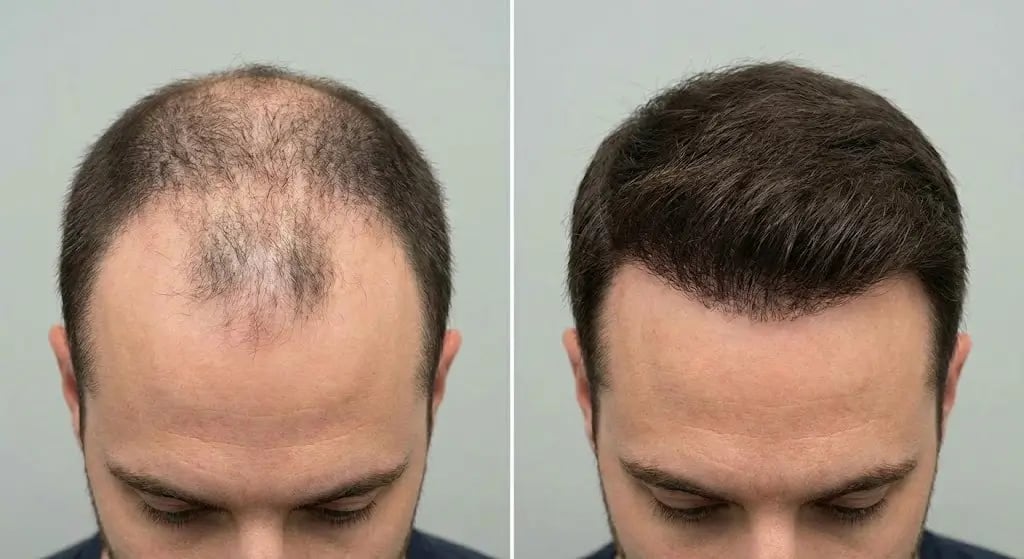
Expect healing, follow-up care, and gradual regrowth after a hair transplant for Dihydrotestosterone Hair Loss. The scalp receives bandaging and medication to reduce infection risk and promote recovery. Mild redness, swelling, or discomfort fades within a week. Hair growth begins within a few months, with full results developing over 12 to 18 months. Transplanted follicles are DHT-resistant and grow permanently. The Hair Transplant Before and After process includes precise implantation, natural density, and minimal scarring.

Just an example image
When to See a Dermatologist for Hair Loss due to DHT
See a dermatologist for hair loss due to DHT when excessive shedding exceeds 150 hairs per day or when clumps appear during combing or washing. Progressive thinning, such as a receding hairline shaped like an “M” or visible thinning at the crown forming a “U” pattern, signals DHT-related hair loss that requires medical attention. Hair miniaturization, where thick strands become short and fine, shows follicle damage due to DHT. Sudden or patchy hair loss suggests a possible underlying medical condition. Redness, itching, inflammation, or sores on the scalp point to scalp disease needing evaluation. A strong family history of pattern baldness combined with early loss increases the need for professional assessment. Hormonal symptoms such as irregular periods or severe acne indicate possible endocrine imbalances contributing to the hair loss. A dermatologist performs clinical evaluations such as trichoscopy, hair pull test, and diagnostic lab tests to confirm androgenetic alopecia. Prescription treatments such as finasteride block DHT and stabilize hair when started early. Severe cases require a Hair Transplant Consultation to restore DHT-resistant follicles and improve appearance.
How is DHT Hair Loss Diagnosed?
DHT hair loss is diagnosed by clinical examination, hormone testing, scalp analysis, and family history assessment. A dermatologist checks the scalp for redness, inflammation, scarring, and specific thinning patterns on the crown or hairline. Pull tests assess active shedding, while card tests evaluate new hair growth. Blood tests measure serum DHT levels and related hormones, such as total and free testosterone, to confirm hormonal imbalance. Additional tests assess thyroid function and iron status to exclude non-hormonal causes. A scalp biopsy is performed to analyze follicle structure under a microscope. Light microscopy identifies hair shaft defects. Genetic risk is assessed through questions about the family history of androgenetic alopecia.
What Are the Best Ways to Block DHT Naturally?
The best ways to block DHT naturally are listed below.
- Saw Palmetto: Take saw palmetto as a supplement or apply topical products containing saw palmetto extract. Saw palmetto helps block DHT by inhibiting the 5-alpha-reductase enzyme that converts testosterone into DHT. Hair growth improvement begins after 4 to 6 months of use. Saw palmetto was shown to modestly inhibit 5-alpha-reductase and improve hair count with minimal side effects, according to the research titled “Do DHT Blockers Work? | All Types Ranked By Evidence” by Aventus Clinic in 2025.
- Pumpkin Seed Oil: Consume pumpkin seed oil in capsule form or apply it directly to the scalp. Pumpkin seed oil blocks DHT by delivering beta-sitosterol and cucurbitin, which suppress 5-alpha-reductase activity. Hair growth becomes noticeable after around 24 weeks of consistent use. A 40% increase in hair count was recorded after 24 weeks of supplementation, according to the research titled “Effect of Pumpkin Seed Oil on Hair Growth in Men with Androgenetic Alopecia: A Randomized, Double-Blind, Placebo-Controlled Trial” by Cho et al. in 2014.
- Green Tea Extract (EGCG): Drink green tea regularly or use topical treatments that contain EGCG extract. EGCG helps reduce DHT activity by inhibiting 5-alpha-reductase and improving scalp circulation. Visible hair growth results are seen within 4 to 6 months. EGCG was found to competitively bind androgen receptors and inhibit 5-alpha-reductase, supporting hair growth, according to the research titled “An Overview of Herbal Alternatives in Androgenetic Alopecia” by Siddiqui et al. in 2011.
- Rosemary Oil: Apply diluted rosemary essential oil to the scalp several times a week. Rosemary oil supports hair growth by improving blood circulation and limiting 5-alpha-reductase activity. Hair regrowth takes 3 to 6 months. Rosemary oil increased blood flow and improved follicle health, according to the research titled “Herbal Remedies for Hair Loss: A Review of Efficacy and Safety” by Sadighha et al. in 2025.
- Grape Seed Extract: Take grape seed extract orally or use topical treatments. Grape seed extract blocks DHT by delivering antioxidants and polyphenols that inhibit 5-alpha-reductase and reduce inflammation. Hair growth improvements are seen after several months. Grape seed extract demonstrated DHT-blocking and antioxidant effects, according to the research titled “An Overview of Herbal Alternatives in Androgenetic Alopecia” by Sadighha et al. in 2025.
- Licorice Root: Use licorice root extract in supplement or topical form. Licorice root limits DHT activity by inhibiting 5-alpha-reductase and lowering inflammation on the scalp. Results appear within 3 to 6 months. Licorice root provided 5-alpha-reductase inhibition and anti-inflammatory support for hair health, according to the research titled “An Overview of Herbal Alternatives in Androgenetic Alopecia” by Sharma et al. in 2019.
How Long Does It Take for Hair to Regrow Naturally After DHT Hair Loss?
It takes 3 to 12 months for hair to regrow naturally after DHT hair loss, depending on the severity of follicle miniaturization and treatment consistency. Hair grows at a rate of 0.5 inches per month, but regrowth slows after age 30. Early signs of DHT hair regrowth appear within 3 to 6 months when using DHT-blocking treatments such as finasteride or natural supplements, while full density develops between 6 and 12 months. Regrowth takes longer than 6 months and extends past 12 months with limited improvement without intervention. Over 90% of patients using finasteride experienced either hair regrowth or reduced loss, according to the research titled “Finasteride Results Timeline: What to Expect” by Knox Beasley, MD, in 2021 and updated in 2025.
How to Prevent Dihydrotestosterone Hair Loss
To prevent Dihydrotestosterone hair loss, follow the seven steps listed below.
- Inhibit DHT production with medication. Use finasteride, a 5-alpha-reductase inhibitor, to block the conversion of testosterone into DHT and prevent follicle shrinkage. The treatment reduces DHT levels in the scalp. A clinical study showed reduced scalp DHT concentration and visible improvement in hair density, according to the research titled “Efficacy of Topical Finasteride” by Goren et al. in 2021.
- Apply topical treatments. Use minoxidil directly on the scalp to stimulate follicles and improve blood flow, which supports regrowth even in DHT-rich environments. The mechanism improves nutrient delivery to affected follicles, according to the research titled “Does Minoxidil Work for Everyone?” by TagVault in 2023.
- Incorporate natural DHT blockers in the diet. Consume green tea, pumpkin seeds, tomatoes, and soybeans, which contain natural DHT inhibitors like EGCG and beta-sitosterol. The compounds help block 5-alpha-reductase activity and protect follicles from DHT impact, as noted in the research titled “Does Pumpkin Seed Oil Block DHT?” by Van De Walle in 2020.
- Use DHT-resistant shampoos and exfoliate the scalp. Choose shampoos formulated to counter DHT effects and exfoliate the scalp regularly to unclog follicles and reduce sebum buildup. The actions maintain scalp health and improve absorption of active ingredients, according to the research titled “Can Shampoo Block DHT Naturally?” by Dr. Paul’s Advanced Hair and Skin Solution in 2020.
- Perform regular scalp massages. Massage the scalp daily to improve circulation and nutrient delivery to follicles while reducing stress-related DHT elevation. It supports follicle resilience, as described in the research titled “Does Scalp Massage Promote Hair Growth?” by TagVault in 2023.
- Manage stress and maintain a healthy lifestyle. Practice relaxation techniques and eat a balanced diet to regulate hormones and lower DHT production. Lifestyle changes influence scalp condition and hair retention, according to the research titled “How to Stop Hair Loss Naturally” by TagVault in 2023.
- Consult a healthcare professional before combining treatments. Seek expert guidance before using multiple therapies such as finasteride and minoxidil to ensure safe use and optimized results. The approach prevents side effects and improves treatment coordination, as stated in the research titled “Does Minoxidil Work for Everyone?” by TagVaultz in 2023.
How Effective Are DHT Shampoos in Preventing Hair Loss?
DHT shampoos are moderately effective in preventing hair loss when used early in androgenetic alopecia. Prescription formulas containing ketoconazole help reduce DHT activity at the scalp and support hair retention. The products are most effective when paired with treatments like finasteride for maintaining existing hair. Improvement is observed within 3 to 6 months, with optimal results after one to two years of continued use.
Over-the-counter DHT shampoos (with saw palmetto or caffeine) offer mild support in reducing hair shedding, but clinical evidence remains limited. The shampoos do not regrow lost hair, but delay progression when used consistently.
DHT shampoos are safe, but users must consider potential DHT shampoo side effects, including scalp irritation, dryness, itching, and altered hair texture. The reactions vary depending on scalp sensitivity or product ingredients. Discontinue if side effects become severe.