

Trazodone is an antidepressant commonly prescribed for depression, anxiety, and sometimes sleep disorders due to its mood-stabilizing and sedative effects. While generally well tolerated, some patients experience trazodone hair loss, which is considered a rare side effect. This form of hair loss occurs because trazodone can disrupt the hair growth cycle, possibly through hormonal changes or stress responses triggered by the medication.
Understanding the connection between trazodone and hair loss helps in monitoring symptoms and managing expectations for patients taking this medication.
How Common Is Hair Loss with Trazodone Medicine?
Hair loss caused by Trazodone is considered an uncommon but possible side effect. Unlike more frequent adverse reactions such as drowsiness, dizziness, or dry mouth, shedding of hair occurs in a relatively small percentage of patients.
Clinical reports and post-marketing surveillance suggest that trazodone hair loss affects fewer than 1–2% of users, making it a rare outcome compared to other antidepressant-related side effects, and is generally categorized as a type of hair loss due to medication.
Why Is Hair Loss a Side Effect of Trazodone (Trazodone)?
Trazodone alters neurotransmitter balance, particularly serotonin regulation, which can indirectly affect hormonal pathways and stress responses involved in the hair growth cycle. This disruption may trigger a condition known as telogen effluvium, where more hair follicles than usual shift into the resting phase, leading to noticeable shedding.
A 2018 case report published in the Journal of Clinical Psychopharmacology documented instances of trazodone side effects hair loss, showing that the medication can contribute to diffuse thinning in susceptible individuals. While most cases are temporary and resolve after dose adjustment or discontinuation, they can still be distressing for patients.
Does Trazodone Make Your Hair Fall Out?
Yes, Trazodone can cause hair loss in some patients, though it is an uncommon side effect. Hair shedding typically occurs gradually and is usually reversible once the medication is adjusted or discontinued.
How Does Trazodone Cause Hair Loss?
Trazodone can disrupt the normal hair growth cycle, potentially causing hair follicles to enter the resting (telogen) phase prematurely, which leads to increased shedding. This effect may be related to hormonal changes or stress responses triggered by the medication, affecting hair follicle function.
A 2017 case report in the Journal of Clinical Psychopharmacology noted diffuse hair shedding in patients after starting Trazodone, supporting its potential role in medication-related hair loss.
Hair loss due to Trazodone typically develops gradually over several weeks to a few months after starting the medication, depending on individual sensitivity and dosage.
How Does the HPA Axis Respond to Trazodone and Contribute to Hair Follicle Miniaturization?
Trazodone, like other SSRIs, can influence the HPA (hypothalamic-pituitary-adrenal) axis by altering cortisol regulation, which may contribute to hair follicle miniaturization over time. Disruptions in cortisol levels can create stress on hair follicles, potentially shortening the anagen (growth) phase and promoting early entry into the telogen (resting) phase.
A 2019 study published in Psychoneuroendocrinology highlighted that SSRIs can modulate HPA axis activity, linking it to subtle changes in hair follicle cycling and shedding.
How Does Trazodone Cause Hair Loss in People with Depression?
Hair loss is considered a direct side effect when taking trazodone, and it may appear more prominently in people with depression who are already vulnerable to shedding due to stress and hormonal imbalance. Trazodone can intensify these effects by altering serotonin and cortisol activity, which are closely tied to the hair growth cycle.
A 2016 study in the Journal of Affective Disorders reported that patients with depression treated with serotonergic antidepressants, including trazodone, had a higher risk of experiencing diffuse telogen effluvium. This shows a clear relationship between trazodone, depression, and hair shedding, often categorized as hair loss due to depression.
Why Does Trazodone Cause Hair Thinning in Depressed Patients?
Trazodone can cause hair thinning in depressed patients because it may trigger telogen effluvium, a condition in which hair follicles prematurely enter the resting phase of the growth cycle. This leads to an increased rate of shedding, often visible as diffuse thinning across the scalp rather than patchy bald spots. The combination of underlying depression, which already heightens stress-related hormonal changes, and trazodone’s pharmacological effects can amplify this process, making thinning hair a noticeable side effect for some patients.
How Does Trazodone Potentially Trigger Telogen Effluvium?
Trazodone can potentially trigger telogen effluvium by disrupting the natural balance of the hair growth cycle, pushing a larger number of follicles into the resting (telogen) phase prematurely. This disruption is often linked to the drug’s influence on serotonin and cortisol regulation, which play roles in stress and hormonal responses that affect follicle stability.
A 2020 study in the International Journal of Trichology reported that medication-induced telogen effluvium, including cases linked to antidepressants, is one of the most common forms of drug-related hair shedding.
Where on the Scalp Is Hair Loss from Trazodone Most Noticeable in Anxiety Patients?
Hair loss from trazodone in anxiety patients is most commonly noticeable along the frontal hairline and crown of the scalp, where stress-related shedding tends to concentrate. Anxiety can elevate cortisol levels, increasing scalp sensitivity and making these regions more prone to follicle weakening.
A 2017 study in the Journal of Affective Disorders found that individuals with chronic anxiety showed higher rates of diffuse thinning, especially in stress-sensitive scalp zones. This suggests that trazodone-related shedding in anxiety patients is not only medication-driven but also amplified by the physiological stress responses associated with hair loss due to anxiety.
How Does Neuroinflammation Contribute to Hair Loss in Patients Taking Trazodone?
While inflammation in the nervous system can affect overall stress and hormonal balance, studies like the 2019 review in Frontiers in Neuroscience indicate that hair follicle shedding from trazodone is more likely linked to alterations in the hair growth cycle rather than neuroinflammatory pathways. Neuroinflammation is a recognized factor in conditions such as depression, but there is no direct evidence that trazodone-induced neuroinflammation directly causes hair loss.
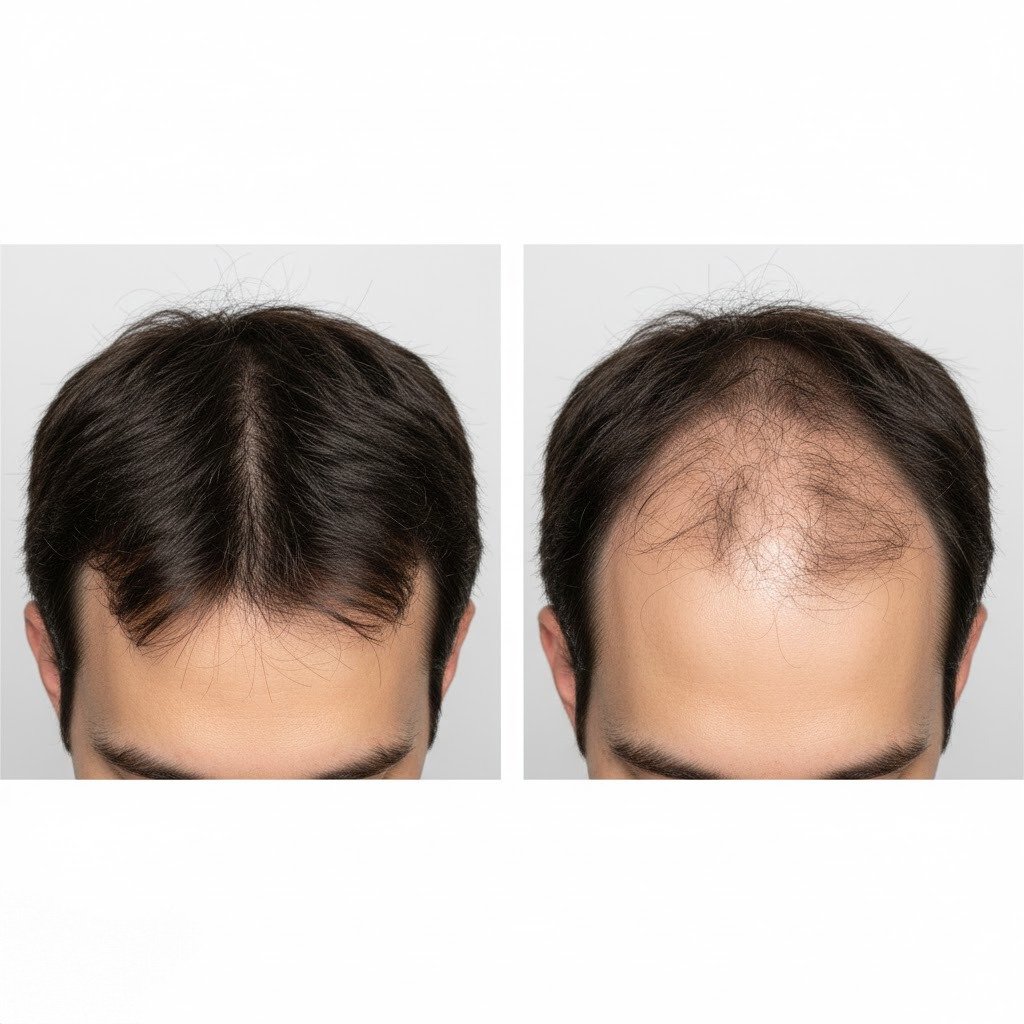
What Does Hair Look Like Before and After Trazodone Hair Loss?
Hair affected by trazodone hair loss typically shows diffuse thinning across the scalp rather than complete bald patches. Patients may notice reduced hair density, increased shedding, and a general weakening of hair strands. The severity varies depending on individual susceptibility and duration of trazodone use.
How to Stop Hair Loss from Trazodone
For an effective way to stop hair loss from Trazodone, each step must be followed by consulting a doctor in profession:
- Consult Your Doctor: Always discuss hair shedding with your healthcare provider before making any changes to your trazodone dosage. Adjustments should be done under medical supervision.
- Consider Medication Alternatives: Switching to another antidepressant may help reverse hair loss if trazodone is identified as the cause. Effectiveness varies between patients, and improvement is usually noticeable within 2–6 months.
- Optimize Nutrition: Ensure adequate intake of protein, iron, zinc, and vitamins like biotin, which support hair growth and reduce shedding.
- Topical Treatments: Minoxidil can be used to stimulate hair regrowth; success rates vary, and results may appear after 3–6 months of consistent use.
- Manage Stress: Incorporating stress-reduction techniques such as mindfulness, meditation, or yoga can help mitigate hair loss related to hormonal disruptions.
- Hair Transplant Consideration: For permanent hair loss due to trazodone, hair transplant surgery may be an option once hair loss stabilizes. Vera Clinic in Turkey provides high-quality hair transplants with reliable outcomes.
Early intervention improves success, and combining medical, nutritional, and topical strategies usually gives the best results. Patients can see improvements in 2 to 4 months.
How Effective Is a Hair Transplant for Treating Permanent Hair Loss due to Trazodone?
A hair transplant can be an effective solution for permanent hair loss caused by trazodone, particularly after other treatments have been explored. However, it’s essential to ensure that the hair loss has stabilized before considering this option.
Hair transplant procedures, such as Follicular Unit Extraction (FUE), involve relocating healthy hair follicles from areas with dense growth to thinning or bald regions. This method is commonly used for androgenetic alopecia but can also address hair loss from other causes, including medication-induced shedding, once the underlying issue is resolved.
In Turkey, hair transplant procedures are renowned for their quality and affordability. Vera Clinic offers advanced techniques and experienced surgeons, making Turkey a popular destination for individuals seeking hair restoration.
What to Expect Before and After a Hair Transplant for Trazodone Hair Loss?
The hair transplant process will start with a consultation with a hair restoration specialist to evaluate the extent of hair loss and overall suitability for a transplant. After the hair transplant surgery, patients will see mild swelling in the recipient and the donor area. Before the new hair grows, patients may experience shock loss. Patients can see their hair transplant before and after results after 1 year.
When to See a Dermatologist for Hair Loss due to Trazodone
Severe or sudden hair shedding while taking Trazodone warrants a dermatology consultation. If hair loss is patchy, accompanied by scalp irritation, itching, or inflammation, or persists beyond a few months despite stopping the medication, medical evaluation is recommended.
A dermatologist can diagnose Trazodone hair loss through a combination of medical history, scalp examination, and, if necessary, laboratory tests to rule out other causes.
Which Antidepressants Are Less Likely to Cause Hair Loss?
Some antidepressants are less likely to disrupt the hair cycle.
- Mirtazapine: An atypical antidepressant, generally low risk for hair thinning compared to SSRIs or SNRIs.
- Bupropion: Often prescribed for depression and smoking cessation; hair loss is rarely reported.
- Agomelatine: A melatonergic antidepressant with minimal evidence of causing hair shedding.
- Tianeptine: Considered less likely to trigger hair loss, though data is limited.
- Reboxetine: A selective norepinephrine reuptake inhibitor with a low incidence of hair-related side effects.
These medications are commonly referenced in discussions of list of antidepressants that cause hair loss to highlight which options are less likely to contribute to hair thinning.
Which Other Types of SARI Antidepressants Can Cause Hair Loss?
Some antidepressants in the type of SARI can cause hair loss.
- Nefazodone: Similar to Trazodone in its serotonergic and adrenergic activity; hair loss is uncommon but has been reported in a few cases.
- Vilazodone: Primarily used for depression and anxiety; very few reports link it to hair thinning.
- Vortioxetine: Generally low risk, though anecdotal cases suggest mild hair shedding may occur.
Unlike hair loss due to depression itself, which is often diffuse and linked to stress or hormonal changes, these SARI antidepressants can trigger hair shedding as a rare medication side effect rather than a direct consequence of depressive symptoms.
Can Switching to other Types of Antidepressants Stop Trazodone Hair Loss?
Yes, switching to another antidepressant can sometimes reverse hair loss caused by Trazodone, especially if the medication is identified as the primary trigger. Hair regrowth usually begins within a few months after discontinuation or substitution, although results vary depending on individual hair growth cycles and overall health. Early intervention and consulting a healthcare provider can improve the effectiveness of this approach.
How to Prevent Hair Loss when Taking Trazodone
There are ways to prevent hair loss while taking Trazodone for antidepressant medication.
- Monitor Your Hair Health Regularly: Track any signs of thinning or shedding to catch early changes.
- Maintain a Balanced Diet: Ensure adequate intake of protein, iron, zinc, and vitamins like biotin, which support healthy hair growth.
- Manage Stress Levels: Stress can amplify medication-related hair loss, so practices like meditation, yoga, or therapy may help.
- Avoid Harsh Hair Treatments: Limit chemical treatments, tight hairstyles, and excessive heat styling that can worsen shedding.
- Consult Your Doctor Promptly: If hair loss progresses, speak with your healthcare provider to discuss dosage adjustments or alternative medications.
A 2017 review in Clinical, Cosmetic and Investigational Dermatology highlights that early monitoring and lifestyle modifications can help reduce the severity of antidepressant-related hair loss.