

Radiation Hair Loss is the hair loss that occurs as a direct result of exposure to radiation during cancer treatment. Hair loss is a common side effect of several cancer therapies, and it is linked to chemotherapy and radiation. Hair loss is not caused directly by the disease, but by the treatments involved, such as radiation therapy, which disrupts hair follicle function. The connection between cancer and hair loss comes from the aggressive nature of treatments designed to target rapidly dividing cells, which include cancer cells and healthy cells, such as the cells in hair follicles.
Radiation therapy hair loss is a type of localized hair loss that results from focused radiation exposure to a specific body area. Hair loss after radiation occurs only in the part of the body receiving the radiation dose, compared to systemic treatments. For instance, radiation aimed at the scalp or head area for brain tumors leads to partial or complete hair loss in that region. Hair loss radiotherapy effects vary depending on radiation dose, treatment frequency, and the exact location being treated. Radiation hair loss falls under the category of treatment-induced alopecia, and it is classified as a direct outcome of follicular damage. The relationship between radiation and hair loss is based on the way ionizing radiation affects healthy skin cells, causing temporary or permanent hair follicle damage depending on exposure levels.
Radiation causes hair loss when directed at areas of the body where hair grows. The effect occurs because radiation damages the cells responsible for hair production, particularly in the treated zone. For example, patients receiving radiation to the scalp for brain tumors experience partial or complete hair loss in the exposed area.
How Does Radiation Cause Hair Loss?
Radiation causes hair loss by damaging the cells within hair follicles in the targeted area of treatment. Hair follicles are among the fastest-growing cells in the body and are highly sensitive to radiation exposure. High-energy rays are directed at cancerous tissues to destroy abnormal cells during radiation therapy. However, the process affects surrounding healthy tissue, including the skin and follicles. The radiation disrupts the growth cycle of hair by impairing follicular cells’ ability to divide and regenerate. Hair shedding begins within a few weeks of starting treatment, leading to visible thinning or complete loss in the treated region. The effect is known as radiation therapy hair loss, and it occurs in areas directly exposed to the radiation beam.
Radiation hair loss occurs when the follicles sustain enough cellular damage to halt their function entirely. Follicles tend to be temporarily or permanently destroyed depending on the dose and duration of treatment. Higher doses destroy the stem cells inside follicles, which prevents regrowth even after treatment ends. Hair grows back, but with a change in texture or color in milder cases. Hair loss after radiation appears most commonly on the scalp, but it is possible to occur anywhere on the body where radiation is applied. The severity and permanence depend on several factors such as radiation dose, frequency, and the area treated.
Is Radiation Hair Loss Permanent? No, Radiation hair loss is not always permanent, but permanence depends on several treatment-related factors (radiation dose, duration, and the targeted area). Low to moderate doses of radiation result in temporary hair loss, with regrowth beginning a few weeks or months after treatment ends. High-dose radiation damages or destroys the stem cells within hair follicles, leading to permanent loss in the exposed area. Changes in texture or color appear due to the follicle’s altered structure when hair grows back. For example, scalp radiation for brain tumors presents a higher risk of permanent hair loss compared to lower doses used for superficial skin cancers. Individual response to radiation and treatment planning influences the outcome, and dermatologists or oncologists assess recovery based on these factors.
What Radiation Dose Causes Permanent Hair Loss?
A radiation dose of approximately 40 Gray units (Gy) or higher to the scalp area causes permanent hair loss. The damage to hair follicle stem cells becomes irreversible, preventing the follicles from re-entering the growth phase even after treatment ends. Radiation exposure at lower doses, such as 20 to 30 Gy, leads to temporary hair loss in most cases, with regrowth occurring within a few months as follicles recover and resume function.
The risk of permanent hair loss increases with higher cumulative doses, repeated sessions to the same area, and minimal spacing between treatments. For example, patients receiving radiation for brain tumors are more likely to experience permanent hair loss due to direct exposure of the scalp to concentrated, high-dose radiation. The follicles exposed to 40 Gy or more lose their ability to regenerate, resulting in lasting baldness or patchy hair regrowth. Treatment planning considers the risk, and oncologists adjust dose levels to limit long-term effects when possible without compromising cancer control.
A study titled “Scalp dose analysis for transient and permanent alopecia following conventional cranial irradiation using Image Guided Radiotherapy (IGRT)” published in PLOS ONE on October 10, 2024, by Bongkot Jia-Mahasap, Wannapha Nobnop, Patumrat Sripan, and colleagues, provides clinical evidence supporting the threshold for permanent hair loss due to radiation. The researchers found that a D2 (dose received by the hottest 2% of a defined volume) of approximately 36.81 Gy to the entire scalp was an indicator of permanent alopecia. Localized hair-loss areas showed thresholds as high as 50.00 Gy. The findings align with the understanding that radiation doses around or above 40 Gy irreversibly damage hair follicle stem cells, preventing regrowth. The study used Computed Tomography (CT)-based scalp mapping and automated contouring to assess follicular exposure and concluded that careful dose planning helps minimize long-term alopecia without compromising tumor control.
Why Do You Lose Your Hair with Radiotherapy?
You lose your hair with radiotherapy because the radiation damages hair follicle cells in the treated area, disrupting their ability to grow hair. Radiotherapy causes hair loss when the treatment area includes regions with active hair follicles, such as the scalp or face. The energy from radiation damages the cells in the follicle responsible for producing hair, leading to shedding. Hair loss during radiation treatment begins within two to three weeks. Hair loss after radiation continues for several more weeks, depending on the treatment duration and intensity. The effect is localized to the area exposed to radiation and does not affect other parts of the body in most cases.
Hair loss is common among cancer patients receiving radiotherapy, with 60% of patients experiencing some degree of shedding in the treated zone. It does not always occur, as the risk depends on the body part receiving radiation, the total dose, and the fraction schedule. The chance of hair loss after radiation is equal between men and women when the treatment area is the same. Children between the ages of 5 and 14 are more prone to long-term or permanent hair loss because their follicles are actively developing. Adults between 30 and 60 show varied outcomes, while patients over 70 face slower regrowth due to reduced follicle activity. Radiation hair loss affects each group differently, but the follicle damage mechanism remains consistent across ages.
Why Is Hair Loss a Side Effect of Radiation?
Hair loss is a side effect of radiation because high-energy beams used during treatment damage the rapidly dividing cells within hair follicles. Radiation therapy targets and destroys cancerous cells, but the surrounding healthy tissues, including the scalp and follicles, absorb a portion of the energy. The follicles, which contain some of the fastest-dividing cells in the body, lose their ability to regenerate when exposed to radiation, leading to shedding or baldness in the treated area. The severity of hair loss depends on the radiation dose, frequency, and location of exposure. The effect is known as radiation therapy side effects hair loss, and occurs in areas directly within the radiation field.
Hair loss becomes visible within weeks of starting treatment and is influenced by whether the follicular stem cells survive the radiation dose. Follicles recover after therapy ends in lower-dose treatments. Higher doses (above 40 Gy) destroy regenerative capacity and result in permanent hair loss. A study titled “Scalp dose analysis for transient and permanent alopecia following conventional cranial irradiation using Image Guided Radiotherapy (IGRT)” by Bongkot Jia-Mahasap et al., published in PLOS ONE on October 10, 2024, confirmed that radiation-induced hair loss is strongly associated with dose levels, showing that doses above 36.81 Gy lead to lasting alopecia.
Does Brain Radiation Cause Hair Loss?
Yes, brain radiation causes hair loss in the areas where the radiation beam passes through the scalp. The loss occurs due to damage to the hair follicles from the energy delivered during treatment. The extent depends on several factors such as radiation dose, the number of treatment sessions, and whether the area includes the hairline or the crown. High-dose treatments are more likely to result in permanent hair loss, while lower doses lead to temporary shedding.
Hair begins to fall out within two to three weeks after the start of hair loss brain radiation therapy. Regrowth timelines vary, with thinner or differently textured hair sometimes returning within several months. The risk of permanent follicle damage increases in cases of stereotactic radiosurgery or whole-brain radiation. Physicians track scalp response throughout therapy to assess whether hair regrows or if long-term loss has occurred. Whole-brain radiotherapy leads to alopecia due to apoptosis in hair follicle matrix cells, with permanent hair loss occurring at doses exceeding 43 Gy in fractionated regimens. The information is from the study titled “Radiation Induced Alopecia: An Under-Appreciated Side Effect of Whole Brain Radiotherapy and Strategies to Ameliorate It” by Irfan Ahmad, Kabir Sardana, Kundan Singh Chufal, and Chandi Prasad Bhatt, published on March 16, 2018.
How Can Radiation Contribute to Hair Fall After Surgery?
Radiation can contribute to hair fall after surgery by damaging hair follicle cells in the treated area, disrupting their ability to grow new hair. The energy from radiation damages the cells responsible for hair growth, leading to thinning or complete hair loss in the treated region. The severity and duration of the hair loss depend on the total dose, frequency of exposure, and location of the radiation field. Hair strands in the growth phase are most vulnerable, and regrowth depends on whether the follicles remain intact after treatment.
Radiation contributes to hair fall after surgery when the treatment follows procedures involving the brain or head. Scalp exposure is unavoidable due to the need to target deep tissues or surgical margins near the surface during brain radiation. The surrounding skin and follicles absorb radiation energy, increasing the risk of temporary or permanent hair loss in the affected zones. The response is expected after craniotomies, followed by whole-brain or localized stereotactic radiation of the scalp, when protective barriers around the scalp are limited. Adolescent survivors of glioblastoma multiforme (an aggressive and fast-growing type of brain tumor) sufferers permanent hair loss after radiation therapy due to follicular damage and vascular compromise, according to the case study titled Severe Unilateral Alopecia in a Long-Term Surviving Male Adolescent Glioblastoma Multiforme Patient by Ling Xiong, Lan Mao, Yuesi Qin, Xia Xiong, and Yongqiong Deng, published on June 6, 2025.
How long after radiation does hair fall out? Hair usually begins to fall out between 2 and 3 weeks after starting radiation therapy. The timing depends on radiation dose, treatment area, and how regularly sessions are given. Head or brain radiation directly exposes the scalp, which results in more noticeable hair loss. Strands tend to shed gradually rather than all at once, beginning with increased hair on pillows, combs, or in the shower. The affected area remains smooth for several weeks after treatment, depending on whether the follicles have sustained permanent damage.
Which Tumor Radiation Treatments Are Most Likely to Cause Hair Loss?
The tumor radiation treatments that are most likely to cause hair loss are listed below.
- Scalp Sarcoma Radiation: Direct radiation to treat tumors of the scalp surface (50 – 70 Gy) leads to immediate hair loss in the affected zone. High-energy exposure destroys follicular stem cells, making permanent alopecia more likely in the treated region. The connection was confirmed in the study “Practical Guideline for Prevention of Patchy Hair Loss following CyberKnife Stereotactic Radiosurgery for Calvarial or Scalp Tumors” by Park DJ, published on September 12, 2023.
- Brain Tumor Radiation Therapy: Radiation treatment for brain tumors (50 – 60 Gray units) delivers high-dose beams directly to the scalp and skull. The exposure causes localized follicular damage, resulting in partial or permanent baldness in the targeted area, depending on the cumulative dose. The findings are supported by the study “Scalp dose analysis for transient and permanent alopecia following conventional cranial irradiation using Image Guided Radiotherapy (IGRT)” by Bongkot Jia-Mahasap, published on October 10, 2024.
- Skull Base Tumor Radiation: Radiation for skull base tumors (Chordomas, Meningiomas with 50 – 70 Gy) involves deep tissue targeting near the brainstem and cranial nerves. Beams enter through the upper scalp, damaging surrounding follicles and producing symmetrical or total hair loss in the entry field. The relationship between scalp exposure and hair loss is according to the study “Assessment and Treatment Outcomes of Persistent Radiation-Induced Alopecia in Patients With Cancer” by Gregory S. Phillips, published on August 5, 2020.
- Nasopharyngeal Carcinoma Radiation: Treatment for tumors in the upper throat and nasal passages (60 – 70 Gy) involves focused beams through the mid-face and skull base. Hair loss occurs across the top and sides of the scalp when the treatment field includes active follicles within the radiation path. Radiation targeting scalp tumors causes localized alopecia. A study reports that biologically effective doses (BED) above 60 Gy increase the likelihood of patchy hair loss. The findings are from the study “Practical Guideline for Prevention of Patchy Hair Loss following CyberKnife Stereotactic Radiosurgery for Calvarial or Scalp Tumors” by Park DJ, published on September 12, 2023.
- Head and Neck Cancer Radiation: Radiation for cancers of the mouth, throat, or larynx (60 – 70 Gy) targets areas surrounding the scalp and jawline. The beams affect nearby follicles, producing patchy hair loss along the neck, sideburns, and back of the head. Radiation therapy for head and neck tumors results in patchy or permanent hair loss in the facial and neck regions. The extent of hair loss depends on beam direction, dose intensity, and repeated exposure. The findings are detailed in the article “Hair loss and radiotherapy” by Cancer Research UK, updated in 2024.
How Long Does It Take for Hair to Fall Out After Radiation Therapy?
Hair begins to fall out approximately 2 to 3 weeks after starting radiation therapy when the scalp or hair-bearing areas are exposed. Clinical observation shows that up to 85% of patients receiving localized radiation to hair-bearing regions develop noticeable hair thinning or complete hair loss by the fourth or fifth week after treatment. The shedding results from repeated follicular injury caused by repeated radiation doses, which damage rapidly dividing hair matrix cells. The effect is known as radiation-induced alopecia and is limited to areas directly within the treatment field. The extent and speed of hair loss depend on the total dose, session frequency, and whether the follicles retain the ability to recover post-treatment. Radiation disrupts the hair growth cycle by damaging rapidly dividing hair matrix cells, which leads to progressive shedding and visible thinning around the fourth or fifth week of treatment. These findings were detailed in the study “Coping with Hair Loss: Dealing with Radiation-Induced Alopecia”, by Andrei Popov, published on February 21, 2024.
What Are the Radiation Hair Loss Treatments?
The radiation hair loss treatments are listed below.
- Minoxidil (Topical Solution): Minoxidil is used in the treatment of hair loss to stimulate blood flow to the scalp and reactivate partially damaged follicles. It helps support regrowth when the hair loss is temporary and the follicle stem cells remain intact. A study shows that 82% of patients with radiation-induced alopecia showed improvement after treatment with topical minoxidil 5% within 61 weeks. These findings were reported in the study “Assessment and Treatment Outcomes of Persistent Radiation-Induced Alopecia in Patients With Cancer”, by Gregory S. Phillips, Morgan E. Freret, Danielle Novetsky Friedman, and colleagues. The study was published in JAMA Dermatology on September 1, 2020.
- Platelet-Rich Plasma (PRP) Therapy: PRP therapy involves injecting the patient’s plasma into the scalp to stimulate healing and follicular regeneration after radiation. It delivers growth factors (Platelet-Derived Growth Factor, Vascular Endothelial Growth Factor, Epidermal Growth Factor) directly to the damaged tissue and is considered effective in supporting partial regrowth. The treatment for hair to grow is useful when radiation exposure is under 40 Gy, and results appear after three to four sessions spaced one month apart.
- Hair Transplant Surgery: Hair transplant surgery is recommended as a cancer hair loss solution when the radiation dose exceeds 40 Gy and follicles are permanently destroyed. The procedure transfers healthy follicles from unaffected areas to the radiation-damaged zone. Transplanted hair grows permanently, with full results seen within 9 to 12 months post-surgery.
- Scalp Cooling Systems (Preventive Use): Scalp cooling systems are used during radiation to reduce blood flow and limit follicular exposure to heat and cellular damage. The method lowers the scalp temperature to preserve follicular integrity before radiation-induced damage occurs. The approach is preventive and effective in specific treatment plans (Image-Guided Radiotherapy, Proton Therapy) that allow localized protection.
- Low-Level Laser Therapy (LLLT): Low-Level Laser Therapy works by using red light wavelengths to stimulate follicular repair and reduce inflammation in the scalp. It improves mitochondrial activity in weak follicles after radiation exposure. Studies show partial regrowth in low-dose radiation cases, with improvement in hair density after 12–16 weeks of regular sessions. The article titled “Low level laser therapy and hair regrowth: an evidence-based review” by Mina Zarei and colleagues, published on December 21, 2015, evaluates the effectiveness of Low-Level Laser Therapy (LLLT) for treating various types of alopecia, including male and female pattern hair loss, alopecia areata, and chemotherapy-induced alopecia.
- Corticosteroid Injections: Corticosteroid injections reduce inflammation in the scalp caused by radiation-induced skin reactions, which interfere with follicular recovery. The treatment supports hair regrowth when inflammation is the primary barrier to healing. It is most effective in the early stages and works best when combined with topical Hair Loss Treatment products.
- Nutritional Therapy: Nutritional therapy supports follicular health by correcting deficiencies in zinc, biotin, and iron that impair recovery. Radiation treatments disrupt metabolic balance, and replenishing essential nutrients improves scalp healing and strengthens regrowing strands. The approach is necessary during recovery and complements other medical treatments for hair to grow.
What Are the Best Shampoos for Radiation Hair Loss?
The best shampoos for radiation hair loss are listed below.
- Nioxin Cleanser Shampoo System 2: Nioxin System 2 targets thinning hair by cleansing sebum and follicle-clogging residues. Radiation therapy patients benefit from cleaner scalp conditions that help preserve weak follicles. Its role in hair growth lies in boosting scalp circulation and improving strand resilience. Best Shampoos for Radiation Hair Loss are mild, non-toxic formulas that support healthier hair regrowth, maintain scalp comfort, and reduce further breakage.
- Aveeno Scalp Soothing Oat Milk Blend Shampoo: The Aveeno shampoo uses oat milk and almond oil to calm irritation and dryness caused by radiation. It is helpful for patients needing moisture repair without aggravating the skin barrier. The product restores softness to the scalp and maintains the balance of the scalp during recovery.
- PURA D’OR Original Gold Label Anti-Thinning Shampoo: PURA D’OR combines biotin, nettle extract, and saw palmetto to reduce shedding and promote fuller strands. Its formula supports fragile roots without containing sulfates that disrupt the scalp barrier. PURA D’OR supports growth by strengthening individual shafts and reducing surface-level breakage.
- Alra Mild Conditioning Shampoo: Alra’s gentle formula supports patients undergoing cancer treatments by avoiding parabens, artificial fragrances, and sulfates. It improves comfort for scalps affected by radiation burns or sensitivity. A cleansing agent’s primary function is to remove dirt and contaminants without stripping away natural oils necessary for healing.
- Jason Thin to Thick Extra Volume Shampoo: The shampoo offers plant proteins and biotin to reinforce thinning hair. Radiation therapy patients benefit from its lightweight formula that avoids clogging follicles or inflaming skin. It encourages hair density while protecting delicate scalp tissue.
- Briogeo Be Gentle, Be Kind Aloe + Oat Milk Ultra Soothing Shampoo: The product helps calm reactive skin with oat milk and aloe vera, two ingredients known for relieving inflammation. It is helpful for radiation-affected scalps needing a soothing cleanse. Growth is facilitated by the preservation of the scalp’s environment.
- Vanicream Free & Clear Shampoo: Vanicream avoids dyes, sulfates, parabens, and other common triggers, making it suitable for radiation recovery. It supports sensitive scalps with minimal ingredients that reduce allergic responses. Hair regrowth is accomplished by stabilizing the skin barrier around follicles.
- Eucerin DermoCapillaire Calming Urea Shampoo: Urea and lactate help relieve itch and dryness caused by radiation’s effect on skin hydration. It supports patients by replenishing lost moisture and reducing flaking. The shampoo contributes to hair strength by sustaining scalp pH and hydration.
- Revita High-Performance Hair Stimulating Shampoo: Revita uses caffeine, biotin, and ketoconazole to strengthen follicles and slow thinning. The shampoo supports follicle health and protects the scalp from additional stress during recovery. It plays a role in boosting regrowth through antioxidant protection and anti-inflammatory action.
- Earth Science Olive & Avocado Deep Conditioning Shampoo: The shampoo nourishes fragile hair with plant oils that repair texture and smooth roughness. Radiation patients benefit from its deep conditioning effect that does not weigh down thinning strands. It supports growth by sealing in nutrients.
How Effective Is Hair Transplant for Treating Radiation Permanent Hair Loss?
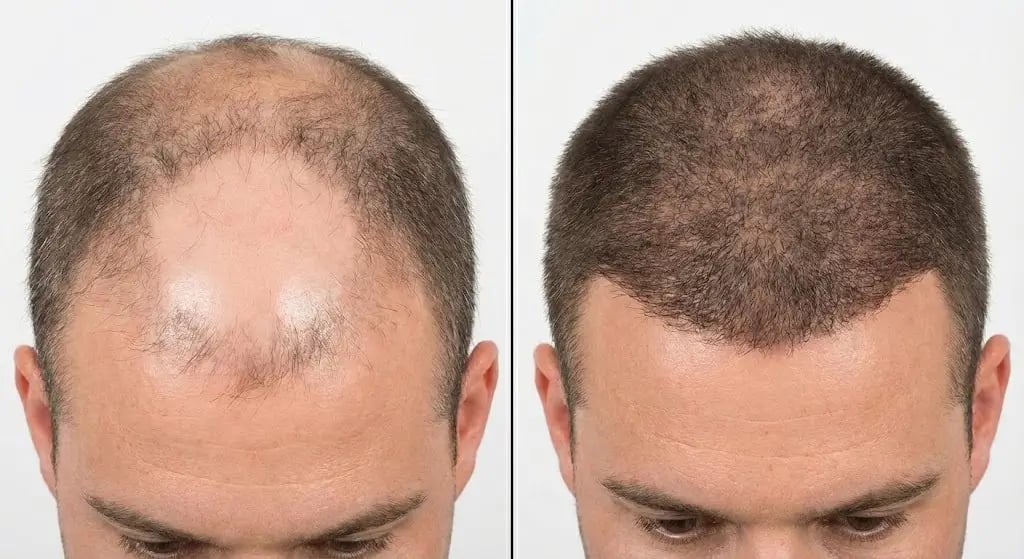
Hair transplant is an effective solution for treating permanent hair loss from radiation once the scalp has fully healed and hair loss has stabilized. Hair transplant is one of the recognized solutions for addressing permanent hair loss caused by radiation therapy. The option becomes viable once medication-induced shedding has stabilized and the scalp has healed fully from treatment. Physicians recommend the procedure when hair follicles no longer regenerate in irradiated areas, and further natural regrowth is no longer expected. Ideal candidates include patients with sufficient donor hair at the back or sides of the scalp, which remains unaffected by radiation exposure.
Hair transplant becomes a practical approach when restoration through non-surgical methods proves ineffective. Clinics in Turkey offer advanced procedures with experienced specialists, lower costs, and internationally accredited medical facilities. The Vera Clinic is among the best hair transplant clinics in Turkey because of its high patient satisfaction rate, use of modern Follicular Unit Extraction (FUE) and Direct Hair Implantation (DHI) techniques, and multilingual medical staff. The procedure helps restore a more natural hairline and density through hair transplant, offering improved appearance and confidence for individuals affected by long-term radiation-related hair loss.
What to Expect Before and After a Hair Transplant for Radiation Therapy Hair Loss
Hair transplant patients undergo a thorough medical evaluation to assess scalp condition, skin integrity, and the extent of follicle damage within the irradiated area before a hair transplant for radiation therapy hair loss. Radiation disrupts the blood supply and damages the skin’s ability to support new follicle growth. Transplant success depends on confirming that the scalp has healed and retains adequate circulation. A dermatologist or hair restoration specialist examines whether donor hair from unaffected areas remains healthy and dense enough for harvesting. Preoperative planning includes mapping the transplant area and setting realistic expectations based on previous hair loss treatment before and after cases involving radiation-related damage.
Initial healing involves scabbing and redness in the transplant zone, followed by shedding of the newly implanted hairs within the first two to four weeks after a hair transplant for radiation therapy hair loss. Regrowth begins between the third and fourth month as follicles enter a new growth cycle. Results of hair transplant before and after treatments for radiation-induced alopecia depend on skin recovery, donor hair quality, and radiation dose history. Long-term outcomes show that when conditions are favorable, transplanted hair grows consistently and restores coverage to previously bare areas. Follow-up care includes medical management of the scalp and comparison of progress with documented hair loss treatment before and after outcomes to ensure satisfactory improvement.
When to See a Dermatologist for Hair Loss due to Radiation
See a dermatologist for hair loss due to radiation when thinning becomes severe, remains persistent, or continues to worsen with time. Warning signs are sudden or patchy bald spots, scalp redness or pain, persistent itching, visible scarring, or bleeding around the follicles. Medical attention is necessary when hair fails to regrow months after treatment completion, or when scalp damage disrupts daily comfort or healing.
A hair transplant consultation becomes relevant after a dermatologist confirms that the hair follicles are permanently damaged and regrowth is no longer possible through non-surgical care. The dermatologist helps determine transplant eligibility by evaluating donor area density, scalp condition, and the stability of hair loss. Seeking expert assessment early allows for a clear diagnosis, medical guidance, and informed planning if surgical restoration is considered.
How is Radiation Hair Loss Diagnosed? Radiation hair loss is diagnosed through a clinical evaluation that considers the treatment history, the location of hair thinning, and the timeline of symptom progression. A dermatologist reviews the areas exposed to radiation and examines the scalp for signs such as redness, peeling, or patchy baldness. Physical inspection is followed by a hair pull test to assess fragility and shedding patterns. A dermatoscope is used in hair transplant consultation cases to examine follicle health and scalp condition more closely. Scalp biopsies are performed to determine whether follicles are active or have been permanently damaged, which helps guide future treatment options.
How long does It take for Hair to Regrow After Radiation?
Hair begins to regrow from 3 to 6 months after radiation therapy ends, depending on the radiation dose and the area treated. Soft vellus hair appears within 2 to 3 months in cases of low doses, with more visible regrowth by the 6-month mark. Regrowth takes up to 12 months for high-dose treatments, and hair follicles fail to return if the follicles are permanently damaged. A study found that 65% of patients experienced partial hair regrowth within 6 months, while 20% showed no significant recovery even after a year, following conventional cranial irradiation. The research is titled “Scalp Dose Analysis for Transient and Permanent Alopecia Following Conventional Cranial Irradiation Using Image Guided Radiotherapy (IGRT)” by Bongkot Jia-Mahasap, Wannapha Nobnop, Patumrat Sripan, Ekkasit Tharavichitkul, Somvilai Chakrabandhu, and colleagues, published on October 10, 2024
The regrowth of hair following radiation treatment depends on the total radiation dose, the duration of therapy, and individual skin sensitivity. Areas like the scalp are more vulnerable when exposed to concentrated radiation beams, leading to slower recovery or permanent loss. Physicians assess progress by observing new follicle activity and checking scalp condition during follow-up visits. Early radiation hair loss regrowth is usually thinner and lighter in color, but regains strength and texture over time if the follicle structures remain intact.
How to Prevent Hair Loss while Undergoing Radiation Therapy
To prevent hair loss while undergoing radiation therapy, follow the nine steps below.
- Discuss Scalp-Sparing Techniques with the Oncologist. Request targeted radiation planning to limit exposure to hair-bearing areas. The adjustment reduces follicle damage without affecting treatment accuracy. Hair-sparing radiation techniques like Volumetric Modulated Arc Therapy (VMAT) and Intensity-Modulated Radiation Therapy (IMRT) minimize follicle damage without compromising treatment efficacy, according to “Hair-sparing whole brain radiotherapy with volumetric arc therapy in patients treated for brain metastases: dosimetric and quality-of-life outcomes” by Gondi V in 2014.
- Protect the Scalp from Heat and Sunlight. Cover the scalp with a soft hat or scarf when outdoors to prevent further stress on sensitive skin. UV exposure increases irritation and slows recovery. UV exposure exacerbates radiation-induced skin damage and delays healing, according to an article entitled “Save Your Scalp from Sun Damage!” by C. William Hanke, MD, MPH, on May 9, 2023.
- Use Gentle, Fragrance-Free Hair Products. Wash hair with mild shampoos that avoid sulfates, alcohol, and artificial dyes. The method helps maintain scalp moisture and reduces breakage. Mild shampoos without sulfates or alcohol reduce irritation and preserve scalp moisture according to “The 9 Best Shampoo For Hair Loss After Radiation (Ranked & Reviewed)” by Revene A & Duong L in 2025.
- Avoid Hair Styling Tools and Harsh Treatments. Skip blow-drying, flat ironing, and chemical treatments like dyes or perms. These practices increase fragility and worsen shedding. Heat and chemical treatments increase fragility and worsen radiation-induced alopecia, according to “Coping with Hair Loss: Dealing with Radiation-Induced Alopecia” by Popov A in 2024.
- Limit Hair Brushing and Tight Hairstyles. Use a wide-tooth comb and avoid pulling hair into buns, braids, or ponytails. Physical tension on weakened strands increases hair fall. Mechanical tension from tight styles or aggressive brushing contributes to hair fall, according to “How to Prepare Your Hair for Chemotherapy” by the Better Not Younger Editorial Team, published in 2021.
- Apply Scalp Moisturizers Regularly. Keep the scalp hydrated with non-irritating creams recommended by a healthcare provider. Moisturized skin supports comfort and reduces flaking. Hydration reduces flaking and supports skin barrier recovery post-radiation, according to “Skin Care During Your Radiation Therapy” by the University of Washington Medical Center in 2023
- Maintain a Balanced, Nutrient-Rich Diet. Eat foods rich in protein, iron, and vitamins such as biotin and zinc. Nutrients support follicle function and skin repair. Micronutrients like biotin, zinc, and iron support follicle health and skin repair according to “Nutrition and Cancer: A Review of the Evidence for an Anti-Cancer Diet” by Donaldson MS in 2004.
- Follow Stress-Reducing Practices. Incorporate calming activities like walking, meditation, or deep breathing. Reduced stress supports hormonal balance, which affects hair shedding. Stress affects hormonal balance and accelerates hair shedding, according to “Psychological stress and hair loss: A review” by Peters EMJ in 2017.
- Monitor Scalp Health with Medical Follow-Up. Attend regular checkups to track skin response and hair condition during treatment. Early signs of damage allow for timely adjustments in care. Regular assessments enable early intervention for skin toxicity and alopecia, according to the study “Assessment and Treatment Outcomes of Persistent Radiation-Induced Alopecia in Patients With Cancer” by Phillips GS in 2020.
How Does Hair Loss Differ between Radiation and Chemotherapy Treatments?
The difference between radiation and chemotherapy hair loss during treatments is shown in the table below.
| Aspect | Chemotherapy | Radiation Therapy |
|---|---|---|
| Cause of Hair Loss | Targets rapidly dividing cells, including hair matrix cells, throughout the body | Destroys hair follicles directly in the area exposed to radiation |
| Scope of Hair Loss | Spreads across the entire scalp or body | Localized only to the area within the radiation field |
| Timing of Hair Loss | Begins 1 to 3 weeks after treatment starts | Begins 2 to 3 weeks after treatment starts in targeted areas |
| Severity | Usually complete scalp or body hair loss, depending on the drug type and dose | Varies based on dose and location; partial to complete loss in the treated region |
| Permanence | Temporary in most cases; hair regrows after treatment ends | Radiation damage tends to be temporary or permanent, depending on the radiation dose and follicle damage |
| Regrowth Characteristics | Hair returns with changes in color or texture | Regrowth occurs only if follicles remain intact and local tissue recovers |
| Hair Loss Prevention Options | Scalp cooling caps during infusion reduce the risk of chemo hair loss | No widely effective preventive method. Shielding non-target areas helps limit loss. |