

Seborrheic dermatitis on the scalp is a chronic inflammatory condition that affects the scalp’s oil glands, leading to redness, flaking, and persistent itching. When left untreated, this inflammation can stress hair follicles, sometimes resulting in seborrheic alopecia, a type of hair loss linked directly to scalp irritation. The connection between seborrheic dermatitis and hair health highlights how prolonged scalp inflammation can disrupt the hair growth cycle, causing shedding or thinning. This form of scalp inflammation hair loss is recognized as a specific type of hair loss that differs from other causes, emphasizing the importance of early management to preserve hair density.
Understanding the mechanisms behind seborrheic dermatitis hair loss allows individuals to address both the scalp condition and its impact on hair, making treatments more effective and preventing long-term damage associated with Scalp Inflammation Hair Loss.
How Does Seborrheic Dermatitis Cause Hair Loss?
Seborrheic dermatitis can directly impact the health of hair follicles through chronic inflammation. When the scalp becomes inflamed, the surrounding hair follicles are put under stress, which may push hairs prematurely into the telogen (resting) phase of the growth cycle. This process, known as telogen effluvium, often results in increased shedding and noticeable thinning.
One of the key factors behind this mechanism is the overproduction of sebum, the scalp’s natural oil. Excess sebum creates an ideal environment for the growth of Malassezia yeast. When this yeast multiplies excessively, it breaks down sebum into irritating by-products, which worsen scalp inflammation and trigger itching, redness, and flaking. Persistent scratching further damages the skin barrier and weakens the follicles, compounding the risk of shedding.
2019 study in the Journal of Clinical and Investigative Dermatology found that patients with seborrheic dermatitis showed significantly higher rates of hair shedding compared to healthy controls, with inflammation markers such as interleukin-1 (IL-1) strongly linked to follicular stress and hair loss. These findings confirm that seborrheic dermatitis is not only a skin condition but also a contributing factor to hair loss.
How Does Seborrheic Dermatitis Lead to Thinning Hair?
Seborrheic dermatitis can cause noticeable hair thinning over time. While the condition itself does not directly destroy hair follicles, the chronic irritation and inflammation it causes weakens them, leading to gradual miniaturization of hair strands. This results in thinner, more fragile hairs that shed more easily..
A 2021 review in the Journal of Dermatological Treatment highlighted that patients with seborrheic dermatitis often experience increased hair shedding and thinning, particularly in oily scalp regions where yeast activity is highest. The study suggested that managing inflammation and controlling scalp oil levels are key to preventing long-term seborrheic dermatitis hair thinning.
Does Seborrheic Dermatitis Cause Permanent Hair Loss?
Seborrheic dermatitis does not cause permanent hair loss in most cases. The condition typically leads to temporary shedding or thinning, as scalp inflammation and excessive scratching push hair follicles into the resting (telogen) phase. Once treated, hair usually regrows to its normal density.
Permanent hair loss only occurs when chronic, untreated inflammation damages the follicle environment to the point of scarring alopecia. A 2019 dermatology review in the Journal of Clinical and Investigative Dermatology noted that patients with seborrheic dermatitis generally experienced reversible hair shedding, with significant regrowth observed after medical treatment and proper scalp care.
Early diagnosis and treatment, through medicated shampoos, antifungals, and anti-inflammatory therapy, help preserve hair density and prevent long-term damage. Addressing seborrheic dermatitis promptly ensures that seborrheic dermatitis hair loss permanent outcomes remain the exception rather than the rule.
How Can Seborrheic Dermatitis Trigger Telogen Effluvium?
Seborrheic dermatitis can trigger Telogen Effluvium by causing chronic inflammation on the scalp, which stresses hair follicles and pushes them prematurely into the telogen (resting) phase. Excess sebum and overgrowth of Malassezia yeast further weaken the follicles, making them more susceptible to shedding. Persistent itching and scratching exacerbate follicle damage, while ongoing scalp irritation can create additional physiological stress that contributes to diffuse hair loss.
A study published in the International Journal of Trichology (2018) highlighted that patients with chronic seborrheic dermatitis showed an increased incidence of telogen effluvium, reinforcing the link between persistent scalp inflammation and temporary hair shedding.
Why Does Seborrheic Dermatitis Cause an Itchy Scalp?
Seborrheic dermatitis triggers an itchy scalp because inflammation causes histamine release, which irritates the skin and leads to constant scratching. This persistent irritation can weaken hair roots and contribute to hair loss, making itchy skin and hair loss a common concern in affected individuals. Studies have shown that patients with seborrheic dermatitis and severe pruritus are more likely to experience thinning hair, linking the itchy flaky scalp hair loss directly to chronic scalp inflammation.
How Does an Oily Scalp Contribute to Seborrheic Dermatitis Hair Loss?
An oily scalp can worsen seborrheic dermatitis hair loss because excess sebum creates an ideal environment for Malassezia yeast to thrive, which triggers inflammation and irritates hair follicles. Malassezia metabolizes triglycerides in sebum into irritating fatty acids, which trigger local inflammation and weaken hair follicles. A study published in the Journal of Clinical and Aesthetic Dermatology found that higher sebum levels and Malassezia overgrowth correlate with the severity of seborrheic dermatitis symptoms, including hair loss.
How Does an Oily Scalp Contribute to Dandruff?
Excess sebum on the scalp fosters the growth of Malassezia yeast, a primary trigger for dandruff. When sebum production is high, it combines with dead skin cells, forming clumps that appear as visible flakes. This oily and inflamed environment not only worsens dandruff but can also stress hair follicles, contributing to hair shedding and thinning. Individuals experiencing dandruff-related scalp issues may notice that persistent flaking and inflammation are closely linked to hair loss due to dandruff.
Research published in the Journal of Dermatology indicates that increased sebum secretion directly correlates with dandruff severity and scalp irritation, which may lead to hair loss.
Why Does Malassezia Overgrowth Cause Seborrheic Dermatitis on the Scalp?
Malassezia overgrowth directly contributes to seborrheic dermatitis by feeding on scalp sebum and breaking it down into oleic acid and other fatty acids. These fatty acids irritate the scalp, triggering inflammation, redness, itching, and flaking. Chronic irritation weakens hair follicles and can lead to temporary malassezia hair loss.
A 2018 study published in Journal of Investigative Dermatology found that Malassezia-induced inflammation can correlate with increased shedding and follicle miniaturization, demonstrating how yeast overgrowth can directly impact hair health.
How Does Cradle Cap Lead to Temporary Hair Shedding in Infants?
Cradle cap, or infantile seborrheic dermatitis, can lead to temporary hair shedding by creating a scalp environment with thick, greasy scales that block hair follicles and trigger mild inflammation. This follicular stress can cause hairs to prematurely enter the telogen (resting) phase, resulting in shedding.
Importantly, this shedding is temporary and not a sign of permanent hair loss. Once the cradle cap resolves, typically with gentle scalp care or medicated treatments, hair usually grows back fully, restoring normal density. Studies in Pediatric Dermatology confirm that hair regrowth occurs spontaneously as the inflammatory scalp condition clears, emphasizing that cradle cap and hair loss is reversible and self-limiting.
How Does Cradle Cap in Adults Contribute to Seborrheic Dermatitis Hair Loss?
Cradle cap in adults, also known as adult seborrheic dermatitis, manifests as thick, greasy, and scaly patches on the scalp. Excess sebum production combined with overgrowth of Malassezia yeast creates chronic inflammation, which stresses hair follicles and weakens hair roots.
Persistent scaling can physically block follicles, further impairing normal hair growth and leading to hair shedding. While not all cases result in permanent loss, untreated chronic inflammation can exacerbate thinning. Research in Journal of Dermatological Treatment highlights that managing sebum levels and controlling yeast overgrowth is crucial to prevent cradle cap in adults hair loss and maintain scalp health.
What Are the Symptoms of Seborrheic Dermatitis on the Scalp?
Seborrheic dermatitis on the scalp can present with a range of symptoms, varying from mild irritation to severe inflammation.
- Mild Symptoms: Slight redness of the scalp, fine, white flaking, occasional itching.
- Moderate Symptoms: Noticeable redness and irritation, greasy or yellowish flakes, persistent itching causing discomfort, some hair shedding due to follicle stress.
- Severe Symptoms: Thick, crusty, or scaly patches covering larger scalp areas, intense itching and irritation, significant hair thinning or temporary hair loss, possible secondary infection from scratching.
Symptoms of seborrheic dermatitis may flare up and then subside, depending on factors like stress, hormonal changes, or weather conditions. Early management of these symptoms is important to prevent seborrheic dermatitis symptoms from progressing to more severe hair loss.
What Does Seborrheic Dermatitis Hair Loss Look Like?
Seborrheic dermatitis hair loss typically presents with diffuse thinning across the scalp rather than localized bald patches. The scalp often shows redness, inflammation, and patchy flaking, with greasy or yellowish scales adhering to the hair shafts. Chronic scratching and irritation may further weaken hair follicles, making hair appear finer and more fragile. In some cases, the scalp may also exhibit small crusty areas where hair follicles are stressed or blocked.
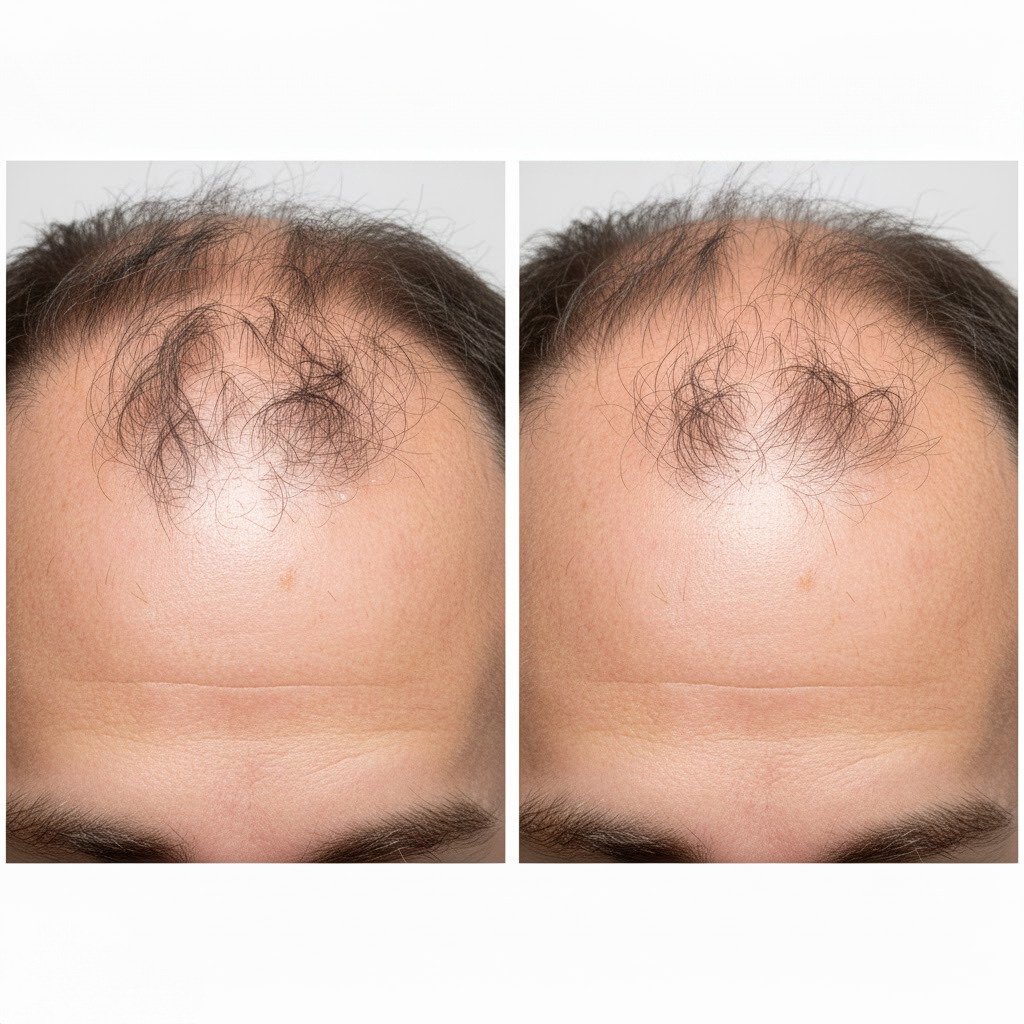
Studies indicate that seborrheic dermatitis-related hair loss is usually temporary if the underlying inflammation is managed effectively, though chronic untreated cases may lead to more pronounced thinning (Smith et al., 2020).
Where on the Scalp Are Bald Spots from Seborrheic Dermatitis Commonly Appear?
Seborrheic dermatitis bald spots most commonly appear in areas of the scalp with higher sebaceous gland activity, such as the crown, hairline, temples, and behind the ears. These oily scalp zones provide an ideal environment for Malassezia yeast overgrowth, which, combined with chronic inflammation, weakens hair follicles and leads to seborrheic dermatitis balding. Persistent itching and scratching in these regions further exacerbate hair thinning, sometimes resulting in visible seborrheic dermatitis bald spots.
Research shows that the severity of hair loss correlates with the degree of scalp inflammation and yeast colonization, emphasizing the importance of early treatment to minimize permanent follicle damage (Tosti et al., 2018).
How to Stop Hair Loss from Seborrheic Dermatitis
There are ways to stop hair loss from seborrheic dermatitis at home and medically.
- Medicated Shampoos: Use shampoos containing ketoconazole, ciclopirox, or zinc pyrithione to reduce Malassezia overgrowth and control inflammation. Effectivity is high, with noticeable improvement in hair shedding within 4–6 weeks of consistent use. These shampoos help restore a healthy scalp environment, preventing further seborrheic dermatitis hair loss.
- Topical Corticosteroids: For moderate to severe inflammation, short-term topical corticosteroids can calm scalp irritation and itching. Typically prescribed for 1–2 weeks, they reduce follicle stress and help hair return to the growth phase.
- Scalp Hygiene and Exfoliation: Regularly remove scales and flakes using gentle exfoliating brushes or scalp scrubs. This improves product penetration and prevents follicles from being blocked, supporting hair regrowth.
- Lifestyle and Stress Management: Since stress can exacerbate seborrheic dermatitis hair loss, maintaining a healthy lifestyle with adequate sleep, diet, and stress-reduction techniques supports scalp recovery.
- Follow-Up and Dermatologist Care: Persistent or severe cases may require specialist evaluation to prevent permanent hair thinning. Early intervention increases the success rate of hair regrowth and preserves hair density.
- Timeline for Hair Recovery: With proper treatment, hair loss due to seborrheic dermatitis generally begins to stabilize within 4–12 weeks, while full regrowth may take 3–6 months depending on severity and adherence to therapy.
What Are the Best Shampoo Ingredients for Seborrheic Dermatitis Hair Loss?
When choosing the best shampoo for adult cradle cap or seborrheic dermatitis–related shedding, certain active ingredients stand out for their proven ability to calm scalp inflammation, reduce flaking, and support healthy hair regrowth.
- Ketoconazole: An antifungal agent that reduces Malassezia yeast overgrowth, one of the root triggers of seborrheic dermatitis. By restoring balance to the scalp microbiome, it helps prevent further irritation and supports stronger follicle activity, making it essential in the best shampoo for cradle cap in adults.
- Zinc Pyrithione: Known for its antimicrobial and anti-inflammatory properties, zinc pyrithione helps regulate excess sebum and prevents dandruff-related irritation. This creates a healthier scalp environment, allowing hair weakened by seborrheic dermatitis to return to its normal growth cycle.
- Ciclopirox: Another effective antifungal ingredient that targets yeast and bacteria on the scalp. Ciclopirox-based shampoos can significantly reduce scaling and flaking, which in turn reduces follicle blockage and encourages new growth.
- Salicylic Acid: A keratolytic agent that helps dissolve thick scales and buildup commonly seen in cradle cap shampoo adults. By unclogging follicles, it improves oxygen and nutrient delivery to the roots, promoting regrowth in areas affected by inflammation.
- Selenium Sulfide: Reduces cell turnover and minimizes flaking while also working as an antifungal. Its soothing effect on the scalp makes it useful for long-term management of seborrheic dermatitis and prevention of further hair loss.
- Tea Tree Oil: A natural antifungal and anti-inflammatory option. While less potent than medicated actives, it provides relief from itching and irritation, making it a good supportive ingredient in mild cases.
Ingredients to Avoid: Shampoos with sulfates, parabens, or heavy fragrances should be avoided as they can worsen irritation, strip natural oils, and aggravate seborrheic dermatitis, ultimately delaying hair recovery.
Can Ciclopirox Shampoo Effectively Reduce Hair Shedding in Seborrheic Dermatitis?
Yes. Ciclopirox shampoo can effectively reduce hair shedding in seborrheic dermatitis by controlling the underlying fungal overgrowth and inflammation that weaken hair follicles. Ciclopirox works as a potent antifungal, targeting Malassezia yeast that thrives on scalp oils and triggers irritation, flaking, and follicle stress. By restoring a healthier scalp environment, it not only reduces symptoms but also supports stronger, more stable hair growth.
Clinical research and dermatology case reviews suggest that ciclopirox shampoo hair loss is not a direct side effect. Instead, temporary shedding may occur as part of the scalp’s recovery process, especially if telogen effluvium was already present. This transitional shedding is usually reversible once inflammation subsides.
Is Ketoconazole Shampoo a Solution for Seborrheic Dermatitis Hair Loss?
Yes. Ketoconazole shampoo is considered one of the most effective topical treatments for seborrheic dermatitis hair loss. It targets the root cause of the condition by inhibiting the growth of Malassezia yeast, which feeds on scalp oils and triggers inflammation.
Generally, ketoconazole shampoo does not cause hair loss. However, some patients may experience temporary shedding when starting treatment, often linked to telogen effluvium or the scalp adjusting to reduced inflammation.
How Effective Is Hair Transplant for Treating Seborrheic Dermatitis Permanent Hair Loss?
Hair transplant surgery is one of the most effective long-term solutions for patients who have developed permanent hair loss due to seborrheic dermatitis. While most cases of seborrheic dermatitis–related shedding are temporary and reversible, when the hair loss is severe and permanent, hair transplant can be an option and only then it is recommended.
Turkey has become the global leader in medical tourism for hair restoration, offering world-class expertise at affordable costs. Clinics like Vera Clinic, internationally recognized as one of the best hair transplant clinics in Turkey, combine advanced technology, experienced surgeons, and comprehensive aftercare programs. For patients with seborrheic dermatitis hair loss, this means achieving natural-looking results while benefiting from a supportive medical team that understands the complexity of inflammatory scalp conditions.
What to Expect Before and After a Hair Transplant for Seborrheic Dermatitis Hair Loss?
Before the transplant, the scalp often appears patchy, inflamed, or thinning due to seborrheic dermatitis. After the transplant, hair grows back naturally, covering bald spots and restoring density, giving a healthy and full appearance.
You can see real examples of hair transplant before and after results to understand the transformation.
When to See a Dermatologist for Hair Loss due to Seborrheic Dermatitis?
Seek medical attention if you notice sudden or patchy hair loss, persistent redness or swelling, intense itching that doesn’t improve, or scalp sores and pus, as these may indicate severe seborrheic dermatitis or secondary infection.
Diagnosis typically involves a dermatological scalp examination, sometimes supplemented with dermoscopy or skin scraping to rule out fungal infections or other scalp conditions. Early consultation helps prevent permanent follicle damage and ensures proper treatment.
How Long Does It Take for Hair to Regrow After Seborrheic Dermatitis?
Hair regrowth after seborrheic dermatitis largely depends on the severity of scalp inflammation and how quickly the condition is treated. In most cases, once inflammation is controlled and scalp health restored, hair typically begins to regrow within 3 to 6 months. Mild cases may see noticeable improvement in as little as 2 months, while chronic or severe seborrheic dermatitis may extend regrowth to up to 9 months.
Clinical observations suggest that approximately 70–80% of patients experience substantial hair density recovery after consistent treatment, highlighting the importance of early and effective intervention.
How to Prevent Hair Loss while Undergoing Seborrheic Dermatitis Therapy
To prevent hair loss during seborrheic dermatitis therapy, patients should consider to:
- Use medicated shampoos consistently: Ingredients such as ketoconazole, ciclopirox, or zinc pyrithione help control yeast overgrowth and reduce scalp inflammation, minimizing hair follicle stress.
- Avoid harsh chemical treatments: Coloring, perming, or excessive heat can aggravate the scalp and worsen hair shedding.
- Gently cleanse and massage the scalp: Light scalp massages improve blood flow and help maintain hair follicle health without damaging inflamed areas.
- Maintain a balanced diet: Adequate protein, iron, zinc, and vitamins A, D, and E support hair regrowth during treatment.
- Manage stress effectively: Stress can exacerbate seborrheic dermatitis and trigger telogen effluvium; mindfulness and relaxation techniques may help.
- Follow treatment plans diligently: Regular follow-ups with a dermatologist ensure proper control of seborrheic dermatitis and reduce the risk of prolonged hair loss.
Research indicates that combining topical antifungal therapy with proper scalp care significantly improves hair retention and accelerates regrowth in patients with seborrheic dermatitis.
How Does Seborrheic Dermatitis Differ from Eczema in Causing Hair Loss?
Seborrheic dermatitis and scalp eczema are both inflammatory scalp conditions, but they differ in causes and presentation. Seborrheic dermatitis is primarily driven by overproduction of sebum and the overgrowth of Malassezia yeast, leading to oily, flaky patches that can stress hair follicles and trigger seborrheic dermatitis hair loss. In contrast, eczema (atopic dermatitis) results from immune system hypersensitivity, causing dry, itchy, and inflamed skin that may lead to hair loss due to eczema through persistent scratching and follicle irritation.
The main differences include the scalp environment and triggers: seborrheic dermatitis usually affects oily areas and involves yeast-related inflammation, while eczema is linked to immune dysregulation and dry skin patches.
Both conditions can cause temporary hair shedding, but permanent hair loss is uncommon unless there is prolonged inflammation or scarring. Studies show that effective management of either condition, through anti-inflammatory treatments, emollients, and targeted shampoos, can prevent long-term hair loss.