

Malnutrition Hair Loss is a form of diffuse alopecia caused by sustained nutritional deficiencies that impair normal follicular function and hair shaft formation. Hair loss occurs when the body lacks critical macronutrients and micronutrients required for keratin production, follicular cycling, and scalp homeostasis. Reduced protein intake compromises keratinocyte activity in the context of malnutrition and hair loss. Deficiencies in iron, zinc, and B-complex vitamins disrupt dermal papilla signaling and matrix cell proliferation. The anagen phase shortens, telogen phase dominance increases, and structural hair quality deteriorates, leading to excessive shedding and visible thinning.
Hair loss due to malnutrition reflects deeper metabolic imbalances and systemic stress. Restrictive dieting, eating disorders, chronic illnesses, and malabsorption syndromes are factors contributing to nutritional alopecia, which prevent adequate nutrient absorption and delivery to follicles. Clinical signs involve brittle strands, reduced density, and lack of shine, requiring scalp evaluation and bloodwork. The hair loss treatment centers on correcting underlying deficiencies through targeted supplementation, dietary intervention, in advanced cases, trichological support to restore follicular health and promote regrowth.
What Is Malnutrition Hair Loss?
Malnutrition Hair Loss is hair thinning or shedding caused by a lack of proper nutrients in the body. Malnutrition and hair loss are linked because the body needs enough calories, protein, and vitamins to grow healthy hair. The body saves nutrients for vital organs, and hair growth slows or stops when nutrition is poor.
Undernutrition means not eating enough food or protein, while micronutrient deficiencies refer to low levels of vitamins and minerals like iron, zinc, and biotin, affecting hair strength and growth. Common causes of malnutrition include poor diet, eating disorders, chronic illnesses, and malabsorption, where the body does not absorb nutrients well. Hair loss from malnutrition is seen in patients with these conditions and improves with proper nutrition. Signs include brittle strands, thinning around the scalp, or increased shedding. Hair continues to weaken without treatment. Restoring nutrients through diet or supplements is key to recovery.
How Does Malnutrition Cause Hair Loss?
Malnutrition Causes Hair Loss through the disruption of the normal hair growth cycle by impairing the anagen (growth) phase and accelerating the shift to the telogen (resting) phase. Inadequate intake of macronutrients and micronutrients interferes with cellular activity in the hair matrix, where keratinocytes rapidly divide to produce hair shafts. Deficiencies in protein, iron, zinc, and fatty acids disturb follicular metabolism, causing premature follicle regression (catagen phase) and suppressed hair regeneration. Nutritional imbalance leads to miniaturization of follicles, resulting in reduced hair density, weakened shaft structure, and slowed elongation.
Excessive or insufficient nutrient intake alters scalp homeostasis and signals systemic dysfunction. Changes in hair texture (dryness, brittleness, or dullness) reflect underlying metabolic stress. Malabsorption syndromes, starvation states, and imbalanced diets trigger inflammatory responses and hormonal shifts, which delay follicular re-entry into anagen. The Diagnosis and Treatment of Iron Deficiency and Its Potential Relationship to Hair Loss, a study by Trost, Bergfeld, and Calogeras (2006) emphasized the link between iron deficiency, even without anemia, and excessive shedding. An outcome of nutritional stress is Telogen Effluvium, where a large number of follicles prematurely enter the telogen phase, resulting in diffuse hair loss.
Is Hair Loss from Malnutrition Reversible?
Yes, Hair Loss from Malnutrition is Reversible, provided the follicular units remain intact and nutritional repletion occurs early. Follicles in the telogen phase, due to nutrient deprivation, re-enter anagen once metabolic balance is restored. Restoration of iron, zinc, biotin, and protein levels promotes keratinocyte proliferation and normal hair shaft synthesis. Follicular miniaturization or scarring alopecia occurs in prolonged or severe malnutrition, in chronic systemic illness, or in eating disorders, limiting regrowth potential. Persistent iron deficiency was shown to inhibit complete regrowth, according to Rushton et al. (2002) in “Causes and Treatment of Hair Loss in Women”, indicating that delayed intervention reduces reversal likelihood.
Hair loss due to a poor diet, will it grow back?
The hair will grow back, depending on the duration and severity of the deficiency. Growth resumes within 3 to 6 months if the hair follicle remains viable and nutritional correction is timely. Regrowth becomes incomplete or fails if structural damage to the follicle has occurred or scarring is present. Early diagnosis, laboratory evaluation, and targeted supplementation are essential to improve prognosis and prevent progression.
What Does Malnutrition Hair Loss look Like?
Malnutrition Hair Loss looks like overall thinning in the scalp, with shedding and reduced hair volume. The hair appears dry, dull, and brittle, with a rough texture and increased breakage. Strands are thinner than usual, lacking strength and elasticity. Thinning tends to be more uniform rather than patchy, and the frontal or crown areas become visibly sparse. The hair loses its natural color and shows signs of fragility. It has shorter regrowth and uneven length across the scalp, in severe cases. The scalp becomes more visible under direct light, and brushing results in increased strand loss. Hair fails to grow past a certain length, reflecting a shortened anagen phase. Patients develop hair that is soft, fine, and discolored, resembling signs of early aging, in extreme protein or micronutrient deficiency.
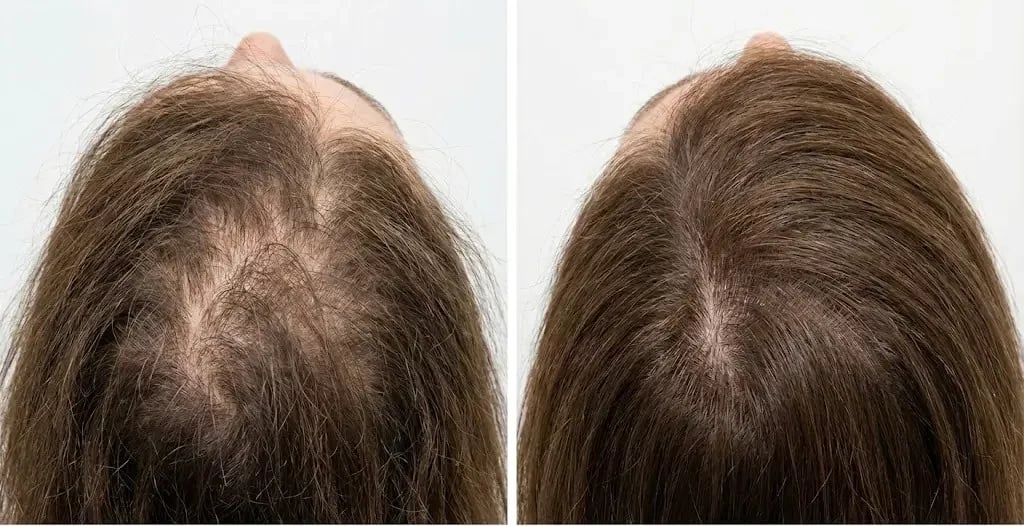
What Does Hair Look Like Before and After Having Malnutrition Hair Loss?
The before and After Having Malnutrition Hair Loss is a clear difference between thick, dark, strong anagen-phase hair and thin, weak telogen-phase strands. Shafts show uniform diameter, smooth cuticle layers, rich pigmentation, and firm texture in the “before” image. Follicles produce vellus-like fibers with reduced cortex thickness, pale color, and matte finish after malnutrition. Scalp becomes more visible as hair density drops, follicular openings widen, and shed hairs appear with bulbous club ends. The overall look shifts from full coverage to sparse, fragile strands that break under slight tension.
What Are the Signs of Malnutrition in Hair?
The signs of Malnutrition in Hair are listed below.
- Thinning: Hair loses volume and becomes finer on the scalp. The density of hair strands per square inch decreases, making the scalp more visible. Thinning appears evenly rather than in bald patches.
- Brittleness: Hair shafts snap easily when brushed or styled, indicating weakened keratin structure. The strands feel rough to the touch and lack flexibility. The hair appears dull and lifeless rather than glossy under light.
- Dryness: Hair affected by malnutrition lacks natural oils, leading to a dry and coarse texture. The scalp flakes or feels irritated due to insufficient sebum production. Dry hair is difficult to manage and resistant to styling.
- Discoloration: Hair loses its natural pigment and becomes lighter or takes on a yellowish tone. It is common in protein or vitamin B deficiencies, where melanin production is disrupted. Strands develop a faded or uneven color in severe cases.
- Slow Growth: Hair grows at a slower rate due to the body conserving nutrients for vital organs. The anagen phase shortens, leading to limited length retention. Haircuts last longer because the strands are not reaching their usual growth milestones.
- Shedding: More hairs are lost daily, visible on pillows, combs, or shower drains. It is linked to a higher percentage of follicles entering the telogen (resting) phase. Club-shaped hairs with white bulbs appear in larger numbers.
- Patchy Texture: The hair surface feels uneven, with areas coarser or thinner than others. Follicles respond differently to nutrient stress, leading to inconsistent strand quality. A patient notices sections looking more damaged or wiry.
- Lack of Shine: Healthy hair reflects light due to its smooth cuticle layer, but malnourished hair appears matte. The dullness signals a loss of lipid coating and water-binding capacity. The hair looks tired or aged.
- Split Ends: The tips of the hair fray into multiple strands due to weakened fiber bonds. Nutrient deficiencies slow the repair process, allowing structural damage to worsen. This leads to a frizzy and uneven finish, especially on longer hair.
- Hair Texture Change: Straight hair may become wavy, or curly hair may loosen, due to altered protein composition. The structural makeup of the hair shaft changes under nutrient stress. The texture shifts are one of the first visible signs of internal imbalance.
Other physical symptoms accompanying malnutrition-related Hair Loss are muscle wasting, swollen ankles or legs (edema), tongue inflammation (glossitis), bleeding gums, dizziness, low blood pressure, irregular heartbeat, cold intolerance, and poor concentration.
What Are the Causes of Malnutrition Leading to Hair Loss?
The causes of Malnutrition Leading to Hair Loss are listed below.
- Poor Diet: A diet lacking essential nutrients (protein, iron, and vitamins) directly disrupts hair follicle function. The body halts non-essential processes like hair growth without fuel, leading to shedding and thinning.
- Eating Disorders: Anorexia nervosa or bulimia causes severe nutrient restriction or loss. The body enters a survival state, redirecting nutrients away from hair follicles and resulting in rapid hair deterioration.
- Chronic Illness: Long-term diseases (cancer, HIV, or kidney failure) increase the body’s nutritional demands while impairing absorption. The imbalance leads to deficiencies that affect hair shaft formation and scalp health.
- Malabsorption Syndromes: Disorders (celiac disease or Crohn’s disease) interfere with the gut’s ability to absorb nutrients. Vitamins and minerals fail to reach hair-producing cells, even with adequate food intake.
- Post-Surgery Recovery: Surgical procedures (gastrointestinal or bariatric surgery) reduce nutrient intake or absorption. Hair follicles receive limited support for growth, triggering diffuse loss.
- Medications: Drugs (chemotherapy agents or long-term antibiotics) affect appetite, gut function, or nutrient metabolism. The indirect malnutrition weakens the hair structure and interrupts regular growth cycles.
- Substance Abuse: Alcoholism and drug use reduce nutrient intake and damage organs responsible for nutrient processing. Chronic use results in deficiencies of zinc or B-complex vitamins, linked to hair weakening.
- Psychological Stress: Mental health issues affect eating patterns and digestion, contributing to poor nutritional status. Cortisol imbalance and skipped meals gradually strip the body of the nutrients required for hair maintenance.
- Infections or Parasites: Parasitic infestations and chronic infections impair appetite and nutrient absorption. Hair follicles receive inadequate nourishment, leading to telogen-phase dominance and visible thinning.
- Socioeconomic Factors: Poverty, food insecurity, and lack of access to balanced meals lead to long-term undernutrition. The cumulative nutrient gap impacts the scalp and follicles, making hair growth unsustainable.
How Can Lack of Nutrition Cause Hair Loss?
Lack of Nutrition Causes Hair Loss through biochemical disruption of the hair follicle cycle, by impairing anagen initiation and sustaining telogen dominance. Nutrients (iron, zinc, protein, and B-complex vitamins) serve as cofactors in keratinocyte proliferation, keratin synthesis, and mitochondrial energy production within the follicular matrix. The body diverts resources away from non-vital tissues like the scalp, leading to follicular miniaturization, reduced shaft diameter, and premature telogen entry.
Inadequate and excessive nutrient intake dysregulate metabolic and hormonal pathways critical to hair structure and cycling. Overconsumption of fat-soluble vitamins or severe caloric restriction interferes with endocrine feedback loops, triggering systemic stress responses that halt follicular growth. A study by Almohanna et al. (2019) titled “The Role of Vitamins and Minerals in Hair Loss” found consistent links between nutritional deficiencies, iron, vitamin D, and biotin, and diffuse shedding conditions (Telogen Effluvium). Nutritional homeostasis is essential to maintain follicle viability and anagen persistence.
Does Lack of Protein Cause Hair Loss?
Yes, lack of protein causes hair loss. Protein malnutrition results in hair changes that include hair thinning and hair loss, with insufficient amino acid availability disrupting follicular cycling and precipitating telogen effluvium. Inadequate protein intake compromises keratin synthesis, the predominant fibrous protein comprising 85% of hair mass, while reducing keratin-associated proteins essential for cortical cross-linking.
The pathophysiology involves disrupted protein metabolism within matrix keratinocytes, where amino acid deficiency impairs keratin gene transcription and polypeptide assembly. Hair follicle matrix cell differentiation and normal hair growth require coordinated activities of genes encoding structural proteins, with follicular keratinocytes requiring sustained amino acid pools for optimal keratin production. Nutritional inadequacy manifests as diffuse alopecia, characterized by decreased hair diameter and premature follicular regression from the anagen to the Protein Deficiency Hair Loss phase.
How Can a Poor Diet Trigger Hair Loss?
A poor diet triggers hair loss by causing micronutrient deficiencies, hormonal imbalance, and inflammation that disrupt the normal hair growth cycle. Low intake of iron, zinc, B-vitamins, and fatty acids impairs the function of dermal papilla cells and matrix keratinocytes, leading to weaker hair strands and reduced follicular activity. Hormonal disruptions, involving IGF-1 and thyroid hormones, accelerate the shift from anagen to telogen, contributing to diffuse shedding.
Oxidative stress from poor antioxidant intake increases inflammatory cytokines, which damage follicles and promote miniaturization. The pro-inflammatory environment disrupts immune regulation in the scalp and contributes to the progression of conditions like androgenetic alopecia. Nutritional deficiencies are strongly linked to chronic telogen effluvium, female pattern hair loss, and other forms of non-scarring alopecia, according to Ahmed, Tsatalis, and Tosti (2019) in “The Role of Vitamins and Minerals in Hair Loss.”
What Are the Treatments for Malnutrition Hair Loss?
The treatments for Malnutrition Hair Loss are listed below.
- Systematic macronutrient and micronutrient restoration achieves 70-85% success rates in reversing telogen effluvium within 3-6 months. Dietary interventions are initiated when the laboratory confirms specific deficiencies and diffuse alopecia patterns emerge.
- Ferrous sulfate administration at 325mg daily demonstrates moderate efficacy in treating iron-deficiency alopecia with restoration timelines of 4-6 months. Iron replacement therapy is indicated when serum ferritin levels fall below 30-40 ng/mL.
- Zinc supplementation at 40-80mg elemental zinc daily shows marked recovery with hair regrowth exceeding 60% in zinc-deficient patients over 12 weeks. Zinc supplementation becomes required when serum zinc concentrations drop below 70 μg/dL.
- Therapeutic doses of 2.5-10mg daily benefit patients with biotin deficiency, but efficacy remains unproven. Biotin therapy is warranted when biochemical deficiency is documented through reduced urinary biomarkers.
- Whey or casein protein at 25-30g daily provides amino acids for keratin synthesis with moderate success rates requiring 3-4 months for improvement. High-quality protein supplementation becomes required when dietary intake falls below 0.8g/kg body weight.
- Multivitamin formulations demonstrate 60-70% response rates over 6-month treatment periods. Multivitamin therapy is recommended when multiple micronutrient deficiencies coexist.
- Eicosapentaenoic acid (EPA) and docosahexaenoic acid (DHA) supplementation at 1-2g daily reduces follicular inflammation with moderate effectiveness, requiring 4-5 months for improvement. Fatty acid therapy becomes indicated when inflammatory markers are elevated.
- Cholecalciferol at 2000-4000 daily supports follicular cycling and immune regulation with gradual improvement over 4-6 months. Vitamin D therapy is required when serum 25(OH)D levels fall below 30 ng/mL.
- Selenomethionine at 200μg daily provides antioxidant protection and supports thyroid function with modest hair growth benefits over 3-4 months. Selenium is one of the Hair Loss Treatment, and is indicated when deficiency is confirmed or thyroid dysfunction coexists.
- Folate supplementation at 5mg daily corrects megaloblastic anemia-associated hair loss with response rates within 2-3 months. Folic acid treatment is warranted when serum folate levels drop below 3 ng/mL or macrocytic anemia is present.
What Are the Best Foods to Promote Hair Regrowth?
The best Foods to Promote Hair Regrowth are listed below.
- Eggs: Eggs are a great source of zinc, selenium, and other hair-healthy nutrients. It makes them one of the best foods for optimal hair growth while providing biotin, which supports keratin production and follicular cell proliferation.
- Salmon: The fish is loaded with strong hair supporters like Vitamin D and protein, but it contains omega-3 fatty acids that promote anagen phase extension and reduce follicular inflammation through anti-inflammatory mechanisms.
- Spinach: Spinach is loaded with nutrients from folate to iron and vitamins A & C, all of which promote hair growth by supporting dermal papilla vascularization and matrix keratinocyte metabolism.
- Sweet Potatoes: Rich in beta-carotene, which converts to vitamin A, sweet potatoes promote sebaceous gland function and follicular differentiation. Sweet potatoes are rich in nutrients and help hair-related concerns through scalp circulation and antioxidant protection.
- Avocados: The Avocado contains B vitamins, folic acid (iron), and potassium, all of which support hair growth while providing monounsaturated fatty acids that improve nutrient absorption and cellular membrane integrity.
- Nuts and Seeds: Nuts (almonds, walnuts, and seeds) are high in biotin, vitamin E, omega-3 fatty acids, and zinc that collectively support follicular architecture and reduce oxidative stress.
- Lentils: Lentils are one of the best hair growth foods for vegetarians and vegans looking for healthier, thicker hair. Packed with biotin, zinc, iron, and protein, the legumes are dense with nutrients essential for keratin synthesis.
- Berries: Berries provide key antioxidants such as vitamin C. Antioxidants protect follicular stem cells from free radical damage while improving collagen synthesis and iron absorption for optimal hair matrix function.
- Whole Grains: Whole Grains are a high source of Biotin. Biotin is an ingredient that aids you in producing amino acids while providing B-complex vitamins for cellular energy metabolism.
- Brazil Nuts: Brazil nuts are packed with selenium, which supports thyroid function and provides antioxidant protection, with just 2-3 nuts delivering optimal selenium requirements for follicular health.
Which Nutrients Help Prevent Hair Loss and Promote Growth?
Nutrients that Help Prevent Hair Loss and Promote Growth are listed below.
- Protein: The Protein component of hair builds and strengthens hair shafts. It supports the growth and repair of all body tissues, including follicles. Hair becomes weak, brittle, and more prone to shedding without sufficient protein.
- Iron: Iron facilitates oxygen transport to the hair follicle matrix via hemoglobin. Oxygen delivery is essential for cellular energy production and follicular metabolism. Iron deficiency disrupts anagen phase activity and leads to chronic telogen effluvium.
- Zinc: Zinc supports deoxyribonucleic acid (DNA) replication, protein synthesis, and cell division in hair follicles. It helps maintain oil gland function and regulates the hair cycle. A deficiency interrupts follicle recovery and contributes to hair shedding and scalp issues.
- Biotin (Vitamin B7): Biotin acts as a coenzyme in fatty acid metabolism and keratin infrastructure. It plays a role in producing energy for rapidly dividing follicle cells. A deficiency in biotin causes brittle hair, breakage, and thinning.
- Vitamin D: Vitamin D modulates gene expression in hair follicle cycling and activates stem cells in the follicular bulge. It supports immune balance and cellular differentiation. Low vitamin D levels are associated with alopecia and delayed regrowth.
- Vitamin A: Vitamin A aids in sebum production, keeping the scalp moisturized and healthy. It supports cellular growth and turnover in epithelial and follicular tissues. Deficiency and excess disrupt hair follicle integrity.
- Vitamin E: Vitamin E functions as a powerful antioxidant, protecting follicular cells from oxidative stress. It improves scalp circulation and helps preserve lipid membranes. The nutrient promotes a stable follicular environment for consistent growth.
- Vitamin C: Vitamin C boosts collagen synthesis, strengthens capillaries supplying the hair root, and improves iron absorption. It acts as a shield against free radical damage. Healthy collagen levels ensure hair elasticity and structural support.
- Omega-3 Fatty Acids: Omega-3s maintain cell membrane integrity and reduce scalp inflammation. It provides essential oils for hair hydration and supports follicle nourishment. Their anti-inflammatory effects contribute to reduced hair follicle miniaturization.
- Selenium: Selenium aids in thyroid hormone metabolism and defends against oxidative stress through glutathione peroxidase activation. It contributes to balanced follicular signaling and healthy skin cell turnover. Inadequate levels have been linked to scalp flaking and diffuse hair loss.
How Effective Is Hair Transplant for Treating Hair Loss due to Malnutrition?
Hair Transplant for Treating Hair Loss due to Malnutrition is effective through follicular unit extraction (FUE) or follicular unit transplantation (FUT). Relocates healthy hair follicles from donor zones to areas affected by irreversible thinning or shedding. Cases lead to permanent follicular damage or miniaturization, while malnutrition-induced hair loss is diffuse and reversible with nutritional correction, when deficiencies persist over time. A transplant becomes a viable option once metabolic balance is restored, and hair loss has stabilized for at least 6-12 months.
Dermatological assessment is essential to confirm that the scalp environment supports graft survival and that systemic causes are no longer active. Hair transplants in Turkey offer world-class results at competitive pricing for patients seeking surgical intervention. Renowned for high medical standards, advanced techniques, and extensive patient care, Turkish clinics attract global clientele. Vera Clinic stands out as the best hair transplant clinic in Turkey, offering customized follicular unit extraction (FUE) treatments, advanced diagnostic tools, and multilingual staff in a state-of-the-art facility. Patients benefit from minimal procedures, rapid recovery, and natural-looking density, suitable for restoring hairlines compromised by nutritional alopecia.
What to Expect Before and After a Hair Transplant due to Malnutrition
Expect metabolic correction and follicular assessment before and gradual regrowth with density after a Hair Transplant due to Malnutrition. Preoperative preparation involves stabilizing nutritional deficiencies to optimize scalp vascularity and graft survival. A metabolic panel and trichoscopic evaluation determine follicular viability and donor site quality. Hair follicles enter chronic telogen without sufficient nutrient repletion, increasing the risk of graft failure and delayed healing.
Post-transplant expectations include an initial shedding phase known as shock loss, followed by new anagen phase activation within 3-4 months. Nutrient support remains essential for keratinocyte proliferation, collagen remodeling, and angiogenesis at the recipient site. Hair density and shaft diameter progressively improve over 9-12 months, provided systemic nutrition remains adequate. Hair transplant before and after outcomes reflect surgical precision and the patient’s ability to maintain internal follicular homeostasis.
When to See a Dermatologist for Hair Loss due to Malnutrition
See a Dermatologist for Hair Loss due to Malnutrition when hair shedding becomes excessive, scalp visibility increases, or hair texture changes to brittle, dry, or thinning strands resistant to regrowth. Severe signs include diffuse alopecia with visible scalp exposure, breakage despite minimal manipulation, and accompanying systemic symptoms (fatigue, unintentional weight loss, brittle nails, or delayed wound healing). Clinical intervention is critical when signs of nutritional deficiency persist beyond dietary correction or when hair fails to re-enter the anagen phase after three to six months. A dermatologist evaluates follicular activity, scalp health, and underlying metabolic factors to prevent irreversible follicle miniaturization or telogen effluvium progression.
How is Malnutritional Hair Loss Diagnosed?
Hair loss diagnosis involves a medical history, nutritional assessment, trichoscopic evaluation, and blood tests measuring ferritin, zinc, vitamin D, thyroid function, and complete blood count. Dermatologists correlate clinical signs with lab abnormalities to distinguish nutritional alopecia from other causes of hair loss.
When Should You Take a Hair Consultation for Hair Loss due to Malnutrition?
You should take a Hair Consultation for Hair Loss due to Malnutrition when persistent shedding, dull texture, and reduced density are accompanied by signs (chronic fatigue or gastrointestinal disturbances). Scalp analysis becomes required when strands appear lifeless, break under light tension, or display uneven growth patterns despite dietary improvements. A trichologist or dermatologist uses advanced tools like digital trichoscopy to evaluate follicular density in cases of suspected nutrient malabsorption, hair shaft integrity, and scalp condition, identifying markers of protein-energy deficiency or micronutrient imbalance.
Hair transplant consultation offers essential insights into follicular response to nutritional stress and helps differentiate telogen effluvium from other forms of diffuse alopecia. Early scalp imaging and cross-sectional analysis support targeted interventions by correlating visual data with biochemical markers. Patients recovering from restrictive diets, chronic illness, or gastrointestinal surgery benefit from diagnostics that inform supplementation protocols and prevent irreversible follicular decline.