
Permanent hair loss affects millions worldwide, harming self-esteem and confidence. For those facing irreversible thinning or balding, a hair transplant is one of the most reliable way to restore natural density.
A hair transplant moves healthy follicles (from the back or sides of the scalp) to thinning or bald areas. Thanks to donor dominance, transplanted follicles keep their growth traits even in bald-prone zones. Advanced methods for hair loss like FUE, DHI, and Sapphire FUE achieve seamless hairlines with graft survival rates in the 90–95% range, consistent with published findings on follicular graft viability (Parsley & Perez-Meza, 2010).
Visible regrowth begins around 3 months, reaches 50–60% density by 6 months, and fully matures at 9–12 months, consistent with the graft maturation timeline described in the hair restoration literature (Parsley & Perez-Meza, 2010). This predictable hair transplant results timeline lets patients regain styling freedom; from fades to pompadours or long layers.
As one of the leading hair transplant clinic in Turkey, Vera Clinic is recognized for pioneering Sapphire FUE and offering OxyCure Therapy: in-house hyperbaric oxygen methods used to support recovery and graft survival. Vera Clinic has earned the European Award in Medicine, Great Place to Work® certification, and IDA Design Awards 2024 in surgical precision and patient care.
Patients expect initial shedding in weeks 2–6, visible sprouts by month 3, and a confident, natural look by month 12.
Vera Clinic Hair Transplant Timeline will detail what to expect for hair transplant day by day, hair transplant week by week and hair transplant month by month, ensuring patients understand every phase of their hair transplant recovery journey; from immediate post-op care to full, style-ready hair transplant results.
Key Points
- Hair transplant recovery moves through five distinct phases, from initial healing in the first week to a stable cosmetic result around month 12.
- In a Vera Clinic Academy growth-cohort of 789 patients, mean regrowth reached 36% at month 3, 78.94% at month 6, and 92% (range 90-96%) at month 12.
- An average of 78% of transplanted hairs shed within the first six weeks before re-entering active growth, based on the same 789-patient Vera Clinic Academy cohort.
- Published graft survival rates for FUE, DHI, and Sapphire FUE fall in the 90-95% range, consistent with the hair restoration literature (Parsley & Perez-Meza, 2010).
- Swelling after a hair transplant peaks around day 3-4 and resolves within 5-7 days with proper aftercare, a pattern consistent with clinical findings on post-operative oedema (Abbasi et al., 2010).
- In a separate Vera Clinic Academy five-year follow-up study, graft survival and hair density showed a gradual decline over several years, reflecting the ongoing progression of androgenetic alopecia in native hair rather than graft failure.
- Vera Clinic supports early healing with OxyCure Therapy, an in-house hyperbaric oxygen protocol limited to a single session in the days after surgery.
What Happens During the Pre-Consultation Stage of a Hair Transplant?
The pre-consultation stage is the first checkpoint in hair transplant stages and directly influences surgical success and ranking signals for clinics in competitive hubs like Turkey. During this session, surgeons analyze donor density with trichoscopy, assess scalp health for miniaturization or hidden conditions (e.g., telogen effluvium), and map future hair loss patterns using AI-assisted imaging. Bloodwork screens for thyroid imbalance or anemia; both silent factors that reduce graft survival or delay regrowth.
This step matters because precise planning lowers graft failure risk and improves post-op satisfaction. Thorough pre-operative assessment and planning is associated with better long-term patient satisfaction, a point emphasized in international expert consensus guidance on hair restoration care (Devroye et al., 2023).
How Do You Prepare for a Hair Transplant Procedure?
Preparing correctly for a hair transplant increases graft survival and minimizes complications. Small lifestyle changes improve blood flow, healing, and final density.
- Stop Smoking and Alcohol (2–4 Weeks Before): Smoking impairs wound healing due to nicotine and has been associated with reduced graft survival (Nilforoushzadeh & Pourebrahim, 2024). In addition, alcohol thins the blood which raise the bleeding risk.
- Pause Blood Thinners and Certain Medications: Under medical supervision, discontinue aspirin or anti-inflammatory drugs that affect clotting. Pre-op medication review is one of the safety measures emphasized in international expert consensus guidance on pre-op and post-transplantation care (Devroye et al., 2023).
- Optimize Nutrition and Hydration: A diet rich in protein, vitamin C, zinc, and iron supports wound healing. Nutritional deficits are associated with slower recovery and poorer aesthetic outcomes following surgical procedures (Seth et al., 2024).
- Wash Hair Thoroughly Before Surgery: Clean scalp reduces infection risk, a standard pre-operative hygiene measure reflected in international expert consensus guidance on hair restoration care (Devroye et al., 2023).
- Arrange Transportation and Post-Op Care: Mild sedation can impair driving, so patients are advised to arrange an escort home, in line with standard ambulatory surgical safety practice.
- Avoid Styling Products or Hair Fibers: These can interfere with donor site assessment and graft handling during the procedure, so surgeons ask patients to avoid them in the days before surgery.
What Happens Day by Day During the First Week After a Hair Transplant?
The hair transplant first week is critical for graft survival and wound healing. Each day has specific milestones that influence the final result, with day 3–5 often considered the crucial stage when graft anchoring strengthens. Healing progresses rapidly within these seven days if proper aftercare is followed.
- Hair Transplant Day 1 – Immediate Post-Op: Immediate Post-Op: Mild swelling and redness at donor and recipient areas. Small crusts form. Sleep with the head elevated to reduce swelling.
- Hair Transplant Day 2 – Early Healing Begins: Swelling increases slightly. Gentle saline sprays recommended. Avoid touching grafts.
- Hair Transplant Day 3 – Grafts Start Anchoring: This is a crucial stage, follicular units become secure in the scalp. Mild itching occurs as healing accelerates.
- Hair Transplant Day 4 – Reduced Swelling: Scabbing becomes more visible. Discomfort decreases. Avoid heavy exercise to protect grafts.
- Hair Transplant Day 5 – Itching and Crust Softening: Healing speeds up. Begin gentle scalp rinsing under clinic guidance. Crusts start loosening naturally. (Keyword: hair transplant day 5)
- Hair Transplant Day 6 – Noticeable Improvement: Most swelling subsides. Redness starts to fade. Continue aftercare sprays.
- Hair Transplant Day 7 – End of Initial Recovery: Scabs mostly fall off. The donor area looks normalizing. Light physical activity is generally safe. Grafts are firmly anchored, reducing risk of dislodgment.
Complications Possible in the First Week
Minor bleeding, infection risk if hygiene is poor, or folliculitis in
rare cases. Proper washing and antibiotic prophylaxis prevent these. Careful day-by-day aftercare in the first week supports graft survival in the 90–95% range reported in the literature, as adherence to post-operative protocols is one of the key factors influencing follicular graft outcomes (Parsley & Perez-Meza, 2010).
How Does the Donor and Recipient Area Heal in the First Week After a Hair Transplant?
In the first 7 days, donor punctures close quickly and recipient grafts anchor by day 3–5. By day 7, swelling and redness fade, and grafts are stable. Light crusts protect follicles as new capillaries form. Proper hygiene prevents hair transplant infection, while smoking or touching grafts raises risk. With modern FUE or Sapphire FUE, healing reaches 90–95% graft survival (Parsley & Perez-Meza, 2010). Vera Clinic uses OxyCure Therapy, an in-house hyperbaric oxygen protocol (1.9–2.3 ATA, applied the day after surgery) reviewed by Dr. Aslıcan Çakkalkurt, a specialist in Underwater and Hyperbaric Medicine. In pre-operative consultations the clinic is clear that OxyCure supports early healing and swelling control rather than increasing density on its own, and limits it to a single session because current evidence supports hyperbaric oxygen only for early healing, not for repeated post-transplant use.
What Day Does Swelling Reach Its Peak?
Swelling after a hair transplant peaks on day 3–4 post-surgery, a pattern consistent with clinical findings on post-operative oedema following hair restoration surgery (Abbasi et al., 2010). By this stage, inflammatory fluids from graft placement descend from the scalp to the forehead or eyelids, making swelling most visible. The tissues are most vulnerable here because fluid redistribution and gravity concentrate edema in facial areas. Hair transplant swelling resolves within 5–7 days with proper care like cold compresses and head elevation.
How Long does Swelling Last After Hair Transplant?
Swelling lasts 5–7 days after a hair transplant, fading as
inflammation subsides and lymphatic drainage clears excess fluid.
How Does the Recovery Progress from Week 1 to Month 1 After a Hair Transplant?
From week 1 to the end of month 1, most patients transition from visible scabbing to nearly normal scalp appearance. By 10 days after hair transplant, donor and recipient areas close, and crusts fall away. By 2 weeks after hair transplant, most redness fades, but transplanted hairs enter a shedding phase (shock loss), which is normal. Around 3 weeks after hair transplant, itching or mild tingling signals follicle revascularization. At 21 days after hair transplant, the scalp’s barrier is largely restored, and the risk of infection drops significantly. By 1 month post hair transplant, the scalp looks healed, though visible regrowth hasn’t started yet; follicles remain in a resting phase.
Crucial stage: Weeks 2–3 are critical because this is when follicles anchor, and external trauma or scratching dislodge grafts. Healing speed depends on graft handling, surgical technique, and patient health. Mild complications like folliculitis or lingering redness occur but are rare with proper aftercare. Most patients regain normal scalp appearance by 3–4 weeks, even if new growth won’t emerge until months 3–4.
How Do the Donor and Recipient Areas Heal in These Few Weeks After a Hair Transplant?
By day 10, the donor area (often the occipital scalp) closes completely, with collagen type III fibers beginning to remodel into type I. The recipient area needs a few extra days due to micro-channel density and local oxygen debt. Under hyperbaric conditions, dissolved oxygen in plasma rises roughly 13-fold, which supports tissue oxygen delivery during early healing even when local circulation is temporarily reduced.
Patients still feel mild numbness or tightness behind the ears, a sign of temporary neural regeneration rather than damage.
Why Does Itching Become the Most Intense in This Timeline?
Itching peaks between day 12 and day 18, precisely when epithelial crusts detach and keratinocytes release growth factors like VEGF and TGF-β. These stimulate nerve endings, causing tingling.
Cool saline sprays, aloe-based serums, and avoiding antihistamines in the first week (unless prescribed) maintain blood flow and reduce irritation and hair transplant itching. This period marks active skin renewal, a sign the graft micro-environment is rebuilding.
How Does Shedding Affect the First Month of Hair Transplant Results?
The shedding phase, or telogen effluvium, starts around week 2 and continues until week 6. Shedding at this stage is expected, not a sign of failure. As follicles recover from the transient ischemia of transplantation, an average of 78% of implanted hairs shed before re-entering active growth (Vera Clinic Academy, prospective observational cohort, n = 789).
While distressing, this stage is part of the normal follicular cycle, and the follicle root remains in place beneath the surface.
Patients should track scalp comfort, not density , a stable, calm scalp in week 4 indicates healthy dermal papilla activity beneath the surface.
How Does Hair Transplant Recovery Progress Between Month 1 and Month 3?
From the end of month 1 to the third month, recovery shifts from repair to regeneration.
New vellus hairs emerge as follicles exit telogen. These are thin and colourless at first. In the Vera Clinic Academy cohort, the early post-shedding window showed limited visible regrowth as most follicles remained in a resting phase; the first measured post-shedding interval, month 3, recorded a mean of 36% (Vera Clinic Academy, prospective observational cohort, n = 789)
Microvascular networks stabilize. Patients begin light exercise without risk to grafts. Some experience “follicular pimples”, tiny folliculitis from new shafts piercing healed skin; these resolve within a week with antiseptic foam cleansing.
The most crucial stage is month 2, when follicle activation defines long-term density. Stem Cell Hair Treatment or Low-Level Laser Therapy (LLLT 620–660 nm) can increase mitochondrial ATP production by up to 40 %, enhancing anagen entry and growth rate.
Healing rate is fastest in this window: collagen alignment finishes and redness fades by week 10. Minor complications such as seborrheic scaling or acneiform folliculitis appear in 5 – 7 % of patients and respond well to topical antimicrobial shampoos.
How Do the Donor and Recipient Areas Heal in the First Few Months after a Hair Transplant?
By month 1, the donor zone regains ≈ 90 % of its normal sensation. Microneural repair continues until month 3. In the recipient zone, fibroblast activity and angiogenesis reach equilibrium, making the area look smooth and uniform. As microvascular networks re-establish between week 4 and week 12, improved circulation is associated with less post-inflammatory erythema and steady hair shaft emergence.
Why Are Scabs Vulnerable in These Months After a Hair Transplant?
Scabs normally form within 24 hours and shed by days 7–10 as the epidermis re-epithelializes. If scabs persist into weeks 3–4, the new skin is still thin and prone to friction, sun, and scratching; picking pulls attached shafts and irritates follicles. Scabs at 3 months signal dermatitis/folliculitis rather than normal healing and should be reviewed by the clinical team, as persistent crusting beyond the expected 2-3 week window falls outside standard post-operative healing norms.
How long does scabbing last after hair transplant?
Scab shedding takes 7–10 days; persistent crusting beyond 2–3 weeks warrants a clinician check.
How Severe Is Shock Loss in the Second Month After Hair Transplant Surgery?
Shedding of implanted shafts peaks within weeks 2–6; in the Vera Clinic Academy cohort this shedding phase, affecting roughly 78% of implanted shafts, preceded regrowth, with measurable regrowth first recorded at month 3 (36% mean; n = 789). A smaller share of nearby native hairs may also shed. Follicles remain alive and regrow from months 3–4. Severity of hair transplant shock loss is higher in patients with miniaturized native hair, tight hairstyles, or inflammation.
How Does Hair Growth Progress Between Months 3 and 12 After a Hair Transplant?
Stubble sprouts appear in 3 month hair transplant month by month; coverage looks patchy but signals re-entry to anagen. Tingling/itching is common with revascularization. For a hair transplant result after 4 months, noticeable thickening begins; 20–30% cosmetic density for many patients (varies by graft count and caliber).
Faster growth; shafts thicken and darken; styling options open for short cuts in hair transplant after 5 months. Mild folliculitis or ingrown hairs occur; self-limited with warm compresses/antibiotics if needed.
Midpoint milestones are in month 6-7; many reach 50–60% of the final cosmetic effect. Texture still matures; waves/curls are transient. Density and shaft diameter improve in month 8-9; angles blend more naturally. Most redness has faded even in fair skin.
Final maturation is in 1 year after hair transplant; terminal-like caliber and shine. Late growers (especially crown) continue to thicken to 15–18 months.
Crucial window: Months 3–6 (the “turn-on” phase) set perceived success; avoid traction, harsh chemicals, or aggressive styling while follicles stabilize.
Complications to watch: episodic folliculitis, seborrheic flares, or persistent shock loss of weak native hair; these are manageable and do not mean graft failure.
Can you see Final Hair Transplant Results by the End of 1
Year?
Yes, most patients can see the final results by the end of 1 year if no
complication happens.
When Can You Expect Visible Results from Months 3 to 1 Year Post Hair Transplant?
Visible sprouts begin at month 3, and 50–60% density is typical by month 6–7, with hair shafts thickening and darkening. By month 9–12, most patients achieve near-final coverage and natural texture; late growers, especially crowns, mature until 15–18 months. In the Vera Clinic Academy cohort, mean graft survival reached 92% (range 90–96%) at month 12, which the study identifies as the reference point for a stable result before any late crown maturation (Vera Clinic Academy, prospective observational cohort, n = 789). Major improvements in coverage occur between months 5–9, a stage widely recognised as critical for patient perception and confidence during the recovery process.
How Healed Are the Donor and Recipient Areas After One Year?
At 1 year post-op, both donor and recipient sites are fully re-epithelialized with scar remodeling largely complete; follicular angles and density appear natural. Nerve regeneration restores sensation by 9–12 months, and even close-cropped cuts hide donor extraction points.
How Long Does It Take to Reach Final Hair Transplant Results?
Final hair transplant results are generally reached around month 12. In the Vera Clinic Academy cohort (a prospective observational study of 789 patients undergoing FUE or DHI for Norwood-Hamilton III–IV hair loss), mean graft survival reached 92% (range 90–96%) at month 12, the point at which the study considers the growth process complete. Regrowth follows a staged curve through the first year, detailed in the growth chart below, and late maturation, mainly in the crown, can continue to 15–18 months in some patients. Individual timelines vary with graft count, shaft caliber, and recipient area, so month 12 is best read as the average point of a stable result rather than a fixed deadline.
How Does Hair Transplant Recovery Progress from 1 Year to Beyond?
After year 1, growth continues refining: shafts gain pigment and diameter up to 18–24 months, especially in the crown. Donor dominance means transplanted grafts keep their genetic resistance to hair loss long-term, so the grafts themselves do not miniaturize. Rare late issues include hypertrophic scars or shock loss in native hairs. The graft growth cycle itself is complete by 12–24 months, but because androgenetic alopecia continues to affect surrounding native hair, overall cosmetic appearance can keep changing gradually in the years that follow.
In a separate Vera Clinic Academy long-term follow-up cohort, detailed in the Five Year FUE Hair Transplant Follow-Up Study, graft survival and hair density showed a gradual decline over several years, consistent with the broader hair restoration literature in which transplanted grafts remain durable but are not entirely immune to the ongoing progression of androgenetic alopecia in the surrounding native hair. This is why overall cosmetic appearance can continue to evolve gradually rather than stabilizing at a fixed point.
How Does the Hair Transplant Growth Chart Help Track Recovery Progress?
A hair transplant growth timeline visually benchmarks density changes, healing milestones, and potential warning signs. Comparing photos to standard charts lets patients and surgeons spot abnormal delays or complications early, optimizing interventions such as PRP or medication. Charts improve patient satisfaction by setting realistic month-by-month expectations.
What Does the Hair Growth Progress in a Hair Transplant Timeline Look Like?
Hair growth after a transplant follows a non-linear path: initial shedding of grafted hairs in weeks 2–6, fine sprouts by month 3, noticeable density around month 6–7, and thicker, darker shafts with natural texture by 9–12 months. Late maturation in the crown or coarse hair can continue until 15–18 months in some patients.
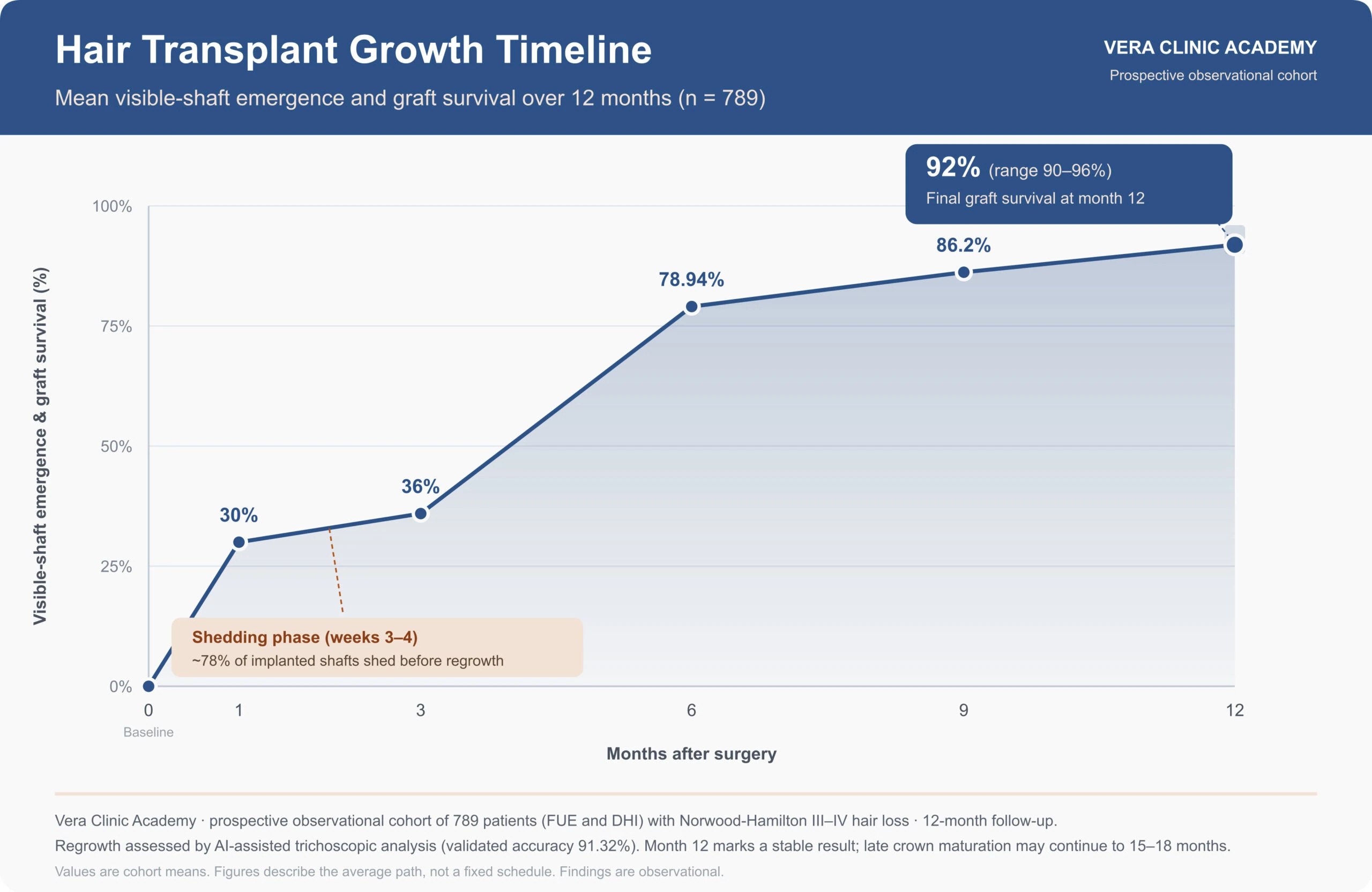
Vera Clinic Academy quantified this growth curve in a prospective observational cohort of 789 patients with Norwood-Hamilton III–IV androgenetic alopecia who underwent FUE or DHI, using standardised photography and AI-assisted trichoscopic analysis (validated measurement accuracy 91.32%). Regrowth followed an S-shaped pattern: near-flat during the early shedding phase, then climbing sharply between months 3 and 9 before levelling into a final plateau. Mean regrowth reached 36% at month 3, 78.94% at month 6, 86.2% at month 9, and a mean graft survival of 92% (range 90–96%) at month 12.
Hair Transplantation Growth Timeline Research| Post-op interval | Mean regrowth rate | n analyzed |
|---|---|---|
| Month 0 (Baseline) | 0.0% | 789 |
| Month 1 | 30% | 789 |
| Month 3 | 36% | 789 |
| Month 6 | 78.94% | 789 |
| Month 9 | 86.2% | 632 |
| Month 12 (Final) | 92% (range 90–96%) | 564 |
Because individual regrowth varies with graft count, shaft caliber, and recipient area, these figures describe the average path recorded across the cohort rather than a fixed schedule.


What Are the Key Differences in Recovery Time for Each Hair Transplant Technique?
The table below compares hair transplant recovery time and milestones for major techniques, highlighting pain, healing, and visible growth stages.
| Technique | Pain Level (Post-op) | Healing Time (Donor Area) | Healing Time (Recipient Area) | New Hair Growth Starts | Noticeable Growth | 80–90% Final Results By |
| FUE Hair Transplant | Mild (tiny punctures) | 7–10 days | 7–14 days | 3–4 months | 6–7 months | 9–12 months |
| FUT Hair Transplant | Moderate (linear scar) | 2–3 weeks | 7–14 days | 3–4 months | 6–7 months | 12–14 months |
| DHI Hair Transplant | Mild | 7–10 days | 5–10 days | 3–4 months | 5–6 months | 9–12 months |
| Sapphire Hair Transplant | Very mild (smaller incisions) | 5–7 days | 5–10 days | 2.5–3 months | 5–6 months | 9–12 months |
| Robotic Hair Transplant | Mild to moderate | 7–12 days | 7–14 days | 3–4 months | 6–7 months | 10–12 months |
| Stem Cell Hair Transplant | Minimal (regenerative) | 5–7 days | 5–10 days | 2–3 months | 5–6 months | 8–10 months |
| Micro FUE Hair Transplant | Very mild | 5–7 days | 5–10 days | 2.5–3 months | 5–6 months | 9–12 months |
Sapphire and Micro FUE techniques are associated with faster donor-area healing compared to FUT, as the smaller blade cross-section reduces tissue trauma at the incision site. Stem cell transplants, though less common, show earlier regrowth (2–3 months) due to regenerative cell signaling.
What to Expect Before and After these Hair Transplant Techniques in Turkey?
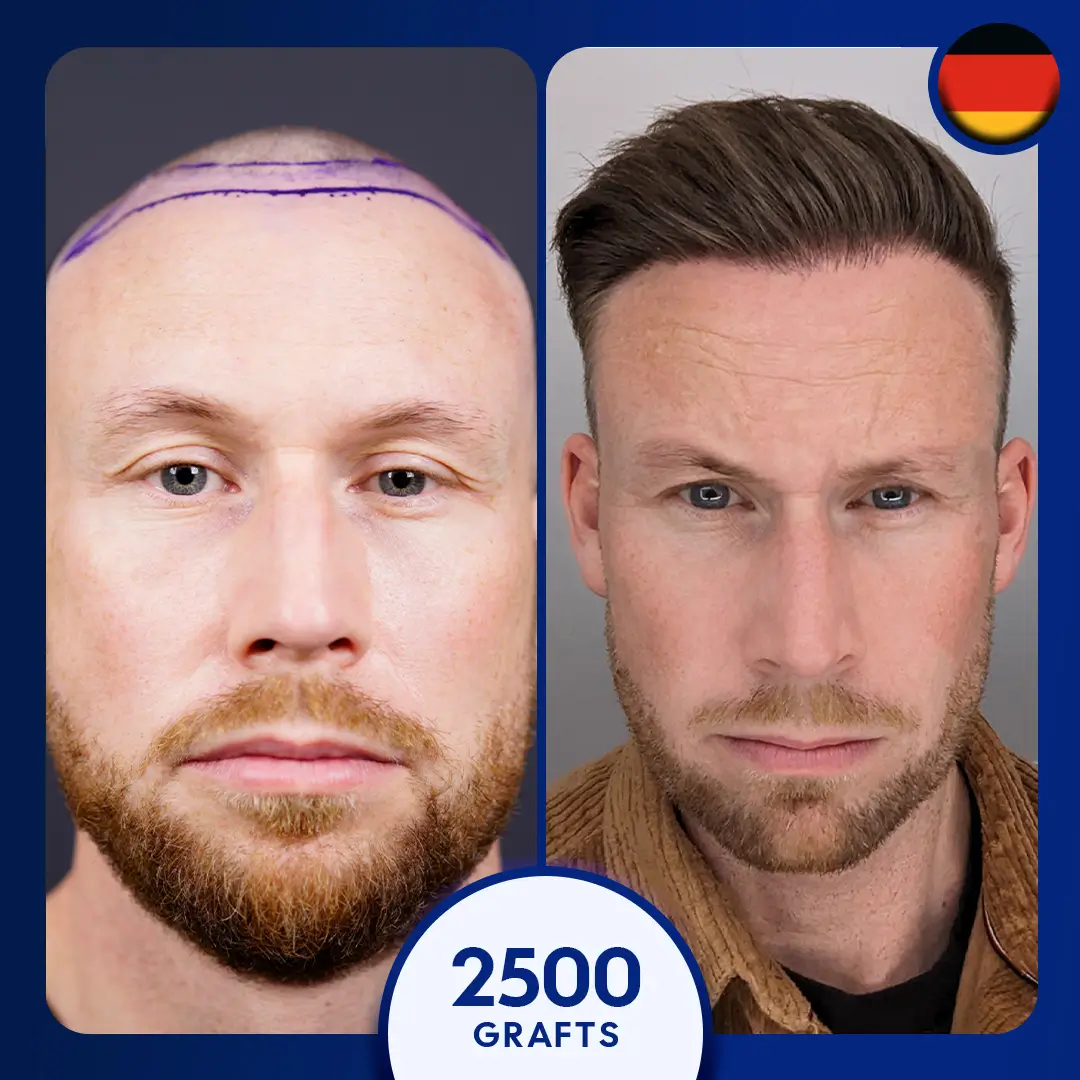
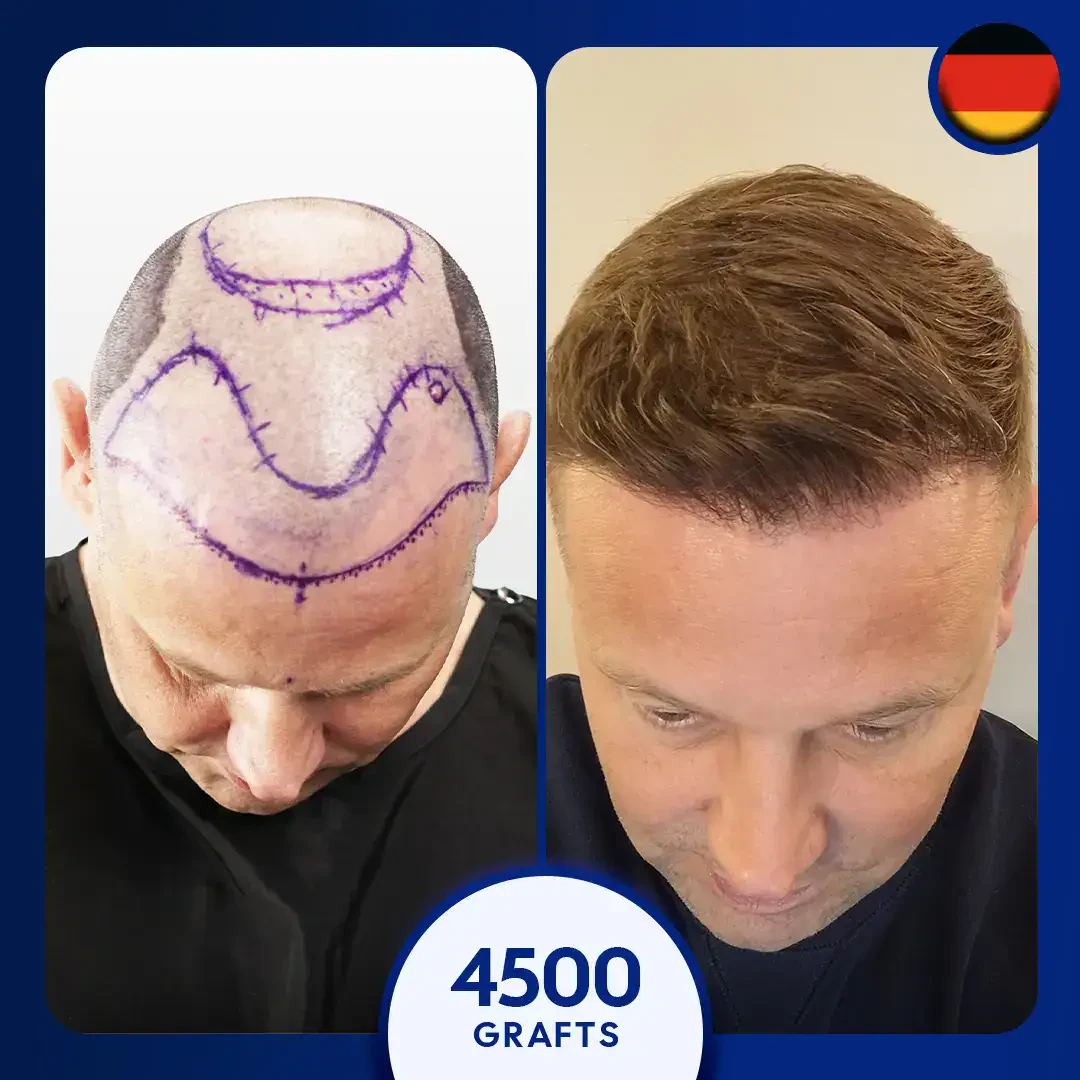
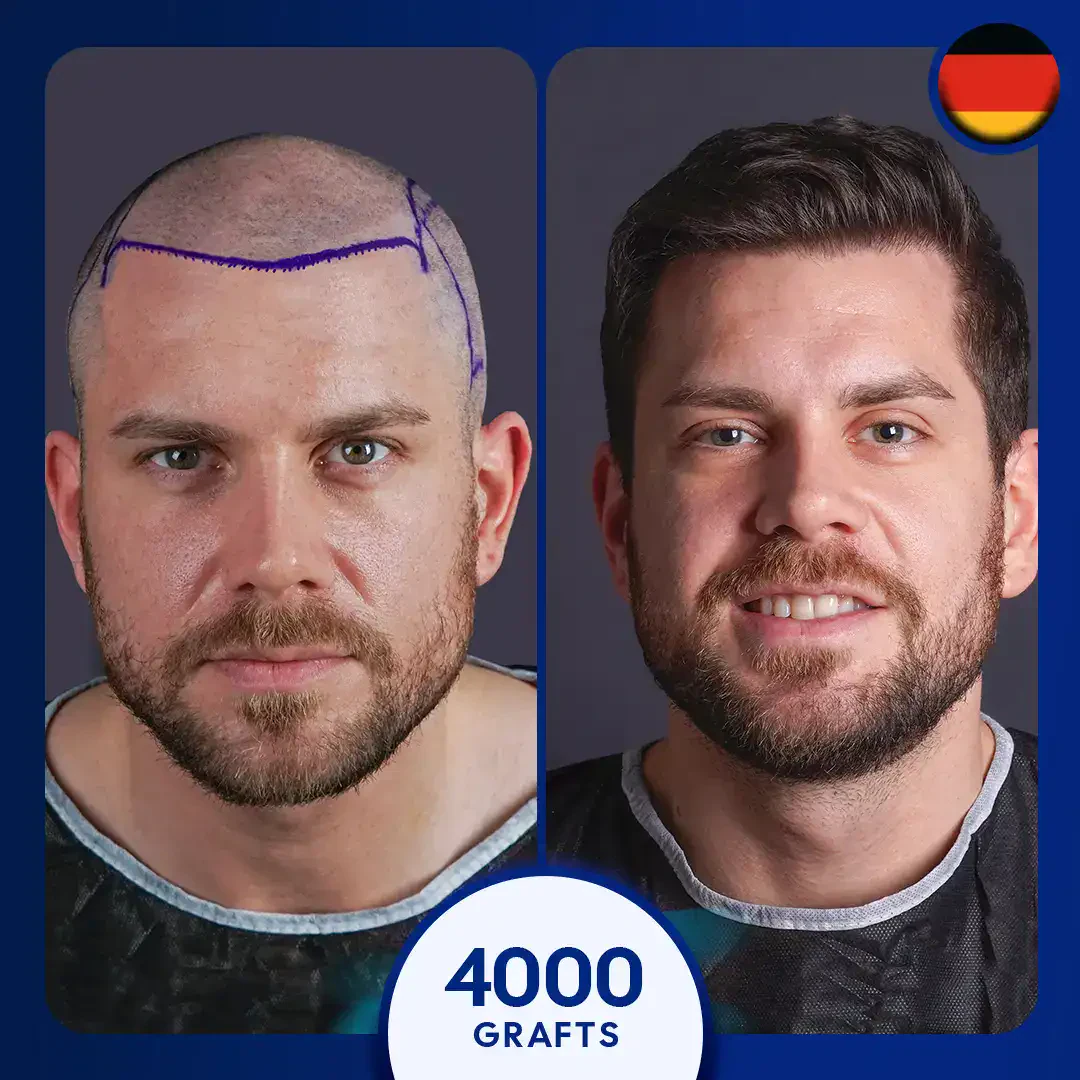
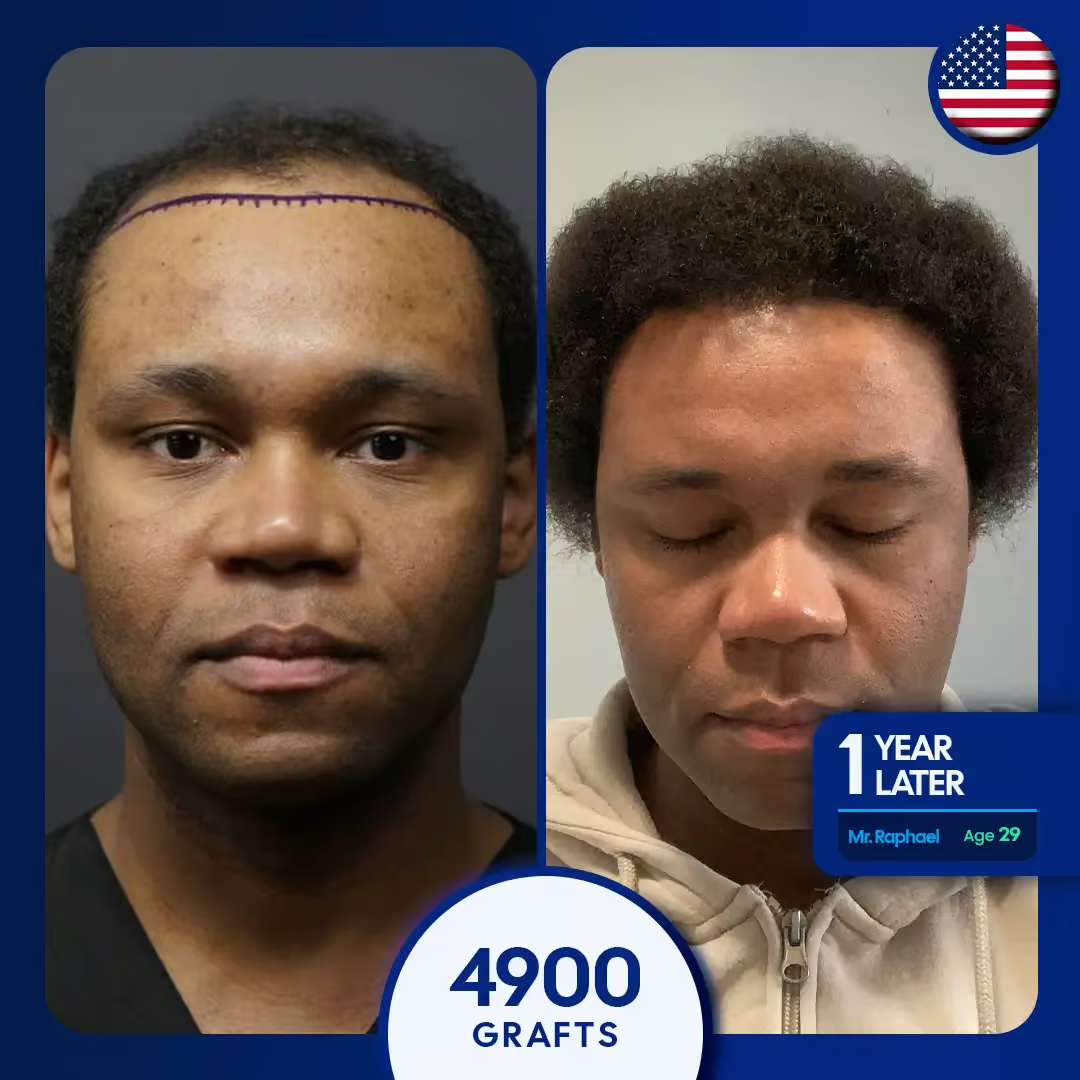
Before a hair transplant in Turkey, patients often present with visible thinning at the temples, crown, or frontal hairline, along with reduced density that exposes the scalp under bright light. Donor areas (the back and sides) retain healthy follicles.
After modern methods like FUE, DHI, Sapphire FUE, Robotic, or Stem Cell transplants, early shedding occurs in weeks 2–6, followed by sprouting around month 3. By 6–7 months, coverage appears noticeably thicker, and 80–90% final density is achieved by 9–12 months. Clinics using Sapphire FUE in Turkey have contributed to the technique’s reputation for natural-looking results, which has supported Turkey’s position as a leading destination for hair restoration.