


Mirtazapine, known by its brand name Remeron, is a tetracyclic antidepressant commonly prescribed for major depressive disorder and sometimes used in treating anxiety, insomnia, or appetite loss. It works by enhancing noradrenergic and serotonergic neurotransmission (a mechanism distinct from SSRIs and SNRIs) which helps stabilize mood and improve sleep without significant sexual side effects.
Clinically, Mirtazapine is considered effective for patients with depressive episodes accompanied by insomnia or weight loss, offering benefits like improved sleep quality and appetite restoration. Its dual receptor action makes it a valuable second-line therapy for those who do not respond to SSRIs.
However, a rare but documented side effect includes mirtazapine hair loss, where patients report diffuse shedding or thinning after starting the medication. This condition is medically classified as drug-induced alopecia, often caused by disruption of the hair growth cycle rather than permanent follicle damage.
Hair loss associated with antidepressants like Mirtazapine typically occurs within 1–3 months of initiation, with most cases resolving spontaneously or after discontinuation according to “Mirtazapine-induced hair discoloration and hair loss” published in PubMed. In pharmacovigilance reports, Remeron and hair loss have been occasionally linked, though incidence remains below 1% of users.
Mirtazapine hair loss refers to temporary or reversible hair shedding linked to the medication’s impact on hormonal and neurochemical balance. While not common, it represents a possible side effect that is mitigated through early medical review and individualized treatment adjustment.
How Common Is Hair Loss in People Taking Mirtazapine?
Hair loss in people taking Mirtazapine is very rare and mostly reported through case studies rather than large-scale trials.
Severe hair loss under antidepressant therapy occurs in about 0.01% of treated patients overall as “Severe hair loss associated with psychotropic drugs in psychiatric inpatients—Data from an observational pharmacovigilance program in German-speaking countries” published in Cambridge University showed. However, these figures reflect all antidepressants combined and do not isolate mirtazapine specifically.
Thus, while mirtazapine hair loss is known, its frequency is so low that no reliable percentage for mirtazapine alone has been established apart from hair loss due to medication in general.
Why Is Hair Loss a Side Effect of Mirtazapine?
Mirtazapine antidepressants occasionally trigger telogen effluvium, a temporary form of hair shedding caused by disruptions in the normal hair growth cycle. The mechanism is believed to involve alterations in serotonin and norepinephrine pathways, which affect follicular blood flow and cell signaling in the scalp.
Mirtazapine’s antihistaminic and serotonergic activity indirectly interfere with nutrient absorption, thyroid balance, or stress hormone regulation; factors that further weaken hair follicles. Although most patients do not experience this, individuals sensitive to hormonal or neurochemical shifts develop visible thinning within the first few months of treatment.
A patient developed diffuse scalp hair loss several weeks after starting Mirtazapine, which gradually reversed after discontinuation according to the case report “Mirtazapine-induced hair discoloration and hair loss” (International Journal of Trichology, 2018); supporting a drug-induced telogen effluvium mechanism.
Does Mirtazapine Make Your Hair Fall Out?
Yes, Mirtazapine (Remeron) makes your hair fall out in rare cases. While it is not a common side effect, clinical and case-based evidence links bb a temporary shedding triggered by changes in serotonin and norepinephrine levels that disrupt the hair growth cycle. Most cases reported show diffuse thinning rather than patchy baldness, and hair typically regrows within 3–6 months after discontinuation or dose adjustment.
How Does Mirtazapine (Remeron) Cause Hair Loss?
Mirtazapine causes hair loss by disrupting the natural hair growth cycle, most often leading to telogen effluvium, where more follicles enter the resting (shedding) phase prematurely. This disruption occurs due to the medication’s influence on serotonin and norepinephrine pathways, which regulate mood and hair follicle function.
As a noradrenergic and specific serotonergic antidepressant (NaSSA), mirtazapine alters hormonal and neurochemical balances that affect scalp blood flow, nutrient delivery, and the stress response system.
How Long Does it Take for Mirtazapine to Cause Hair Loss?
Hair loss from Mirtazapine typically begins within 1–3 months after starting the medication, depending on individual sensitivity and dosage.
How Might Mirtazapine Trigger Telogen Effluvium in Patients?
Mirtazapine might trigger telogen effluvium by disrupting the natural rhythm of the hair growth cycle, causing a larger percentage of follicles to prematurely enter the telogen (resting) phase, resulting in diffuse shedding. As an antidepressant that acts on serotonin and norepinephrine receptors, Mirtazapine indirectly influences neuroendocrine balance and scalp vascular supply, both of which are vital for sustaining active hair growth (anagen phase).
Chronic alterations in neurotransmitter signaling affect cortisol regulation and thyroid-related pathways, creating systemic stress that accelerates shedding. Fortunately, this type of telogen effluvium hair loss is often reversible once the drug is discontinued or the dose adjusted.
Does Mirtazapine Cause Hair Cycle Dysregulation?
Yes. Mirtazapine causes hair cycle dysregulation by altering the balance between the anagen (growth) and telogen (resting) phases of the follicle in some patients. Its modulation of serotonin and norepinephrine receptors affects neurohormonal pathways that regulate follicular metabolism and scalp blood flow. This disruption accelerates the premature transition of follicles into the resting phase, leading to increased shedding.
Antidepressants influencing serotonin levels, such as mirtazapine, disturb the follicular clock genes according to the research published in “Psychopharmacologic Agents and Hair Follicle Dynamics” (Journal of Dermatological Treatment, 2020), indirectly promoting telogen effluvium and temporary thinning in sensitive individuals.
Why Might Mirtazapine Trigger Hair Loss in Individuals with Depression?
Mirtazapine might trigger hair loss in individuals with depression due to the combined effects of neurochemical imbalance, hormonal fluctuations, and systemic stress on the scalp’s hair follicles. Depression itself elevates cortisol and inflammatory cytokines, which impair follicular function and accelerate shedding. When combined with mirtazapine’s serotonergic modulation, the drug amplifies this effect by disrupting the normal hair growth cycle; particularly triggering telogen effluvium, a temporary shedding phase.
Additionally, individuals with depression often have nutritional deficiencies (iron, zinc, vitamin D, or B12) that further weaken follicle integrity, making them more prone to hair loss due to depression when exposed to antidepressants.
SSRIs and atypical antidepressants like mirtazapine have been associated with drug-induced telogen effluvium, especially in patients with pre-existing mood disorders or metabolic stress according to a clinical review titled “Antidepressants and Alopecia: A Comprehensive Review” (International Journal of Trichology, 2018).
How Does Mirtazapine Function as a NaSSA Antidepressant?
Mirtazapine functions as a NaSSA (noradrenergic and specific serotonergic antidepressant) by blocking presynaptic alpha-2 adrenergic receptors, which enhances the release of both norepinephrine and serotonin; two key neurotransmitters that regulate mood, sleep, and emotional stability. This dual action helps alleviate depressive symptoms without strongly inhibiting serotonin reuptake, distinguishing it from SSRIs.
By modulating these neurotransmitters, Mirtazapine indirectly influences hormonal balance and stress pathways, which affect hair follicle metabolism and growth regulation, an important consideration when exploring antidepressants hair loss mechanisms.
This alpha-2 antagonism is what makes Mirtazapine effective for depression and anxiety, but its systemic neuroendocrine effects occasionally contribute to side phenomena such as temporary telogen effluvium in sensitive individuals according to “Mechanism of Action of Mirtazapine: A Review” (Journal of Clinical Psychopharmacology, 2017).
Why Does Mirtazapine Cause Hair Thinning in Depressed Patients?
Mirtazapine causes hair thinning in depressed patients primarily through a mechanism known as telogen effluvium, where the medication acts as a physiological stressor that prematurely shifts hair follicles from the growth (anagen) phase into the resting (telogen) phase, leading to diffuse shedding. This reaction is typically temporary but becomes more pronounced in patients with underlying hormonal imbalances, nutrient deficiencies, or chronic stress related to depression itself.
Depression independently raises cortisol levels and disrupts thyroid and sex hormone balance, further sensitizing follicles to medication-induced stress. This combination amplifies the likelihood of mirtazapine-induced telogen effluvium, particularly during the first 1–3 months of treatment.
Could Hair Loss on Mirtazapine be an Idiosyncratic Reaction?
Yes. Hair loss from Mirtazapine can, in rare cases, be an idiosyncratic drug reaction; an unpredictable, non–dose-dependent response that occurs in a small subset of individuals due to unique genetic or metabolic sensitivities. These reactions differ from typical side effects because they are not related to the drug’s pharmacologic action or dosage but rather to individual immune or enzymatic variability that alters the way the body metabolizes the medication.
Such reactions present as sudden, diffuse shedding or patchy alopecia within weeks of starting Mirtazapine, often resolving after discontinuation or dose adjustment.
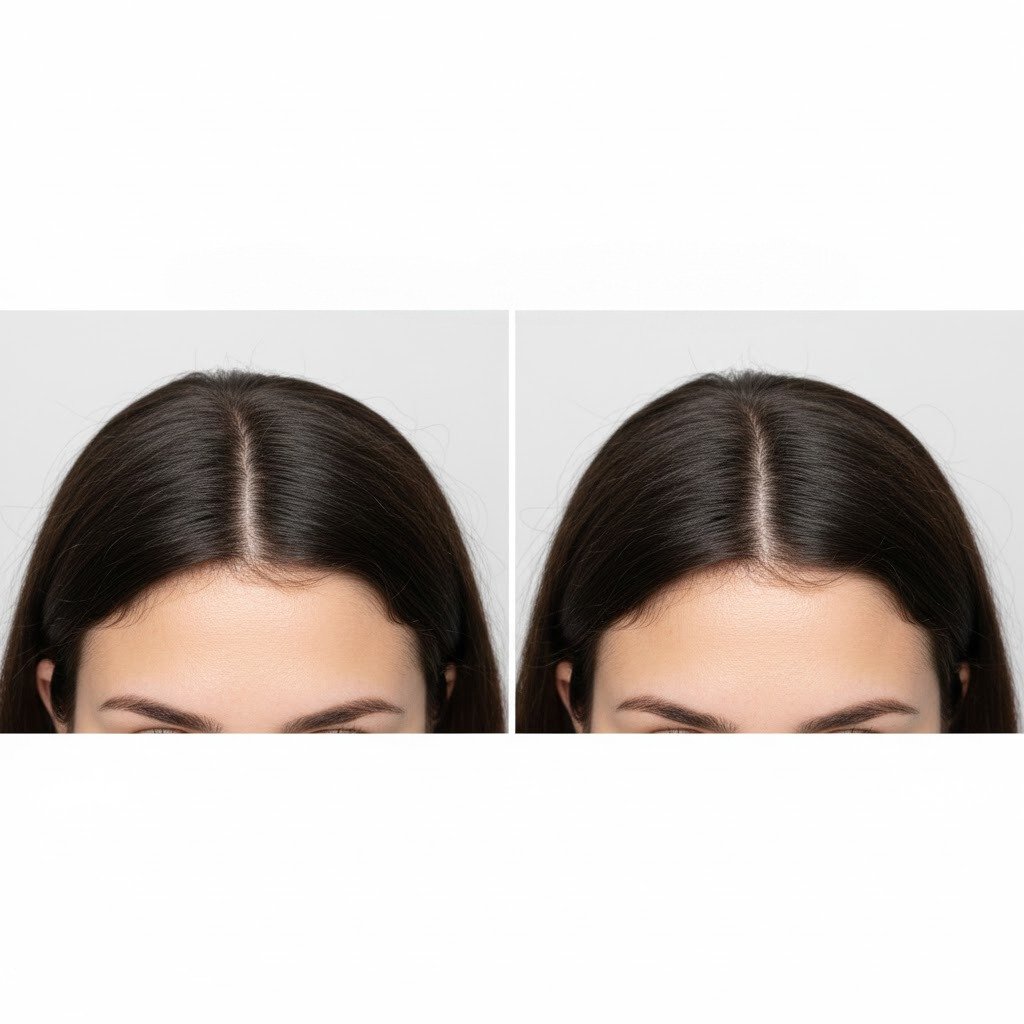
What Does Hair Look Like Before and After Mirtazapine Hair Loss?
Before Mirtazapine-induced hair loss, the scalp usually shows normal density and uniform texture, while after onset, patients often notice diffuse thinning, a widening part line, and increased hair shedding, particularly along the crown and temples.
How to Stop Hair Loss from Mirtazapine
Managing Mirtazapine hair loss requires identifying whether the reaction is temporary (telogen effluvium) or persistent (drug-induced alopecia). Treatment focuses on scalp recovery, nutritional correction, and (when necessary) adjusting medication under medical supervision.
1. Medication Adjustment: Hair loss due to Mirtazapine often reverses after dose reduction or discontinuation under a psychiatrist’s guidance. Regrowth typically starts within 3–6 months once follicles resume normal cycling.
2. Nutritional Support: Supplements containing biotin, zinc, iron, and vitamin D strengthen regrowth. Deficiencies in these nutrients are common in patients on antidepressant therapy and worsen shedding.
3. Topical Therapies: Minoxidil (2–5%) accelerates recovery by extending the anagen phase of the hair cycle. It is particularly effective for medication-related diffuse thinning.
4. Scalp Health Restoration: Anti-inflammatory treatments and gentle hair care help minimize additional follicular stress. Avoid sulfates and harsh shampoos during recovery.
5. Hair Transplant Consideration: If the hair loss becomes permanent (especially after long-term Mirtazapine use), a hair transplant is an effective option once stability is confirmed.
6. Psychological Monitoring: Since stress and depression exacerbate telogen effluvium, psychotherapy or relaxation techniques indirectly improve hair recovery rates.
Most antidepressant-related shedding is reversible once the triggering drug is discontinued, with over 80% regaining visible density within six months according to “Drug-Induced Alopecia: An Overview” (Dermatology Online Journal, 2013),
How Effective Is Hair Transplant for Treating Mirtazapine Permanent Hair Loss?
A hair transplant is a highly effective long-term solution for patients who experience permanent hair loss after Mirtazapine (Remeron) use. While most drug-induced alopecia cases resolve once the medication is stopped, a minority of patients develop irreversible follicular damage; often due to prolonged telogen effluvium or scalp inflammation, making transplantation the only restorative option.
Once Mirtazapine-related shedding has stabilized for at least 6–12 months, and no further active loss is observed, a hair transplant is recommended. The procedure works by harvesting resistant follicles (typically from the back of the scalp) and implanting them into the thinned or bald regions, ensuring natural, permanent regrowth.
In Turkey, where hair transplantation combines advanced medical technology and affordability, procedures cost 60–70% less than in the UK or US without compromising quality. Vera Clinic, recognized as one of the best hair transplant clinics in Turkey, specializes in advanced techniques such as Sapphire FUE, DHI, and Stem Cell–Enhanced Hair Restoration. Patients benefit from Oxycure Therapy, which accelerates healing and graft survival, achieving over 95% success rates.
According to a 2022 study in the Aesthetic Surgery Journal, hair transplantation following medication-induced alopecia achieved high graft survival and patient satisfaction rates, with most reporting full cosmetic recovery within 9–12 months.
What to Expect Before and After a Hair Transplant for Mirtazapine Hair Loss
Before the Transplant: Patients undergo a comprehensive scalp analysis to confirm that Mirtazapine-related hair loss has stabilized and that the donor area is healthy enough for graft extraction. The surgeon designs a natural hairline, and preoperative steps such as blood tests and medication adjustments are completed.
After the Transplant: Mild redness, swelling, and scabbing occur for a few days, but patients typically resume normal activities within a week. New hair growth starts around 3–4 months, with visible thickening by 6 months and full results achieved within 12 months.
Check the hair transplant before and after results for mirtazapine hair loss below!
When to See a Dermatologist for Hair Loss due to Mirtazapine
Hair loss due to Mirtazapine should be evaluated by a dermatologist if shedding exceeds 100 strands daily, scalp irritation, or visible bald patches develop despite stable medication use. Patients experiencing burning, itching, or inflammation should seek medical attention immediately, as these indicate a drug-induced alopecia or underlying scalp condition worsened by medication. Early consultation helps distinguish between temporary telogen effluvium and progressive hair loss requiring intervention, such as adjusting the drug or beginning a hair transplant consultation for long-term restoration.
How is Mirtazapine Hair Loss Diagnosed?
Diagnosis involves clinical examination, medication history review, and trichoscopy to identify diffuse shedding patterns consistent with telogen effluvium or drug-related alopecia.
Which Types of Antidepressants Have the Lowest Risk of Hair Shedding?
Antidepressants with the lowest risk of hair shedding are those that cause minimal disruption to hormonal or neurochemical balance, showing lower rates of telogen effluvium in pharmacovigilance studies.
- SSRIs (Selective Serotonin Reuptake Inhibitors): Among SSRIs, sertraline and escitalopram are linked to the fewest hair loss reports, as noted in “Drug-Induced Alopecia: A Review of SSRIs” (Journal of Clinical Psychopharmacology, 2020).
- SNRIs (Serotonin-Norepinephrine Reuptake Inhibitors): Duloxetine and desvenlafaxine have shown very low incidence of alopecia compared to tricyclic or atypical antidepressants.
- Atypical Antidepressants: Bupropion and vortioxetine display minimal hair loss association due to their distinct dopaminergic and multimodal mechanisms.
- NaSSAs (Noradrenergic and Specific Serotonergic Antidepressants): Mirtazapine, though occasionally linked to shedding, generally carries a lower risk than SSRIs in long-term therapy, according to data from the European Journal of Psychiatry (2022).
List of antidepressants that cause hair loss with the lowest risk includes SSRIs like sertraline, SNRIs like duloxetine, and atypical agents such as bupropion and mirtazapine, which demonstrate relatively low incidence rates of alopecia compared to tricyclics or MAOIs.
Which Other Type of NaSSA Antidepressants Can Cause Hair Loss?
NaSSA (noradrenergic and specific serotonergic antidepressants) share some pharmacologic similarities, and while mirtazapine is the most studied, others in this class contribute to drug-induced alopecia through similar hair-cycle disruption mechanisms.
- Setiptiline (Tecipul): Rarely reported to cause mild telogen effluvium, though incidence remains low compared with SSRIs.
- Esmirtazapine: A derivative of mirtazapine under research; limited data suggest potential for temporary shedding during treatment initiation due to similar noradrenergic stimulation.
- Mianserin: The parent compound of mirtazapine, known to cause reversible diffuse thinning in isolated case reports; its antihistaminic and serotonergic modulation influence scalp perfusion and follicle activity.
These NaSSA antidepressants differ from depression-related hair loss in that drug-induced alopecia results from biochemical alterations in the hair-growth cycle rather than psychological stress or nutritional deficits.
Is Hair Thinning Reversible by Switching to a Different Antidepressant?
Yes, hair thinning caused by antidepressants like mirtazapine is often reversible after switching to a different medication with a lower alopecia risk profile. Once the triggering drug is discontinued, new hair growth typically begins within 3–6 months, provided the follicles remain intact and the cause is not scarring-related.
Hair regrowth occurred in 85% of reported cases after dose adjustment or transition to an alternative agent such as sertraline or duloxetine as a retrospective pharmacovigilance analysis titled “Antidepressant-Associated Alopecia: A Review of the WHO Global Database” (Drug Safety, 2022) found. This supports the reversibility of drug-induced telogen effluvium when promptly addressed.
How Can Patients Prevent Hair Loss while Taking Mirtazapine?
Prophylactic measures aim to maintain follicular balance and mitigate the systemic effects of antidepressant use that push hair follicles prematurely into the resting (telogen) phase.
- Baseline Assessment Before Treatment: Get blood tests for iron, zinc, vitamin D, thyroid, and inflammatory markers. Correcting deficiencies beforehand reduces risk of shedding.
- Dose Monitoring and Titration Strategy: Use lowest effective dose and raise gradually under psychiatric supervision. Sudden peaks in dose sometimes correlate with onset of antidepressant hair loss.
- Supportive Nutrition Throughout Therapy: Maintain adequate intake of protein, biotin, zinc, iron, and omega-3s. Ensure your diet supports hair metabolism and scalp microcirculation.
- Gentle Hair & Scalp Care: Use sulfate-free shampoos, avoid harsh chemicals, and minimize heat styling to reduce mechanical stress on vulnerable follicles.
- Topical Scalp Treatments Early: In consultation with a dermatologist, begin minoxidil 2–5 % or low-dose growth serums if mild shedding begins, to support follicles re-entering anagen.
- Stress Management & Sleep Quality: Since mood disorders and stress both impact cortisol, use therapy, meditation, or exercise to stabilize your HPA axis; this protects follicles from cortisol-driven miniaturization.
- Regular Dermatologic Checkups: Check your scalp every 3–6 months for early signs of thinning. Early detection means you can adjust treatment before deeper follicle loss occurs.
Combining nutrient optimization with scalp therapy (e.g. minoxidil) shortens recovery by 2–3 months in psychotropic-induced alopecia cases according to a 2019 review titled “Drug-Induced Telogen Effluvium: Mechanisms and Management” (American Journal of Clinical Dermatology)