

Wellbutrin, also known as bupropion, is a prescription antidepressant widely used to treat major depressive disorder and seasonal affective disorder. Doctors also prescribe it to help people stop smoking. While many patients benefit from its effect on mood and energy, some report unwanted side effects, including hair loss.
Hair loss linked to antidepressants is not rare. Several medications in this class can disrupt the hair growth cycle, leading to thinning or shedding. With Wellbutrin, the connection is still considered uncommon, but evidence shows it can happen. A large study published in The Journal of Clinical Psychiatry reviewed over 1 million patients and found that bupropion carried a slightly higher risk of hair loss compared with selective serotonin reuptake inhibitors (SSRIs) such as sertraline and fluoxetine.
How Common Is Hair Loss with Bupropion Medicine?
Hair loss with bupropion is uncommon but documented. Clinical studies and patient reports suggest it affects less than 1 in 100 people. In pharmacovigilance data, the incidence rate is estimated at 0.1% to 1%, making it a rare side effect compared to other drug reactions.
A population-based study in The Journal of Clinical Psychiatry (2017) compared antidepressants and found that bupropion had a slightly higher association with hair loss due to medication than SSRIs.
For example, after two years of treatment, about 1 in 45 patients on bupropion experienced some degree of hair shedding, while fluoxetine and paroxetine carried lower risks.
Most cases are temporary and reversible. The shedding often begins 2–4 months after starting the drug and may resolve once the body adapts or the medication is discontinued. However, if the shedding continues beyond six months, the hair loss may be persistent and require medical intervention.
How Does Wellbutrin Cause Hair Loss?
Wellbutrin can cause hair loss by disrupting the hair growth cycle. Normal hair grows in phases: anagen (growth), catagen (transition), and telogen (rest). When a drug like bupropion interferes with hormonal or neurological pathways, it can push a higher number of hairs into the telogen phase, leading to a condition called telogen effluvium.
Researchers suggest that Wellbutrin may trigger hair shedding through its effect on the dopamine and norepinephrine systems, which play indirect roles in the body’s stress response. These changes can influence the hypothalamic-pituitary-adrenal (HPA) axis, a key regulator of cortisol and other hormones that affect follicles.
In a review published in Drug Safety, antidepressants including bupropion were linked to stress-induced shedding in a small but consistent percentage of patients. The pattern usually appears as diffuse thinning across the scalp, not patchy bald spots.
For some, the hair begins to thin within three to four months of starting Wellbutrin. The good news is that if the drug is stopped, regrowth often begins within a similar timeframe.
Why Is Hair Loss a Common Side Effect of Wellbutrin (Bupropion)?
Hair loss is not the most frequent Wellbutrin side effect, but when it happens, the cause is often linked to stress on the body’s hair cycle. Bupropion changes how the brain regulates dopamine and norepinephrine. These shifts can raise cortisol levels, which in turn disrupts normal follicle function.
When more follicles enter the resting phase (telogen) at the same time, hair begins to shed more than usual. This explains why patients describe finding extra hair on their pillow, in the shower, or while brushing.
A study in Annals of Pharmacotherapy documented several cases where people developed bupropion side effects hair loss within months of treatment. In most reports, the shedding slowed or reversed after the drug was discontinued.
Why Does Wellbutrin Sometimes Lead to Scalp Itching?
Scalp itching is a less common side effect of Wellbutrin, but it has been reported in patient case studies and drug safety databases.
The exact cause is not fully understood. One theory is that bupropion can cause mild skin hypersensitivity, which may present as dryness or itchiness on the scalp. Another possibility is that increased shedding from hair follicles irritates the skin, creating an itchy sensation.
A review in Clinical Neuropharmacology noted that around 2% of patients reported itching as part of their bupropion side effects. While most wellbutrin itchy scalp cases do not require treatment, persistent itching should be discussed with a doctor, as it can sometimes overlap with allergic reactions or scalp conditions unrelated to the drug.
How Does the HPA Axis Respond to Bupropion and Affect Hair Follicles?
The hypothalamic-pituitary-adrenal (HPA) axis controls the body’s response to stress by regulating hormones such as cortisol. When functioning normally, it helps maintain balance in many systems, including skin and hair health.
Bupropion influences dopamine and norepinephrine activity, which can indirectly stimulate the HPA axis. This can lead to higher cortisol levels, and elevated cortisol has been shown in studies to shorten the anagen (growth) phase of hair follicles. When this happens, more follicles move prematurely into the telogen (resting) phase, causing shedding.
A paper in Endocrine Connections highlighted how chronic stress or HPA axis dysfunction can damage follicle cycling and even delay regrowth. This mechanism helps explain why some patients on Wellbutrin report increased thinning or shedding, particularly if they are already vulnerable to stress-related hair loss.
How Does Wellbutrin Cause Hair Thinning in People with Depression?
People with depression already face a higher risk of wellbutrin hair thinning because chronic stress and low mood can disrupt the hair growth cycle. When Wellbutrin is added, it can amplify this effect in some patients.
The drug alters neurotransmitters like dopamine and norepinephrine. These changes may trigger hormonal shifts and influence how nutrients are absorbed, both of which are important for healthy hair. Reduced nutrient uptake, especially iron, zinc, and vitamin D, has been linked to diffuse shedding in people with mood disorders.
Research published in Psychiatry Investigation showed that patients with depression had significantly lower hair density compared to non-depressed individuals, even before starting medication. Adding bupropion can sometimes push hair follicles further into the telogen phase, resulting in visible thinning across the scalp.
For most, the hair loss due to depression is temporary. Hair often begins to regrow once the body adjusts to the medication, or if the drug is switched to a different antidepressant.
Can Neuroinflammation Contribute to Hair Loss in Patients Taking Bupropion?
Yes. Neuroinflammation can play a role in hair loss for some patients on bupropion. Chronic activation of the immune system in the scalp can damage hair follicles and disrupt the growth cycle. Bupropion’s influence on neurotransmitters may indirectly trigger low-level inflammatory responses in susceptible individuals.
How Does Bupropion Potentially Trigger Telogen Effluvium?
Telogen effluvium is a condition where a large number of hair follicles enter the resting (telogen) phase simultaneously, leading to diffuse shedding. Bupropion can trigger this effect through its impact on neurotransmitters and hormonal balance.
When dopamine and norepinephrine levels shift, the body may respond as if under stress. This stress can shorten the anagen (growth) phase and push more hairs into telogen, creating noticeable shedding 2–4 months after starting treatment.
Clinical reports, including a review in Drug Safety, document bupropion-induced telogen effluvium as a rare but recognized reaction. The shedding is usually diffuse, temporary, and often reverses once the medication is adjusted or discontinued.
What Does Hair Look Like Before and After Wellbutrin Hair Loss?
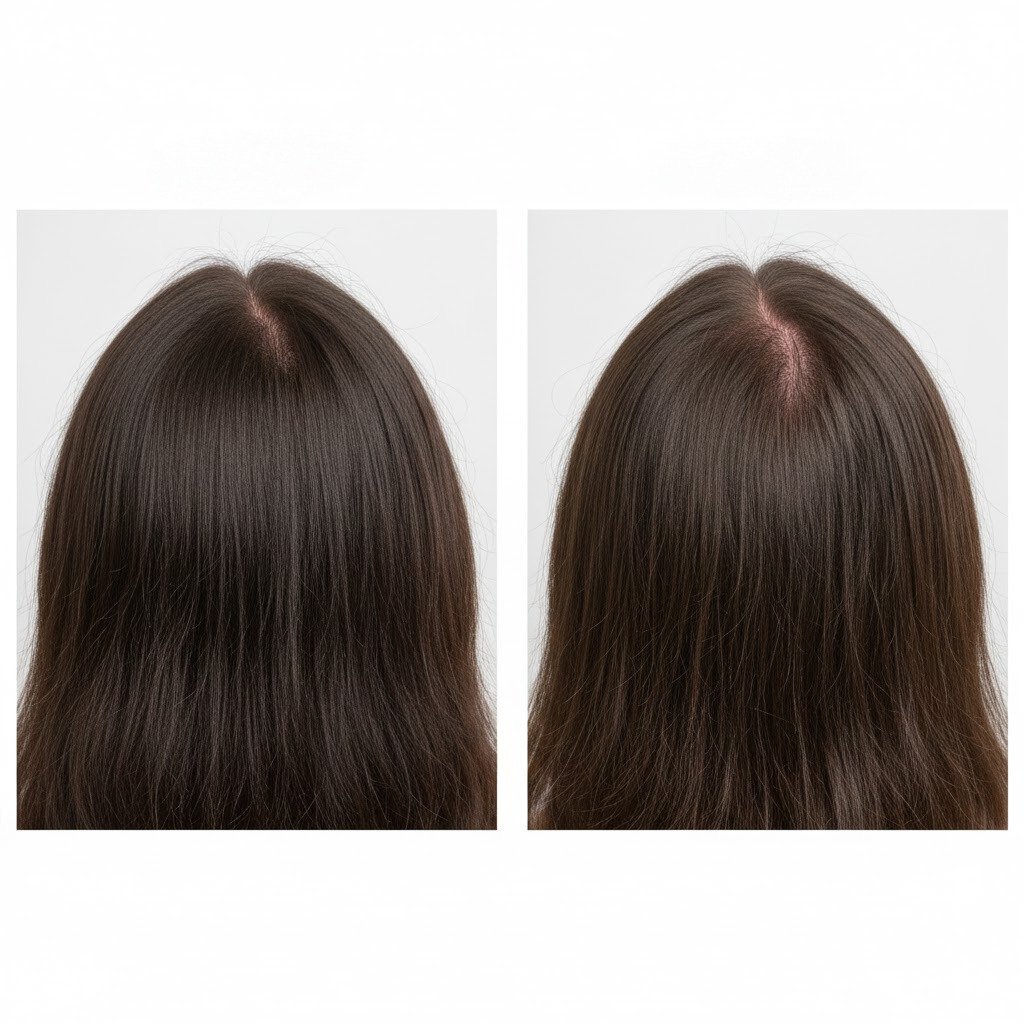
Before experiencing hair loss from Wellbutrin, the scalp typically shows normal hair density with uniform thickness across the strands. After several weeks or months on bupropion, some patients may observe diffuse thinning, particularly on the top and crown of the scalp.
How to Stop Hair Loss from Wellbutrin
Stopping hair loss from Wellbutrin requires a combination of medical guidance and supportive care. Patients should never discontinue the medication without consulting their doctor.
1. Consult your prescribing physician: Your doctor can assess whether hair loss is likely caused by bupropion or another factor. They may adjust the dosage or suggest switching to a different antidepressant.
2. Optimize nutrition: Adequate intake of iron, zinc, biotin, and vitamin D supports healthy hair growth. Blood tests can identify deficiencies that contribute to shedding.
3. Use gentle hair care: Avoid harsh shampoos, excessive heat, or tight hairstyles. Mild, sulfate-free shampoos and conditioner can reduce breakage and scalp irritation.
4. Consider topical treatments: Minoxidil or other clinically approved hair growth stimulants can help maintain follicle activity.
5. Medical interventions if needed: In cases where shedding persists beyond six months or leads to permanent thinning, advanced solutions like PRP therapy or hair transplants can restore hair density.
Hair regrowth typically begins 2–4 months after addressing the cause, but full recovery can take 6–12 months.
How Effective is Hair Transplant for Treating Wellbutrin Permanent Hair Loss?
Hair transplant surgery can be a viable solution for permanent hair loss caused by Wellbutrin, especially when the shedding has stabilized. The procedure restores hair density by relocating healthy follicles from donor areas to thinning or bald regions.
Clinical evidence shows that graft survival rates for modern techniques like Sapphire FUE exceed 95%, providing natural-looking results. Patients often notice visible improvement within 3–6 months, with full density achieved around 12 months post-procedure.
Vera Clinic in Turkey is recognized as a leading destination and the best hair clinic for hair transplant, combining customized plans, high-precision techniques, Oxycure Therapy for faster recovery, and post-operative care.
Hair transplant in this context is highly effective, but patient selection, medical history, and proper planning are critical for optimal outcomes.
What to Expect Before and After a Hair Transplant for Wellbutrin Hair Loss
Before the procedure, patients undergo a detailed consultation, scalp analysis, donor area evaluation, and medical history review. At Vera Clinic, advanced diagnostic tools like Trichoscale AI help measure hair density and follicle health with precision. After hair transplant, patients can expect to see final results in 1 year.
Patients often look at hair transplant before and after results to set realistic expectations after Wellbutring usage.
When to See a Dermatologist for Hair Loss due to Wellbutrin
Not all shedding on Wellbutrin requires urgent care, but certain warning signs mean it’s time to see a dermatologist. Patients should book an appointment if they notice:
Sudden, excessive shedding of more than 100–150 hairs per day, patchy bald spots rather than general thinning, persistent hair loss lasting longer than six months, scalp redness, itching, burning, or flaking along with hair loss, accompanying symptoms such as fatigue, brittle nails, or unexpected weight changes, which may indicate nutritional or thyroid issues.
A dermatologist can distinguish between temporary telogen effluvium caused by Wellbutrin and other conditions like alopecia areata or pattern baldness. Early evaluation is essential because timely treatment, including nutritional therapy, PRP, or a hair transplant consultation, improves long-term outcomes.
Why Might Switching Antidepressants Help Reverse Hair Thinning?
Switching antidepressants can sometimes reverse hair thinning because the shedding is often a medication-related side effect, not permanent follicle damage.
A study published in Drug Safety documented that drug-induced telogen effluvium typically resolves within 3–6 months once the triggering medication is discontinued or replaced. In clinical practice, patients who transition from bupropion to an SSRI or SNRI often report reduced shedding and visible regrowth within months.
What Antidepressants Do Not Cause Hair Loss? H3
Some antidepressants have a low risk of causing hair loss, making them suitable alternatives for patients sensitive to this side effect. These include:
- SSRIs (Selective Serotonin Reuptake Inhibitors) with minimal hair impact: escitalopram, citalopram, and sertraline in standard doses
- SNRIs (Serotonin-Norepinephrine Reuptake Inhibitors): venlafaxine and duloxetine have rare reports of hair shedding
- Mirtazapine: uncommon to trigger diffuse hair loss
- Agomelatine: limited data, but case reports suggest very low incidence
While no antidepressant is completely risk-free, switching to one of these medications can significantly reduce the likelihood of hair thinning compared to Wellbutrin.
Which Other Type of NDRI Antidepressants Can Cause Hair Loss?
Besides Wellbutrin (bupropion), other NDRI (Norepinephrine-Dopamine Reuptake Inhibitor) antidepressants can occasionally contribute to hair thinning, although this is rare. Hair loss is usually diffuse and linked to telogen effluvium rather than pattern baldness.
Known NDRIs associated with hair shedding include:
- Bupropion SR (Sustained Release): slightly higher incidence than immediate release
- Bupropion XL (Extended Release): some patients report mild, temporary shedding
- Other investigational or less commonly prescribed NDRIs: very few documented cases
For a comprehensive overview, patients should see the list of antidepressants that cause hair loss to prevent hair shedding due to medication.
Which Type of Wellbutrin Causes Hair Loss?
Hair loss can occur with any formulation of Wellbutrin, but reports suggest differences in incidence among the types:
- Wellbutrin Immediate Release (IR): Hair shedding is uncommon but has been reported in some patients.
- Wellbutrin Sustained Release (SR): Slightly higher reports of diffuse shedding compared to IR. Most cases are temporary.
- Wellbutrin Extended Release (XL): Generally well-tolerated, though rare cases of telogen effluvium have been documented.
Patients experiencing shedding should consult their doctor to discuss whether a different antidepressant or supportive hair therapy is appropriate.
How to Prevent Hair Loss when Taking Wellbutrin
Preventing hair loss while on Wellbutrin involves proactive care, monitoring, and lifestyle adjustments. Patients can take several steps to protect hair follicles and support growth:
1. Maintain proper nutrition: Ensure sufficient intake of iron, zinc, vitamin D, and biotin, which are essential for hair health. Blood tests can identify deficiencies that may exacerbate shedding.
2. Practice gentle hair care: Avoid tight hairstyles, harsh brushing, and heat styling. Use mild, sulfate-free shampoos to reduce scalp irritation and breakage.
3. Manage stress: Stress can worsen medication-related hair loss. Incorporate relaxation techniques, adequate sleep, and light exercise to reduce cortisol-related follicle disruption.
5. Discuss medication adjustments: Never alter your Wellbutrin dose without consulting your doctor. In some cases, switching to a different antidepressant or adjusting the dose can prevent further shedding.
6. Consider supportive treatments: Topical treatments like minoxidil, PRP therapy, or low-level laser therapy may strengthen follicles and accelerate regrowth. Studies indicate these methods can improve hair density by 30–50% in diffuse thinning cases.
By following these strategies, patients can minimize the risk of hair loss while continuing their antidepressant treatment safely.