

Teenage Hair Loss is a growing concern in dermatological practice, triggered by complex biological, psychological, and environmental factors during puberty. Hairfall in teenagers is frequently reported, affecting approximately 10 to 20% of adolescents, according to pediatric dermatology case reviews titled “Androgenetic alopecia in children” by Tosti et al. in 2005. The condition develops gradually or presents as sudden shedding, linked to stress, hormonal shifts, nutritional deficits, or inflammatory scalp conditions. A delayed diagnosis and long-term follicular miniaturization result from ignoring teenage hair loss in cases of androgenetic alopecia or untreated infections. Addressing hair fall in teenagers early is essential for reversing non-scarring loss and maintaining scalp health during critical years of development. Recognizing the reasons of hair fall in teenage years involves evaluating key patterns, such as diffuse thinning in telogen effluvium, circular bald patches in alopecia areata, traction-related recession in mechanical alopecias, or compulsive self-induced loss in trichotillomania.
Clinical assessments are required for each form, as well as targeted management. Widening part lines, increased hair on pillows or brushes, brittle strands, or visible scalp patches are common signs. Diagnosis is guided by trichoscopic examination, laboratory screening for deficiencies or autoimmune markers, and behavioral evaluations when psychiatric components are suspected. Treatments range from correcting nutritional imbalances and managing stress to using topical corticosteroids or antifungals, depending on the underlying cause. Consistent intervention guided by trichological or dermatological expertise improves prognosis and minimizes psychological distress in adolescent patients facing hair loss in teens.
Why is my hair falling out as a teenager?
Your hair is falling out as a teenager because hormonal fluctuations, nutrient deficiencies, scalp disorders, and psychological stress interfere with healthy follicle function. Androgen elevation during puberty alters the growth cycle by shortening the anagen phase, while iron depletion or vitamin D deficiency weakens keratin formation. Autoimmune attacks in alopecia areata, fungal infections, and seborrheic buildup contribute to scalp damage. Daily practices like excessive brushing or heat styling strain the hair shaft, increasing breakage. Emotional pressure activates the hypothalamic-pituitary-adrenal pathway, which accelerates follicle shedding and leads to Hair Loss.
What Is Teenage Hair Loss?
Teenage hair loss is a medical condition where teenagers between the ages of 13 and 19 experience a noticeable decrease in scalp hair density due to disruptions in the hair growth cycle. Teenage hair loss begins with increased hair shedding, visible thinning near the temples or crown, or patches of baldness. Hair loss in teens feels distressing during a period when physical appearance affects confidence and social interactions. Understanding hairfall in teenagers is essential because it helps identify underlying causes early, including hormonal shifts, nutritional deficiencies, autoimmune conditions, stress responses, or reactions to medications. Early recognition supports faster diagnosis and more effective intervention by healthcare professionals. Learning how hair loss in teens develops helps families and educators respond and reduce unnecessary shame or misinformation about the condition.
How Common Is Hair Loss in Teenagers?
Hair loss in teenagers is common, affecting around 25% of teenagers between the ages of 13 and 19. Hair loss in teenagers appears more in males due to the activity of androgens like dihydrotestosterone, which influence hair follicle shrinkage and shorten the growth phase. Male adolescents are more prone to develop visible thinning at the temples or crown, while female adolescents tend to experience increased shedding across the scalp linked to nutritional gaps, thyroid irregularities, or menstrual-related hormonal shifts.
Hairfall in teenagers begins between the ages of 14 and 18, though early signs have been observed as young as 12. 16.3 % of male adolescents under 18 showed early-onset androgenetic alopecia, compared to 6.7% of females, according to research titled “Prevalence and Pattern of Androgenetic Alopecia among Adolescents” by Dr. Kiran Godse and colleagues, published in 2017 in the Journal of Clinical and Diagnostic Research. The research confirms that hair loss in teens is more common in males due to earlier and stronger hormonal influence during puberty. Reports of hair loss at 17 males involve crown recession and visible scalp exposure. Cases of hair loss at 16 males begin with excessive shedding during combing or washing. Symptoms of hair loss at 15 females and hair loss at 17 females include widening part lines and increased strand loss in daily routines. Multiple cases of hair loss at 15 females are associated with iron deficiency, emotional stress, and chronic scalp inflammation.
How Much Hair Fall Is Normal for a Teenager?
The normal hair fall for a teenager is between 50 and 100 strands per day, which reflects the natural balance between hair growth and shedding. The amount is typical for males and females and results from the hair cycle, where old hairs shed to allow new ones to grow. The scalp contains around 100,000 follicles, and losing a small portion daily does not affect density. The normal hair fall per day teenage male stays within the same range unless triggered by hormonal factors or genetic predisposition.
Exceeding the range of 100 strands per day suggests that hair loss in teens is linked to imbalances in the body or external stressors. Nutritional gaps, hormonal shifts during puberty, scalp inflammation, or autoimmune reactions interrupt the growth cycle and lead to excess shedding. The answer to the question “Is hair fall common in teenage years?” depends on teens’ health, genetics, and environment, though mild daily shedding is expected. Excess hair fall in men is accompanied by receding temples or crown thinning. A female’s hair tends to thin overall or develop increased strands during grooming. Continuous hairfall in teenagers beyond the normal range increases the risk of long-term thinning and weakened regrowth if left unaddressed. The reasons of hair fall in teenage cases include iron deficiency, thyroid changes, stress-related hormonal shifts, and improper scalp care. Taking action early on hair volume changes allows better control of contributing factors and protection of follicle health.
What Are the Signs of Teenage Hair loss?
The signs of teenage hair loss are listed below.
- Excessive Daily Shedding: Hair loss exceeds 100 strands per day, indicating disruption of the normal hair cycle. Telogen effluvium is triggered by stress, illness, or nutritional imbalance, according to research titled “Hair Disorders” by Dr. Elston and Dr. Ahmed in 2002.
- Widening Part Line: The central part of the scalp appears broader due to reduced follicular density. The early indicator of female-pattern thinning has been classified in adolescents, according to research titled “Clinical Classification of Female Pattern Hair Loss” by Dr. Vera Price in 2003.
- Visible Scalp Patches: Circular or irregular bald areas develop suddenly, linked to autoimmune follicle attack, according to research titled “Pediatric Alopecia Areata Study” by Dr. Antonella Tosti in 2015.
- Thinning at the Temples or Crown: Hair volume decreases in the frontal or vertex regions, associated with early androgenic effects in adolescent boys, according to research titled ”Adolescent Androgenetic Alopecia Prevalence Report” by Dr. Kiran Godse in 2017.
- Hair Accumulation on Surfaces: Excess strands collect on pillows, brushes, or clothing as a result of increased daily shedding, according to research titled “Diseases of the Hair and Scalp” by Dr. Geoffrey Dawber in 1997.
- Delayed Regrowth: Fine, short, or absent regrowth in shedding zones signals prolonged follicle rest or shrinkage, according to research titled “Study on Chronic Telogen Effluvium” by Dr. David Whiting in 1996.
- Scalp Itching or Irritation: Redness, scaling, or itchiness on the scalp surface suggests inflammatory skin conditions that disrupt follicle health, according to research titled “Inflammatory Scalp Disorders in Adolescents” by Dr. R. Ploysangam in 1997.
Signs and symptoms of hair loss in teenagers are different between males and females due to variations in hormone response and hair distribution patterns. Teenage males experience localized thinning around the temples and crown, linked to androgenetic influences that affect scalp follicles during puberty. The pattern produces a gradual recession or early-stage balding in focused regions. Teenage females show diffuse thinning across the scalp near the part line, linked to nutritional gaps or hormonal fluctuations. The differences reflect underlying causes, including androgen sensitivity in males and iron deficiency or thyroid shifts in females. Recognition of distinct patterns in hair loss in teens supports targeted diagnosis and treatment across genders.
What Are the Early Signs of Hair loss in Teenagers?
The early signs of hair loss in teenagers are listed below.
- Increased Daily Shedding: The Increased Daily Shedding sign introduces the earliest visible clue of disrupted hair cycle activity. Shedding beyond 100 strands per day differs from miniaturized regrowth, which focuses on the quality of new hair rather than the amount lost. Increased daily shedding is a distinct sign of acute stress-related loss and temporary telogen effluvium.
- Diffuse Thinning: Diffuse thinning introduces a gradual loss of volume across the entire scalp. Diffuse thinning contrasts with thinning at temples or the crown, which affects localized areas and is more pattern-based. It is a distinct sign of chronic shedding conditions such as nutritional deficiency or hormonal imbalance.
- Widened Part Line: The Widened Part Line sign introduces a slow but noticeable broadening of the central scalp part. A widened part line creates a specific visual gap along one axis compared to diffuse thinning, which reduces volume everywhere. It is a distinct sign of female-pattern thinning and early follicle miniaturization.
- Thinning at Temples or Crown: Thinning at Temples or Crown sign introduces localized recession that begins around the hairline or crown area. Thinning at Temples or Crown pattern creates angular loss, more common in males compared to widened part line, which is centrally positioned. It is a distinct sign of androgen-related follicle sensitivity.
- Miniaturized Regrowth: Miniaturized Regrowth sign introduces thin, weak strands replacing thick ones. Miniaturization reveals weakened regrowth, unlike increased daily shedding, which removes hair. It is a distinct sign of early-stage follicle shrinkage and reduced hair quality.
- Noticeable Hair on Surfaces: The Noticeable Hair on Surfaces sign introduces physical hair presence on external surfaces like pillows or floors. It reflects the volume of loss rather than the pattern, compared to scalp-focused signs such as thinning or part widening. It is a distinct sign of active shedding episodes.
- Itchy or Inflamed Scalp: Itchy or Inflamed Scalp introduces scalp discomfort, caused by underlying dermatologic issues. Scalp irritation reflects surface-level inflammation compared to non-inflammatory signs like thinning or shedding. It is a distinct sign of scalp-related hair loss triggers, like dermatitis or infection.
What Are the Late Symptoms of Hair loss in Teenagers?
The late symptoms of hair loss in teenagers are listed below.
- Visible Scalp Exposure: The Visible Scalp Exposure introduces large areas of exposed scalp under bright light or wet conditions. Scalp exposure is more widespread compared to the widened part line, which is linear and narrow. It is a distinct sign of follicle inactivity and late-stage volume loss.
- Permanent Patch Formation: Permanent Patch Formation introduces areas where hair fails to regrow over time, resulting in bald patches. Permanent patches lack follicular activity altogether compared to miniaturized regrowth, which involves weak new hair. It is a distinct sign of alopecia areata progression or scarring alopecia.
- Hairline Recession: Hairline Recession introduces backward movement of the frontal or temporal hairline, most common in males. Recession alters the original boundary of the scalp compared to thinning at temples, which reduces density without reshaping the hairline. It is a distinct sign of chronic androgenetic hair loss.
- Reduced Follicle Count: The Reduced Follicle Count introduces a visible decrease in the number of active follicles across a region. Reduced follicle count reflects lost regeneration, unlike increased shedding, which removes existing hair. It is a distinct sign of follicle dormancy or destruction.
- Shiny or Smooth Scalp Texture: Shiny or Smooth Scalp Texture introduces a polished scalp surface where hair once grew, indicating long-term follicular inactivity. A shiny scalp signals follicle absence compared to an inflamed scalp, which involves irritation and scaling. It is a distinct sign of scarring or irreversible loss.
- Lack of Regrowth After Shedding: Lack of Regrowth After Shedding sign introduces the absence of new hair even weeks after loss, showing a halt in the anagen phase. The phase presents no visible replacement compared to delayed regrowth, which produces thin strands. It is a distinct sign of suppressed follicular cycling.
What Age Does Hair Balding Begin in Teenagers?
Hair balding in teenagers begins between the ages of 15 and 19, with early signs appearing in males around age 16 to 18. The range reflects the influence of puberty-driven hormonal changes and increased androgen activity. The onset of male pattern hair loss during late adolescence is associated with genetic predisposition and early sensitivity to dihydrotestosterone.
Age is a factor in balding because the hormonal surge that occurs during mid-to-late puberty activates androgen receptors in scalp follicles. Teenagers genetically prone to follicle miniaturization begin experiencing changes even before adulthood. The first signs of balding at 15 include minor temple recession or increased hair fall, while the second signs of balding at 16 and balding at 17 are more common to include early crown thinning and visible part-line changes. The balding at 18 and balding at 19 show clearer signs of androgenetic patterns, with reduced hair density and delayed regrowth. Rare cases of balding at 13 or balding at 14 signal early activation of genetic traits or underlying medical conditions affecting hair cycle regulation. The symptoms that begin in this age range strongly predict the long-term pattern of androgenetic alopecia, while hair loss in teens does not result in full balding during adolescence. Recognizing early symptoms between the ages of 13 and 19 provides an opportunity to evaluate scalp health and respond to early-stage hair loss in teens with preventive care.
Is a Bald Spot on the Head in Teenagers a Sign of Hair Loss?
Yes, a bald spot on the head in teenagers is a sign of hair loss. A bald spot represents localized follicle disruption where hair has stopped growing or has fallen out in full. Teenagers with the pattern are suffering from alopecia areata, an autoimmune disorder that targets specific hair follicles. The sudden appearance of a round or irregular patch of bare scalp sets it apart from diffuse thinning or gradual receding hairlines. Fungal infections or traction damage from tight hairstyles produce bald patches in some cases. Each form reflects underlying scalp stress or biological imbalance, making the presence of a bald spot a clinical indicator of active hair loss in teens. An early diagnosis allows a dermatologist to evaluate the situation and take the appropriate steps to prevent scarring.
Is Excessive Hair Fall in Teenagers a Sign of Hair Loss?
Yes, excessive hair fall in teenagers is a sign of hair loss. Daily hair shedding beyond the normal range of 50 to 100 strands indicates that the natural growth cycle is disrupted. The condition reflects a shift from the anagen phase to the telogen or shedding phase, triggered by hormonal imbalance, nutritional deficiency, or emotional stress. Excessive loss results in noticeable thinning, reduced volume, or slower regrowth over time. The process begins in teenage boys around the temples or crown. The pattern tends to be diffuse and affects the part line or overall density in teenage females. Prolonged shedding without visible recovery points to underlying follicle instability and confirms the presence of active hair loss in teens that requires evaluation. Iron deficiency, thyroid dysfunction, and scalp inflammation due to poor hygiene or dermatologic conditions are common reasons of hair fall in teenage.
Is a Receding Hairline in Teenagers a Sign of Balding?
Yes, a receding hairline in teenagers is a potential sign of balding. A receding hairline occurs when the hairline moves backward at the temples, forming an M-shaped pattern. Receding hairline condition reflects early androgenetic activity, where follicles begin to shrink due to genetic sensitivity to dihydrotestosterone in adolescent males. A receding pattern observed before age 20, combined with other symptoms like thinning at the crown or miniaturized regrowth, indicates early-stage male pattern baldness. The hairline change is progressive and permanent unless treated in such cases.
Receding hairlines in teenagers do not always result in balding. Mild shifts in the hairline during puberty result from natural facial maturation and are not always linked to follicle miniaturization. Recessions without accompanying hair thinning are considered a normal developmental trait. Active retreat of the hairline in conjunction with shedding and density loss confirms hair loss in teens. An early evaluation is necessary to determine whether the recession is cosmetic or part of a wider balding pattern.
What Causes Hair Loss in Teens?
The causes of hair loss in teens are listed below.
- Hormonal Imbalance: Increased androgen activity during puberty disrupts the normal hair cycle, leading to follicle miniaturization and early thinning in males.
- Nutritional Deficiency: Inadequate levels of iron, vitamin D, zinc, or biotin interfere with keratin production and follicle strength, resulting in weakened hair structure.
- Stress Response: Physical or emotional stress shifts hair follicles into the resting phase, leading to widespread shedding known as telogen effluvium.
- Autoimmune Conditions: Immune system dysfunction causes attacks on healthy hair follicles, producing patchy or total loss, as seen in alopecia areata.
- Thyroid Dysfunction: Imbalances in thyroid hormone levels reduce follicular activity, slowing hair growth and promoting diffuse thinning across the scalp.
- Scalp Infections: Fungal infections like tinea capitis cause inflammation, scaling, and patchy bald spots due to direct follicular damage.
- Traction and Styling Practices: Repetitive use of tight braids, buns, heat styling, or chemical treatments places stress on the hair shaft, leading to traction-related breakage.
- Medication Side Effects: Certain medications prescribed for acne, epilepsy, or mood disorders disrupt the hair growth cycle and contribute to excessive shedding.
- Genetic Predisposition: A family history of early balding increases the chances of hair thinning during adolescence along the hairline or crown.
What Are the Most Common Causes of Hair Loss in Teens?
The most common causes of hair loss in teens are listed below.
- Hormonal Imbalance: Hormonal imbalance during puberty increases androgen activity, dihydrotestosterone, which causes follicles to shrink and reduce hair growth. Hormonal imbalance is the common cause of patterned hair thinning in teenage males, according to research titled “Prevalence and Pattern of Androgenetic Alopecia among Adolescents” by Dr. Kiran Godse in 2017.
- Nutritional Deficiency: Nutritional deficiency affects keratin production and weakens follicle function due to low levels of iron, zinc, vitamin D, or biotin. Nutritional deficiency disrupts the hair growth cycle and increases shedding, according to research titled “Nutritional Factors and Hair Loss, Clinical and Experimental Dermatology” by Dr. Hugh Rushton in 2002.
- Stress-Induced Shedding: Stress-induced shedding results from physical or emotional stress that forces hair follicles into the resting (telogen) phase, leading to widespread hair fall. Stress-induced shedding is a leading cause of diffuse thinning in adolescents, according to research titled “Chronic Telogen Effluvium Increased Shedding in Women” by Dr. David Whiting in 1996.
- Autoimmune Disorders: Autoimmune disorders trigger the immune system to attack healthy follicles, causing patchy or complete hair loss in localized areas. Autoimmune disorders condition begins in adolescence, according to research titled “Alopecia Areata in Children and Adolescents Clinical Features and Prognosis, Pediatric Dermatology” by Dr. Antonella Tosti in 2015.
- Scalp Infections: Scalp infections, such as tinea capitis, damage follicles and cause round, bald patches accompanied by scaling or inflammation. The infections are common in school-aged populations, according to research titled “Fungal Infections of the Scalp in Children, British Journal of Dermatology” by Dr. Jenny Savin in 2003.
Common causes of hair loss vary by age, demographic background, genetic history, and underlying health conditions. Stress-related shedding and nutritional deficiencies are more prevalent in early adolescence due to academic pressure and rapid physical growth. Teenage hormone imbalance is the most common trigger in males with a family history of androgen sensitivity. Ethnic background influences scalp health and hair structure, with studies noting higher traction alopecia in populations practicing tight hairstyles. Genetic predisposition increases the chances of early-onset balding when one or both parents show signs of pattern hair loss before age 30. Chronic illnesses such as thyroid disorders, anemia, or autoimmune conditions like lupus introduce additional risk factors that alter follicular behavior. Understanding the variations allows for more accurate diagnosis and aligns treatment with the patient’s biological and environmental profile.
What Are the Rare Causes of Hair Loss in Teens?
The rare causes of hair loss in teens are listed below.
- Trichotillomania: Trichotillomania is a compulsive hair-pulling disorder that leads to patchy hair loss, with uneven borders and broken hairs of varying lengths. Trichotillomania is classified as a psychiatric condition rather than a dermatologic disorder and affects the scalp, eyelashes, or eyebrows. It is one of the rare behavioral causes of adolescent hair loss, found in 0.6 to 4.0% of teens, according to research titled “Trichotillomania Clinical Characteristics and Neurobiology” by Dr. Jon Grant in 2001.
- Lupus Erythematosus: Lupus erythematosus is a systemic autoimmune disease that causes inflammation across multiple organs, including the skin and hair follicles. Lupus erythematosus produces patchy or diffuse hair loss, accompanied by scarring, scaling, and skin discoloration. It is a rare cause in teenagers, affecting fewer than 5 per 100,000 adolescents, according to research titled “ The Lupus Book, 5th edition” by Dr. Daniel Wallace in 2012.
- Lichen Planopilaris: Lichen planopilaris is a rare inflammatory scalp condition that causes permanent destruction of hair follicles and leads to scarring alopecia. Lichen planopilaris presents with perifollicular redness, itching, and progressive thinning. Its appearance in adolescents is rare, reported in less than 1 % of pediatric dermatology cases, according to research titled “Lichen Planopilaris Diagnosis and Treatment, Dermatologic Therapy” by Dr. Vera Price in 2008.
- Congenital Hypotrichosis: Congenital hypotrichosis is a hereditary disorder in which hair follicles are malformed or absent from birth, resulting in sparse or absent scalp and body hair. It occurs in fewer than 1 in 10,000 births, according to research titled “Genetic Hair Loss Disorders in Childhood, Pediatric Dermatology” by Dr. Rudolf Happle in 1999.
- Endocrine Tumors: Endocrine tumors affecting glands like the pituitary or adrenal disrupt hormone levels, leading to abrupt and severe hair shedding. The tumors are considered rare in teenagers and present with other endocrine symptoms such as rapid weight change or menstrual irregularity, according to research titled ” Oxford Textbook of Endocrinology and Diabetes” by Dr. John Wass in 2011).
Rare causes of hair loss in teenagers differ based on age, genetic background, demographic group, and existing health conditions. Behavioral triggers during developmental stress lead to psychological conditions such as trichotillomania in early adolescence. Autoimmune causes (lupus and lichen planopilaris) become more relevant in older teens and adults with a family history of autoimmune disorders. Genetic conditions like congenital hypotrichosis are present from birth and remain consistent regardless of age, but show variable expression depending on ethnicity and hereditary traits. Endocrine-related causes are linked to underlying glandular abnormalities and are more common in patients with early-onset hormonal disorders or complex metabolic syndromes. The patterns show that rare hair loss origins are not evenly distributed and depend on patients’ biological and environmental profiles.
What Are the Most Severe Causes of Hair Loss in Teens?
The most severe causes of hair loss in teens are listed below.
- Scarring Alopecia: Scarring alopecia eradicates the follicle, replacing it with fibrous tissue that prevents regrowth. Scarring alopecia is considered one of the severe forms because the damage is permanent. Lichen planopilaris and discoid lupus erythematosus are leading causes of scarring in adolescents, according to research titled “Scarring Alopecia Classification and Diagnosis, Dermatologic Therapy” by Dr. Vera Price in 2008.
- Alopecia Totalis/Universalis: Alopecia totalis results in complete scalp hair loss, while alopecia universalis involves total loss of body hair. Alopecia totalis is one of the severe forms of alopecia areata due to its rapid onset and complete follicular shutdown. The variants were found in less than 2% of pediatric alopecia cases but are associated with long-term autoimmune activity, according to research titled “Alopecia Areata Epidemiology and Pathogenesis” by Dr. Rodney Sinclair in 2013.
- Chemotherapy-Induced Alopecia: Chemotherapy-induced alopecia is caused by cytotoxic agents targeting rapidly dividing cells, including cells in hair follicles. Chemotherapy-induced alopecia is severe due to the psychological impact and association with life-threatening diseases. A substantial amount of hair loss occurs in 65% of patients who are undergoing chemotherapy, according to research titled “Chemotherapy-Induced Hair Loss Pathomechanism and Management” by Dr. A. Trueb in 2005.
- Discoid Lupus Erythematosus (DLE): DLE is a chronic autoimmune condition that affects skin and follicles, leading to scarring and pigmentation loss. DLE is classified as a severe cause due to its potential to cause irreversible scalp damage. Adolescents with cutaneous lupus were reported to develop permanent alopecia in over 30% of active cases, according to research titled “The Lupus Book, 5th edition” by Dr. Daniel Wallace in 2012.
- Trichotemnomania: Trichotemnomania is a rare psychiatric condition involving compulsive shaving or cutting of hair. Trichotemnomania is considered severe due to its strong psychiatric link and long-term behavioral impact. It is one of the treatment-resistant causes of alopecia in adolescents, requiring long-term psychiatric care, according to research titled “ Pediatric Psychodermatology” by Amy Paller in 2003.
Severe causes of hair loss in teenagers vary based on age, genetics, demographic profile, and pre-existing medical conditions. Alopecia totalis and discoid lupus erythematosus tend to develop in early adolescence among adolescents with a family history of immune dysfunction. The cases are more aggressive and present with widespread or scarring loss. Teenagers with severe psychiatric-linked conditions (trichotillomania and advanced trichotillomania) are more prone to suffer from the condition during peak stress years. Demographics influence severity through cultural grooming practices or access to early diagnosis. Genetic factors contribute to conditions like scarring alopecia or endocrine-related loss when inherited from first-degree relatives. Cancer or systemic lupus increases the risk of complete follicle shutdown or permanent damage due to inflammation, medication, or metabolic disruption. A combination of variables contributes to the rate at which hair loss progresses and to its response to medical intervention.
How Do the Causes of Hair Loss in Teenagers differ from Males and Females?
The causes of hair loss in teenagers differ between males and females due to hormonal activity, biological patterns, and health-related factors. The common cause of receding hairlines or crown thinning in males is androgen-related thinning, which is caused by increased testosterone during puberty. The trigger follicle sensitivity causes hair to thin. The type of loss follows a defined pattern and progresses with age. The causes of hair loss in teenage males include early-onset pattern thinning, genetic predisposition, and hormonal shifts linked to androgens.
The causes of hair loss in teenage females are more related to diffuse hair loss due to iron deficiency, thyroid imbalance, or fluctuating hormone levels during the menstrual cycle. The loss tends to affect volume rather than specific regions. Autoimmune disorders, scalp inflammation, and emotional stress impact the two groups but show different patterns in presentation. Male hair loss is more prone to become permanent and structured, while female hair loss tends to be temporary and evenly spread across the scalp.
The causes of hair loss in teenagers differ between males and females, as shown in the table below.
| Hair Loss Causes in Teenage Males | Hair Loss Causes in Teenage Females |
| Androgen-related thinning. | Diffuse thinning from hormonal fluctuation. |
| Receding hairline or crown thinning. | Volume loss across the entire scalp. |
| Genetic predisposition. | Iron deficiency anemia. |
| Early follicle miniaturization. | Thyroid imbalance. |
| Elevated testosterone during puberty. | Menstrual cycle linked to hormone shifts. |
| Patterned hair loss progression. | Telogen effluvium from stress or illness. |
| Structured and localized thinning. | Even distribution of shedding. |
| Higher chance of permanent loss. | Higher chance of temporary loss. |
What Lifestyle Habits Cause Hair Loss in Teenagers?
Lifestyle habits that cause hair loss in teenagers are listed below.
- Poor Nutrition: Poor nutrition reduces essential nutrients needed for hair growth, such as protein, iron, zinc, and vitamins. Poor nutrition weakens keratin formation and leads to follicular slowdown, according to research titled “Nutritional Factors and Hair Loss, Clinical and Experimental Dermatology” by Dr. Hugh Rushton in 2002.
- Irregular Sleep Patterns: Irregular sleep disrupts hormonal cycles involving cortisol and melatonin, which are linked to follicle function. Sleep-related hormone disruption has been shown to delay the anagen phase, according to research titled “Circadian clock genes contribute to the regulation of hair follicle cycling” by Lopez‑Pajares et al. in 2009.
- Emotional Stress: Emotional stress alters the hair cycle by pushing follicles into the early telogen phase, resulting in diffuse shedding, according to research titled “Chronic Telogen Effluvium Increased Shedding in Women, Cutis “ by Dr. David Whiting in 1996.
- Excessive Heat Styling: Excessive heat from curling irons, flat irons, and dryers damages the hair shaft and promotes breakage, according to research titled “Hair Shaft Damage from Heat and Drying Time of Hair Dryer” by Yoonhee Lee et al. in 2011.
- Tight Hairstyles: Tight braids, ponytails, or buns create prolonged tension on follicles and result in traction alopecia along the hairline, according to research titled “Traction Alopecia and Scalp Stress” by Dr. Angela Christiano in 2008.
- Smoking and Substance Use: Smoking restricts blood flow and raises scalp oxidative stress, which disrupts follicle nourishment and accelerates thinning, according to research titled “Association Between Smoking and Hair Loss, Dermatology” by Dr. Ralph Trüeb in 2010.
- Lack of Scalp Hygiene: Poor scalp hygiene contributes to seborrheic dermatitis and follicular inflammation, the two of which promote hair shedding, according to research titled “Inflammatory Scalp Disorders in Adolescents, Dermatologic Clinics” by Dr. R. Ploysangam in 1997.
How Does Diet Affect Hair Loss in Teenagers?
Diet affects hair loss in teenagers by disrupting the supply of essential nutrients that support follicle development, keratin synthesis, and scalp health. Protein, iron, zinc, vitamin D, biotin, and B-complex vitamins are critical for the structural and functional integrity of hair strands and follicles. A deficiency in these nutrients slows the anagen phase, weakens the hair shaft, and triggers telogen effluvium, a form of diffuse shedding. Restrictive eating patterns, poor meal quality, or rapid weight loss directly impact nutrient availability to hair follicles. Diets low in protein compromise keratin production, while iron deficiency lowers oxygen delivery to scalp tissues. An insufficient supply of vitamin D leads to inflammatory scalp conditions. The effects combine to cause brittle texture, delayed regrowth, or visible thinning. Nutritional correction is essential to reversing early-stage loss triggered by dietary gaps in female adolescents prone to anemia or disordered eating.
Can Stress Cause Sudden Hair Loss in Teenagers?
Yes, stress can cause sudden hair loss in teenagers. Emotional or physical stress disrupts the normal hair growth cycle by shifting numerous follicles from the active anagen phase into the resting telogen phase. The result is telogen effluvium, a condition in which excessive shedding occurs two to three months after the triggering event. The common sources of stress in teenagers are academic pressure, social challenges, and major life changes. The resulting hair loss is diffuse across the scalp rather than isolated to one area. Repeated exposure to high stress levels prolongs follicle recovery and delays regrowth, but the condition is temporary. Identifying stress as a cause is essential to address the underlying trigger and prevent continued loss.
Can Stress Cause Hair Breakage in Teenagers?
Yes, stress can cause hair breakage in teenagers. Chronic emotional or physical stress raises cortisol levels, which interfere with the balance of essential proteins, lipids, and nutrients needed to maintain hair strength. The hair shaft weakens and becomes more prone to breakage near the ends or along the length when the scalp receives less support through blood flow and cellular repair. Breakage occurs along the strand as opposed to hair shedding, which affects the root and causes uneven hair texture, reduced length, and frayed appearance. The condition is worsened in teenagers by poor dietary habits, sleep disruptions, and mechanical stress caused by grooming habits. The combination of internal stress and external strain accelerates structural damage to the hair fiber, leading to visible thinning and loss of volume over time.
How to Stop Hair Loss in Teenagers
To stop hair loss in teenagers, follow the eight steps listed below.
- Increase iron and zinc intake. Use iron- and zinc-rich foods or supplements to restore nutrient levels required for hair growth, according to research titled “Nutritional Factors and Hair Loss, Clinical and Experimental Dermatology” by Dr. Hugh Rushton in 2002.
- Establish a consistent sleep routine. Maintain regular sleep schedules to stabilize cortisol and melatonin, which influence follicle cycling, according to research titled “Circadian Rhythms and Hair Follicle Cycling, Experimental Dermatology by Dr. Kirill K. Lin in 2009.
- Reduce emotional stress through structured methods. Implement physical activity, journaling, or therapy to manage stress-related shedding, according to research titled “Chronic Telogen Effluvium: Increased Shedding in Women, Cutis” by Dr. David Whiting in 1996.
- Stop tight hairstyles and reduce tension on the scalp. Eliminate braids, ponytails, and buns that create traction and damage follicles, according to research titled “Traction Alopecia and Scalp Stress, Journal of Investigative Dermatology, by Dr. Angela Christiano in 2008.
- Avoid flat irons and chemical hair treatments. Discontinue use of high-heat tools and chemical products that degrade hair shaft integrity, according to research titled “Hair Shaft Damage from Chemical Agents, International Journal of Trichology, by Dr. Feroze Kaliyadan in 2011.
- Treat scalp inflammation using medicated products. Apply antifungal or anti-inflammatory shampoos to relieve irritation and unclog follicles, according to research titled “Inflammatory Scalp Disorders in Adolescents, Dermatologic Clinics” by Dr. R. Ploysangam in 1997.
- Request hormone and thyroid screening. Perform blood tests to evaluate for endocrine or reproductive imbalance affecting the hair cycle, according to research titled “Hormonal Influences on Hair Growth, American Journal of Clinical Dermatology” by Dr. Vera Price in 2003.
- Schedule a dermatology consultation early. Seek clinical evaluation if shedding continues beyond three months or includes visible thinning, according to research titled “Pediatric Hair Disorders, Pediatric Dermatology” by Dr. Veronica A. Kinsler in 2015.
Treatment solutions for hair loss differ between teenage males and teenage females due to hormonal influence, pattern of thinning, and underlying biological factors. Topical minoxidil is more effective for early patterned loss in teenage males because their hair thinning is linked to androgen sensitivity at the crown or hairline. Teenagers experiencing receding hairlines benefit more from dihydrotestosterone-regulating agents, although hormone-regulating medications are avoided unless monitored. Teenage females respond better to iron supplementation, nutritional correction, and hormonal balance therapy in cases triggered by menstrual irregularities or thyroid dysfunction. Female-specific treatments focus on reversing diffuse shedding, improving density, and supporting volume rather than pattern repair.
How Effective Is Hair Transplant for Hair Loss in Teenagers?
Hair transplant is not effective for teenagers with hair loss. The reason is that teenage hair loss follows unpredictable patterns due to ongoing hormonal changes, making the results of transplantation unreliable or temporary. Surgical intervention is considered when the hair loss is severe, progressive, and unresponsive to medical therapies in older adolescents with diagnosed androgenetic alopecia. Evaluation must confirm the stability of the donor area and cessation of active shedding in cases where a transplant is medically justified.
Turkey has become a global hub for hair transplant procedures due to its experienced surgeons, modern facilities, and affordable pricing. Clinics in Istanbul offer comprehensive packages including consultation, accommodation, and follow-up. Vera Clinic is recognized as the best hair transplant clinic in Turkey, providing expertise in advanced follicular techniques and natural hairline restoration. Transplantation in teenagers carries a higher risk and must only be pursued under strict clinical guidance, while the results in adults are permanent and dense. The decision to undergo Hair Loss Surgery must be delayed until the progression of loss is defined and stable.
How Do Vitamins Help Hair Growth in Teenagers with Thinning Hair?
Vitamins support hair growth in teenagers with thinning hair by addressing nutritional deficiencies that disrupt the hair growth cycle. Iron, zinc, vitamin D, biotin, and vitamin B12 are the critical micronutrients for follicle strength, cellular metabolism, and keratin production. Iron deficiency is responsible for over 30% of hair shedding cases in adolescent girls, according to research titled “Clinical Pediatric Endocrinology” by Dr. Hiroyuki Nakamura in 2014. Vitamin D receptors regulate follicular cycling, while zinc plays a role in follicle recovery during telogen effluvium. Biotin contributes to structural protein synthesis in the hair shaft. Supplementation is beneficial when bloodwork confirms a clinical deficiency. Improper use of supplements without testing increases the risk of toxicity or masking other causes. Medical consultation is necessary before starting vitamins to ensure the treatment matches the biological cause of hair thinning.
Are There Any Home Remedies to Stop Hair Loss in Teenagers?
Yes, there are home remedies to stop hair loss in teenagers. The approaches focus on improving scalp health, reducing oxidative stress, and strengthening the hair shaft, though scientific validation is limited to small-scale or observational studies. Coconut oil application protects the cuticle by reducing protein loss during grooming, according to research titled “The Journal of Cosmetic Science” by Dr. Rele and Mohile in 2003. Aloe vera is valued for its anti-inflammatory action on the scalp, supported by Surjushe et al. in the Indian Journal of Dermatology 2008, which notes its potential to soothe seborrheic symptoms. Onion juice is known for sulfur-rich compounds, was shown to support patch regrowth in alopecia areata patients in a randomized trial by Dr. Sharquie and Al-Obaidi 2002. Green tea contains epigallocatechin gallate (EGCG), which has demonstrated hair follicle stimulation in murine models. Fenugreek and amla oil are rich in phytoestrogens and antioxidants, used in traditional care but lacking reliable clinical trials. Dermatological evaluation remains essential when hair loss is excessive or progressive, while the remedies offer supportive benefits for hair loss remedies male.
How Can Teenagers Prevent Hair Loss?
Teenagers can prevent hair loss by following the 10 steps below.
- Identify early signs of shedding. Track patterns in the comb, pillow, or drain to detect changes in hair volume and density.
- Limit chemical and heat exposure. Avoid bleaching, frequent dyeing, flat irons, or tight hairstyles that damage the cuticle layer.
- Wash the scalp every day. Remove sebum, product buildup, and microbial irritants by cleansing with pH-balanced shampoo.
- Eat nutrient-dense meals. Include iron, protein, biotin, zinc, and vitamin D in daily intake to sustain follicle function.
- Address hormonal imbalances. Consult a medical provider for acne, irregular cycles, or signs of androgen elevation linked to hair thinning.
- Reduce psychological stress. Manage exam pressure or emotional strain through regulated sleep, physical activity, and mental breaks.
- Avoid restrictive dieting. Prevent caloric or macronutrient deficiency that contributes to telogen effluvium.
- Use wide-tooth combs. Minimize mechanical breakage on fragile or wet hair shafts during grooming.
- Seek trichology or dermatology support. Get expert evaluation for patchy loss, itching, or scaling conditions that require targeted care.
- Treat underlying scalp disorders. Control dandruff, seborrheic dermatitis, or fungal infections that disrupt the follicular environment.
What Are the Most Common Types of Hair Loss in Teenagers?
The most common types of hair loss in teenagers are Telogen Effluvium, Androgenetic Alopecia, Alopecia Areata, Traction Alopecia, Trichotillomania, and Tinea Capitis. Each condition arises from a distinct cause, displays a different pattern on the scalp, and has a separate outcome in terms of recovery. Telogen effluvium is triggered by physical stress, illness, or nutritional imbalance and results in general thinning. Androgenetic alopecia is linked to hormonal activity, dihydrotestosterone, and tends to follow a patterned recession. Alopecia areata is caused by immune dysregulation and shows abrupt bald spots without scalp scaling. Traction alopecia stems from repeated mechanical pulling on hair follicles and occurs around the hairline or parting. Trichotillomania is classified as a psychiatric condition characterized by compulsive pulling of one’s hair, leading to uneven loss. Tinea capitis is a fungal infection of the scalp and is accompanied by inflammation, flaking, and hair breakage. Understanding the differences is essential to guiding proper intervention and recovery.
| Type | Cause | Pattern | Reversibility |
|---|---|---|---|
| Telogen Effluvium | Physical or emotional stress | Diffuse thinning | Yes |
| Androgenetic Alopecia | Hormonal (DHT sensitivity) | Crown or hairline recession | No (progressive) |
| Alopecia Areata | Autoimmune follicle attack | Patchy bald spots | Variable |
| Traction Alopecia | Prolonged tension from hairstyles | Marginal thinning or recession | Yes (early stages) |
| Trichotillomania | Repetitive hair-pulling behavior | Broken, irregular patches | Yes (if stopped) |
| Tinea Capitis | Fungal scalp infection | Scaly patches with broken hairs | Yes (with treatment) |
1. Telogen Effluvium
Telogen Effluvium is a non-scarring type of hair loss characterized by excessive shedding that results from a disruption in the hair growth cycle. A teenager’s scalp is characterized by diffuse thinning without patchy bald spots or inflammation. The condition emerges after a physiological or psychological stressor within two to three months. Febrile illness, crash dieting, hormonal changes, emotional shock, or post-surgical recovery are common triggers. Hair follicles prematurely enter the telogen phase, leading to noticeable hair fall during washing or brushing. The condition does not affect the structure of the hair shaft or lead to scalp scaling, unlike autoimmune or fungal causes. Recovery begins once the underlying factor is corrected, and regrowth is seen within six months. The shedding appears sudden but is self-limiting, provided that no chronic stressor persists in Telogen Effluvium.
2. Androgenic Alopecia
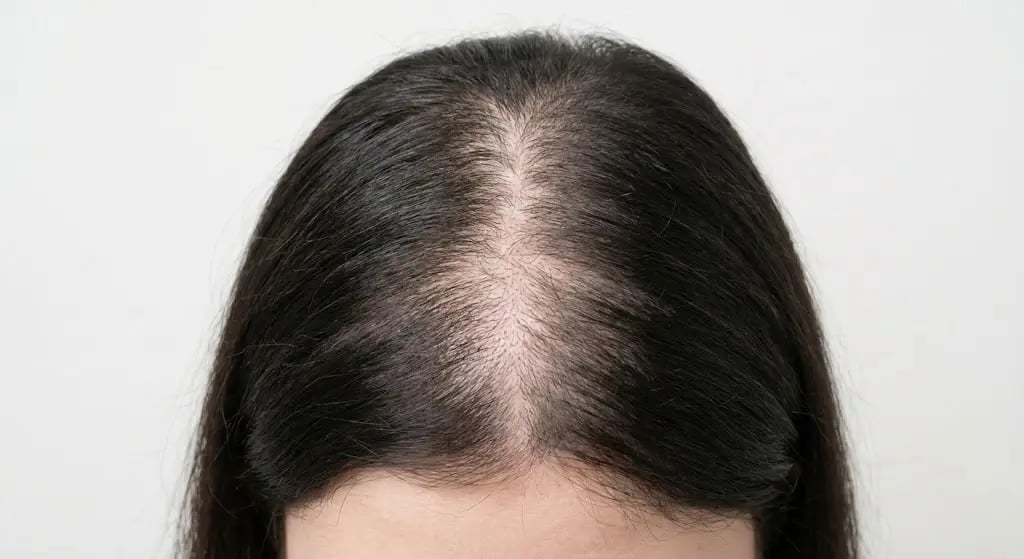
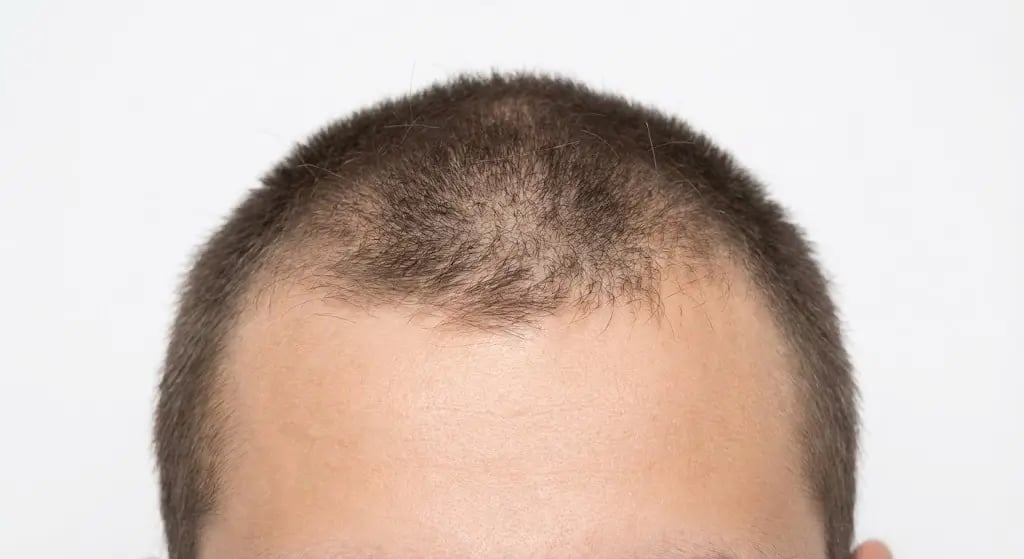
Androgenic alopecia is a progressive, patterned type of hair thinning caused by increased sensitivity of scalp follicles to dihydrotestosterone. Adolescent males experience frontal recession or vertex thinning, while females experience a widening central part with preserved hairline. The miniaturization of terminal hairs into vellus hairs creates a visible reduction in density over time. The condition tends to develop slowly but becomes noticeable during mid-to-late puberty, triggered by elevated androgen levels. No inflammation, scaling, or patchy loss is present, which separates it from scarring and autoimmune forms. Family history is reported in parents or close relatives, reinforcing the hereditary origin. Treatment response depends on early detection and continuous management using anti-androgen therapies, nutritional support, or topical solutions. Diagnosis is clinical, but confirmed by dermoscopy findings, which show variability in hair shaft diameter and increased miniaturized hairs in Androgenic alopecia.
3. Alopecia Areata
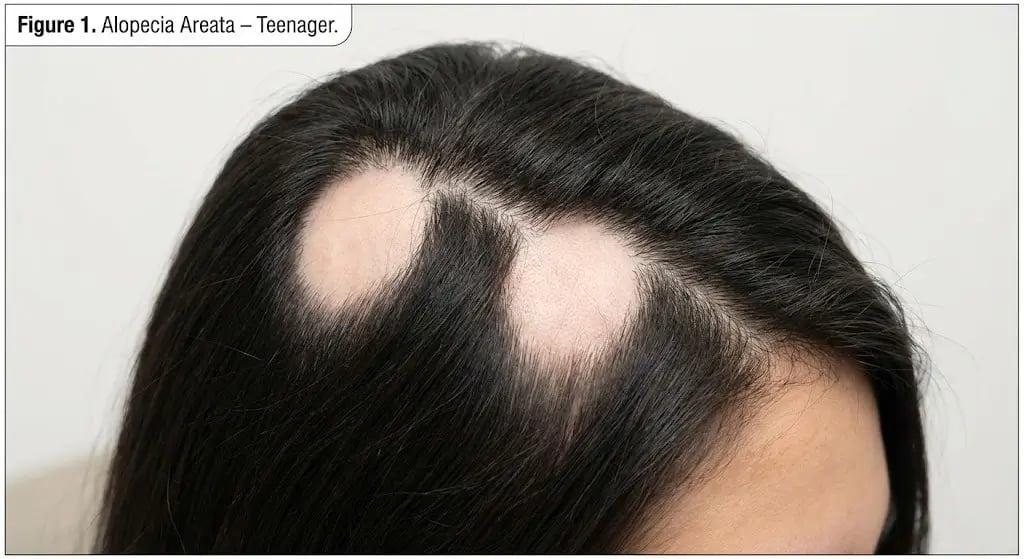
Alopecia areata is an autoimmune condition that targets anagen hair follicles and leads to sudden, non-scarring hair loss in well-defined patches. A teenager affected by the disorder observes sharply demarcated round or oval bald spots on the scalp or eyebrows, while the surrounding skin appears normal and uninflamed. The follicles remain intact, but immune cells accumulate around the bulb, disrupting growth. The condition emerges without pain or itching and progresses into more extensive subtypes like alopecia totalis or universalis. Nail pitting and family history of autoimmunity are frequent associations. A spontaneous regrowth occurs in more than 80% of pediatric cases after one year, and recurrence is common. Clinical diagnosis relies on trichoscopy, which reveals exclamation mark hairs and yellow dots. Recovery outcomes vary depending on duration, extent, and age of onset, which are defining features of alopecia areata.
4. Traction Alopecia
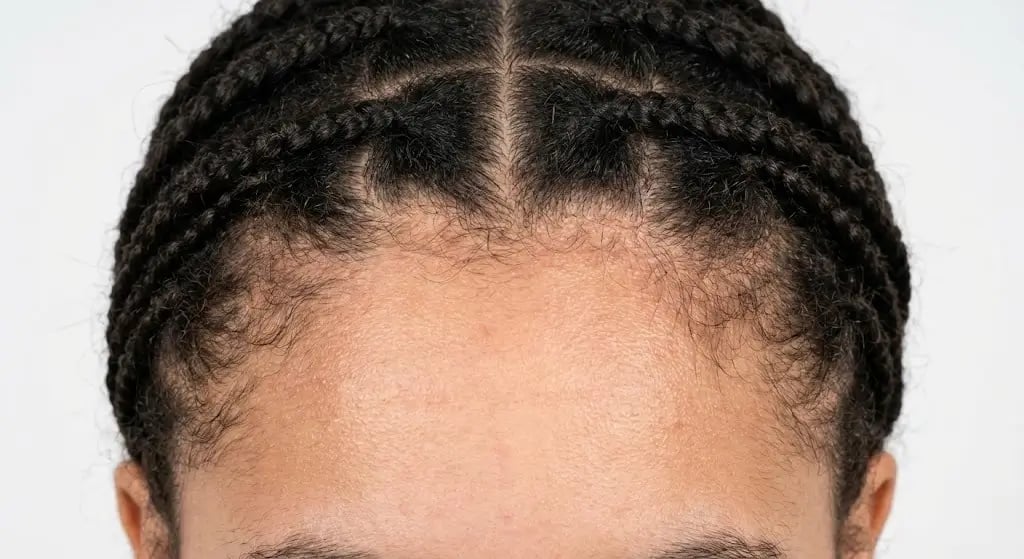
Traction alopecia is a mechanical form of hair loss caused by repetitive tension on the hair shaft from tight hairstyles. Traction alopecia affects the frontal and temporal margins of the scalp, where stress from braids, buns, ponytails, or hair extensions is significant. The earliest sign is perifollicular erythema or hair breakage along the edges. Chronic traction leads to follicular dropout and scarring, evident through smooth, shiny skin and reduced follicular openings in advanced stages. Adolescent girls and boys with prolonged use of tension-based styling are affected by cultural or fashion-based grooming practices. Clinical recognition is based on hairline recession that preserves the mid-scalp density. The early stages are reversible through tension avoidance, while prolonged cases progress to permanent scarring. The condition is distinct due to its patterned onset and history of sustained physical stress to the scalp, making traction alopecia a preventable but overlooked form of hair loss.
5. Trichotillomania
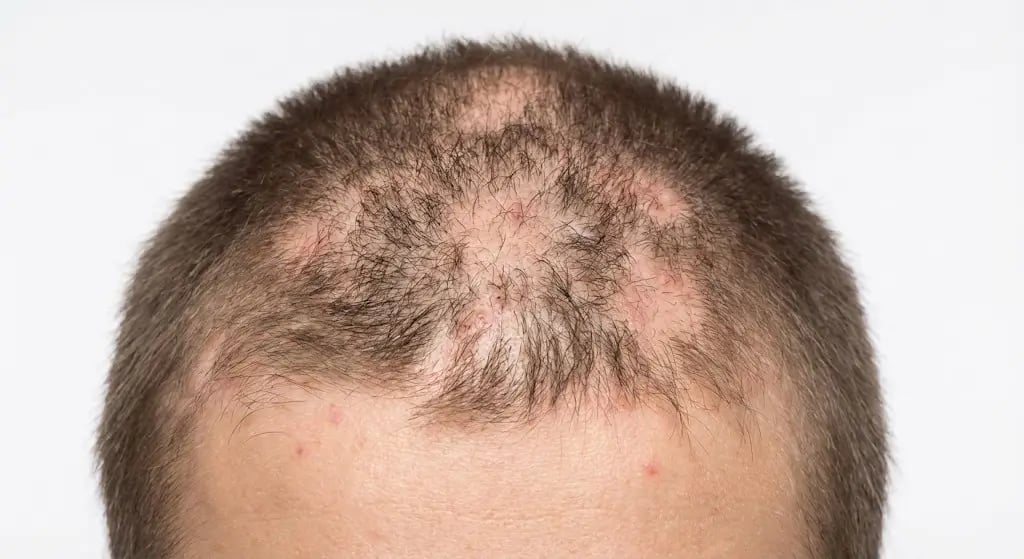
Trichotillomania is a behavioral condition that results in self-induced hair loss caused by recurrent hair pulling. The disorder falls under obsessive-compulsive and related disorders in the Diagnostic and Statistical Manual of Mental Disorders (DSM)-5 and begins during adolescence. Hair loss in trichotillomania appears irregular and patchy, with hairs of varying lengths across the affected region. The crown, sides, or frontal scalp are involved, though eyebrows and eyelashes show signs of pulling. The patches do not follow anatomical or androgenic patterns, making the loss asymmetric and uneven. Examination reveals broken shafts, black dots, follicular hemorrhage, and coiled hairs. The scalp remains non-inflamed and free of scaling or infection. Affected patients experience psychological tension before pulling and relief afterward, which distinguishes the condition from other dermatologic causes. A trichoscopy or scalp biopsy is performed to rule out inflammatory alopecias. Behavioral therapy and early psychiatric intervention are critical to controlling the habit and preventing long-term follicular damage in adolescents with trichotillomania.
6. Tinea Capitis
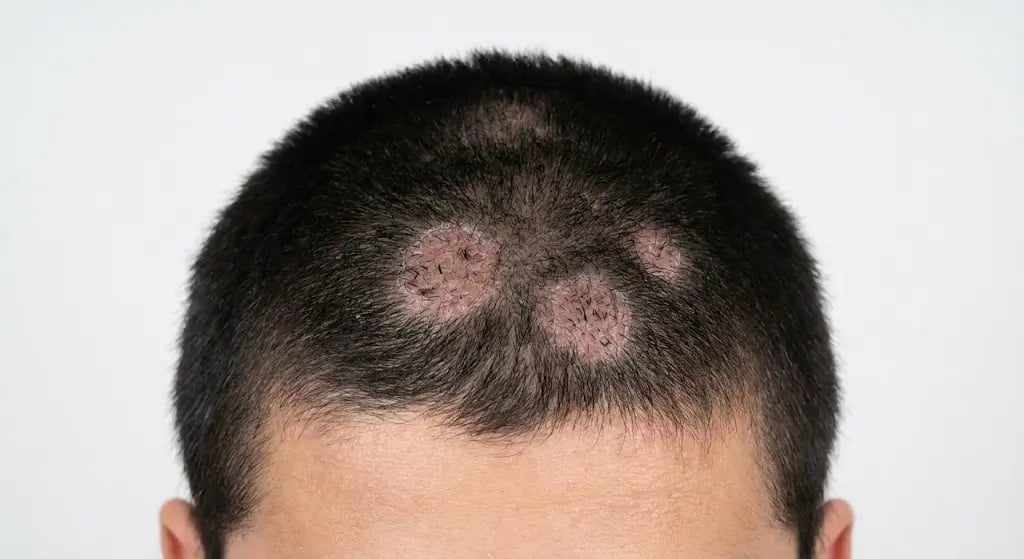
Tinea capitis is a fungal scalp infection that leads to localized hair loss, inflammation, and scalp scaling in teenagers. The Tinea capitis results from dermatophyte invasion of hair shafts and follicular openings, caused by Trichophyton or Microsporum species. The affected area appears as a round or irregular patch with broken hairs, erythema, and black dots where shafts have fractured at the surface. Inflammatory variants form kerion lesions, which are swollen, pus-filled nodules that risk scarring if untreated. Tinea capitis exhibits fungal elements visible under microscopy and positive cultures, unlike non-infectious alopecias. Tinea capitis is more prevalent among children and adolescents with close contact in communal environments. Antifungal therapy with griseofulvin or terbinafine is needed for clearance. Prompt treatment leads to full regrowth, though chronic inflammation increases the risk of permanent follicular damage in tinea capitis.
What Is the Rarest Type of Hair Loss in Teenagers?
The rarest type of hair loss in teenagers is Lichen planopilaris. Lichen planopilaris is a chronic, lymphocyte-driven inflammatory disorder that causes permanent destruction of hair follicles and scarring alopecia. Lichen planopilaris presents with perifollicular redness, scaling, and progressive thinning, misidentified due to its resemblance to more common scalp issues. The condition is observed in adults, with pediatric incidence estimated below 1% in clinical scalp disorder evaluations, making its presence in adolescents exceptionally uncommon. Diagnostic confirmation requires scalp biopsy, which reveals lichenoid tissue interface dermatitis and follicular dropout. Hair loss becomes irreversible as fibrosis replaces follicular structures. The hair does not regrow once lost, unlike non-scarring conditions, according to research titled ” The British Journal of Dermatology” by Dr.Harries et al. in 2010.
Rare types of hair loss in teenagers present depending on age, gender, ethnicity, genetic predisposition, and coexisting health conditions. Prepubescents experience autoimmune-related hair loss more and in patchier patterns, whereas older adolescents tend to experience hormonally influenced alopecia. Gender influences severity and distribution, as autoimmune and scarring variants such as lichen planopilaris and lupus erythematosus more affect females, whereas folliculitis decalvans tends to appear more frequently in males. Ethnic background alters presentation patterns in traction alopecia and tinea capitis, which show higher prevalence in patients of African descent. Genetic inheritance contributes to the susceptibility to autoimmune or inflammatory forms, where family history increases the risk of onset. Rare hair loss types emerge as secondary manifestations of underlying systemic diseases, including thyroid dysfunction, lupus, or nutritional deficiencies, which alter the scalp environment and immune reactivity. The interaction between the variables explains why rare disorders show diverse morphology, chronicity, and treatment outcomes in teenage populations.