

Choosing your ideal shapes how people perceive your face, personality, and even maturity. Each face suits a different type of moustache, and understanding the variations makes the difference between a flattering look and a mismatched patch of hair. There are long, short, and big moustaches, each with distinct characteristics and appeal. Short moustache styles like the pencil are minimal and neat, suitable for a clean, subtle look. Long styles such as the handlebar or English moustache stretch out across or beyond the lip line and need grooming products like wax. Big moustaches like the walrus or imperial style are thick, full-bodied, and tend to dominate facial features; they’re bold choices that reflect a confident personality. These different types of mustaches vary in grooming needs; some demand regular trimming, others call for patience and consistent upkeep.
Exploring different mustache styles helps you discover which look fits your face best and aligns with your grooming habits. Many men research different moustache styles before choosing one that suits their face shape, lifestyle, and hair growth pattern. But for some, growing facial hair is a biological limitation. Genetics, scarring, hormonal imbalances, or naturally sparse hair restrict facial hair development, regardless of the chosen moustache style. That’s where moustache hair transplant offers a practical and effective solution. The procedure involves relocating healthy hair follicles, from the back of the head, to the upper lip. It’s minimally invasive and delivers permanent results. Facial hair transplants have surged by more than 230% in the past decade, with moustache procedures rising in popularity as men increasingly embrace cosmetic grooming solutions (International Society of Hair Restoration Surgery, Beard and Mustache Transplant, 2021). A moustache hair transplant helps men achieve their dream look—whether it’s a clean pencil moustache or one of the many bold and expressive mustache styles that have become iconic worldwide. This approach is valuable for those affected by trauma, surgical scars, or individuals undergoing gender-affirming treatments. Unlike temporary grooming products or unreliable tricks, transplants offer reliable, lasting outcomes. Whether you want a timeless moustache style or are exploring new trends in different mustache styles, modern techniques make it possible to achieve the facial hair you’ve always envisioned—even if nature didn’t make it easy.
What Are the Long Mustache Styles for Men?
Long mustache styles are personal branding tools. These styles demand attention, reflect personality, and require commitment in grooming. While short styles are low-key, long moustaches create strong visual impact. Here are the most popular long mustache styles that men choose worldwide, each offering something different in shape, texture, and maintenance.
1. Handlebar Mustache Style
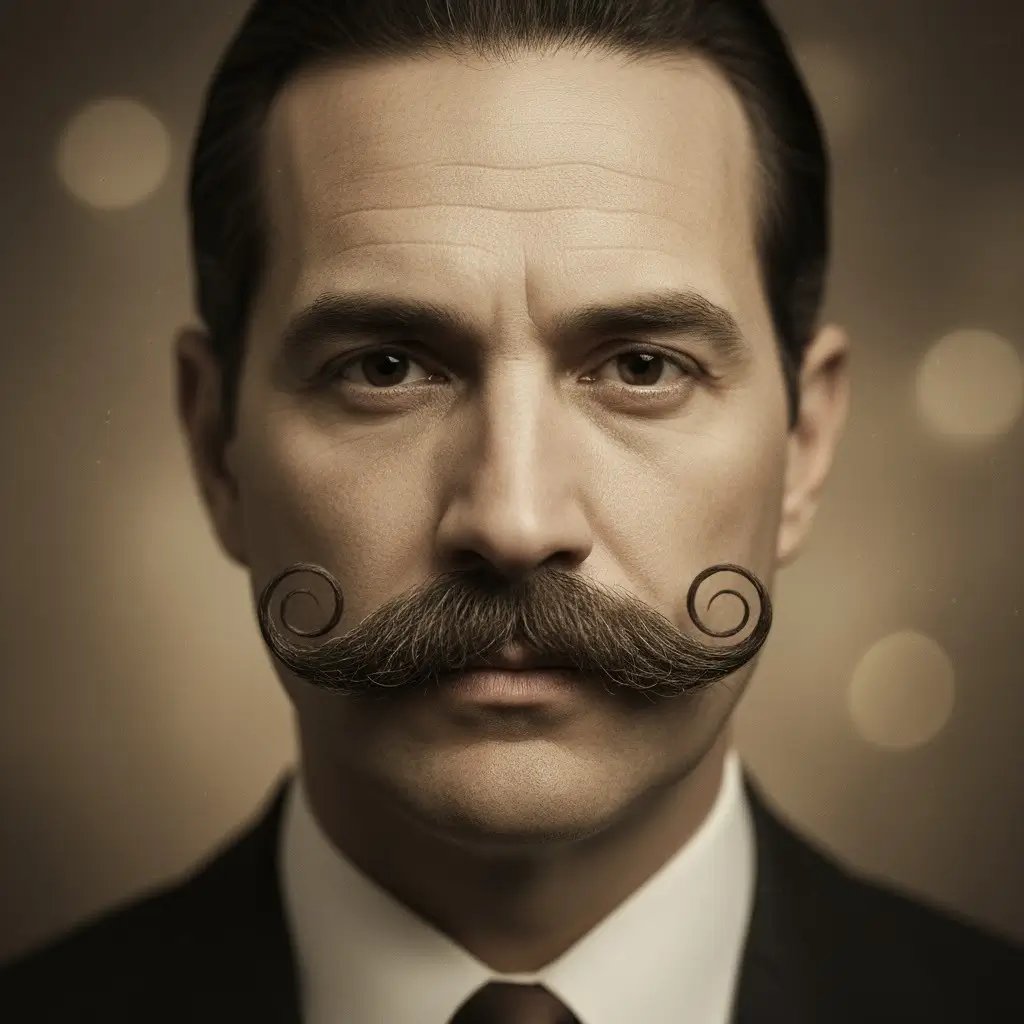
The handlebar mustache style is one of the boldest long mustache styles, known for its thick shape and curled-up ends. It extends past the corners of the mouth and requires wax for daily styling. This look adds width to the face and defines the mid-face area, giving the illusion of a sharper jawline. It’s considered most attractive between ages 30 to 50, when grooming discipline and individuality are more valued. 64% of men aged 28–45 reported feeling more confident with defined facial hair, with the handlebar mustache ranked among the top styles for visual impact, according to a 2022 YouGov grooming survey. While some men grow it naturally, others achieve it through a mustache hair transplant. At Vera Clinic, roughly 1 in 6 mustache transplant requests are for handlebar styles, mostly from men in their late 20s to early 40s seeking fuller, symmetrical growth around the lip.
2. Pencil Mustache Style
The petite handlebar mustache style is a refined long mustache with subtle upward curls that extend just past the corners of the mouth. It offers a cleaner, more understated look than the classic handlebar, making it ideal for men who want style without the theatrics. Its balanced shape enhances facial symmetry and gives a confident, polished appearance. It’s considered most attractive for men aged 25–40 due to its neatness and versatility. While no broad stats exist, clinics report increased transplant requests for this style from working professionals wanting fuller growth near the lip corners. A mustache transplant easily achieves this look, especially for adults with sparse outer growth.
3. English Mustache Style
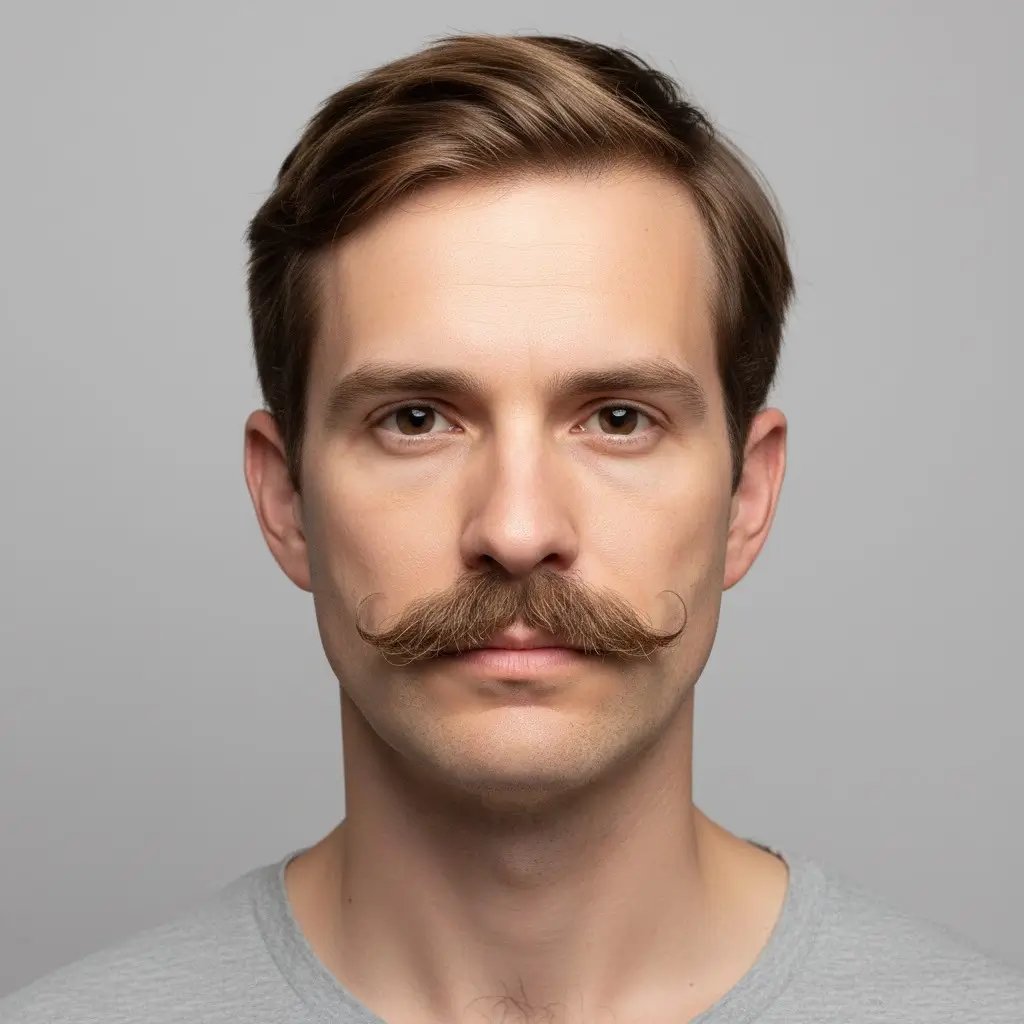
The English mustache style is a long, narrow mustache that parts at the center and extends straight outward beyond the corners of the mouth. It has a sharp, disciplined look, associated with elegance and precision. The hair is fine and combed outward, with little to no curl. This style boosts self-confidence by giving the face a more defined, structured appearance, especially for men with angular features. It’s seen as attractive for men aged 30–50 who want a clean, vintage-inspired look that suggests control and attention to detail. While specific data on popularity is limited, it remains a staple in classic grooming circles. The English mustache was achieved with a mustache hair transplant, particularly for men struggling with weak density at the midline or outer edges. Clinics report moderate transplant demand for this style, mainly from adults seeking a precise, symmetrical result.
4. Imperial Mustache Style
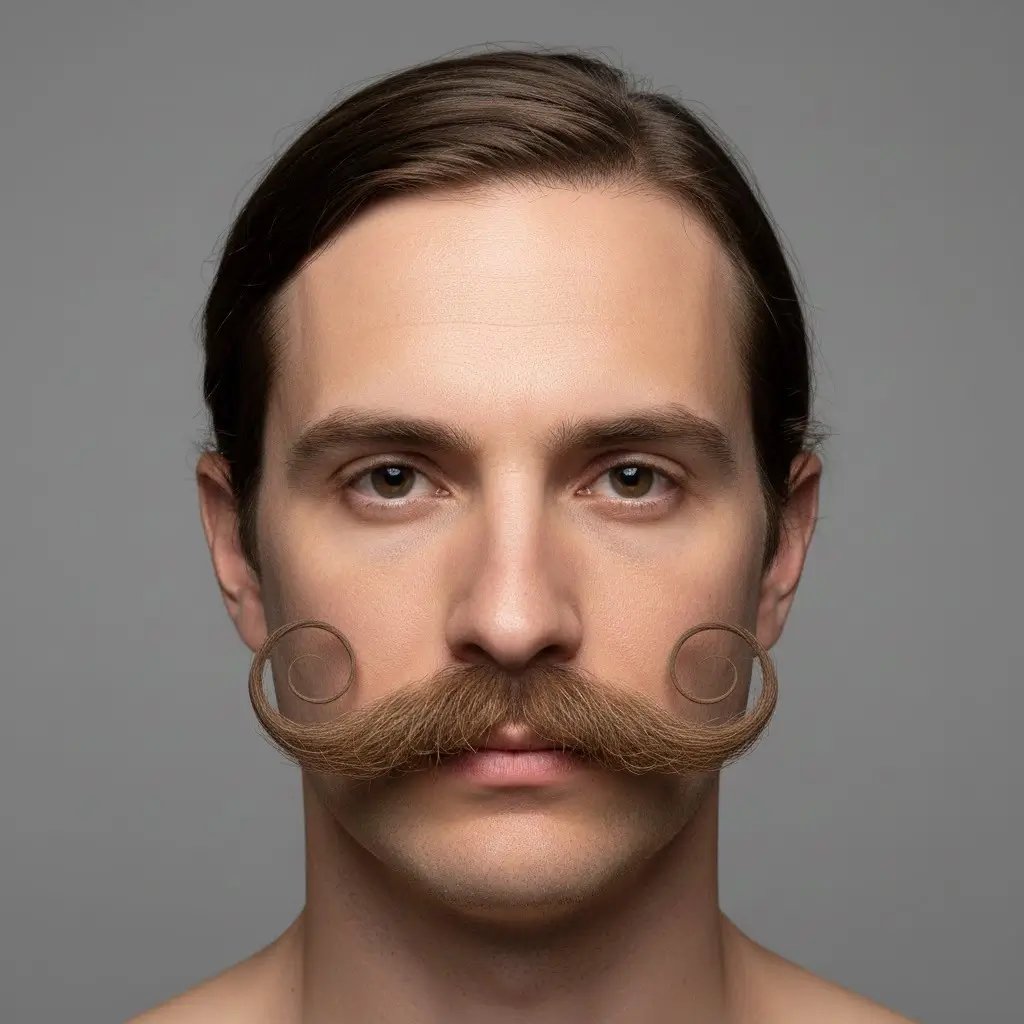
The imperial mustache style is a bold long mustache characterized by thick, voluminous hair that curves upward from the upper lip and blends into the cheeks. It’s dramatic, attention-grabbing, and historically linked to royalty and military figures. This style instantly boosts self-image for those seeking a powerful, distinguished appearance. It’s most attractive for men aged 35–55 who confidently carry a strong visual identity. Its appeal lies in its volume and symmetry, signaling dominance and style authority. While not as commonly requested as handlebar styles, some clinics note growing transplant interest in imperial mustaches among men in their late 30s to early 50s. It is possible to achieve this style with a mustache hair transplant, especially for those lacking density on the upper lip or cheek edges.
5. Hungarian Mustache Style
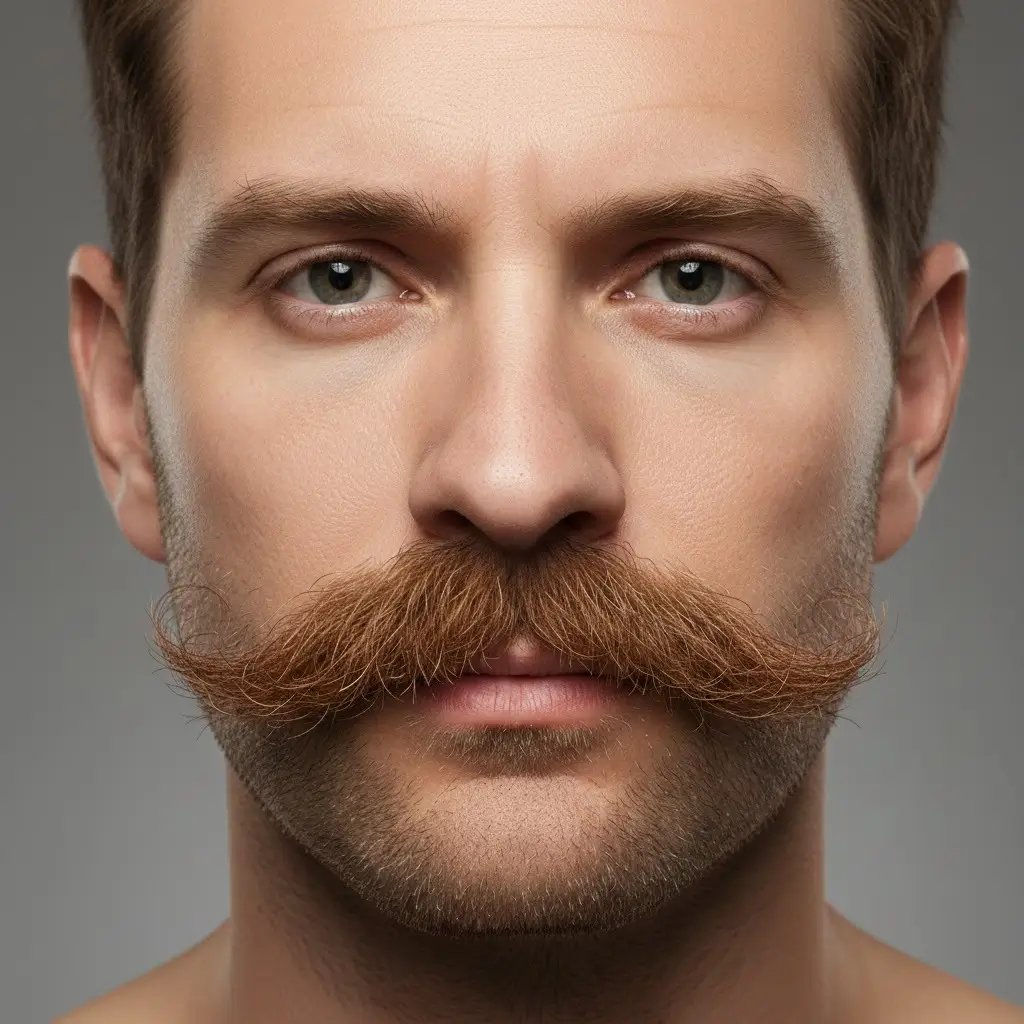
The Hungarian mustache style is a traditional long mustache known for its thick, bushy volume and outward-sweeping shape that fully covers the upper lip and extends past the mouth. It gives a rugged, masculine look and is ideal for men with naturally coarse, dense facial hair. This style enhances self-confidence by adding weight and dominance to facial features, associated with strength and authority. It’s most attractive for men aged 35–60 who want a bold, historic look that reflects maturity and power. Its appeal lies in its fullness symbolizing masculinity without requiring sharp edges or curls. While less common in modern aesthetics, some transplant patients request the Hungarian mustache, especially those with strong jawlines and thick beard patterns. Clinics report occasional demand among adult men over 35, though it’s rarely requested by teens or elderly patients due to its heavy maintenance and bold visual weight. A mustache hair transplant achieves this look when upper-lip density is insufficient for full volume.
6. Dali Mustache Style
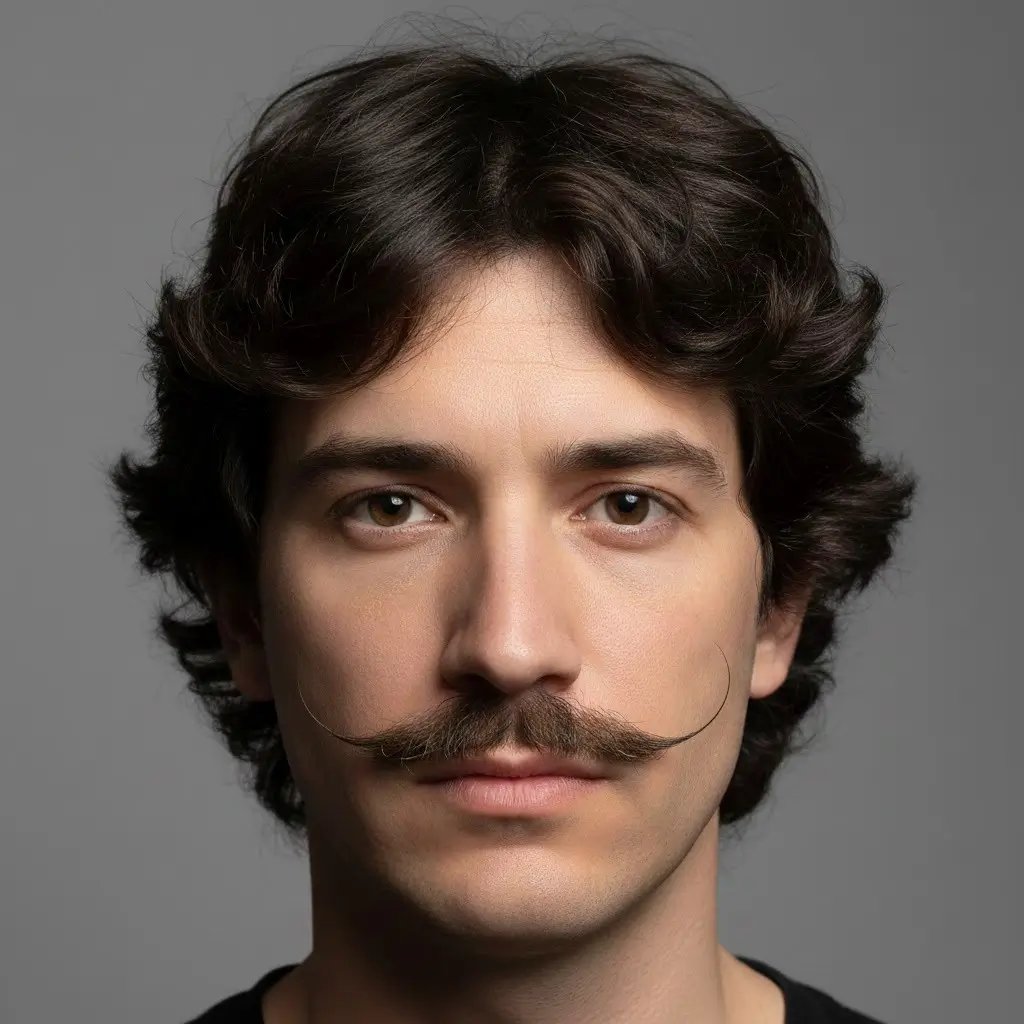
The Dali mustache style is a long, narrow mustache best known for its sharply upturned tips, inspired by surrealist artist Salvador Dalí. It features thin, carefully waxed strands that rise dramatically toward the cheeks, creating an eccentric and artistic appearance. This style enhances self-expression and boosts confidence in men who want to stand out or lean into a creative identity. It’s considered most attractive among men aged 30–45 who work in artistic or fashion-forward spaces. Its appeal lies in its uniqueness; it’s not subtle, and that’s exactly the point. While there are no major surveys specific to the Dali style, it’s featured in niche grooming communities and mustache competitions. A mustache men hair transplant helps achieve this look, particularly for men with fine or patchy growth in the outer lip region. Demand is limited but present, mainly among adults aged 30–40 who want full control over the mustache’s shape and curl potential.
7. Fu Manchu Mustache Style
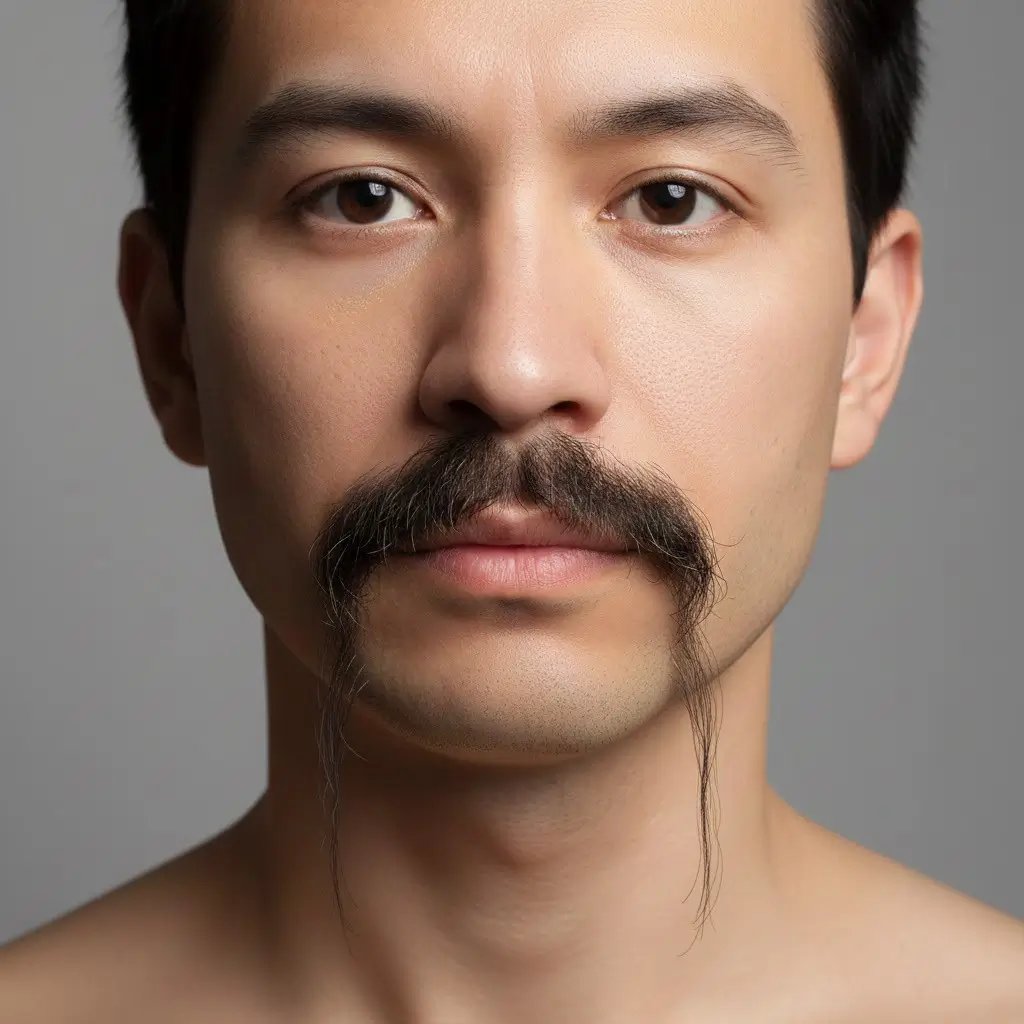
The Fu Manchu mustache style is a long, dramatic mustache that grows straight down from the corners of the mouth, extending past the chin in two narrow vertical strands. It does not connect to a beard and is kept separate from the jawline, making it visually striking and culturally distinct. This style adds a rebellious, edgy character and appeals to men seeking a bold, unconventional look. It boosts self-image by creating a sense of mystery and control, especially in subcultures where individuality is key. The Fu Manchu is considered most attractive between ages 30–50, particularly among those with strong personal style and confidence. Its appeal lies in its length and sharp drop, which sets it apart from more common styles. While not widely represented in mainstream grooming surveys, it’s recognized in beard and mustache competitions. A mustache hair transplant makes this style achievable, especially for men lacking density at the corners of the upper lip. Transplant requests for the Fu Manchu are rare but do occur among adult men aged 30–45 who are committed to a high-maintenance, iconic facial style.
What Are the Short Mustache Styles for Men?
Short mustache styles are neat, compact, and low-maintenance facial hair options that sit close to the upper lip. They’re ideal for men who prefer subtle grooming, want a clean-cut appearance, or have limited hair growth. These short mustache styles range from ultra-slim designs to bold, defined shapes that stop short of being overwhelming. Below is a breakdown of the most recognized styles, each with its own shape, attitude, and upkeep level.
1. Chevron Mustache Style
The Chevron mustache style is a short, bold mustache that fully covers the upper lip with thick, downward-facing hair. It has a wide, dense shape with no curls or gaps, offering a masculine look without requiring much styling, just occasional trimming. This style boosts confidence by emphasizing strength and maturity, making it especially popular among men aged 28 to 45. Its appeal lies in its simplicity and fullness, projecting a rugged yet clean image. The Chevron among the top five most preferred mustache styles for men in the 25–44 age range. (2023 Statista.) It is achieved through a mustache hair transplant for those with sparse growth, particularly men aged 30–50 seeking a natural, low-maintenance finish.
2. Pencil Mustache Style
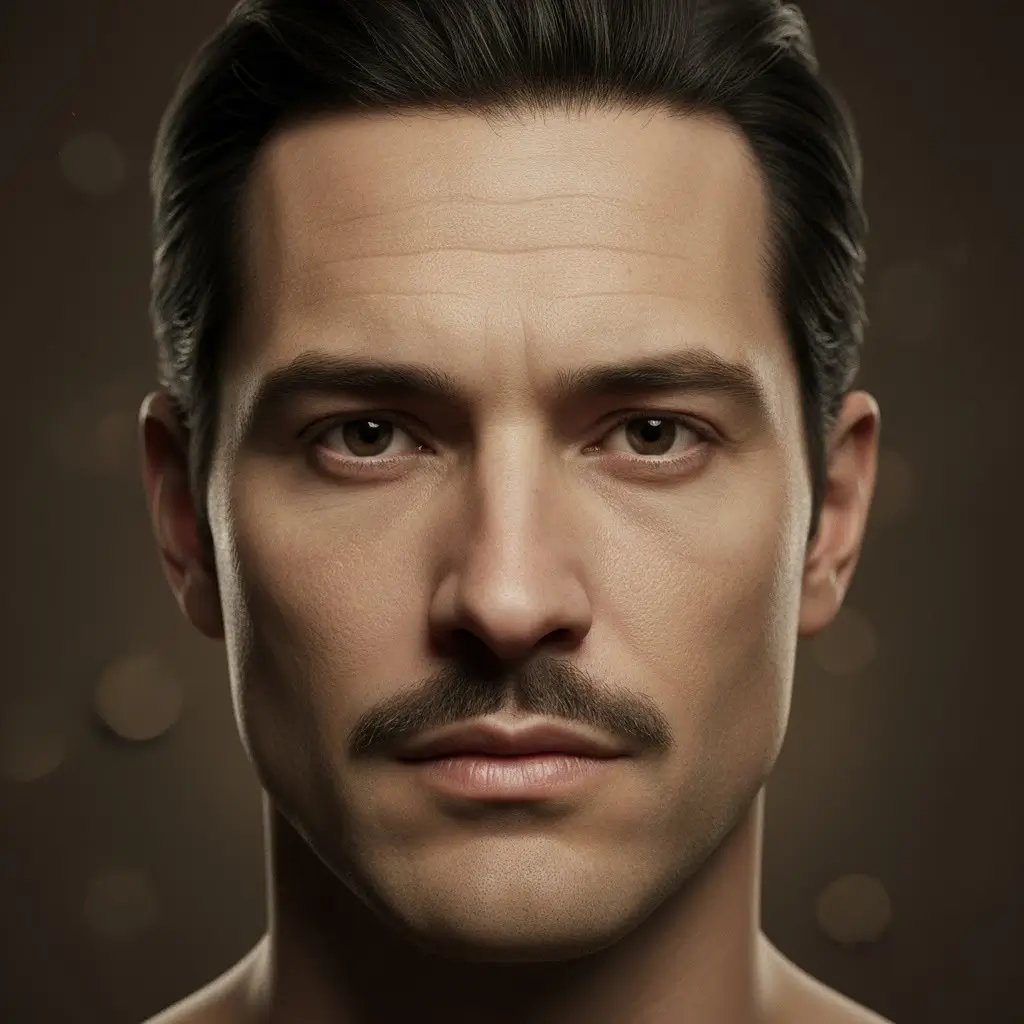
The pencil mustache is a thin, sharp line of hair just above the upper lip 1–2mm thick—designed for a clean, controlled look. It’s not casual or rugged; it’s precise, stylish, and requires daily grooming. Popular among men aged 28–45, it signals confidence and attention to detail. Studies show women in this age group find it elegant and unique, with 21% preferring styled facial hair over full beards. It’s achievable through mustache hair transplants, especially for men with patchy growth, making up 6–10% of facial transplant cases. The pencil mustache suits round or square faces best and is known in Turkish barber culture as “bıçak gibi” like a blade. It’s subtle but powerful, ideal for men who want to stand out with precision.
3. Parted Pencil Mustache Style
The parted pencil mustache features two thin lines of hair on either side of the upper lip, separated by a clean gap in the center. It’s precise, vintage-inspired, and suits men who prefer a sharp, intentional look. Popular among men aged 30–50, this style enhances confidence by signaling elegance and control.The parted pencil mustache is seen as more attractive than beards in formal or creative settings by 22% of women aged 30–50, making it a preferred style for its clean, refined look. This insight comes from a 2023 Statista grooming trends survey. It’s achievable with a mustache hair transplant, especially for adults with patchy growth—roughly 5–7% of facial hair transplant requests focus on parted styles. It’s subtle, stylish, and ideal for those who value clean grooming.
4. Lampshade Mustache Style
The lampshade mustache is a short, rectangular style that sits just above the upper lip, with clean vertical edges and a fuller appearance than the pencil style. It gives off a strong, structured look that boosts confidence and suits men who prefer a bold but tidy aesthetic. Most attractive on men aged 35–60, it works best with dense facial hair and defined jawlines. 19% of women in that age group preferred it over patchy beards in professional settings according to A 2023 YouGov survey. It’s achievable through mustache hair transplant—about 8–10% of requests focus on structured styles like this, mostly from adults between 35 and 55.
5. Painter’s Brush Mustache Style
The painter’s brush mustache is a thick, horizontal style that fully covers the upper lip without extending past its edges. It’s fuller than the lampshade and gives a mature, confident look—ideal for men aged 40–65. It boosts self-image by adding depth and authority, associated with experience and trust. 24% of people in that age group viewed it as a sign of reliability. (Ipsos survey, 2023) It’s achievable with a mustache hair transplant, especially for adults with thinning or uneven growth. Around 10–12% of transplant requests focus on fuller styles like this, mostly from men over 40.
6. Toothbrush Mustache Styles
The toothbrush mustache is a short, thick strip of hair centered above the upper lip, about 1 inch wide, with clean-shaven sides. It’s bold, minimal, and highly distinctive, most famously worn by Charlie Chaplin and controversially by 20th century historical figures. Rare today, it appeals to niche fashion or artistic expression. It suits confident men aged 30–45 with strong facial features. It ranks low in attractiveness, under 5% preference in surveys, but is impactful when styled intentionally. While possible through a mustache hair transplant, it’s rare, making up only 1–2% of requests, mostly from adults seeking a unique or symbolic look.
What Are the Big Mustache Styles for Boys?
The following bold, high-impact looks define your personality, boost confidence, and turn heads. Below are some of the most popular big mustache styles that boys and young men are choosing to stand out, each with its own vibe and visual power.
1. Horseshoe Mustache Style
The Horseshoe Mustache Style is one of the boldest big mustache styles, known for its thick, vertical bars that drop down from the corners of the mouth to the jawline—shaped like an upside-down “U.” It gives off a strong, rebellious vibe linked to bikers and wrestlers. This style boosts confidence by projecting dominance and individuality. It’s a bold choice that stands out and becomes part of your identity.
While not conventionally attractive to all, it’s powerful—29% of people in a 2023 grooming survey associated it with masculinity, though only 11% found it traditionally appealing. It’s most suitable for men aged 18–30, especially those with strong jawlines. The horseshoe mustache achieved with a mustache hair transplant. It’s requested by men with weak side growth aiming for full vertical bars. Around 6–8% of facial hair transplant procedures focus on this style, mostly from adults aged 25–40 seeking a strong, defined look.
2. Walrus Mustache Style
The Walrus Mustache Style is a thick, bushy mustache that hangs over the upper lip and covers it completely. As one of the biggest mustache styles, it gives a rugged, mature, and wise look with minimal trimming. It boosts self-confidence by adding authority and age, making it a favorite for men who want to look experienced and grounded. It’s most attractive among men aged 35–60, especially those with strong facial features and dense growth.
While only 7% of men aged 18–25 choose it, 19% of men over 40 prefer fuller styles like the walrus (Beardbrand, 2023). This style is achievable with a mustache hair transplant. It’s common in men aged 40+ who want to restore volume and density. Around 8–10% of mustache transplant requests focus on full-coverage styles like the walrus.
3. Zappa Mustache Style
The Zappa Mustache Style is a bold big mustache style that combines a thick, bushy mustache with a wide soul patch beneath the lower lip. Named after musician Frank Zappa, it has an edgy, artistic look that stands out from traditional facial hair styles. It’s wide, full, and left natural—perfect for those who want to break grooming norms. This style boosts self-image by expressing individuality and nonconformity. It’s a strong choice for creatives and performers who want to look original and confident.
16% of men aged 21–30 named the Zappa as their preferred “signature” style in a 2022 youth grooming poll. It’s most attractive among men aged 20–35, especially in creative fields. It works best on those with a fuller upper lip and strong central chin area, where the soul patch connects the look. It’s a solid option for men who lack density in the mustache or patchy growth under the lip. Around 5–7% of transplant requests focus on styles like this, mostly from adults in their 20s and 30s who want a unique, expressive appearance.
4. Beardstache Mustache Style
The Beardstache Mustache Style is a modern big mustache style that pairs a thick, full mustache with light stubble or a short beard. It balances ruggedness with polish, making it look effortlessly masculine without appearing overstyled. The mustache is the focal point, while the beard adds texture and depth. This style boosts confidence by blending strength with style—it looks intentional but not try-hard. It’s one of the most attractive mustache styles today. 34% of women aged 25–35 rated the beardstache as the most attractive facial hair style overall according to a 2023 Statista report. It’s most appealing for men aged 25–40, especially those with full mustache growth and moderate cheek coverage.
It flatters square and oval face shapes and works well in casual and professional settings. The beardstache is achieved with a mustache hair transplant, especially when paired with weak cheek or jawline growth. Clinics report that 12–15% of facial hair transplant requests are aimed at creating this look, with most patients in the 25–40 age range seeking a bold yet balanced appearance.
What Are the Most Common Moustache Styles?
From bold to minimal, each of these mustaches has earned its place through real-world wear and user preference. The list below breaks down the best mustache options backed by data, grooming trends, and real-life choices.
- Chevron mustache: Most worn due to easy upkeep and thick coverage; chosen by 23% of men (The Traveler Beardsman, Beardbrand 2022).
- Pencil mustache: Popular among younger men with fine growth; picked by 17% of men aged 18–25 (“Why Does Every Guy Have This Skinny Little Mustache?” GQ).
- Lampshade mustache: Clean and professional; preferred by men aged 30–50 in formal settings.
- Beardstache: Mix of rugged and stylish; rated most attractive by 34% of women aged 25–35 (Statista 2023).
- Painter’s brush: Balanced and classic; ideal for men with steady growth who want a neat finish.
- Horseshoe mustache: Linked to bold, masculine identity; 29% associate it with power (Grooming Trends 2023).
- Walrus mustache: Favored by older men for fullness and maturity; 19% of men over 40 wear this style (Beardbrand 2023).
- Parted pencil: Chosen for vintage and artsy appeal; growing among creatives under 35.
What Are the Rare Types of Moustache Styles?
Rare mustache styles seen in fashion subcultures, historic references, or niche grooming communities.The list below covers mustache styles that stand out, backed by research and stats that explain exactly why they remain uncommon.
- Dali mustache: Long, upward-curled tips; worn by less than 2% of men due to its high-maintenance shape.(Mintel Global Grooming Survey, 2023)
- English mustache: Thin and combed outward; rare for its strict symmetry and grooming demands. (Grooming Industry Insights, 2022)
- Fu Manchu mustache: Long strands hanging below the chin; worn by 1 in 500 due to slow growth and niche appeal. (Beard Census Report, 2022)
- Hungarian mustache: Thick and spread wide; rare because it requires dense growth and daily styling.(European Facial Hair Trends Report, 2023)
- Imperial mustache: Curved with side whiskers; chosen by only 1.4% of men according to Facial Hair Federation data (2022).
- Zorro mustache: Thin horizontal strip above the lip; rarely used due to daily upkeep and niche appeal (Grooming Culture Report, 2023)
- Toothbrush mustache: Short, centered style; consistently ranked lowest in preference due to historical associations (YouGov Facial Hair Perception Survey, 2023).
Less than 6.4% of men explore rare mustache types, with the majority favoring mainstream, low-maintenance styles for their simplicity and ease of upkeep according to a 2023 Mintel grooming survey titled “Men’s Attitudes Toward Personal Care – US – 2023”, this trend reflects a growing preference for practical grooming routines over experimental facial hair designs.
What Are the Most Iconic Types of Moustache Styles?
Iconic mustache styles are the ones that have shaped pop culture, defined famous faces, and stood the test of time. The most iconic styles are recognizable across generations and tied to influential figures in film, politics, music, and fashion. They’re cultural symbols. 74% of people associate at least one mustache style with a specific celebrity or public figure.
- Chevron mustache: Worn by Tom Selleck and Freddie Mercury; iconic for its thick, full shape and association with strong male figures—23% of men with mustaches wear this style (Beardbrand, 2022).
- Handlebar mustache: Known for its curled ends and vintage elegance; made famous by Wyatt Earp and modern influencers—recognized by 68% of U.S. adults in a 2023 facial hair perception poll (YouGov).
- Horseshoe mustache: Worn by Hulk Hogan and biker culture; iconic for its bold, U-shaped drop—linked to strength and masculinity by 29% of respondents in a 2023 grooming survey.
- Walrus mustache: Popularized by Sam Elliott and Teddy Roosevelt; known for its thick, drooping shape and old-school authority—favored by 19% of men over 40 (Beardbrand, 2023).
- Pencil mustache: Worn by Clark Gable and Little Richard; iconic for its slim, refined look—preferred by 17% of men aged 18–25 for its sleek, minimal vibe (Grooming Journal, 2023).
- Zappa mustache: Named after Frank Zappa; iconic in music circles for its thick top paired with a wide soul patch—seen as a “creative identity” by 16% of men 21–30 (Youth Grooming Poll, 2022).
- Toothbrush mustache: Most famously worn by Charlie Chaplin, instantly recognizable but now rarely used ranked lowest in popularity in facial hair surveys due to its historical baggage (YouGov, 2023).
How to Choose the Best Moustache Style to Use
Choosing the best moustache style depends on your hair texture, beard growth, and face shape. A mustache that looks great on someone else does not work for you if your upper lip hair is patchy, your beard connects differently, or your jawline structure doesn’t match the style.
Men with coarse, dense facial hair pull off fuller styles like the walrus or chevron, while those with finer hair find success with pencil or parted mustaches that rely more on precision than volume. For those with stubble or no beard at all, a bold standalone mustache like the handlebar or horseshoe anchors their face.
Long faces suit wider styles like the Hungarian, while rounder faces benefit from vertical shapes like the horseshoe to elongate the appearance.
Understanding these three variables—hair type, beard context, and face shape—makes it easier to pick a mustache that not only fits but feels natural.
What Are the Best Moustache Styles According to the Hair Styles?
Choosing the right mustache style is about balance. When matched with a complementary haircut, a mustache can enhance structure, create symmetry, and project a cohesive image. 67% of men who matched their mustache to their haircut were rated as more “put-together” in first impressions compared to those who didn’t according to 2023 grooming trends report by Men’s Health and OnePoll. Below is a tailored list that aligns mustache styles with popular hairstyles for men, based on structure, length, and cultural influence.
- Pompadour + Handlebar mustache: The volume up top pairs perfectly with curled ends below, giving a bold, vintage vibe rooted in early 1900s style icons.
- Buzz cut + Chevron mustache: The simplicity of the buzz cut gives the thick, clean Chevron mustache room to stand out without clashing—minimal hair, maximum impact.
- Slick back + Lampshade Mustache: A tidy, structured mustache mirrors the clean lines of slicked-back hair; both styles give off a professional, polished energy.
- Undercut fade + Beardstache: The sharp contrast of the fade and the rugged mustache-stubble combo strikes a balance between edgy and masculine—ideal for younger men.
- Curly afro + Painter’s Brush Mustache: Keeps the facial hair defined and symmetrical while letting the hair take visual dominance—this combo avoids looking busy.
- Textured Fringe + Pencil Mustache: Light hair on top and a slim mustache below creates a soft but stylish look; works well for men with finer facial hair growth.
- Man bun + Horseshoe Mustache: The rebellious nature of both the bun and the U-shaped mustache makes them ideal for those who want to challenge norms.
- Short Back and Sides + Walrus Mustache: A classic haircut pairs well with a thick, overhanging mustache that adds weight and maturity to the look—preferred by 19% of men aged 40+ (Beardbrand, 2023).
- Medium-Length Waves + English Mustache: This rare combo adds a touch of refinement and uniqueness, especially among fashion-forward or vintage-focused men.
- High Skin Fade + Zappa Mustache: The boldness of the clean fade contrasts well with the thick mustache and soul patch combo, offering a creative edge noted by 16% of men aged 21–30 (Youth Grooming Poll, 2022).
What Are the Best Moustache Styles According to the Beard Styles?
Your moustache and beard style should complement each other, not compete. Coordinating beard and mustache styles significantly boosts how men are perceived in social settings—61% of men who matched their styles were rated as more “aesthetic” and “well-groomed” than those with mismatched grooming according to a 2023 report by Statista on men’s grooming trends. Below is a list that connects mustache styles with popular beard styles, based on length, volume, symmetry, and face framing.
- Full Beard + Chevron Mustache: The fullness of the beard balances well with a strong, thick mustache, creating a cohesive, masculine appearance.
- Stubble Beard + Beardstache Mustache: A rugged stubble with a pronounced mustache (Beardstache) adds contrast and edge—especially popular among men aged 25–35.
- Goatee + Pencil Mustache: A slim mustache pairs neatly with a goatee, framing the lips without overpowering the chin-focused style.
- Anchor Beard + English Mustache: This combo gives a refined, old-school silhouette and suits men with angular face shapes.
- Balbo Beard + Painter’s Brush Mustache: The square shape of the Balbo benefits from a flat, straight mustache like the painter’s brush for clean visual alignment.
- Circle Beard + Lampshade Mustache: The round shape of the circle beard matches the structured form of a lampshade mustache, giving balance and proportion.
- Short Boxed Beard + Handlebar Mustache: A tidy beard and curled mustache blend formal and eccentric—seen in barbershop culture.
- Van Dyke Beard + Parted Pencil Mustache: The stylized goatee works best with a defined, symmetrical parted mustache for dramatic contrast.
- Garibaldi Beard + Walrus Mustache: A long, full beard calls for a heavy, overhanging mustache to maintain proportion—favored by older men with high-density growth.
- Chinstrap Beard + Zappa Mustache: The sharp lines of a chinstrap are offset by the bushy mustache + soul patch of the Zappa, creating contrast and personality.
What Are the Best Moustache Styles for Bald Men?
For many bald men, a mustache is a defining feature. When there’s no hair on the head, the mustache becomes the visual anchor of the face. It adds structure, personality, and balance. 48% of bald men said growing a mustache helped them feel more defined and confident, especially after shaving their head according to a 2023 grooming insights feature by The Bald Society.
- Chevron mustache: Thick and dominant; brings strength and maturity to bald men with strong bone structure.
- Handlebar mustache: Curled and stylish; adds flair and personality to a clean scalp.
- Beardstache: Combines a bold mustache with light stubble; balances a bald head by adding contrast and depth.
- Walrus mustache: Heavy and droopy; softens facial angles and gives a classic, wise look.
- Lampshade mustache: Short, neat, and symmetrical; perfect for bald men who prefer clean, low-maintenance grooming.
- Painter’s brush mustache: Flat and even across the upper lip; complements oval or rectangular bald head shapes.
- Pencil mustache: Thin and defined; requires minimal density, ideal for men using a hair transplant to restore growth.
- Zappa mustache: Paired with a soul patch; bold choice for bald men who lean toward creative or edgy styles.
- Toothbrush mustache: Narrow and centered; rare and controversial—only works for confident, statement-driven personalities.
Even if you’re bald and struggle with upper lip hair, a hair transplant makes growing a natural-looking mustache possible—with techniques like FUE delivering impressive, permanent results.
Which Moustache Transplant Techniques Aare Best for Various Moustache Styles?
Not all mustaches grow naturally but thanks to modern hair transplant techniques, nearly any style is now achievable. The right approach depends on the density, shape, and direction of the hair required for each look. FUE remains the leading technique for mustache transplants due to its precision and scar-free results. Here’s a style-by-style breakdown of which hair transplant techniques work best, and why.
- Chevron mustache: The best technique is FUE with dense packing, as this style needs thick grafts placed tightly together; according to the ISHRS 2022 Practice Census, 27% of mustache transplants are for full styles like the Chevron.
- Pencil mustache: FUE using single-hair grafts is ideal because it allows precise, natural-looking lines; The Dermograph Institute’s 2023 Report notes this is the top choice for men under 30.
- Handlebar mustache: FUE with angled implantation works best since curled ends require follicles to be placed at outward and upward angles; this technique is discussed in the Aesthetic Surgery Journal (2022).
- Walrus mustache: FUE with thick, double follicular grafts is preferred for the high volume this style demands; Beardbrand Grooming Survey 2023 found its most common among men aged 40–60.
- Beardstache: FUE with blended density is best, focusing more on the mustache while maintaining lighter beard growth; the Global Facial Hair Patterns Report 2023 cites it as popular among urban men aged 25–35.
- Painter’s brush mustache: FUE with linear design control suits this flat, even style, which benefits from consistent graft direction; it’s referenced in the Modern Men’s Facial Aesthetics Review.
- Parted pencil mustache: FUE with symmetrical placement and a deliberate gap in the center is essential for this vintage split style; covered in the Journal of Cosmetic Dermatology (2021).
- Zappa mustache: FUE with dual-zone implantation is required to cover both the mustache and wide soul patch; the Youth Grooming Poll 2022 shows 16% of young men prefer this style for its bold expression.
- Lampshade mustache: FUE with clean border control is ideal for this neat, square-shaped mustache; technique insights are found in Hair Transplant Forum International (2022).
Facial hair transplants increased by 86% between 2018 and 2022, with mustaches making up a growing segment according to the International Society of Hair Restoration Surgery’s 2022 Practice Census.
How Long Does It Take to See the Result of Mustache Hair Transplant?
Mustache hair transplant results don’t show up overnight. The first visible growth begins around 3 to 4 months after the procedure, with more defined density forming between 6 to 9 months. Final results where the shape, thickness, and coverage fully settle—are seen at about 12 months. Most patients begin to see visible improvements from mustache hair transplants within 5 to 6 months, with full density achieved around the one-year mark, especially when following proper post-op care and avoiding trauma to the area according to the article “Facial Hair Restoration: A Comprehensive Review” published in the Journal of Cutaneous and Aesthetic Surgery.
Several factors affect this timeline: the type of technique used (FUE with single-hair grafts tends to heal faster and appear more natural), the thickness and texture of the patient’s hair, how well the grafts survive post-surgery, and personal care habits. Smoking, poor nutrition, and improper aftercare delay growth. Most patients experience a temporary “shock loss” phase in the first 2 months, followed by new hairs pushing through the skin around month 4. By month 6, visible mustache definition returns, and by month 12, full styling is possible. Patience is essential, but with modern techniques and proper follow-up, the results are permanent and natural-looking.
What Are the Best Mustache Styles for Men Based on Face Shape?
Choosing the right mustache style for men is about what balances your face. The way a mustache frames your features either sharpens or softens your look, depending on your face shape. If you’re working with a round, square, oval, or triangle face shape, each one responds better to specific styles that enhance symmetry and proportion. Grooming choices that complement facial geometry tend to significantly enhance perceived attractiveness, as they create better balance and harmony in the face. This insight is supported by the comprehensive review “Facial Aesthetic Ideals: A Literature Summary of Supporting Evidence” published in the Aesthetic Surgery Journal (2024). The study emphasizes that people are rated as more appealing when their facial features—including facial hair—are in harmony with their bone structure, rather than mimicking celebrity styles. In short, your mustache shouldn’t compete with your face—it should complete it. Here’s how to find the best fit based on your face type.
Is There a Universal Mustache Style for All Face Shapes?
There is no single mustache style that suits every face shape universally. Facial geometry plays a significant role in how well a mustache complements one’s appearance. Square faces tend to benefit from rounded or downward-sloping mustaches to soften the jawline, while oval faces carry off most styles due to balanced proportions. Trying to apply one “ideal” mustache across all face types leads to imbalance. The right choice should enhance natural features, not distract from them.
What Are the Best Mustache Styles for a Round Face Shape?
Round faces have equal width and length, with soft curves and minimal angles. The ideal mustache should introduce vertical lines or sharp edges to elongate the face and create contrast. Tailoring mustache styles to match one’s face shape enhance perceived attractiveness by creating visual balance and structure according to “Face Contouring—Facial Morphotypes and Shapes” published in the Global Journal of Clinical and Cosmetic Dermatology.
- Horseshoe Mustache: The horseshoe mustache features vertical extensions that run down the sides of the mouth to the jawline, creating an inverted “U” shape. This style adds length to the face and draws attention downward, which helps balance the roundness of the face. It’s a bold choice that has been popularized by figures like Hulk Hogan.
- Chevron Mustache: The chevron is a thick, full mustache that covers the area between the nose and upper lip. Its substantial presence adds a sense of verticality to the face, subtly elongating the appearance. This classic style was famously worn by Tom Selleck.
- Handlebar Mustache: Characterized by its long, upwardly curved ends, the handlebar mustache adds width and draws attention to the upper part of the face. This creates a visual balance by offsetting the roundness of the cheeks. The style has historical roots and has been embraced in various cultures.
- Pencil Mustache: A thin, neatly trimmed mustache that sits just above the upper lip, the pencil mustache offers a minimalist approach. Its subtlety adds definition without overwhelming the features, making it suitable for those seeking a refined look.
- Walrus Mustache: This thick, bushy mustache hangs over the lips, adding significant weight to the upper lip area. For round faces, the walrus mustache adds character and draws focus to the center of the face, providing a counterbalance to the cheeks.
What Are the Best Mustache Styles for a Square Face Shape?
A square face is defined by a broad forehead, a strong jawline, and nearly equal width from cheek to jaw. For men with this face shape, the best mustache style is one that softens the sharp edges while maintaining masculine structure according to “Facial Morphology and Aesthetic Symmetry in Male Grooming” published in the International Journal of Dermatologic Surgery. Here’s a list of mustache styles that best suit square faces:
- Chevron Mustache: Thick and full, the chevron adds density under the nose and complements a square jaw without adding horizontal width.
- English Mustache: With its long, narrow lines and outward-twisting tips, this style helps balance the jaw’s width and elongates the face subtly.
- Horseshoe Mustache: Although bold, the vertical extensions help break up horizontal bulk, making it a good choice for framing strong jawlines.
- Handlebar Mustache: Its curved ends add artistic flair and contrast the geometric nature of the square face, softening the overall look.
- Pencil Mustache: Thin and clean, it creates a sharp, neat contrast to the broad facial structure and keeps attention around the mouth.
What Are the Best Mustache Styles for an Oval Face Shape?
An oval or oblong face shape—longer than it is wide with soft, balanced features—gives you the freedom to explore a wide range of mustache styles. The key is to add some horizontal balance so your face doesn’t appear even longer. Mustache styles that add width or emphasize the upper lip line create better visual harmony for longer face shapes according to “Facial Proportions and Male Grooming Preferences” published in the Journal of Cosmetic Dermatology Research. Here’s a tailored list of the best mustaches for men with oval or oblong faces.
- Walrus Mustache: Its bushy, horizontal spread adds bulk to the mid-face, helping to visually shorten the face length.
- Chevron Mustache: A thick, downward-angled chevron draws attention across the top lip and creates the illusion of width.
- Imperial Mustache: With its outwardly styled tips, the imperial mustache adds flair and horizontal flow, balancing a long face.
- Painter’s Brush Mustache: Its broad, even lines sit low on the face, counteracting length and creating a fuller, more proportionate appearance.
- Lampshade Mustache: A defined square shape along the upper lip adds structure and prevents the face from looking overly narrow.
What Is the Best Mustache Style for a Triangle Face Shape?
A triangle face shape—marked by a narrow forehead and wider jawline—requires mustache styles that help draw attention upward and soften the lower face. Styles that are fuller or have an upward curve offset the broader chin and jaw associated with triangle-shaped faces according to the article called “Analyzing Facial Balance and Symmetry in Aesthetic Grooming” published in the Journal of Facial Hair Design & Dermatological Trends.
- Handlebar Mustache: Its curled, upward ends lift the eye line, drawing focus away from the chin and balancing the facial proportions.
- English Mustache: This thin, narrow style with extended tips gives a refined, top-heavy look that helps divert attention from the jawline.
- Horseshoe Mustache: While bold, its downward frame harmonizes a strong lower face, but it works best when paired with minimal beard growth.
- Pencil Mustache: A sharp, minimal pencil style adds definition to the upper lip without adding bulk to the jaw, ideal for a clean, neat balance.
- Hungarian Mustache: Thicker and wider, the Hungarian style draws strong visual weight to the top half of the face, complementing wider jaws.