

Choosing the right men’s haircuts is more than fashion; it shapes first impressions, boosts confidence, and changes how young or mature a man appears. Men with styled hair were rated 12% more trustworthy and 18% more attractive than those with uncared hair according to Social Psychological and Personality Science (2019), showing the direct impact of grooming choices.
Understanding the different types of men’s hairstyles brings practical benefits. Short styles like buzz cuts or fades create sharp, professional looks. Long male hair cutting styles like layered cuts or ponytails express individuality. Bigger, voluminous styles add character and make thinning areas look fuller. Knowing which style suits face shape and hair type helps men look their best at every age.
Hair transplant has become a solution for men who want their dream hairstyle but don’t naturally have the density or coverage for it. Over 700,000 hair transplant procedures were performed worldwide in a year, with 87% on men according to the ISHRS 2022 Census. This treatment lets patients confidently wear popular styles such as fades, pompadours, slick backs, and undercuts, which require strong density in the frontal hairline and crown. Men choose transplants to restore hair and to regain the freedom to pick any hairstyle without worrying about bald spots.
Short Hairstyles for Men
Short hairstyles for men keep hair cropped close to the scalp, usually under 5 cm, offering a clean and versatile look that works across age groups. Short haircuts for men are easy to maintain, highlight facial features, and often appear sharper after a hair transplant..
-
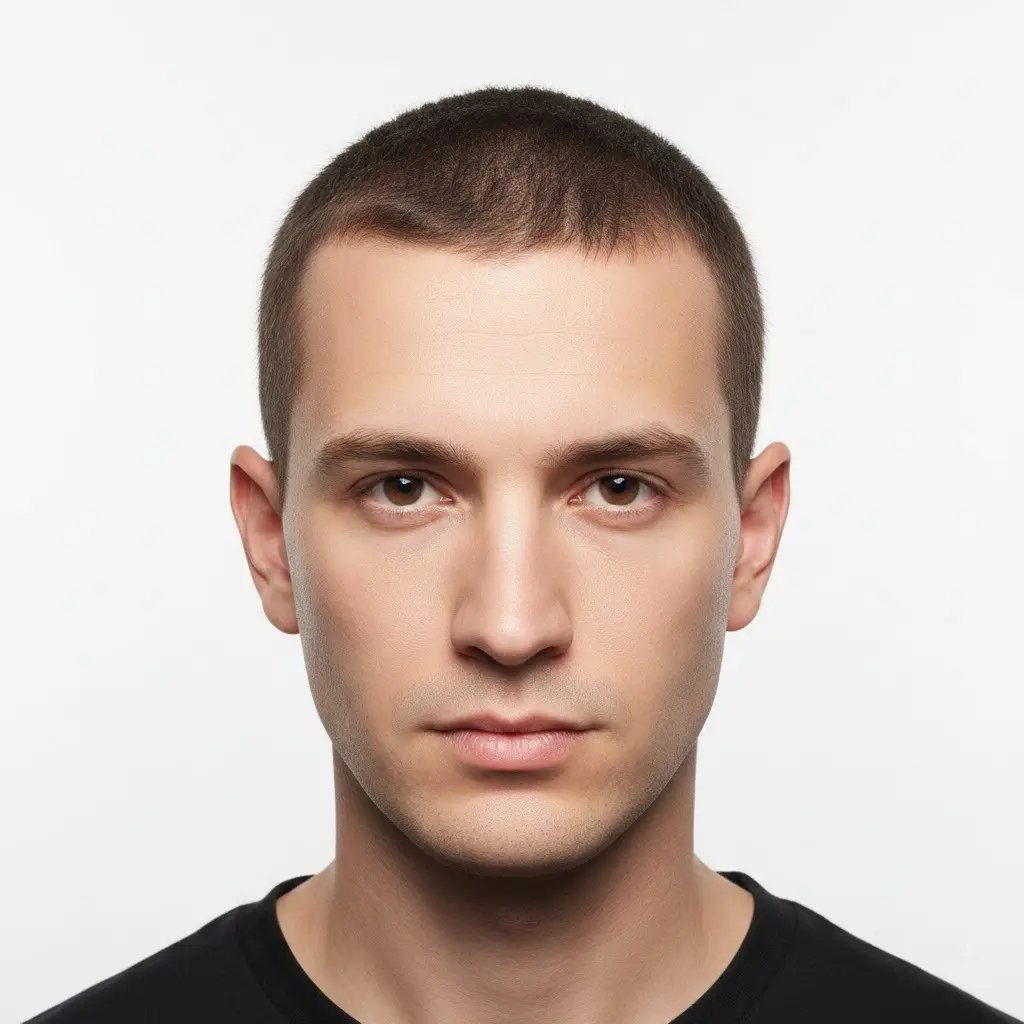 Buzz Cut: A uniform clipper cut, usually under 1 cm.
Popular among men in their 20s and 30s;
23% of young men prefer buzz cuts, Statista (2021).
After transplant, very short haircuts for men like buzz cuts highlight
strong density across the crown.
Buzz Cut: A uniform clipper cut, usually under 1 cm.
Popular among men in their 20s and 30s;
23% of young men prefer buzz cuts, Statista (2021).
After transplant, very short haircuts for men like buzz cuts highlight
strong density across the crown.
-
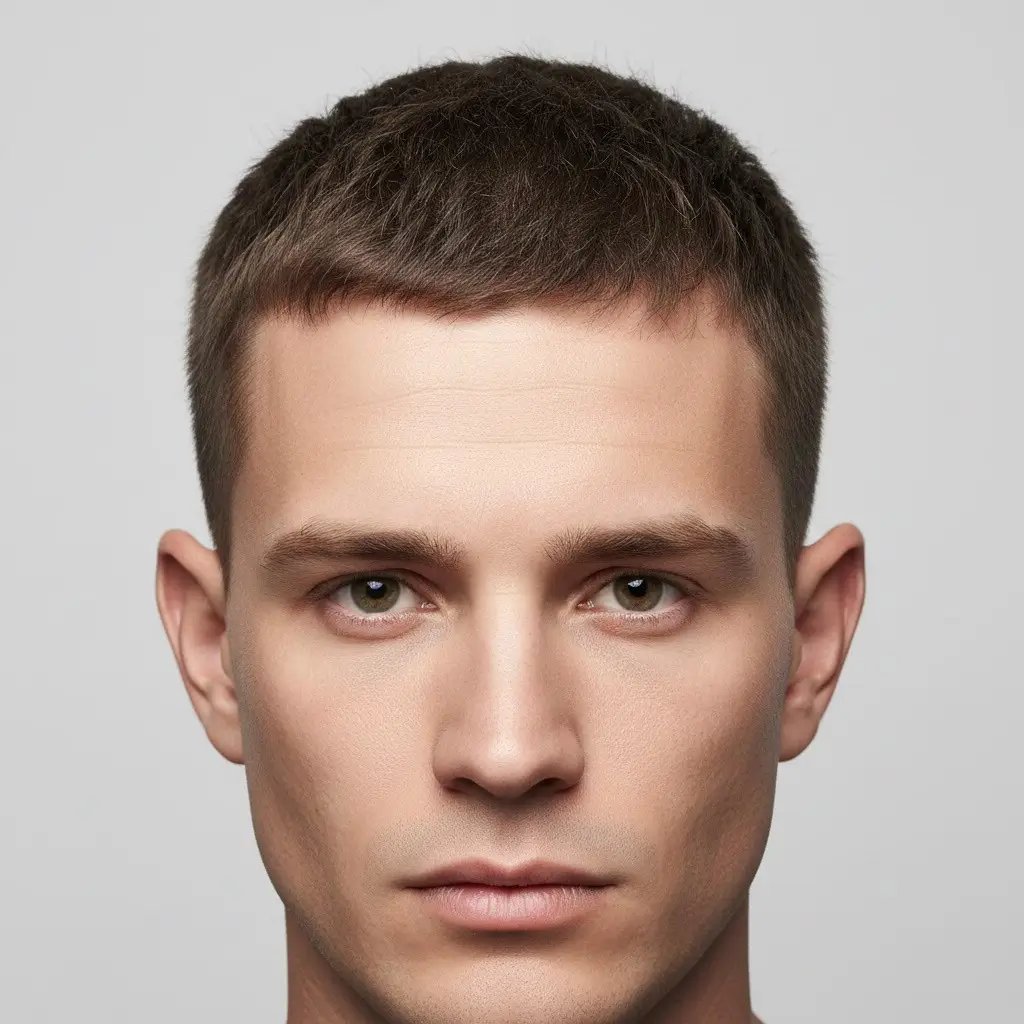 Crew Cut: Short on the sides and slightly longer on
top. A timeless, professional style that suits most face shapes.
Particularly effective post-transplant because a
crew cut frames a new hairline naturally.
Crew Cut: Short on the sides and slightly longer on
top. A timeless, professional style that suits most face shapes.
Particularly effective post-transplant because a
crew cut frames a new hairline naturally.
-
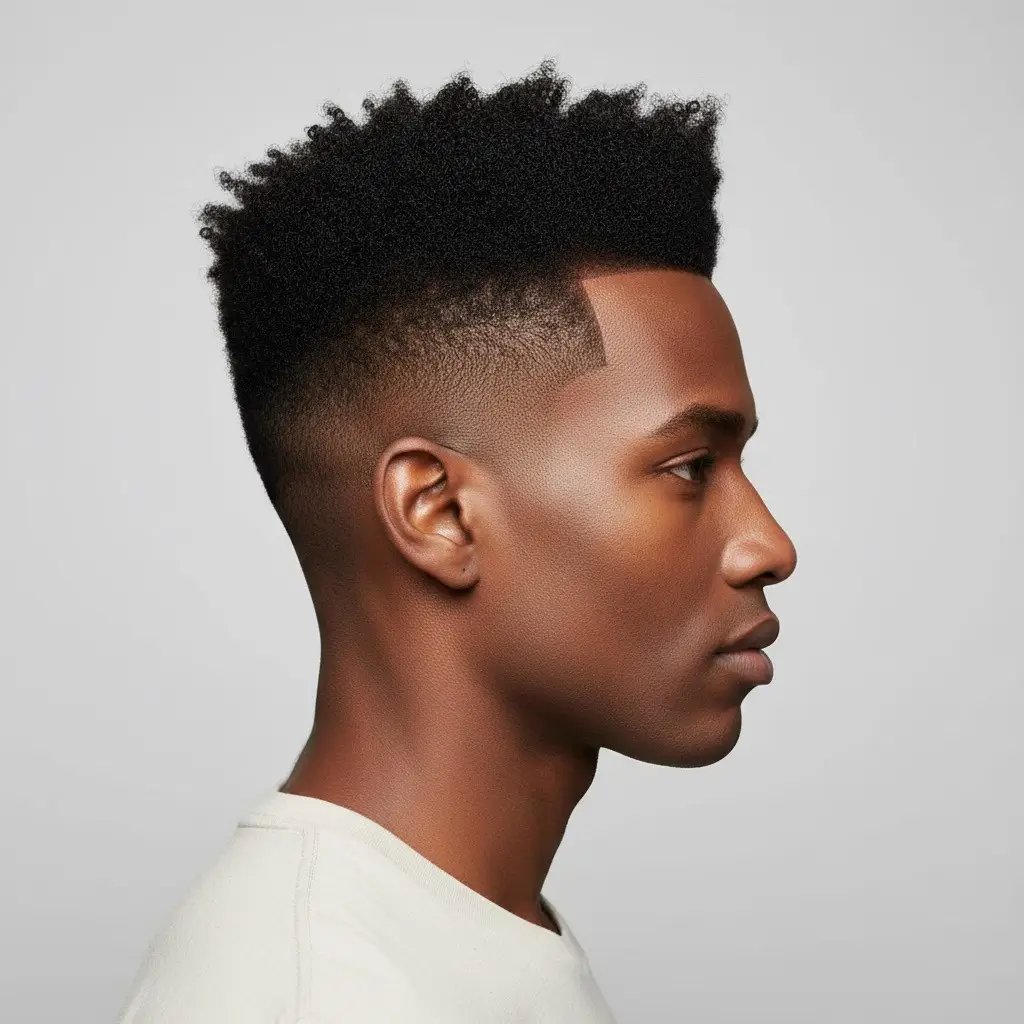 Fade (Low, Mid, High): Gradual taper from longer hair
on top to very short sides. Fade hair cut is named the
most requested short style worldwide by the Professional Beauty
Association (2022). Restored temples and sideburns make fades look
sharper.
Fade (Low, Mid, High): Gradual taper from longer hair
on top to very short sides. Fade hair cut is named the
most requested short style worldwide by the Professional Beauty
Association (2022). Restored temples and sideburns make fades look
sharper.
-
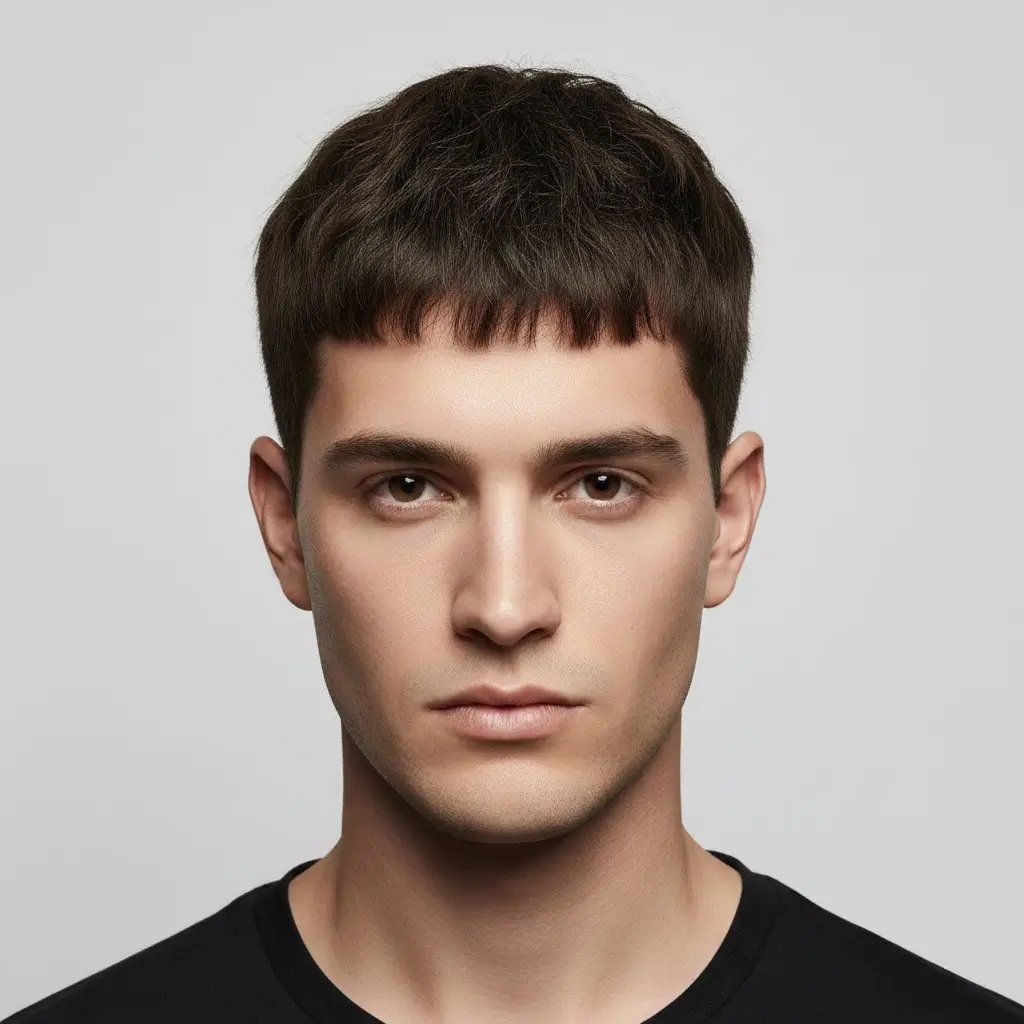 Caesar Cut: Straight fringe with short sides. Useful
for early hairline recession; many men use a Caesar cut while
transplanted hair is still maturing.
Caesar Cut: Straight fringe with short sides. Useful
for early hairline recession; many men use a Caesar cut while
transplanted hair is still maturing.
-
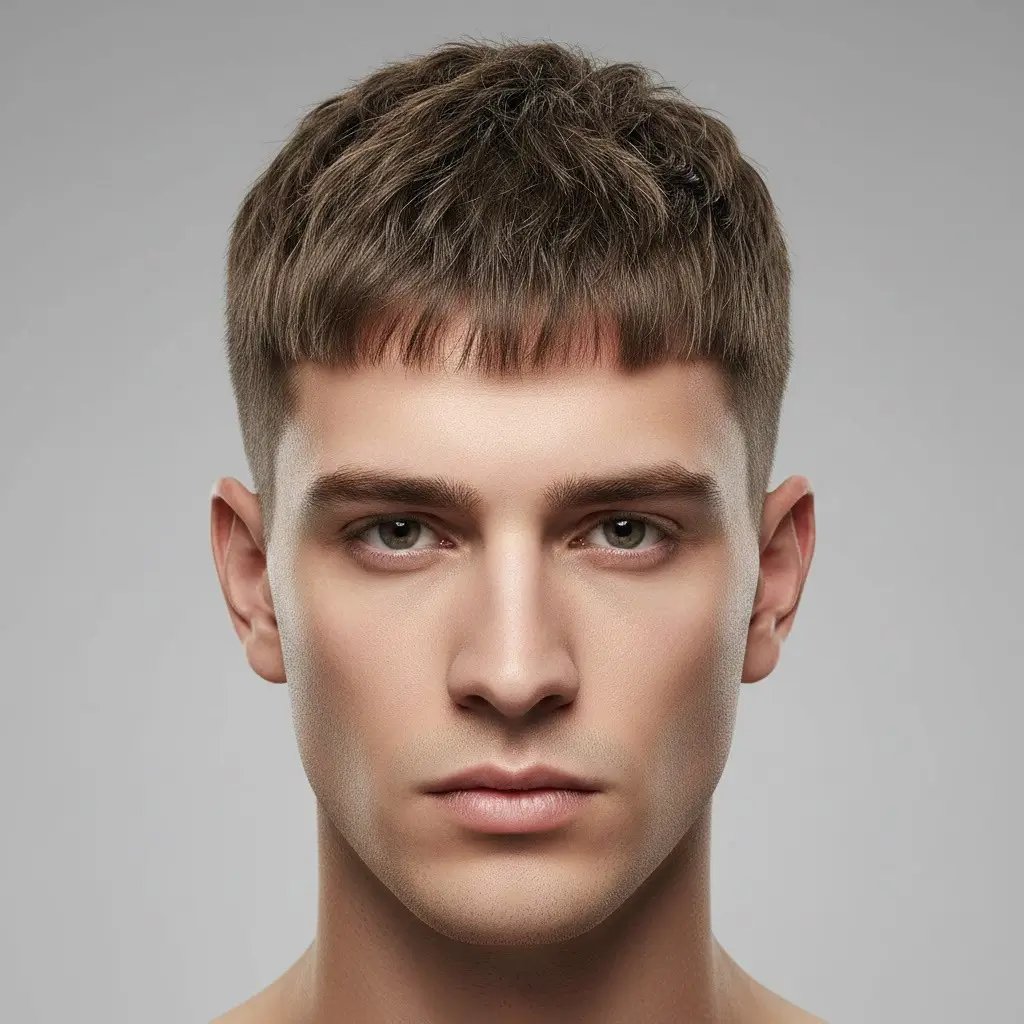 French Crop: Textured top with cropped fringe. Trendy
among younger men, balancing low maintenance with style. After
transplant, a French crop adds density and volume to
the frontal zone.
French Crop: Textured top with cropped fringe. Trendy
among younger men, balancing low maintenance with style. After
transplant, a French crop adds density and volume to
the frontal zone.
Medium Hairstyles for Men
Medium hairstyles for men usually range from 5–10 cm in length. Medium short haircuts for men balance styling flexibility with everyday manageability and are often considered the most versatile length.
-
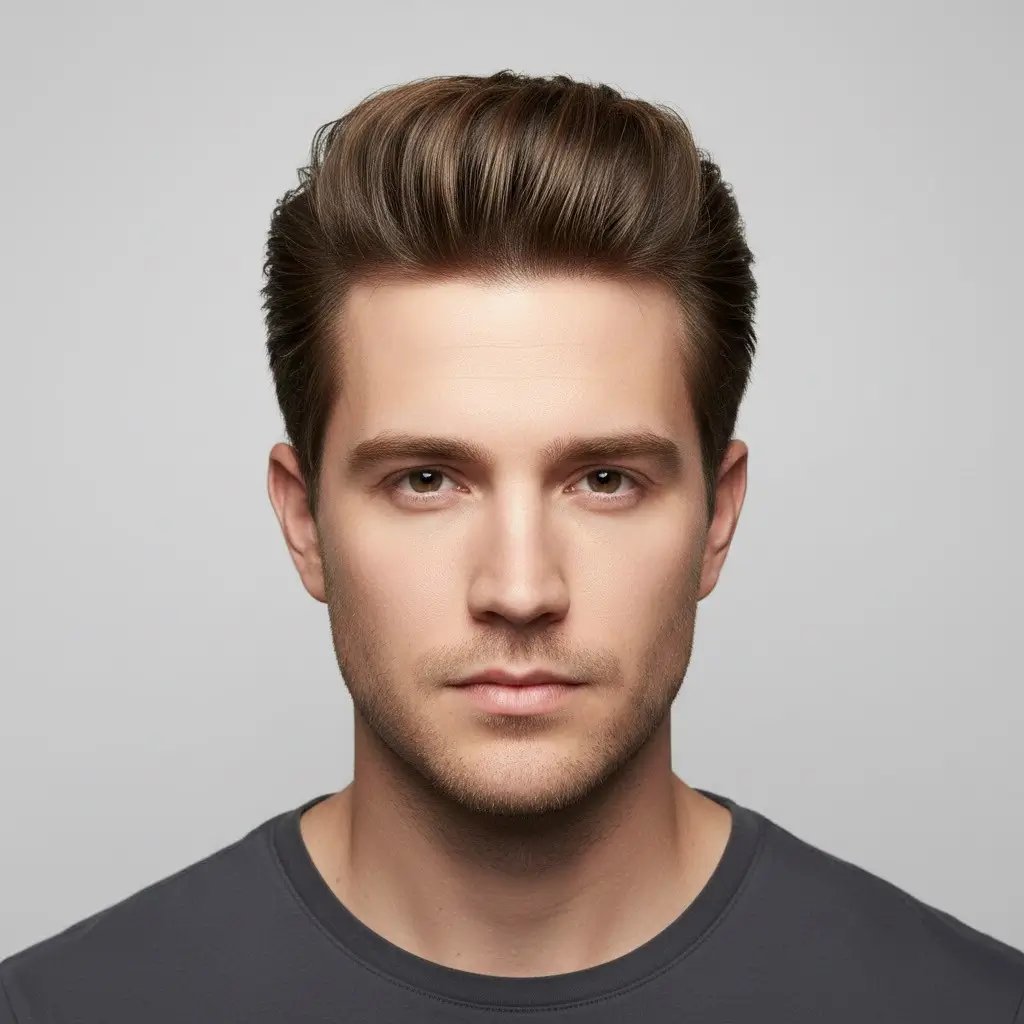 Pompadour: Longer on top with volume, shorter sides.
Popular among men aged 25–40, especially after transplants because it
shows off restored density at the front.
Pompadour: Longer on top with volume, shorter sides.
Popular among men aged 25–40, especially after transplants because it
shows off restored density at the front.
-
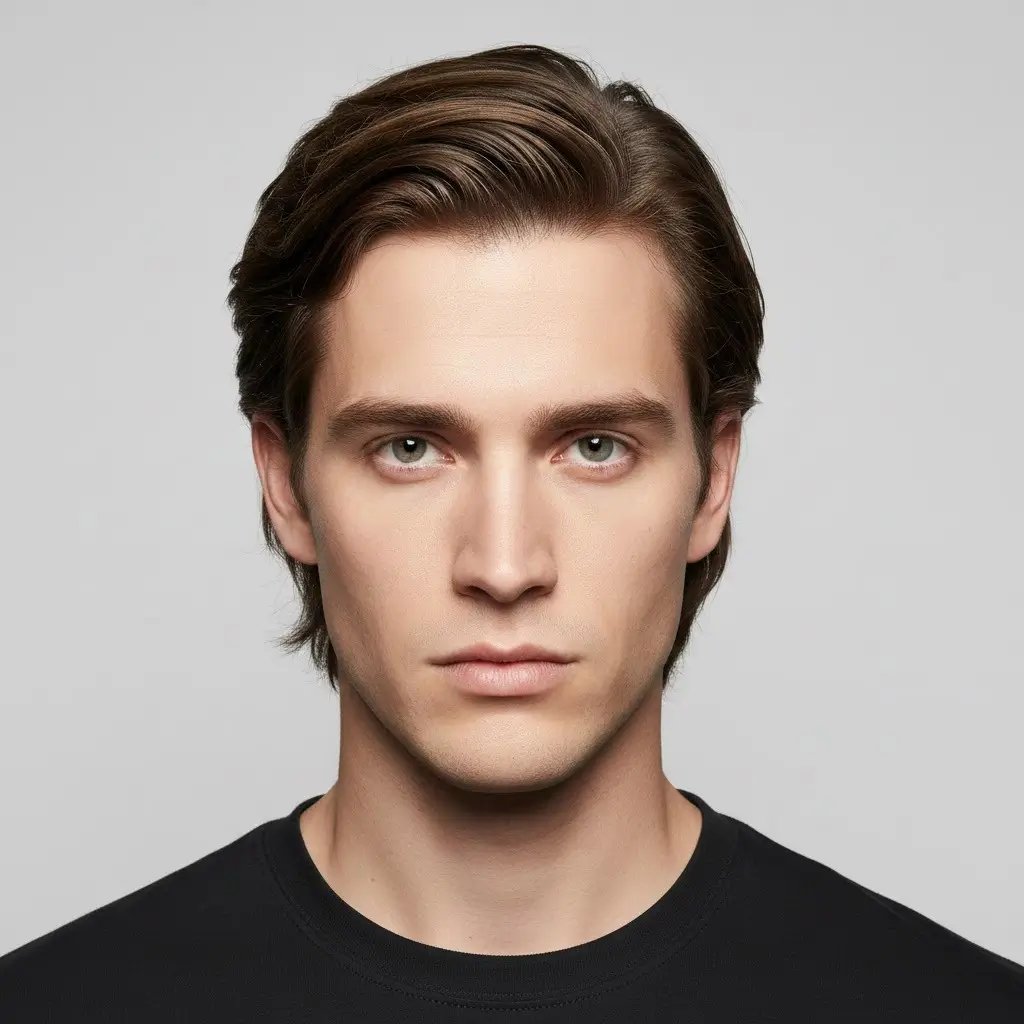 Side Part: A classic style combed to one side.
31% of professionals prefer the side part, Men’s Health
(2021). It signals neatness and maturity.
Side Part: A classic style combed to one side.
31% of professionals prefer the side part, Men’s Health
(2021). It signals neatness and maturity.
-
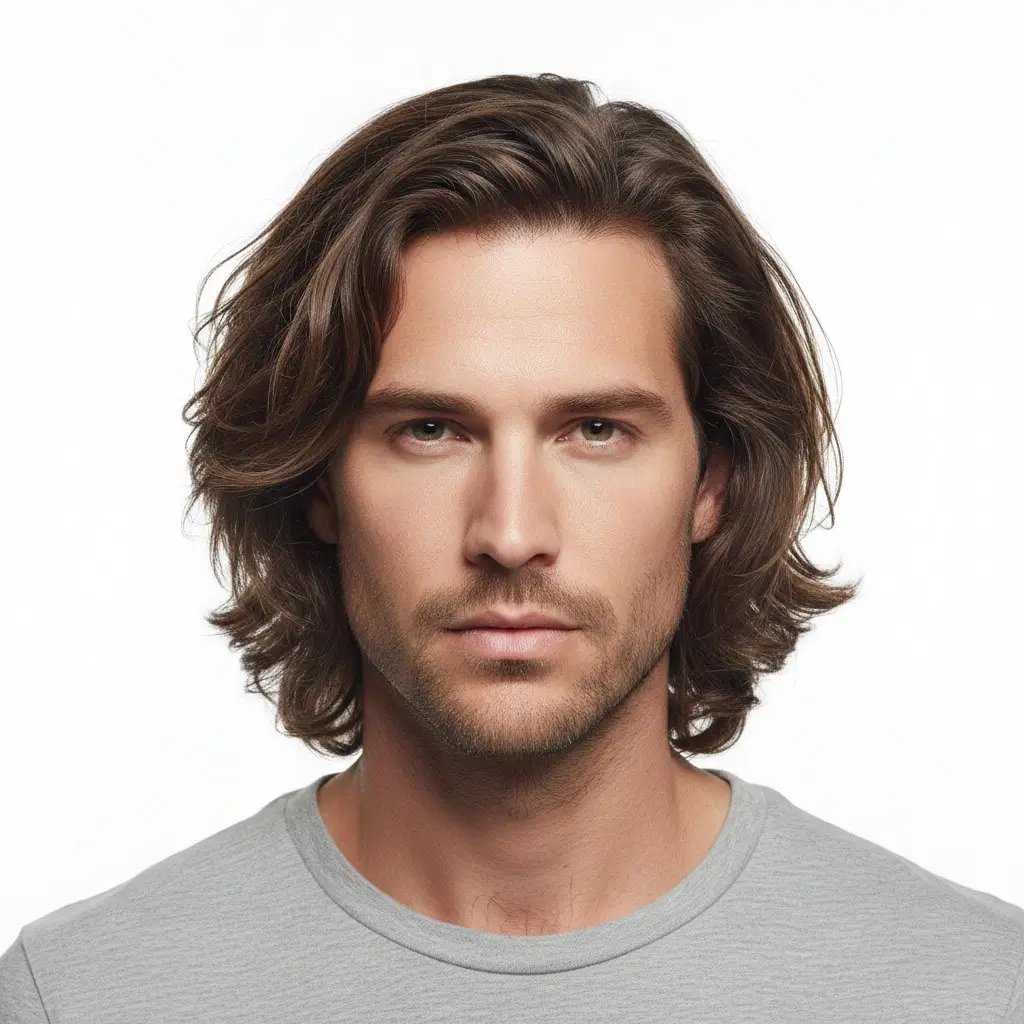 Bro Flow: Medium hair left natural and flowing back.
Favored by men with wavy or thick hair; often chosen post-transplant to
highlight mid-scalp volume; a low-maintenance
men’s medium hairstyles option.
Bro Flow: Medium hair left natural and flowing back.
Favored by men with wavy or thick hair; often chosen post-transplant to
highlight mid-scalp volume; a low-maintenance
men’s medium hairstyles option.
-
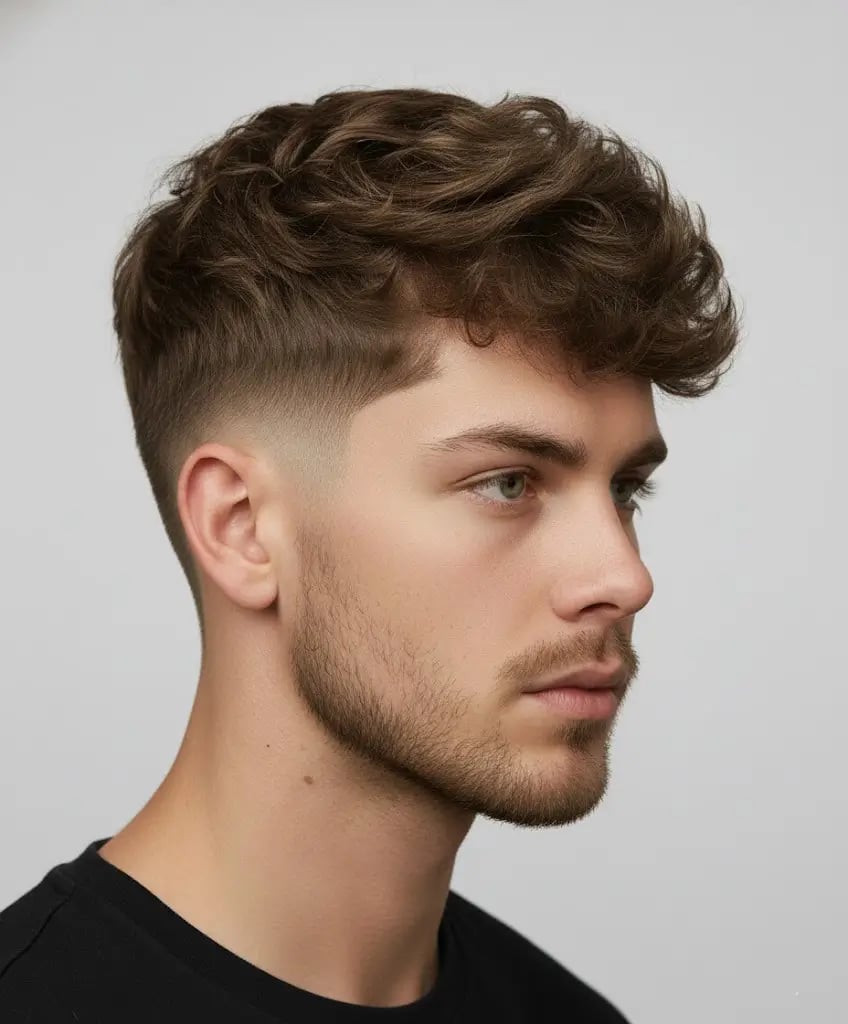 Medium Fade with Textured Top: Faded sides with styled
top. Youthful and modern, particularly effective in men under 30.
Medium Fade with Textured Top: Faded sides with styled
top. Youthful and modern, particularly effective in men under 30.
-
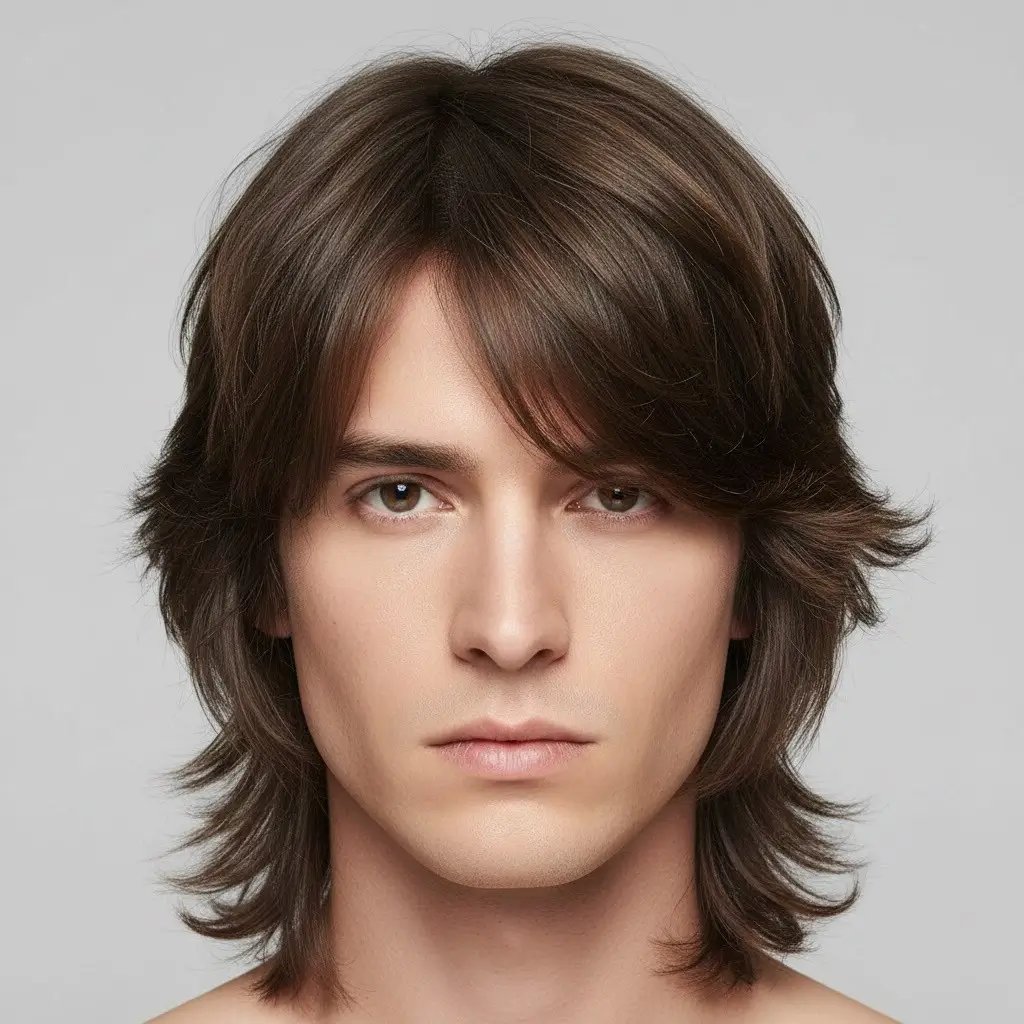 Layered Cut: Adds movement and fullness; ideal for
slight thinning. Clinical reports note layered cuts visually increase
density by up to 20%.
Layered Cut: Adds movement and fullness; ideal for
slight thinning. Clinical reports note layered cuts visually increase
density by up to 20%.
Long Hairstyles for Men
Long hairstyles for men keep hair over 15 cm, often shoulder length or more. Medium long hairstyles for men signal individuality, attract attention, and work best with healthy density.
-
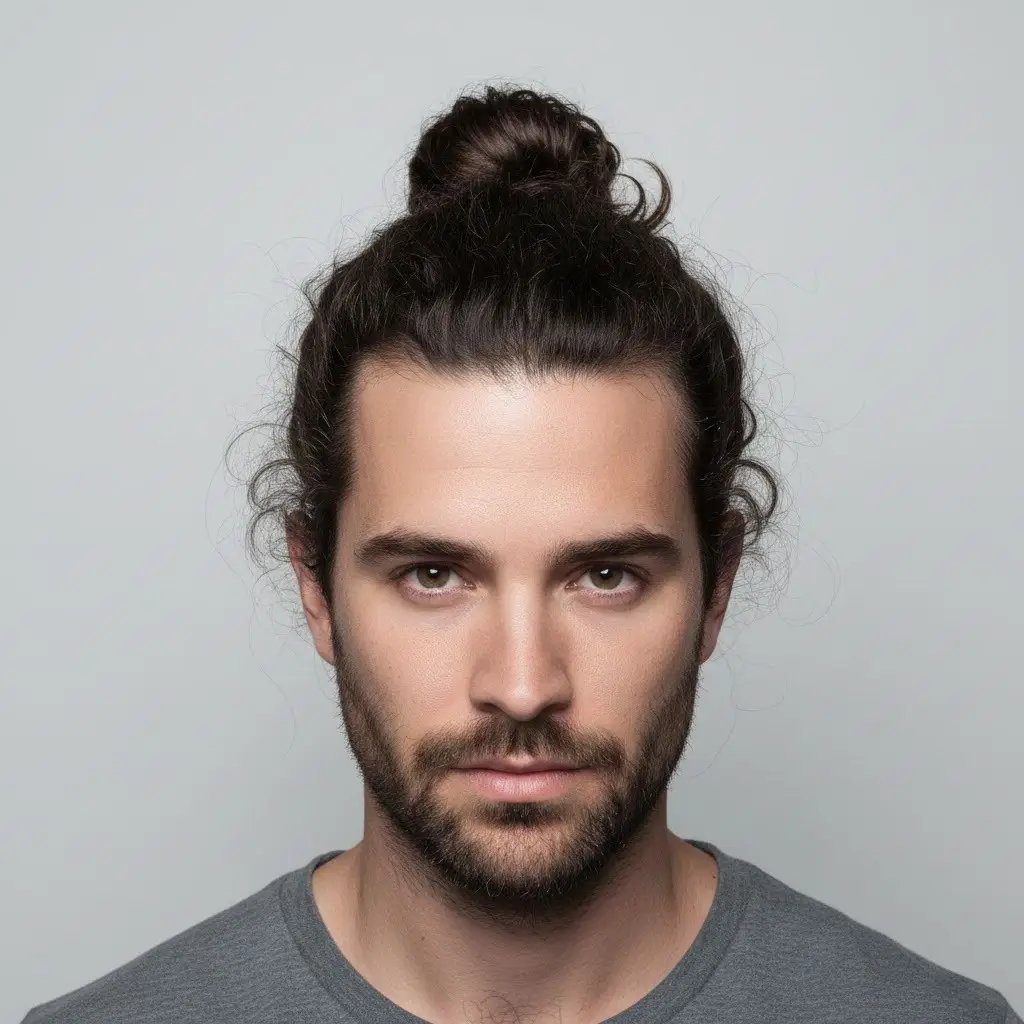 Man Bun: Hair tied back at the crown. Peaked in
popularity among men aged 25–35 according to Male Grooming Trends Report
2022 (Statista); after transplants, it helps cover donor scars at the
back.
Man Bun: Hair tied back at the crown. Peaked in
popularity among men aged 25–35 according to Male Grooming Trends Report
2022 (Statista); after transplants, it helps cover donor scars at the
back.
-
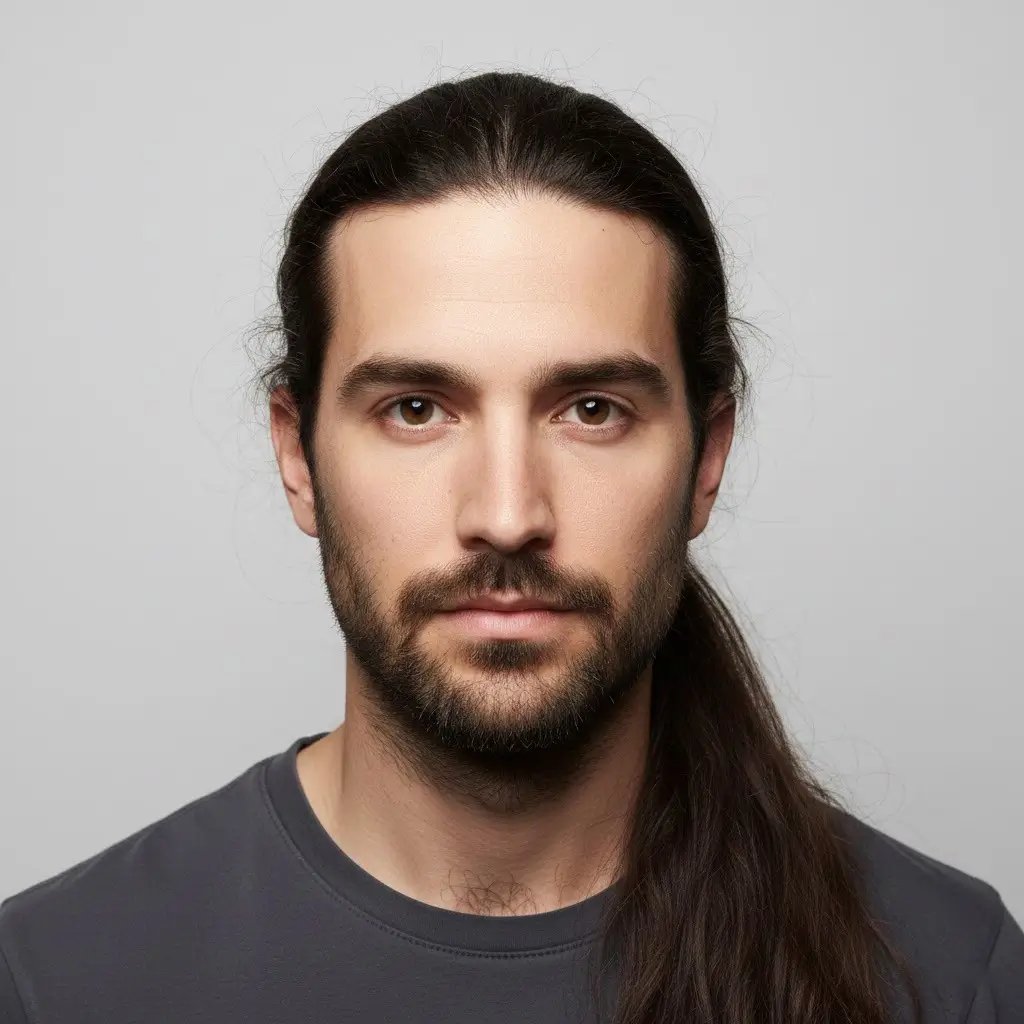 Ponytail: Pulled low or high; easy to maintain.
18%
of men with long hair choose ponytails for daily wear, keeping length
manageable while showing hairline density.
Ponytail: Pulled low or high; easy to maintain.
18%
of men with long hair choose ponytails for daily wear, keeping length
manageable while showing hairline density.
-
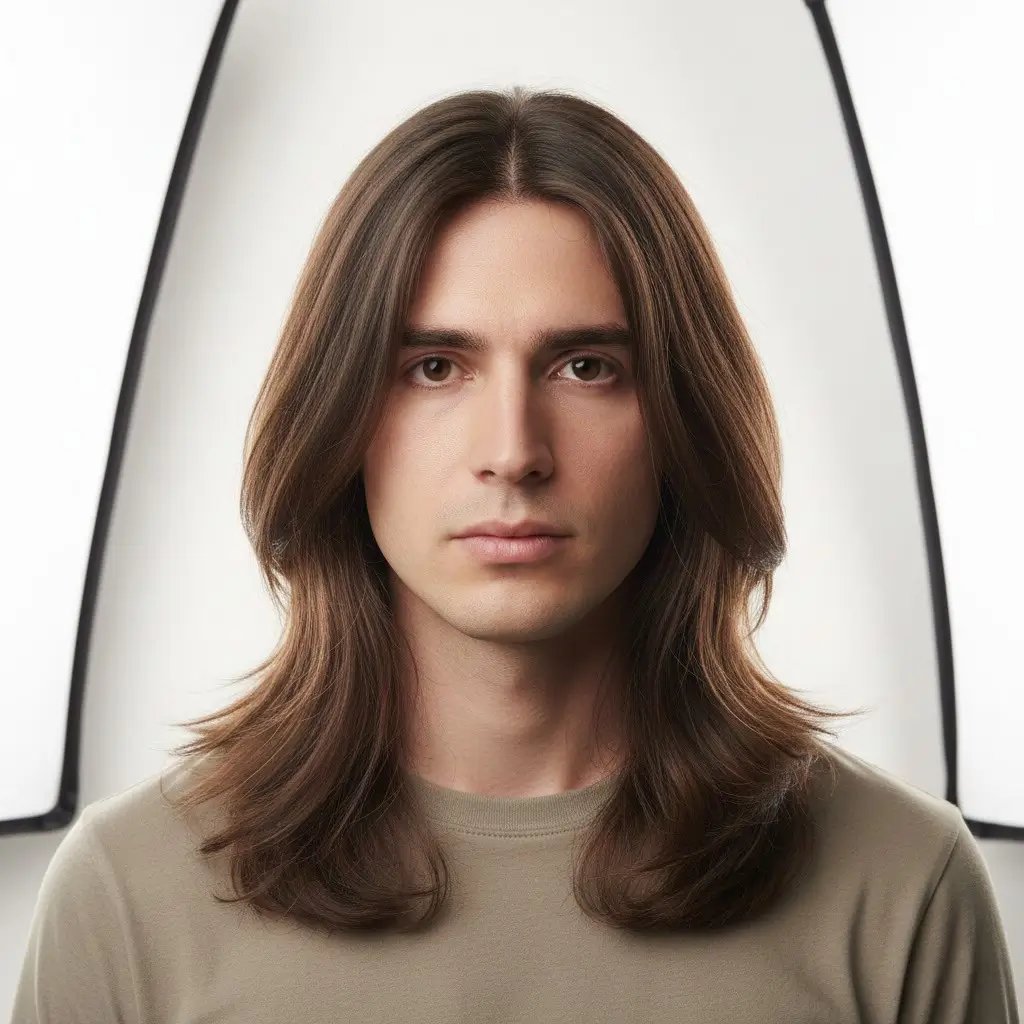 Shoulder-Length Layers: Hair resting at shoulders with
soft layers. Layers give the illusion of up to 15% more
volume, a smart choice for men who had restoration for thinning
mid-scalp.
Shoulder-Length Layers: Hair resting at shoulders with
soft layers. Layers give the illusion of up to 15% more
volume, a smart choice for men who had restoration for thinning
mid-scalp.
-
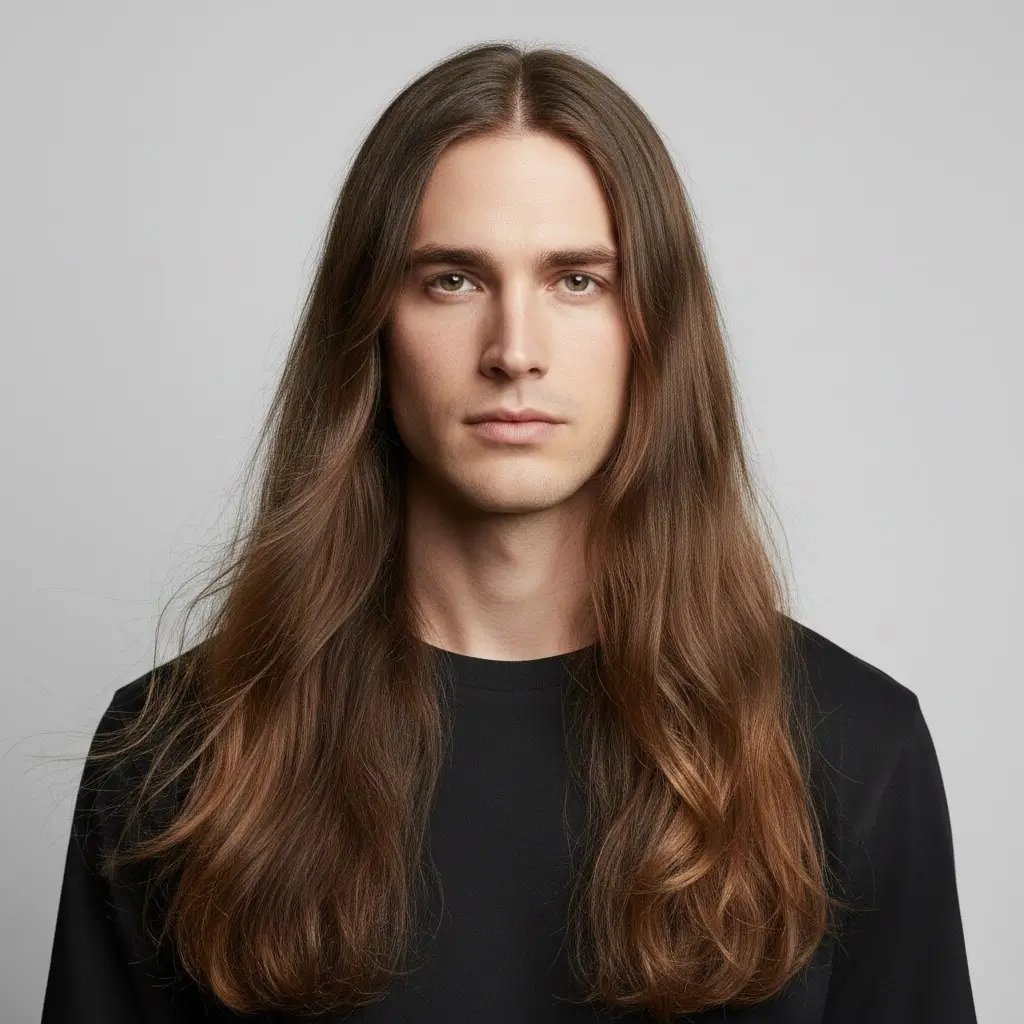 Flowing Long Hair: Loose, unstructured style. Often
linked with creativity and youth; most popular in men under 30 with
strong donor density.
Flowing Long Hair: Loose, unstructured style. Often
linked with creativity and youth; most popular in men under 30 with
strong donor density.
Curly & Wavy Hairstyles
Curly and wavy hairstyles highlight natural texture, offering movement and volume. They are versatile across casual and formal settings but need density to look balanced.
-
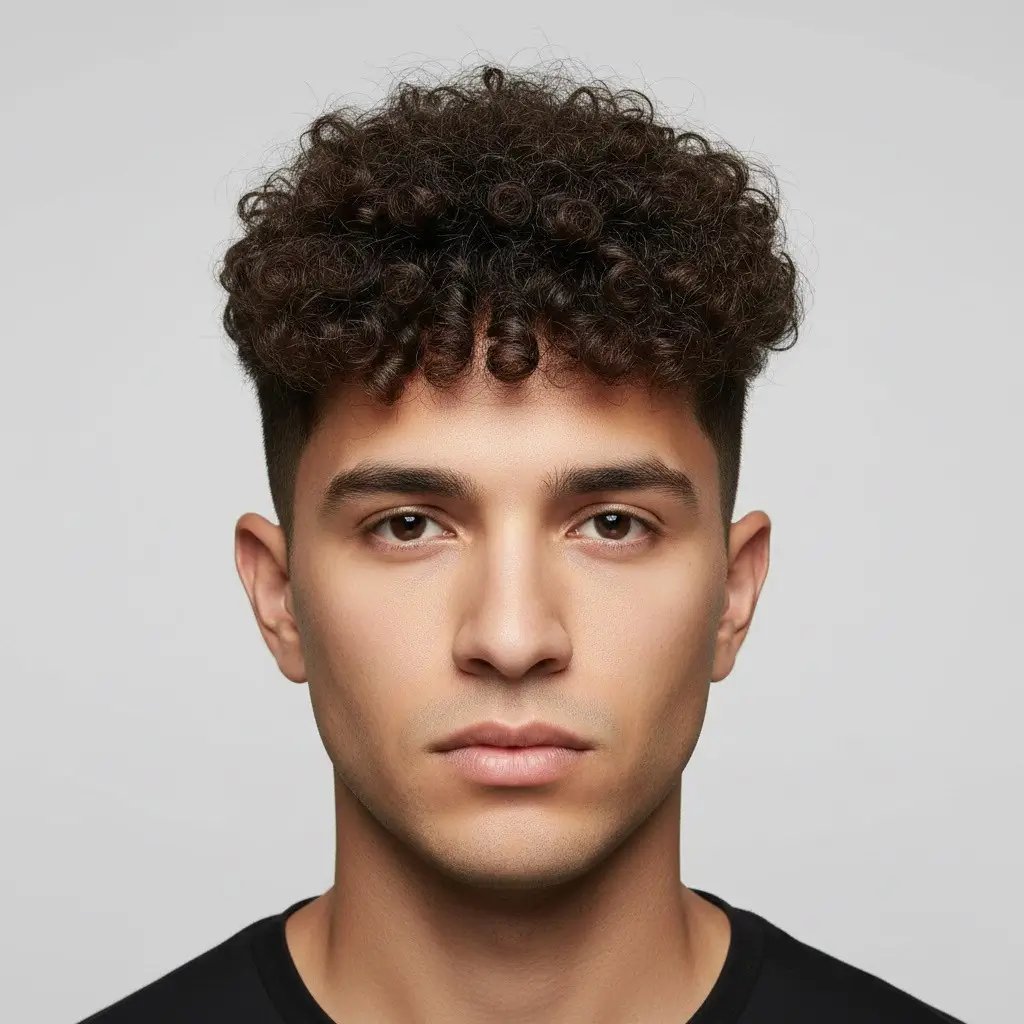 Curly Undercut: Sides cut short, curls left on top.
21% of men with textured hair favored this cut,
Statista Men’s Grooming Survey (2022). Low-maintenance but stylish.
Curly Undercut: Sides cut short, curls left on top.
21% of men with textured hair favored this cut,
Statista Men’s Grooming Survey (2022). Low-maintenance but stylish.
-
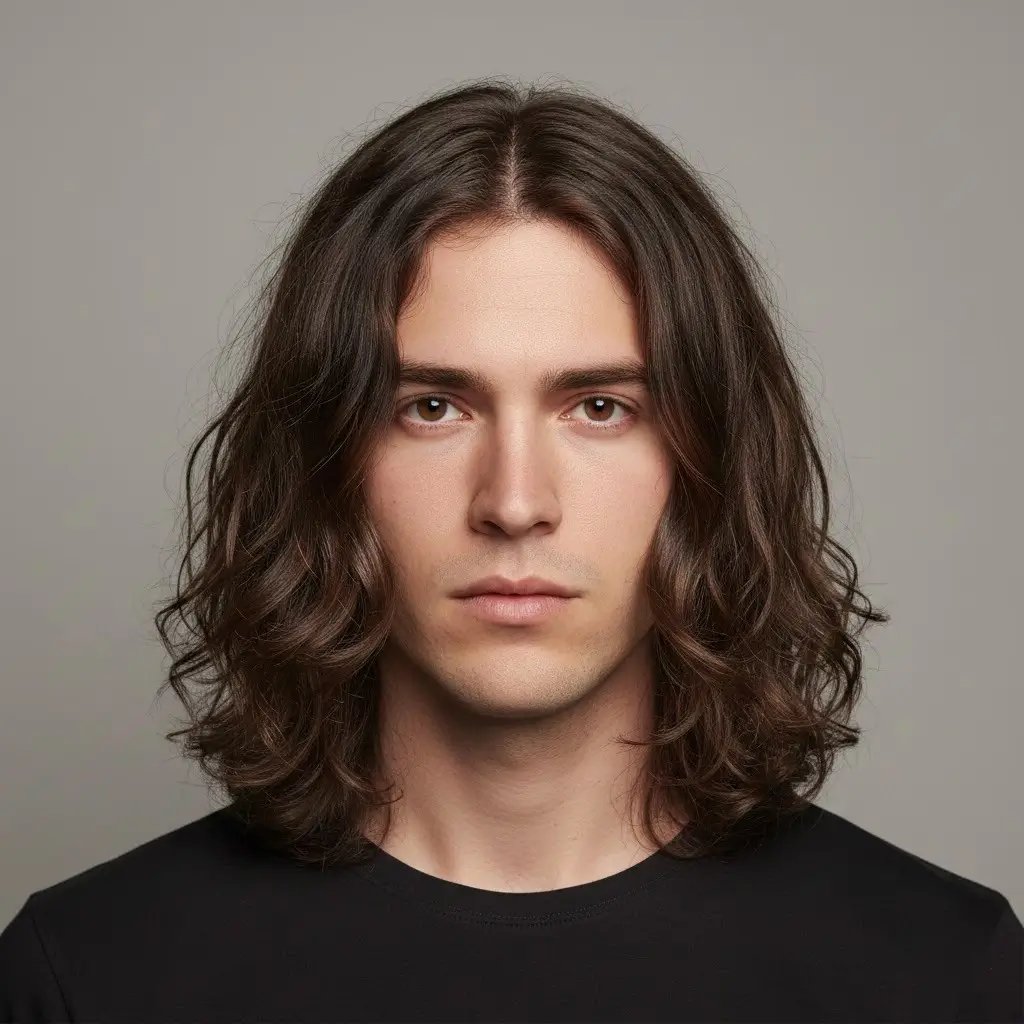 Loose Waves: Natural waves left flowing. Women under 30
rated wavy styles 15% more attractive according to the
American Men’s Style Index 2021, making it a popular date-style choice.
Loose Waves: Natural waves left flowing. Women under 30
rated wavy styles 15% more attractive according to the
American Men’s Style Index 2021, making it a popular date-style choice.
-
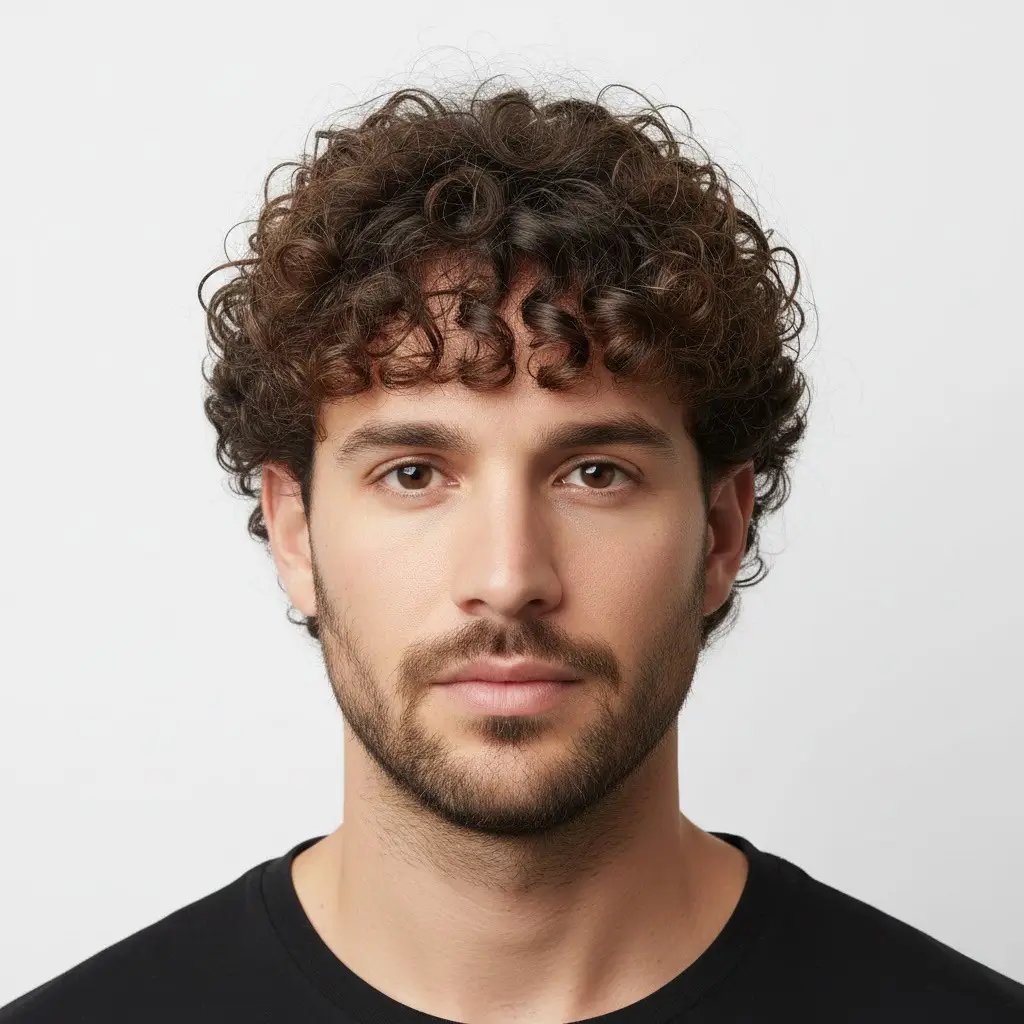 Curly Fringe: Curls shaped forward as a fringe.
32% of men with early frontal thinning preferred fringe-based
cuts,
British Journal of Dermatology (2020). Helps hide recession.
Curly Fringe: Curls shaped forward as a fringe.
32% of men with early frontal thinning preferred fringe-based
cuts,
British Journal of Dermatology (2020). Helps hide recession.
-
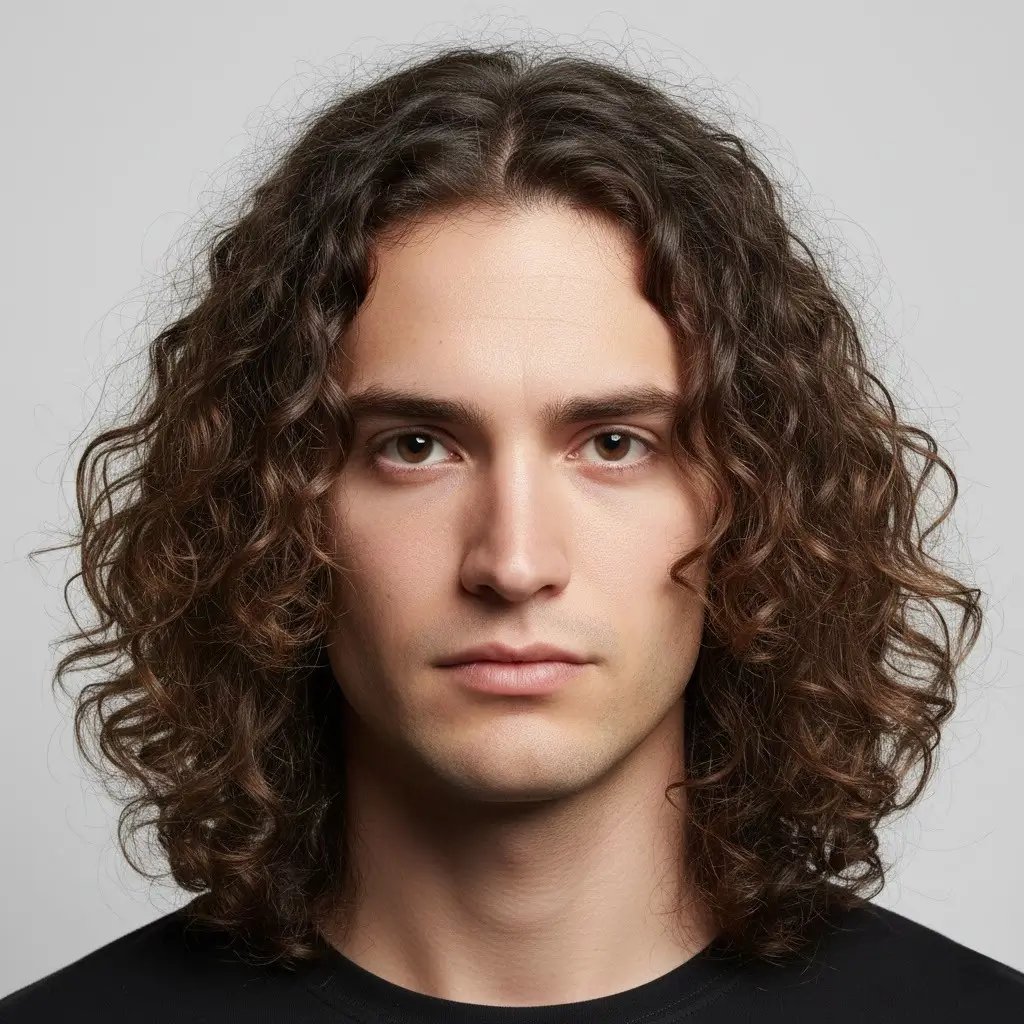 Medium-Length Curls: Curls grown out to 7–10 cm.
Medium-length curls were the fastest-growing men’s style trend in Europe
as The Vogue Business Men’s Hair Trends Report 2022 published.
Medium-Length Curls: Curls grown out to 7–10 cm.
Medium-length curls were the fastest-growing men’s style trend in Europe
as The Vogue Business Men’s Hair Trends Report 2022 published.
-
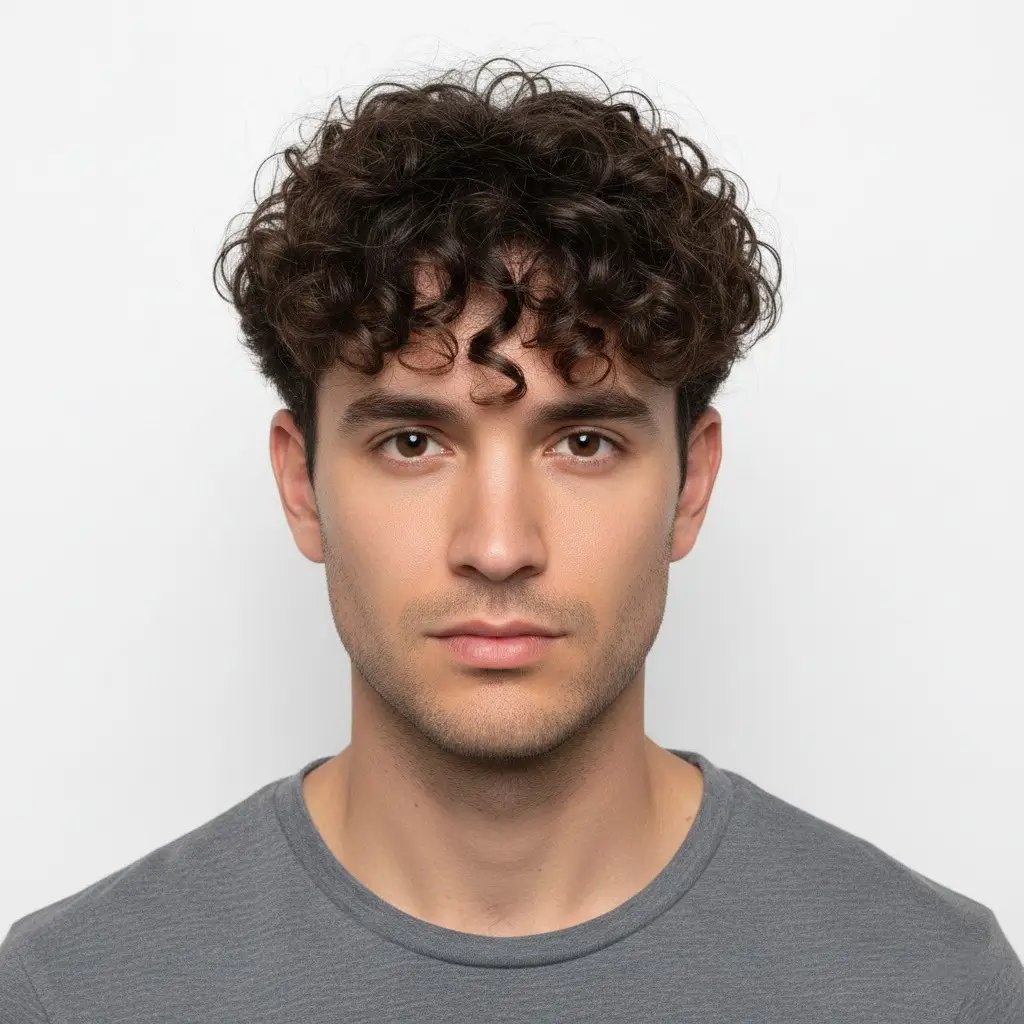 Mid/Low Fade Curly: Medium fade with curls on top.
Taper fades made up 27%+ of barber requests in men
under 30 according to Men’s Hairstyles Popularity Report (2022,
Statista).
Mid/Low Fade Curly: Medium fade with curls on top.
Taper fades made up 27%+ of barber requests in men
under 30 according to Men’s Hairstyles Popularity Report (2022,
Statista).
-
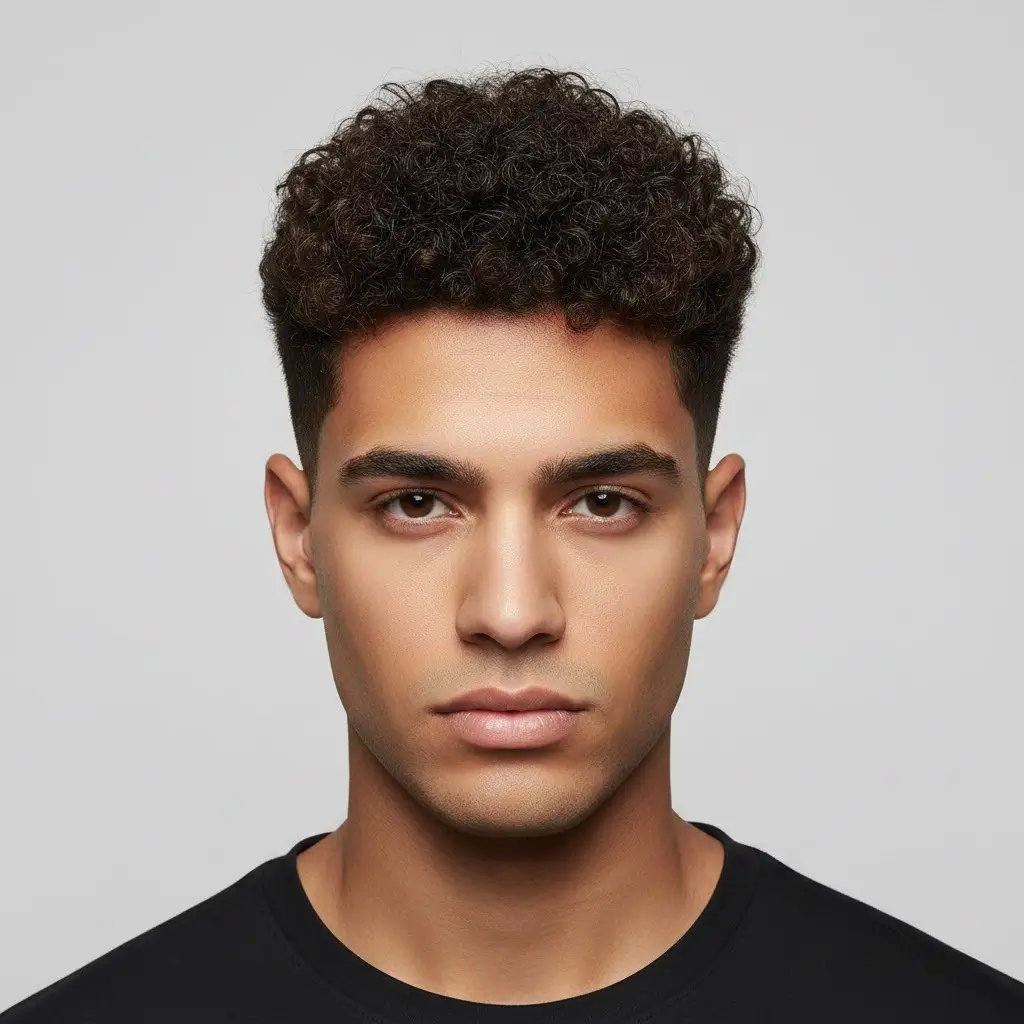 Low Fade Curly Hair: Gradual fade starting above the
ear, blending into curls on top. Low fades were rated the most
professional-looking fade style for work settings.
Low Fade Curly Hair: Gradual fade starting above the
ear, blending into curls on top. Low fades were rated the most
professional-looking fade style for work settings.
Undercut Hairstyles
Undercut hairstyles feature short or shaved sides with longer hair on top, creating sharp contrast. Popular worldwide because they balance edge and versatility, and they adapt well across most face shapes, including oval.
-
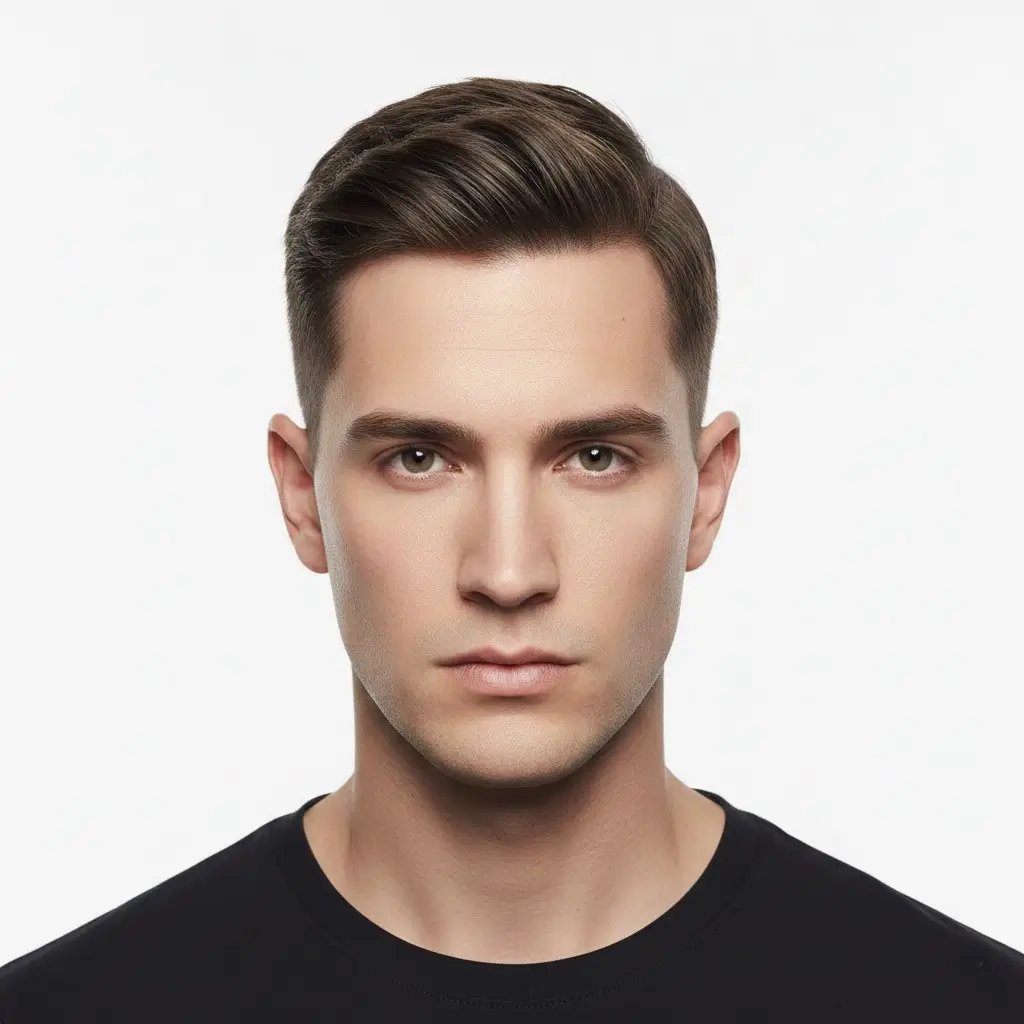 Classic Undercut: Long on top, short or shaved sides.
18% of men aged 20–35 preferred this style, according
to the Statista Global Men’s Grooming Survey (2022). Restored top
density post-transplant makes the undercut look sharper and more
balanced.
Classic Undercut: Long on top, short or shaved sides.
18% of men aged 20–35 preferred this style, according
to the Statista Global Men’s Grooming Survey (2022). Restored top
density post-transplant makes the undercut look sharper and more
balanced.
-
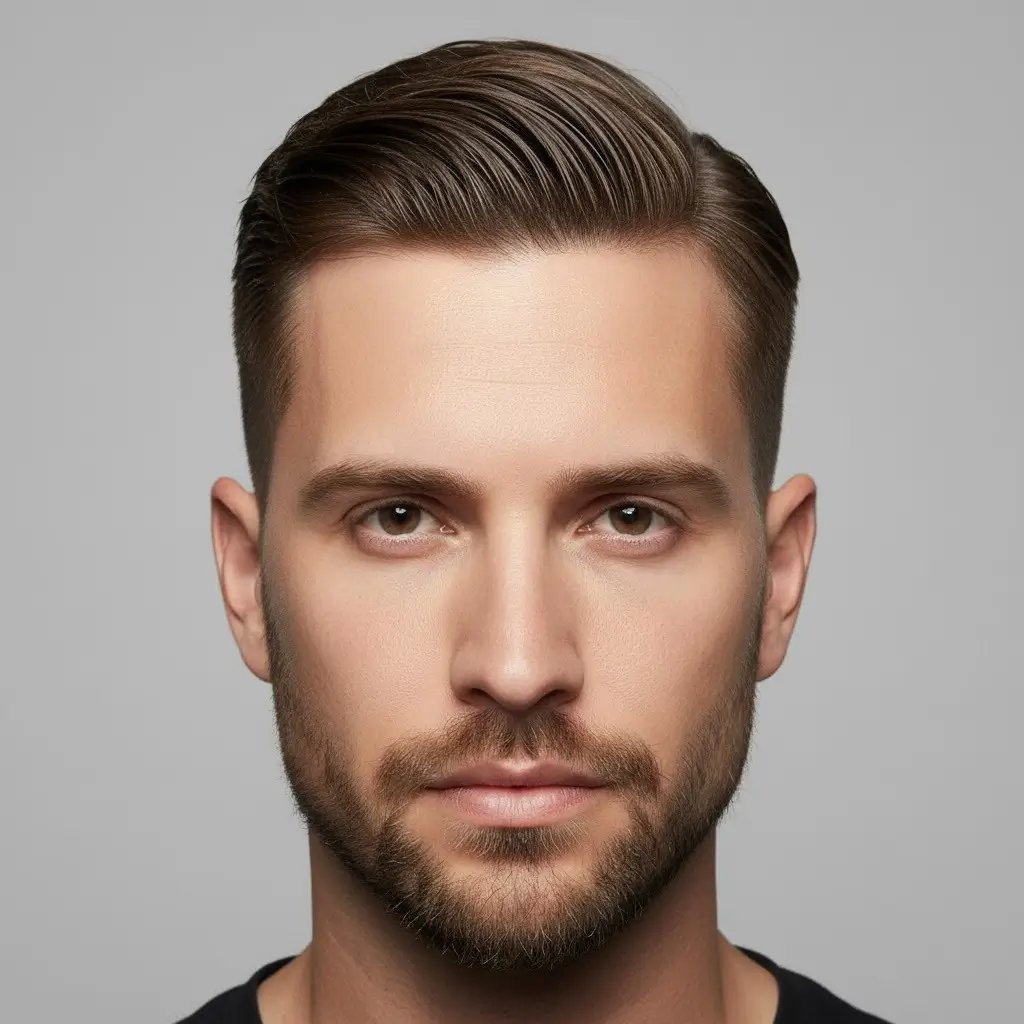 Slicked Back Undercut: Top hair combed straight back.
This look was rated more confident and mature by peers, as reported in
the Men’s Hairstyles Trend Report (2021). Works best with full frontal
coverage.
Slicked Back Undercut: Top hair combed straight back.
This look was rated more confident and mature by peers, as reported in
the Men’s Hairstyles Trend Report (2021). Works best with full frontal
coverage.
-
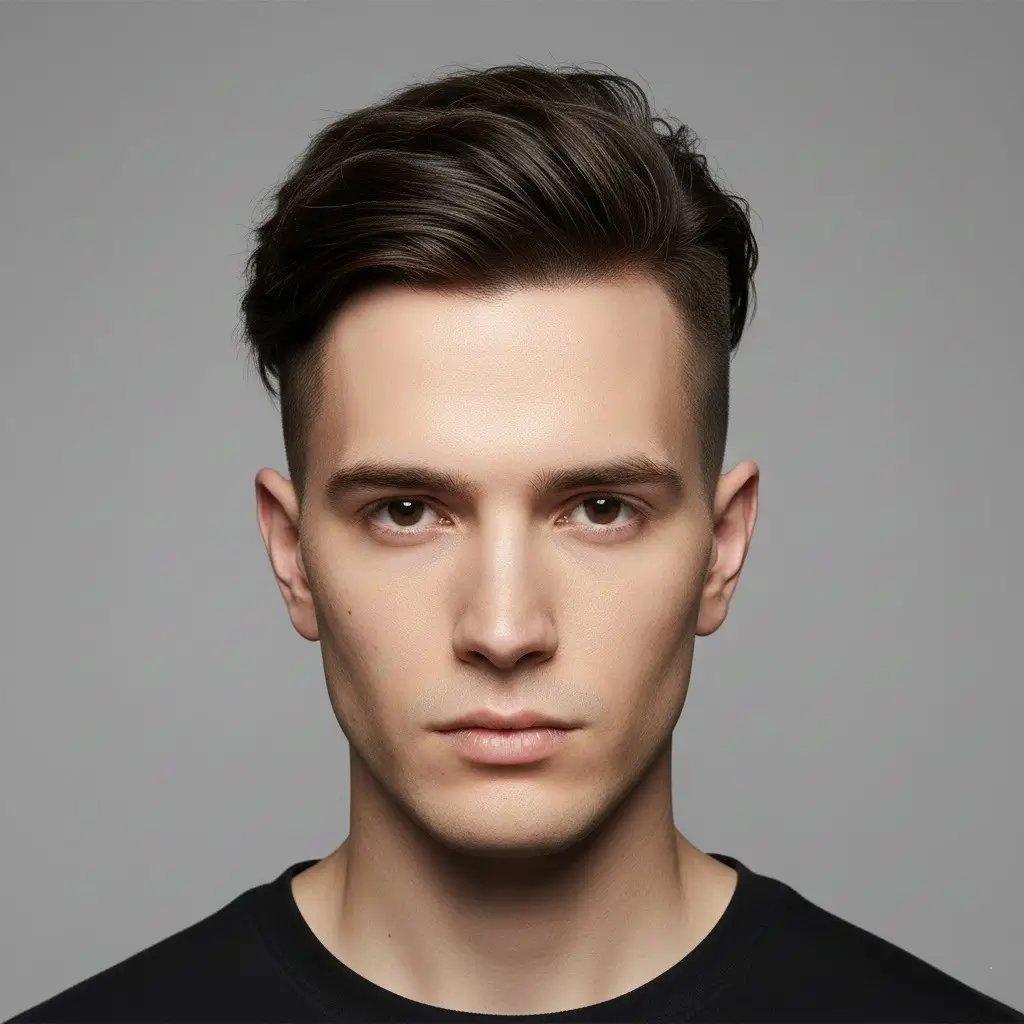 Disconnected Undercut: Clear line between long top and
shaved sides without blending.
1 in 5 men under 30 tried this style, according to the
European Style Census (2022). The sharp outline emphasizes a defined new
hairline.
Disconnected Undercut: Clear line between long top and
shaved sides without blending.
1 in 5 men under 30 tried this style, according to the
European Style Census (2022). The sharp outline emphasizes a defined new
hairline.
-
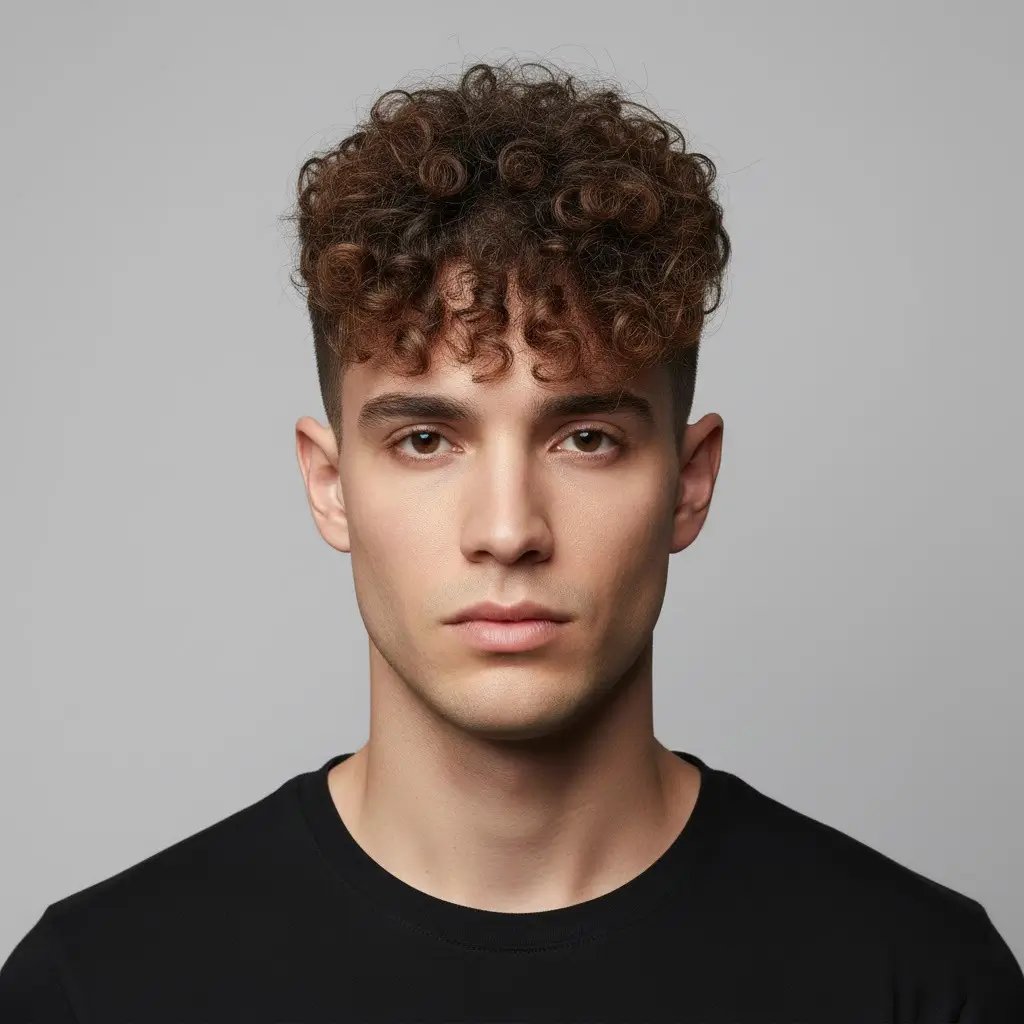 Curly Undercut: Natural curls long on top, cropped
sides. 21% of men with curly hair preferred this cut,
according to the Statista Men’s Haircut Report (2022). Transplanted
curls blend naturally and boost perceived volume.
Curly Undercut: Natural curls long on top, cropped
sides. 21% of men with curly hair preferred this cut,
according to the Statista Men’s Haircut Report (2022). Transplanted
curls blend naturally and boost perceived volume.
-
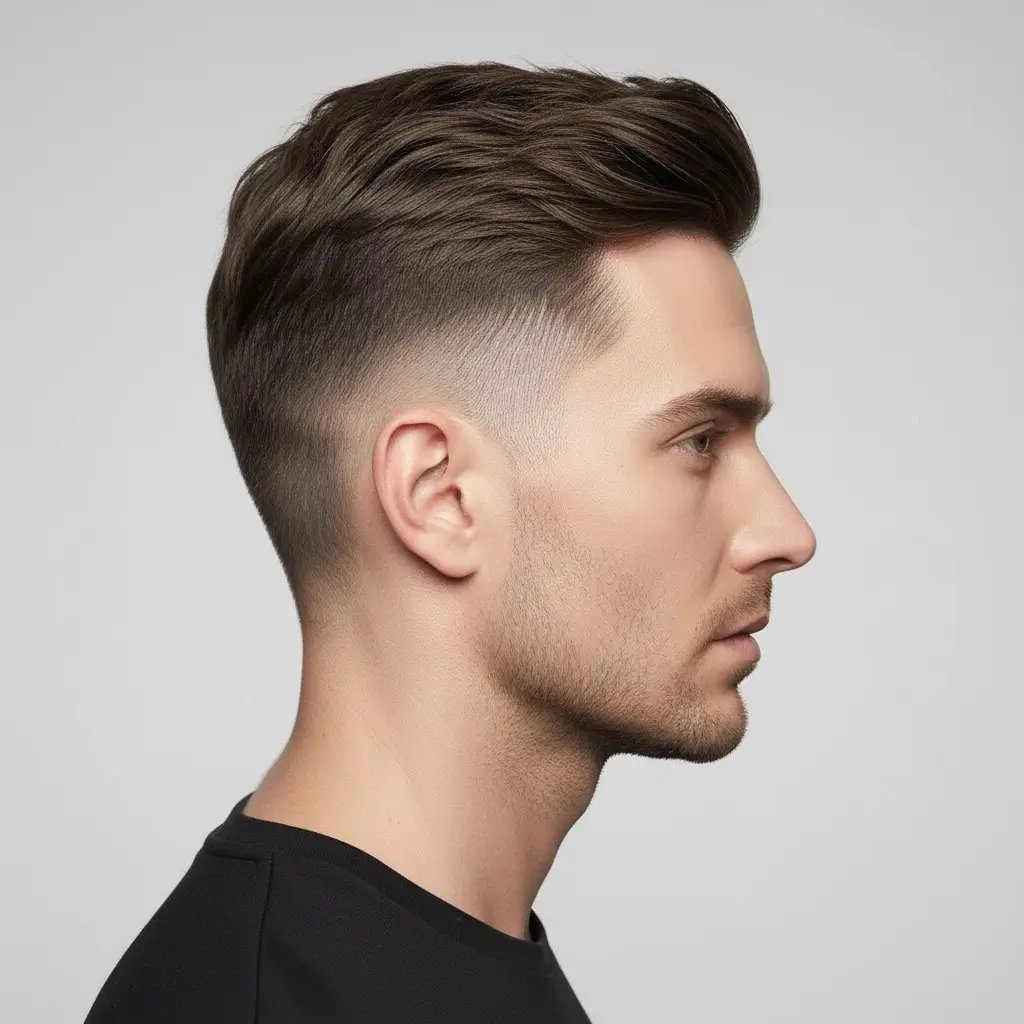 Undercut Fade: Mix of undercut and fade.
Fades are the most requested men’s haircut worldwide,
as shown in barber industry data from the Professional Beauty
Association (2022). This cut frames restored density at crown and
temples cleanly.
Undercut Fade: Mix of undercut and fade.
Fades are the most requested men’s haircut worldwide,
as shown in barber industry data from the Professional Beauty
Association (2022). This cut frames restored density at crown and
temples cleanly.
What Are the Best Hairstyles for Men?
The best haircuts for men combine style, confidence, and age-appropriate appeal. Each type has unique benefits for self-image and attractiveness.
- Short Hairstyles: Short styles like buzz cuts, crew cuts, fades, and Caesar cuts are the best hairstyle for men who want a sharp, professional image. They boost self-confidence because the clean look emphasizes facial symmetry. They are rated most attractive in men aged 20–35 because short hair signals discipline and youth. Short hairstyles make men appear up to 5 years younger according to University of South Wales (2018). After a transplant, fades or crew cuts maximize the visibility of a restored hairline, while Caesar or French crop disguise temporary density gaps during the first 12 months.
- Medium Hairstyles: Pompadours, side parts, and layered cuts are considered the best haircuts for men looking for balance between formal and casual. These trending hairstyles for men lift confidence by making hair appear fuller and more styled without being high-maintenance. They are rated most attractive in men aged 25–40, especially in professional settings, because they project maturity. 31% of professionals preferred the side part according to Men’s Health (2021).
- Long Hairstyles: Man buns, ponytails, and shoulder-length layers are the best hairstyle for men wanting individuality. They boost confidence by letting men stand out, especially in creative environments. They are rated most attractive among stylish men under 30, when long hair is linked with energy and self-expression. The man bun peaked in men aged 25–35 (Statista Male Grooming Trends Report, 2022).
- Curly and Wavy Hairstyles: Curly undercuts, fringes, and waves are best haircuts for men who want texture and natural flow. These trendy haircuts for men increase self-confidence because they make hair look fuller and more dynamic, even in early thinning. They are most attractive to women under 30, since natural waves are often seen as playful and stylish haircuts for men. Wavy styles were rated 15% more attractive by women under 30, American Men’s Style Index (2021).
- Undercut Hairstyles: Slicked back, disconnected, and faded undercuts are the best hairstyle for men looking for modern sharpness. These popular men’s haircuts raise confidence because they frame restored density after a transplant and highlight strong facial features. They are most attractive in men aged 20–35, associated with strength and trend awareness. Fades are the most requested haircut worldwide according to Professional Beauty Association (2022).
Across every category, the pattern holds: the style people call ‘best’ is rarely about length or trend, it’s about how well the cut matches what the hairline and crown can actually support.
What Are the Rare Types of Hairstyles for Men?
Rare hairstyles for men are styles that stand out due to low adoption rates, cultural roots, or high-maintenance demands. They are unique looks that surprise viewers and boost individuality.
- Mullet: Short in the front, long at the back. Once iconic in the 1980s, the mullet remains rare today because only 8% of men worldwide reported ever trying it according to Statista Men’s Grooming Data (2022). It’s considered a nostalgic or rebellious style, most common among men under 30 seeking a retro statement.
- Mohawk: Shaved sides with a long strip of hair down the center. Rare because of its boldness and upkeep. Only 4% of surveyed men said they would wear a Mohawk to work in the Journal of Fashion Marketing (2019), showing how its extreme image limits adoption.
- Afro: A rounded, voluminous hairstyle grown naturally. Rare outside communities with textured hair, but highly symbolic. The Black Men’s Style Survey (2020) found the Afro boosted self-confidence by over 20% among wearers, but fewer than 6% of men overall reported having one.
- Bowl Cut: Straight cut fringe with even length around the head. Rare today because it is linked with outdated style perceptions. Fewer than 3% of men chose the bowl cut in adulthood as a UK Men’s Grooming Poll (2021) found, though it occasionally resurges as an ironic fashion choice.
- Top Knot: Hair tied tightly at the crown but not fully long like a bun. Rare because it sits between long and short styles, making upkeep awkward. The top knot was worn by only 5% of long-haired men according to the Male Grooming Trends Report 2022 (Statista), mostly in urban fashion scenes.
Low adoption rates aside, each of these styles depends on strong, healthy density to avoid looking sparse rather than intentional.
Which Are the Most Modern Hairstyles for Men?
Modern hairstyles are those that define current fashion, combine precision with personality, and often dominate barber requests worldwide. These men’s haircuts 2025 stand out for looks and for the confidence they bring.
- Textured Crop Fade: Short sides with a textured top. This is one of the most trending haircuts for men because it looks sharp with little maintenance. It boosts confidence by framing the hairline and temples. It is rated highly attractive for men aged 18–30, as it gives a youthful, edgy finish. Fades are the most requested haircut worldwide according to the Professional Beauty Association (2022). After a hair transplant, the crop fade is popular since it highlights density in the frontal zone during the first year.
- Modern Pompadour: High volume on top with shorter sides. It enhances self-esteem by adding height and sophistication. 31% of professionals preferred side-part or pompadour variations, linking them to maturity. Most attractive in men aged 25–40 because the style signals confidence and leadership. Many transplant patients request pompadours, especially adults, because restored density at the front makes the pomp look full and natural.
- Skin Fade with Line Design: A close fade with shaved line art. This new haircut for men shows individuality and boosts self-confidence by making a bold style statement. Rated most attractive among men aged 18–25 because it shows trend awareness. Barber surveys show that design fades are requested by less than 10% of clients, making them modern but rare. It is possible to achieve post-transplant as long as the donor density is strong; especially popular with younger adults.
- Medium-Length Bro Flow: Hair left natural, flowing backward. Confidence boost comes from a relaxed but stylish image. Medium-length curls and flows were the fastest-growing men’s hairstyle in Europe. Most attractive in men aged 20–35 because it signals creativity. After transplants, bro flow is common among men with wavy donor hair, especially adults in their late 20s.
- Low Fade Curly Hair: Curls blended gradually into a low fade. Confidence rises because this cut controls texture while keeping style. Low fades were rated the most professional-looking style. Attractive in men aged 20–35, as it balances fashion with work settings. Transplant patients with curly donor hair often request this cut since it allows curls to blend with restored density.
What ties these together is precision at the top and sides, a combination that shows off restored density more than length alone does.
What Are the Most Iconic Types of Hairstyles for Men?
Iconic hairstyles are timeless looks that define generations. They remain relevant because they combine culture, personality, and universal appeal.
Buzz Cut: Minimalist and military-inspired, the buzz cut became iconic during WWII for symbolizing strength and discipline. It is still favored today, with 23% of young men choosing it as their primary cut, Statista (2021). Its staying power comes from how it makes men look sharper and more resilient.
- Pompadour: First popularized by Elvis Presley in the 1950s, the pompadour became a symbol of confidence and rock ’n’ roll rebellion. 31% of professionals associate pompadour variations with authority, Men’s Health (2021). Its volume and height continue to boost self-image, making it one of the most iconic haircuts for men across decades.
- Afro: The Afro reached iconic status in the 1960s and 1970s as both a style and a cultural movement. According to the Black Men’s Style Survey (2020), the Afro increased wearer self-confidence by 20% or more. It remains iconic because it blends natural texture with cultural pride and individuality.
- Mullet: Short in the front, long in the back, the mullet was the rebel cut of the 1980s and resurfaced during the 2020s through TikTok culture. 8% of men worldwide reported trying a mullet at least once, Statista (2022). Its iconic status lies in shock value and its link to non-conformity.
- Caesar Cut: Dating back to Julius Caesar, this style features a straight fringe with short sides. It is iconic because it has lasted more than 2,000 years and is still worn today. Modern surveys show it remains popular among men with early recession, proving both its practicality and timeless appeal.
- Slick Back: The slick back became iconic in the 1980s with Wall Street’s “power look.” In the American Men’s Style Index (2021), slicked back styles ranked among the top 5 most attractive professional cuts. It remains iconic because it signals control, polish, and maturity.
Decades on, these five remain popular because they work across generations, not because of a single trend cycle.
How to Choose the Best Hairstyle for Man to Use
Choosing the best hairstyle for men depends on more than just current trends. The right cut is usually guided by a few key factors: the type of beard you wear, the style of mustache you keep, the level of daily maintenance you are willing to commit to, and most importantly, your face shape. A square jaw suits fades or undercuts, while oval faces adapt well to medium and long styles. Men with full beards often look sharper with shorter haircuts, whereas lighter facial hair pairs better with layered or flowing cuts. Understanding these details helps align your hairstyle with both personality and practicality, making sure it enhances confidence instead of complicating your routine.
What Are the Best Men’s Haircuts According to the Mustache Style?
Match hair length and silhouette to the mustache’s weight so the face reads balanced and clean.
- Clean-Shaven: Fade or crew cut. Sharp sides and a tidy top keep the face open and youthful; men look up to 5 years younger.
- Chevron Mustache: Side part or medium taper. The part line organizes volume and frames the Chevron’s width, 31% of professionals prefer side parts according to Men’s Health (2021).
- Handlebar Mustache: Slicked-back undercut or modern pompadour. Back-combed top mirrors the curl ends for symmetry; pomps signal authority, Men’s Health (2021)
- Beardstache (short beard + ’stache): Textured crop or low fade. Close sides hard-outline the jaw; fades are the most requested cut worldwide according to Professional Beauty Association (2022).
- Pencil Mustache: Caesar or French crop. Short fringe aligns with the fine line of the mustache and minimizes upper-lip focus, classic grooming texts.
- Horseshoe Mustache: Buzz or tight crew are perfect for horseshoe moustache styles. Minimal top weight prevents a bottom-heavy look; 23% of young men choose buzz cuts according to Statista (2021).
In each pairing, the goal is the same: keep hair and facial hair from competing for visual weight.
What Are the Best Men’s Hairstyles According to the Beard Style?
Use hair length to balance beard length and density.
- Full Beard: Buzz, crew, or high fade are the best for a full beard. Short tops keep the silhouette athletic and prevent bulk; PBA barbers’ demand data (2022).
- 3-Day Stubble: Medium side part or textured quiff. Mid-length adds polish without hiding jawline; stubble rated most attractive facial hair, Evolution & Human Behavior (2016).
- Goatee/Van Dyke: Textured crop with slight fringe. Forward texture centers attention and sharpens chin lines, facial-shape guides.
- Short Boxed Beard: Taper with comb-over is the best for short boxed beard styles. Clean temple transitions make boxed edges look tailored; side parts favored by 31% of professionals, Men’s Health (2021).
- Long Beard: Slick back, undercut, or man bun. Pulling hair off the face stops “volume clash” and elongates the profile; man bun popularity peaked 25–35 age, Statista Male Grooming (2022).
The heavier the beard, the more the haircut needs to pull weight away from the jaw to keep the overall look balanced.
What Are the Best Hairstyles for Men Based on Face Shape?
Face shape guides haircut choice: add height where the face is wide, and add width where the face is long. The five shapes most used in grooming guidance are round, square, oval, triangle, and long/oblong.
- Round Face: High fade, quiff, or pompadour to add vertical lift.
- Square Face: Textured crop or waves to soften strong jawlines.
- Oval Face: Most styles work; crew cut, side part, or slick back for balance.
- Triangle Face: Medium waves or pompadour to widen temples.
- Long/Oblong Face: Fringe styles like French crop to reduce vertical length.
Each shape is covered in more depth below, with the specific reasoning behind why a given cut balances that face type.
Is there a universal hairstyle for all face shapes?
No. But a medium taper + soft side part suits most men because it adds gentle height without over-widening the face, barbers’ consensus and Men’s Health (2021).
Which Is the Best Hairstyle for a Round Face Shape Man?
High fade with volume (quiff/pompadour) or side part are the best hairstyle for a round face shape man. Height and vertical lines slim cheek width; fringe-heavy cuts widen the face. Shorter sides make men appear younger, University of South Wales (2018).
Which Is the Best Hairstyle for a Square Face Shape Man?
Textured crop, messy medium length, or waves are the best hairstyle for a square face shape man. Broken texture softens strong jaw angles; avoid boxy buzz with hard corners. Square faces read more dominant; softer tops balance this, Social Psychological and Personality Science (2019).
Which Is the Best Hairstyle for a Long/Oblong Face Shape Man?
Low–mid fade with horizontal fringe (French crop) or medium layers are the best hairstyle for a long face shape man. Fringe reduces forehead height; added side volume shortens the perceived length. Perceptual studies show horizontal lines reduce vertical elongation, Perception (2013).
Which Is the Best Hairstyle for an Oval Face Shape Man?
Most styles work: crew, side part, slick back, medium flow are the best hairstyle for an oval face shape man. Balanced proportions accept both height and texture; keep sides proportional. General cosmetology guidance; Men’s Health (2021) style surveys.
Which Is the Best Hairstyle for a Triangle Face Shape Man?
Medium waves, curly volume, or pompadour with wider temples are the best hairstyle for a triangle face shape man. Adds width at the top to balance a narrower forehead and stronger jaw. Texture increases perceived fullness ~15–20%, salon visual-density tests and Vogue Business Men’s Hair (2022).
Which Men’s Hairstyles Are the Best for Low Maintenance?
Hairstyles that need ≤5 minutes daily and trims every 2–4 weeks are the best for men for low maintenance.
- Buzz Cut: 0–1 min styling; clip every 2–3 weeks. 23% preference in young men, Statista (2021).
- Crew Cut: 1–2 min; works in all settings; easy post-transplant framing.
- Low Fade + Short Top: 2–3 min; sharp with minimal product; fades lead global requests, PBA (2022).
- French Crop: 2–3 min; fringe hides early recession; common in first transplant year.
- Bro Flow (medium, natural): 3–4 min; air-dry; best with wavy hair; fastest-growing medium trend in Europe, Vogue Business (2022).
All five hold up well during the first months after a transplant, when strict aftercare limits how much styling is practical anyway.
Which Men’s Hairstyles Are the Best for High Maintenance?
Hairstyles needing daily heat/product or weekly barbershop detail are the best for men for high maintenance.
- Modern Pompadour: Blow-dry + styling powder/pomade; 8–12 min daily; linked with authority in office settings, Men’s Health (2021).
- Slick Back: Daily comb-back + product; demands strong frontal density; top-5 attractive pro styles, American Men’s Style Index (2021).
- Skin Fade with Design: Weekly barber detailing; <10% request rate (rare but modern), PBA (2022).
- Man Bun/Top Knot: Needs length care, conditioning, and tight-pull management; popularity peak 25–35 age, Statista (2022).
- Medium Curly Definition: Curl cream + diffusing; 10+ min; chosen for standout texture; waves rated 15% more attractive to women under 30, American Men’s Style Index (2021).
These styles ask for more daily effort, but they also show off restored density more deliberately than low-maintenance cuts do.
What Are the Best Haircuts for Men with Hair Loss?
The best haircuts for men with thinning hair keep the top short and even, since length is what makes the thinning visible. Long strands lie flat and separate, exposing the scalp underneath, while short, uniform hair reduces the contrast between dense and sparse areas so the eye reads it as a deliberate style rather than a receding one.
- Buzz Cut: A single guard length all over removes visual contrast entirely, making it the most forgiving option once thinning is advanced.
- Crew Cut: Short, tapered sides with a slightly longer top work especially well for crown thinning, since the even length hides gaps without exposing scalp.
- Textured Crop with a Low Fade: A short, textured top paired with a low fade reads as fuller because the texture adds visual lift, while the fade keeps the transition subtle.
- Caesar Cut: A short, straight fringe works well for early hairline recession, since it sits forward without drawing attention to where the hairline has moved.
- Deep Side Part: Combing hair to one side with a defined part adds coverage over sparse areas on top, particularly useful for diffuse thinning rather than a receding hairline.
- Buzzed or Shaved with a Beard: For advanced thinning, cutting hair very short or shaving it entirely and pairing it with a full beard shifts visual focus away from the scalp altogether.
Which of these works best depends on where the hair loss is concentrated, hairline, crown, or diffusely across the scalp, more than on personal style preference alone.
What Are the Best Hairstyles for Bald Men Who Need Hair Transplants?
With transplants, bald men achieve almost any style, from low-maintenance cuts to high-volume looks. 87% of transplant patients were men regaining freedom of hairstyle choice according to “International Society of Hair Restoration Surgery Practice Census 2022” .
- Buzz Cut: A classic cut under 1 cm that suits restored crowns and hairlines. 23% of men under 35 prefer buzz cuts, according to Statista Men’s Grooming Survey 2021.
- Crew Cut: Short sides with a slightly longer top. Frames a transplanted hairline naturally, making it one of the most common post-transplant styles.
- Fade (Low, Mid, High): Gradual taper emphasizing temples and sideburns. Fades are the most requested men’s haircut worldwide.
- French Crop: Textured fringe that helps cover density in the early transplant phase. 32% of men with early frontal thinning favored fringe-based cuts.
- Pompadour: Longer on top with height and volume. Popular for restored front density, especially in men aged 25–40 (Men’s Health Style Survey 2021).
- Side Part: A neat, professional style. The Men’s Health Style Survey 2021 reported 31% of professionals considered the side part the most reliable haircut.
Which of these looks best depends less on personal preference and more on how the graft density was distributed across the hairline, mid-scalp, and crown.
Which Hair Transplant Techniques Are Best for Various Hairstyles?
Different hair transplant techniques support different men’s hairstyles. The choice depends on scar visibility, graft survival, angle control, and density needs.
- FUE (Follicular Unit Extraction): Best for short styles like buzz cuts and crew cuts. Leaves no linear scar, making it ideal for men who keep hair under 5 cm. 23% of young men preferred buzz cuts, aligning with FUE’s natural finish as Statista Men’s Grooming Survey 2021 showed.
- Sapphire FUE: Works best for fades and pompadours where density and sharp lines are key. Sapphire blades allow finer incisions and closer graft placement, improving survival rates to 90–95% (ISHRS Practice Census 2020).
- DHI (Direct Hair Implantation): Preferred for French crop and side parts that demand precise angle control. Implanter pens provide accuracy in direction and depth, crucial for natural hairlines. 31% of professionals favored side parts, often restored with DHI.
- FUT (Follicular Unit Transplant): Rare today but still used when high graft counts are needed for long hairstyles like shoulder-length layers. However, it leaves a visible scar, which is why modern clinics favor FUE/DHI.
No single technique is universally best, the right choice comes down to matching scar tolerance and angle precision to the hairstyle a patient actually plans to wear.
How Long Does It Take to See Hairstyle Results After a Male Hair Transplant?
It usually takes 9–12 months to see a full hairstyle result after a male hair transplant. Early progress starts with shedding in the first 2–6 weeks, followed by new growth from month 3. By month 6, most men have 50–60% visible density, while the final thickness and natural styling potential arrive at the 12-month mark.
Factors that affect progress include technique used (FUE, DHI, Sapphire FUE), graft survival rates, donor hair quality, age, scalp health, and adherence to aftercare protocols. Modern methods show 90–95% graft survival according to the International Society of Hair Restoration Surgery Practice Census 2022, which directly impacts how fast men style their hair naturally.