

Hair transplant procedures move healthy follicles from a donor area to thinning areas, and surgeons place each graft to match patients’ natural direction and density. Women get hair transplants when the diagnosis is clear and the donor hair is strong, so the plan must fit female pattern thinning, traction loss, or hairline repair.
A female hair transplant respects a softer hairline, the part line, and styling habits, and many patients prefer no-shave or partial-shave DHI to keep length. A female hair transplant covers consultation, harvest, site creation, and placement, while cost depends on graft count, method, and clinic standards, and recovery includes a week of crusting, shedding in weeks two to eight, and visible growth by month three. Women lose hair for genetic, hormonal, traction, or scarring reasons, and surgery becomes a viable solution when medical care stabilizes the cause and the donor area stays reliable.
Female surgical patients rose 16.5% between 2021 and 2024, reaching 15.3% of all hair transplant patients (ISHRS Practice Census, 2025), a shift the Vera Clinic Academy Database (2026) links to no-shave protocols that preserve existing hair length.
This guide explains hair transplant procedures, hair transplant cost, and every key step in a female hair transplant so women judge process, quality, risks, and aftercare before they choose a clinic.
What Are the Common Causes of Hair Loss in Women?
Hair loss in women has many causes. The list below states each cause, how it works, and why it affects women.
- Female Pattern Hair Loss (FPHL): Androgen sensitivity makes follicles miniaturize along the part and frontal scalp. Many women notice a widening part and a thinner ponytail over time. FPHL is the most common cause in women according to “Thinning hair and hair loss: Could it be female pattern hair loss?” published in AAD (American Academy of Dermatology)
- Telogen Effluvium (stress, illness, crash diets): A trigger shifts more hairs into the resting phase at once. Shedding starts about three months after the event and then settles as the trigger resolves. Nutritional gaps and systemic illness raise the risk.
- Postpartum Telogen Effluvium: Estrogen falls after delivery and pushes many hairs to shed together. Average timing starts at 2.9 months, peaks at 5.1 months, and ends by 8.1 months. Most cases normalize by 6 to 12 months according to “Investigation of exacerbating factors for postpartum hair loss: a questionnaire-based cross-sectional study” published in National Library of Medicine.
- Iron Deficiency and Low Ferritin: Low iron stores reduce anagen duration and increase shedding. Studies link better outcomes when ferritin exceeds about 40 μg/L and show improvement after supplementation. Menstruation and pregnancy increase risk in women. (“Female pattern hair loss: A clinical, pathophysiologic, and therapeutic review” published in NIH)
- Thyroid Disorders: Hypothyroidism and hyperthyroidism disrupt the hair cycle and cause diffuse thinning. Women have a higher thyroid disease burden, so screening finds the cause. Hair regrowth follows correction.
- PCOS and Androgen Excess: Elevated androgens drive FPHL in women with PCOS. Guidelines advise monitoring hair thinning as a clinical sign and treating the hormonal driver.
- Traction Alopecia: Tight styles create chronic pull at the follicles, especially along the hairline and temples. The risk is higher with frequent tight braids, weaves, or high ponytails; changing styles early prevents permanent loss.
- Scarring Alopecias (Frontal Fibrosing Alopecia and Lichen Planopilaris): Autoimmune inflammation destroys follicles and causes permanent loss. FFA affects peri- and post-menopausal women and starts with eyebrow loss; some evidence links cosmetic exposures as potential modifiers. Early diagnosis limits scarring according to “Lichen planopilaris and frontal fibrosing alopecia: review and update of diagnostic and therapeutic features”.
- Central Centrifugal Cicatricial Alopecia (CCCA): This scarring alopecia primarily affects women of African descent and begins at the vertex. Recent data link CCCA with keloid scarring, which guides counseling.
- Alopecia Areata: Autoimmunity targets anagen follicles and causes patchy or diffuse loss. Lifetime incidence is about 2 percent, and episodes recur; women are affected during high-stress periods.
- Chemotherapy and Radiotherapy (Anagen Effluvium): Cytotoxic drugs and scalp radiation injure rapidly dividing matrix cells and cause abrupt loss. Onset occurs 1 to 3 weeks after chemotherapy starts; regrowth is typical but is delayed or persistent in some cases.
- Medications and Supplements: Retinoids, some blood-pressure and gout drugs, and high vitamin A doses trigger shedding. A detailed drug history helps confirm a link.
- Rapid Weight Loss and Restrictive Diets: Calorie and protein deficits push follicles into telogen and increase shedding. Correcting deficits reduces loss over the following months.(“Male and female pattern hair loss: Treatable and worth treating” published in CCJM.org)
In women with diffuse shedding, clinicians check ferritin, thyroid function, and signs of hyperandrogenism together. This bundle catches the most actionable, female-specific hair loss drivers in one visit and prevents missed causes.
What Are the Different Types of Hair Loss in Female?
Female hair loss includes non-scarring and scarring types. The list states what each type is, what causes it, how it affects women, and what makes women prone.
- Female Pattern Hair Loss (FPHL): This type shows central thinning and a wider part. Androgen sensitivity causes follicle miniaturization. Many women develop signs with age; about 25% show some pattern by age 50, rising to 41 to 50% by age 70 or older (CMAJ, 2026). Risk rises with family history, menopause, and fine hair caliber. Within diagnosed FPHL, the Ludwig pattern accounts for 51.1% of cases, followed by the Olsen subtype at 32.9%, and the Hamilton-Norwood subtype, characterized by bitemporal recession and vertex thinning resembling male-pattern baldness, at 16% (Clinical, Cosmetic and Investigational Dermatology, 2023).
- Telogen Effluvium (acute or chronic): A trigger shifts many hairs into the resting phase and causes diffuse shedding. Women are prone after illness, surgery, crash diets, or major stress; chronic cases last beyond six months. Postpartum shedding is a common form due to falling estrogen.
- Anagen Effluvium (chemotherapy-related): Cytotoxic drugs injure growing hairs and cause rapid loss. Women on chemotherapy see onset within days to weeks of treatment. Risk tracks with drug class, dose, and schedule according to “Anagen Effluvium Study” published in IJDVL (Indian Journal of Dermatology, Venereology and Leprology).
- Alopecia Areata (patchy, totalis, universalis): Autoimmunity attacks anagen follicles and creates patches or diffuse loss. Women of any age are affected; nail changes and stress co-occur. Risk increases with personal or family autoimmunity.
- Alopecia Areata Incognita (diffuse variant): This subtype presents as sudden, heavy shedding without clear patches and is reported in women. Trichoscopy and biopsy confirm the diagnosis. AAI is described as a distinct diffuse form seen predominantly in women.
- Traction Alopecia: Tight styles pull on follicles and thin the hairline and temples. Women who wear tight braids, weaves, high ponytails, or heavy extensions face higher risk. Early changes in styling reverse it; long-standing traction scars.
- Frontal Fibrosing Alopecia (FFA): This scarring alopecia recedes the frontal hairline and thins eyebrows. It mainly affects postmenopausal women. Factors include autoimmune pathways and possible cosmetic or hormonal modifiers.
- Lichen Planopilaris (LPP): Autoimmune inflammation destroys follicles and causes permanent loss, with burning or scale. Women in midlife are common patients; thyroid disease and other autoimmune conditions co-exist.
- Central Centrifugal Cicatricial Alopecia (CCCA): This scarring alopecia starts at the crown and expands outward. It primarily affects women of African descent, with genetic and inflammatory drivers. Heat, chemical relaxers, and traction worsen it. CCCA is the most common scarring alopecia in Black women according to “Central centrifugal cicatricial alopecia”
- Trichotillomania (hair-pulling disorder): Repetitive pulling leads to broken hairs and irregular patches. Adolescent and adult women are diagnosed more frequently. Anxiety and OCD-spectrum traits raise risk.
- Tinea Capitis (fungal scalp infection): Dermatophytes infect hair shafts and cause patchy loss or boggy kerion. Adult cases are uncommon, but postmenopausal women are over-represented in reports. Crowding, shared hair tools, and immunosuppression increase risk.
- Endocrine-Related Diffuse Loss: Thyroid disease and iron deficiency trigger or worsen shedding in women. Menstruation, pregnancy, and low ferritin increase risk.
What Is Female Hair Transplant?
A female hair transplant is a hair restoration performed on women that moves permanent, androgen-resistant follicles from the donor area to thinning zones to restore density and frame the face. It uses standard techniques such as FUE or FUT and adapts the design to a softer female hairline, the part line, and temple flow. It serves women with stable female pattern hair loss, traction alopecia, and selected scars, while temporary shedding states such as telogen effluvium first need medical care (“Hair Transplant for Women: Patient Guide”, ISHRS).
ISHRS patient guides outline diagnosis, planning, and graft placement for hair restoration for women, and with patient satisfaction in female series reported between 75 and 90% and rising when surgeons implant a larger number of hairs; common but manageable events include swelling, folliculitis, and temporary shedding (Journal of Cosmetic Dermatology, 2025). Female pattern hair loss miniaturizes follicles along the mid-scalp and frontal zones, so moving resistant units adds lasting coverage when medical therapy alone does not meet density goals (“Thinning hair and hair loss: Could it be female pattern hair loss?, AAD”).
Hair transplant for thinning hair in women is a surgical solution for baldness caused by female pattern hair loss and a proven tool for women’s hair restoration when the loss is stable, the donor area is strong, and supportive medical care is in place.
“When planning a hair transplant for women, graft count means very little on its own. What actually matters is follicle behavior. In the same donor zone, two neighboring follicles can age very differently. One keeps its shaft thickness and growth cycle. The other continues to miniaturize silently. That’s why in female hair transplantation we select for transferable follicles, not just available ones. Follicles below a certain caliber, pigment density, and anagen ratio never get harvested. If they do, the transplant may look good early, then thin again years later, with no obvious explanation for the patient.”
- Dr. Emin Gül, Vera Clinic Surgeon
When is hair transplant necessary?
A hair transplant becomes necessary when a woman has persistent, pattern-driven thinning that affects daily life, has not responded enough to medical therapy, and has safe donor hair to move.
What Motivates Women to Get a Hair Transplant?
Women and men seek hair transplants for related but distinct reasons, and the gap centers on self-confidence versus career appearance. Across surveyed hair transplant patients globally, the leading reported motivation is to look and feel more attractive, cited by 90% of patients in a recent industry census (ISHRS, 2025), though the weight given to specific reasons differs by gender. Women are less likely than men to consider surgical hair restoration at all, but report a stronger link between progressing hair loss and reduced confidence, and say they would pay more for treatment if they pursued it (Knoedler et al., 2023). Clinical reviews also note that men tend to present for consultation earlier than women (Queen & Avram, 2025), a pattern generally attributed to female pattern hair loss being more diffuse and less immediately visible than male-pattern baldness.
At Vera Clinic, this same divide shows up directly in patient-reported motivation and in the age at which women come in for surgery. In a survey of 460 patients treated between January 2022 and December 2024, 41.1% of women named self-confidence as their primary reason for hair transplant, while 39.9% of men most often cited professional or career appearance (Vera Clinic Academy, 2026). Women in this group were also older on average than men at the time of surgery, 38.6 versus 33.8 years, which lines up with the later-presentation pattern described above: it takes longer for a diffuse thinning pattern to reach the point where it visibly affects confidence than it does for a receding hairline. In practice, this is why consultations with female patients spend more time on expectations and day-to-day impact than on graft count alone.
This same motivational pattern is also visible in which technique women choose. Among 168 female patients treated at Vera Clinic in the same period, 54.8% underwent DHI and 45.2% underwent Sapphire FUE, a split that likely reflects DHI's no-shave capability: patients can return to daily life without a visible change in appearance during recovery, which matters more when the goal is a quiet return of confidence rather than a dramatic before-and-after. These figures are drawn from the Vera Clinic Academy Hair Transplant Motivation and Beauty Standards Study, a single-centre, cross-sectional analysis of 620 patients, so they describe associations rather than proven causes.
Does a Hair Transplant Improve Self-Esteem in Women?
Yes. A 2023 study using the same Rosenberg Self-Esteem Scale found significant post-transplant self-esteem improvement in androgenetic alopecia patients, though the study included only men and its authors cautioned the findings might not generalize to women (Nilforoushzadeh et al., 2023). Vera Clinic Academy has since measured this outcome directly in women: among 68 patients with a Hamilton-Norwood pattern, the FPHL subtype resembling male-pattern baldness, RSES scores rose by nearly five points on average in the year following recipient-unshaved DHI, with the largest gains seen among women who started with the most advanced hair loss (Vera Clinic Academy, 2026). These figures are drawn from the Vera Clinic Academy Self-Esteem After Unshaven DHI Hair Transplant in Women Study, a single-centre retrospective cohort of 68 patients treated between January and December 2023, so the finding is associative rather than proof of a causal treatment effect.
How Does Hair Transplant Work in Women?
Hair transplants work for women when diagnosis is secure, the donor zone is strong, and the surgical plan targets female-specific patterns such as the part line, frontal third, and temples.
- Candidacy & Diagnosis: Confirm the loss type (e.g., female pattern hair loss, traction alopecia, scar camouflage) and rule out temporary shedding states or active scarring disorders.
- Donor Mapping: Measure density and miniaturization across the occipital “safe donor zone” with dermoscopy; avoid weak areas during harvest.
- Design & Density Plan: Draw a softer female hairline, prioritize the part, set density gradients, and budget graft numbers for present needs and future stability.
- Pre-Op Optimization: Standardized photos, no-shave/partial-shave strategy, ferritin and thyroid checks, medication review, antiseptic wash, and informed consent.
- Anesthesia & Asepsis: Sterile field and local anesthesia; comfort remains steady with timely top-ups.
- Harvesting: Extract follicular units individually using micro-punches with even spacing to preserve the donor’s appearance.
- Graft Handling: Sort singles, doubles, and multiples; keep grafts hydrated, chilled, and out of body for minimal time to protect survival.
- Recipient Site Creation: Create micro-incisions (sapphire or steel blades, or implanter pens) that mirror natural direction, angle, and curl orientation; pack densely along the part and frontal frame.
- Implantation: Place units atraumatically under magnification, reserving singles for the hairline and using larger units for internal volume.
- Hemostasis & Dressing: Gentle hemostasis, light dressing, head elevation advice, and friction avoidance the first night.
- Early Aftercare: Begin gentle washing at 24 to 48 hours; crusts clear days 7 to 10; avoid sun exposure and strenuous exercise during early healing.
- Shedding & Regrowth Timeline: Transplanted shafts shed weeks 2 to 8, first sprouts appear around month 3 to 4, bulk builds months 6 to 9, and cosmetic maturity lands by 12 to 18 months, with thicker calibers refining toward the later end of that window.
- Long-Term Maintenance: Ongoing therapy for native hair (e.g., minoxidil where appropriate), scheduled reviews, and staged sessions only when indicated.
Professional society guides (ISHRS) and dermatology references (AAD, StatPearls) describe donor dominance and female-specific design principles that deliver permanent, natural-looking outcomes. Patient satisfaction in female series is reported between 75 and 90%, rising when surgeons implant a larger number of hairs, with short-term events such as swelling, folliculitis, and temporary shedding (Journal of Cosmetic Dermatology, 2025). Graft survival falls between 85 and 95% when handling and storage are optimal (Vera Clinic Academy Database, 2026).
How does pain felt by a patient affect the length of a hair transplant surgery?
Greater female hair transplant pain perception slows workflow because teams deliver extra local anesthetic, take short pauses, and proceed with gentler placement; buffered local anesthetic with epinephrine, comfortable positioning, steady communication, and anxiety control keep discomfort low and procedure duration closer to plan. Across 19,586 patients treated between February 2021 and February 2025, needle-free pneumatic anesthesia produced an average reported pain score of 1.70 out of 10 against an expected 7.36, according to hair transplant pain data that links lower perceived pain to reduced pauses and top-ups during surgery (Vera Clinic Academy Database, 2026).
How Long Does a Female Hair Transplant Last?
Female hair transplant results are permanent because donor hairs retain their growth traits. When surgeons implant these follicles into thinning areas, they continue to grow as they did in the donor zone; surrounding native hair still thins over time, so ongoing medical care helps maintain the look.
A hair transplant for women lasts as long as the donor hair lasts. In a correct case, growth is lifelong because the follicles were resistant to hormonal miniaturization before the move and remain so after. The appearance stays stable when the team confirms the diagnosis, harvests inside the safe donor zone, and treats the underlying loss. (“A hair transplant can give you permanent, natural-looking results” by AAD)
Several factors make results permanent. A precise diagnosis rules out temporary shedding and active scarring disease. Harvesting strictly within the safe donor zone preserves true permanent hair. Gentle graft handling, short time out of body, and proper storage support growth. Ongoing therapy for native hair (e.g., minoxidil in the right patient) slows future thinning around the grafts according to “Follicular Unit Extraction (FUE) Hair Transplant: Curves Ahead” published in PubMed.
Female hair transplant success rate refers to the share of implanted grafts that grow visible hair 12 to 18 months after surgery. Clinical studies report graft survival between 85 and 95% when handling and storage are optimal, with yields tied to technique and surgeon experience rather than gender, based on graft survival data the Vera Clinic Academy maintains for female procedures. Patient-reported satisfaction in female series falls between 75 and 90% at 12 to 18 months (Journal of Cosmetic Dermatology, 2025).
When is a female hair transplant impermanent?
Results decline if the donor hair was not truly permanent (e.g., diffuse unpatterned alopecia in the donor), if surgeons harvest outside the safe zone, or if scarring alopecia such as frontal fibrosing alopecia remains active; in FFA, studies show graft counts fall after initial growth. Systemic triggers like chemotherapy shed transplanted hair shafts temporarily, though follicles re-enter growth. Proper screening and disease control keep results durable.
What Is the Hair Transplant Procedure for Women ?
A hair transplant for women procedure moves permanent follicles from the safe donor zone to thinning areas to restore visible density. Before surgery, the clinic confirms candidacy with a clear diagnosis, donor density and miniaturization checks, and basic labs like ferritin and thyroid.
The surgeon then selects the technique; FUE, Sapphire FUE, DHI, no-shave DHI, robotic FUE, or FUT, based on patients’ pattern, hair caliber, styling needs, and desire for discretion. On the day, the team harvests grafts, creates sites that match natural direction, and places units to frame the face; recovery includes a week of scabs, shedding in weeks 2 to 8, and new growth from month 3. For female pattern thinning, no-shave DHI and long-hair Sapphire FUE give the most natural coverage along the part and hairline when donor hair is strong, because they preserve existing length during recovery (Vera Clinic Academy Database, 2026). This section includes post-transplant hairstyle guidance by face shape so the new density looks balanced and natural.
“What helped me most was that they explained everything before touching my hair. They kept my part and hairline looking like me. The female hair transplant process felt calm, and the regrowth came gradually, which actually made it easier to trust.”
-Sarah Storaska, Vera Clinic Patient
Who Is a Good Candidate for a Female Hair Transplant?
A good candidate for a female hair transplant is a woman with stable hair loss, a clear diagnosis, and healthy donor hair on the back and sides of the scalp. The surgeon confirms that the donor follicles resist miniaturization and cover the thinning zones with realistic density goals, targeting 30 to 50 follicular units per cm² in female cases to restore natural coverage without unnatural bulk (Vera Clinic Academy Database, 2026).
Ideal candidates show a patterned thinning rather than uniform loss. They have female pattern hair loss with a preserved donor area, traction alopecia after stopping the traction, or small scars that need camouflage. They hold realistic expectations, accept that one session does not solve very large areas, and agree to protect native hair with medical care.
Before surgery, the team should verify the cause of loss and rule out temporary shedding. Doctors check ferritin and thyroid status and review medications that trigger shedding. They examine the donor with dermoscopy to measure density and miniaturization, plan safe extraction, and map future loss so they do not overuse the donor in one go.
Not everyone is a candidate for women’s hair restoration because not all hair loss is surgical. Diffuse unpatterned alopecia thins the donor itself, which makes grafts impermanent. Active scarring diseases such as frontal fibrosing alopecia, lichen planopilaris, or CCCA destroy new grafts. Uncontrolled telogen effluvium, recent chemotherapy, or severe medical conditions reduce candidacy until stabilized.
A strong donor area defines candidacy. Healthy follicles in the occipital “safe zone” keep their lifetime growth pattern after relocation, so surgeons prefer this supply. When the donor is weak or miniaturized, results fade and the look becomes patchy.
Does donor hair grow back after hair transplant?
The follicles removed do not grow back in the exact extraction points; remaining follicles in the donor keep growing and, when harvesting is even and conservative, they mask the tiny gaps over time.
What Are the Different Types of Hair Transplants in Females?
Female types of hair transplants use the same core methods as men, but surgeons adapt design for a softer hairline and the part line. Different techniques give different results in density, downtime, and concealment.
- Sapphire FUE: The surgeon extracts individual follicular units and opens micro-channels with sapphire tips for precise angles and tight spacing. Results look natural with strong density in the front third and temples. Pain is mild after anesthesia and fades in 24 to 72 hours. Sapphire FUE hair transplant is useful for women who want high-density packing and minimal scarring.
- DHI (Direct Hair Implantation): The team loads grafts into implanter pens and places them without pre-made incisions. Results show good control on the part line and hairline micro-work. Pain is mild to moderate for 1 to 3 days. DHI hair transplant is useful when patients need dense, directional placement around existing hair with less trimming.
- FUE (Follicular Unit Extraction): The surgeon extracts individual follicular units from the donor area using micro-punches and implants them into thinning zones. Results are natural and scar visibility is minimal. Pain is mild after local anesthesia and fades within 24 to 72 hours. FUE hair transplant is versatile for most female cases, especially when the donor hair is healthy.
- No-Shave / Partial-Shave DHI: The surgeon extracts and implants while keeping most hair length. Results allow patients to return to public life faster because the haircut change is minimal. Pain profile matches standard FUE (1 to 3 days of soreness). This approach is useful for women who want discreet recovery.
- Robotic-Assisted FUE: A robotic system helps select and extract grafts with consistent spacing. Results depend on programming and surgeon oversight; advantages include uniform punching in suitable hair types. Pain is similar to FUE and settles within a few days. This option is useful when patients need highly even extraction across a wide donor zone.
- FUT / Strip Surgery (select centers; not common for many women): The surgeon removes a narrow strip and closes the area, then dissects grafts under a microscope. Results of the FUT hair transplant are strong in large sessions but leave a linear scar that limits certain hairstyles. Pain is modest but the donor feels tight for several days to a week. Vera Clinic does not perform FUT for female cases because the permanent linear scar restricts future hairstyle and length choices; FUT hair transplant suits women elsewhere who accept this trade-off and need many grafts in one pass.
- Adjuncts (used with any technique): PRP, low-level laser therapy, and medical therapy (topical or oral minoxidil; antiandrogens when indicated) help protect native hair and improve visual density over 6 to 12 months. Graft survival across techniques falls between 85 and 95% at 12 to 18 months when handling and storage are optimal (Vera Clinic Academy Database, 2026); women benefit most when diagnosis is secure and donor hair is strong.
Which Hair Transplant Techniques Are Best for Female Pattern Baldness?
Sapphire FUE and DHI are the best techniques for female pattern baldness hair transplant. They let the surgeon place singles at the hairline, pack grafts densely along the part, and match direction in temples with high control. They work well without full shaving and leave only tiny dot scars, so recovery is discreet. These methods are best because they support precise angle control, tight spacing in thin zones, and safe donor use. They suit women who want to keep their length and return to work quickly.
Results rely more on diagnosis, donor quality, graft handling time, and ongoing medical care for native hair than on the tool itself. ISHRS patient guidance and AAD clinical resources support hair transplantation as an effective option for women with stable female pattern baldness and adequate donor supply, and female outcome series report satisfaction between 75 and 90% when surgeons follow these principles (Journal of Cosmetic Dermatology, 2025).
Which Female Hairstyle Is Best for Your Face Shape?
The best hairstyle balances your face shape, not a trend. Spot your shape by the widest point and jawline, then apply simple rules: add length for round faces, soften angles for square faces, add chin volume for heart shapes, and add cheek width for long faces; oval faces wear most cuts, so focus on hair thickness and parting. Your transplant stage matters; choose volume-friendly, low-maintenance styles early, then move to precision cuts once density matures. The female hairstyle sections below pair each face shape with styles that look natural in daily life.
A pixie cut crops the sides and back short and leaves the top a little longer for lift. Women choose it because it styles fast and looks confident. It suits oval, heart, and square faces, and it softens round faces when the top has extra height. Short crops pull the viewer’s gaze to eyes and brows first, which is why many people feel “put together” with minimal makeup.

A classic bob sits at or just below the jaw and creates a clean outline that photographs well. It stays popular because it works on fine and thick hair and takes little time to style. It flatters oval and heart faces at jaw level and slims round faces when it drops slightly longer. A blunt hem reflects light as a single line, so the ends look thicker than they are.

A short shag adds light layers and texture for movement without heavy styling. It attracts women who like an easy, lived-in feel. It flatters square and round faces by softening angles at the cheeks and jaw. Broken texture scatters light, so hair looks fuller even when density is average.

Medium Hairstyles for Women
A lob lands between the chin and collarbone and shifts from sleek to wavy with little effort. It remains a safe change because it feels fresh without losing length. It suits most faces; round faces gain length when the ends sit near the collarbone. The collarbone acts like a shelf that sets a natural bend, which is why loose waves hold so well at this length.
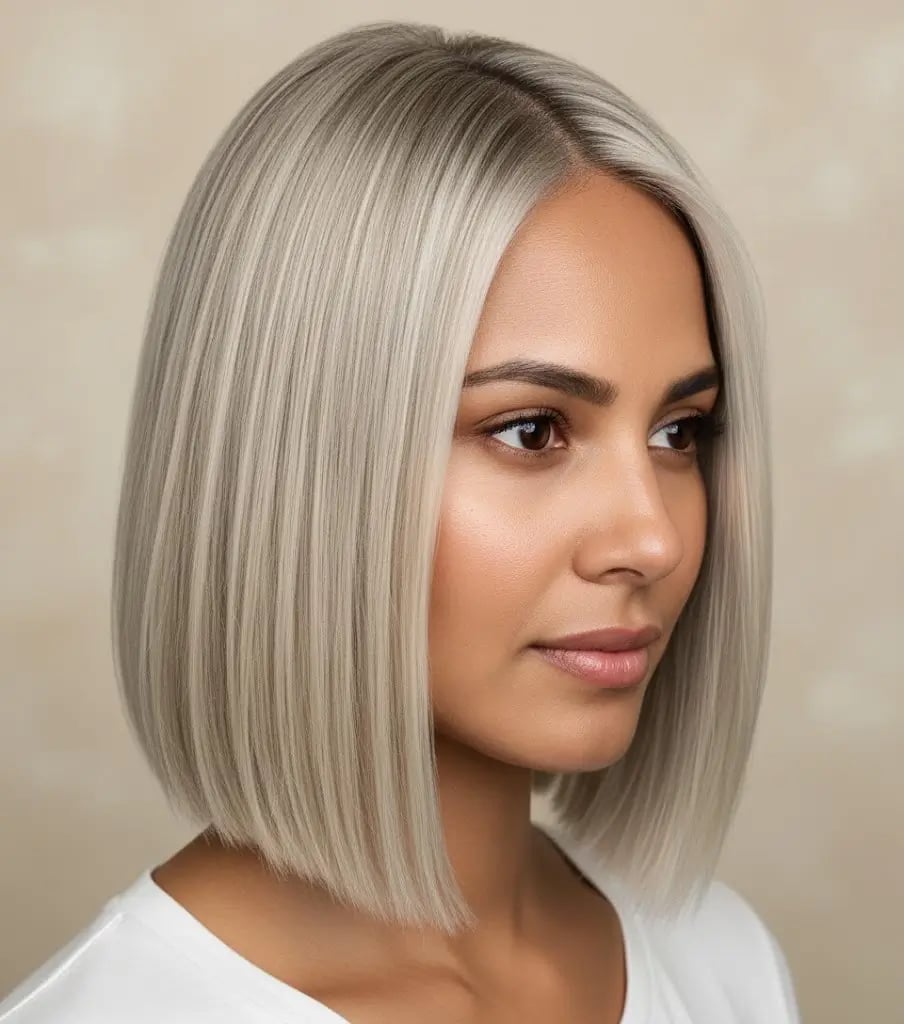
A shoulder-length cut with layers removes bulk and adds movement. Women pick it to lighten thick hair without going short. It suits oval and square faces and prevents the “triangle” shape on heavy hair. Internal layers move weight off the mid-shaft, so ends fall cleaner and need fewer heat passes.

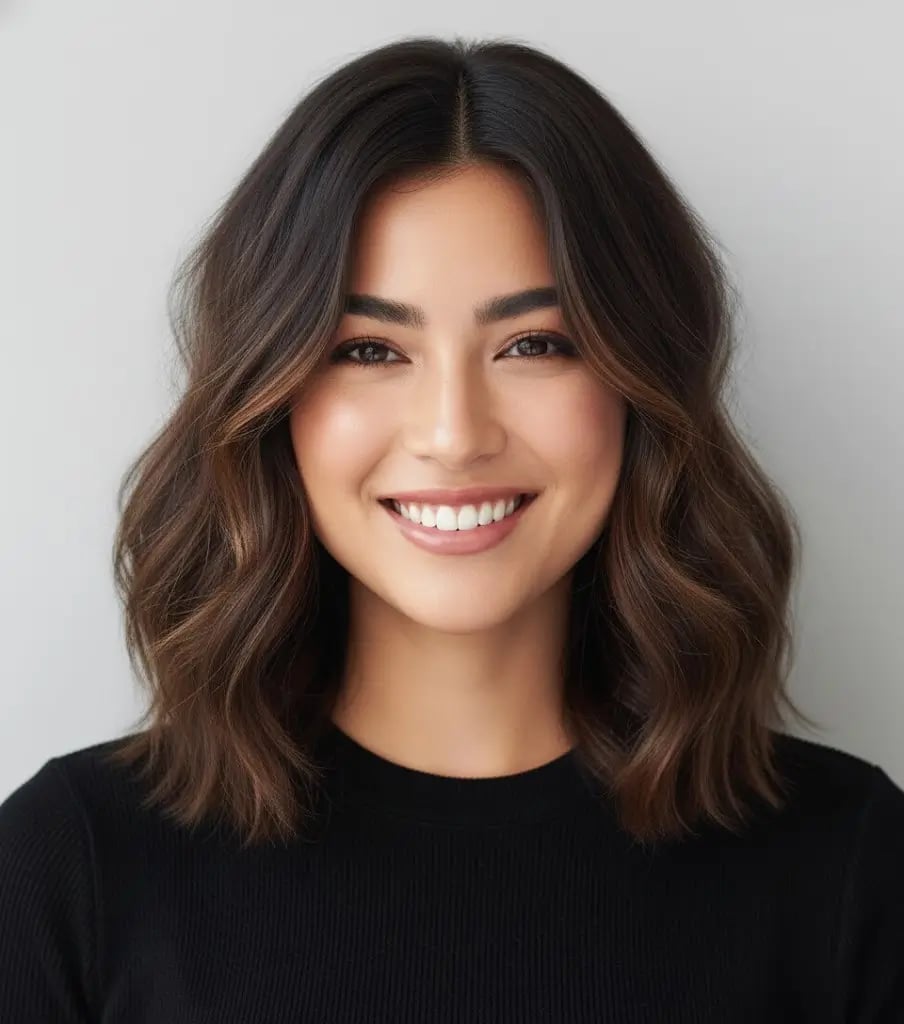
A medium cut with soft waves reads relaxed yet polished. It is common because many hair types hold a wave at this length. It flatters the heart and oval faces and adds width at the jaw when needed.
Long Hairstyles for Women
Long layers keep length and add flow so hair does not hang flat. Women choose it for versatile styling and lighter ponytails. It suits oval and heart faces and helps thick hair move without puffing out. Micro-dusting the perimeter every 8 to 10 weeks keeps the line dense without losing visible length.

Beachy waves create a tousled pattern that looks casual but intentional. They stay popular because you set them with a wand or heatless methods. They suit most faces and soften strong jaws. Salt sprays swell the cuticle for grit, so pair them with a light leave-in to avoid dryness over time.

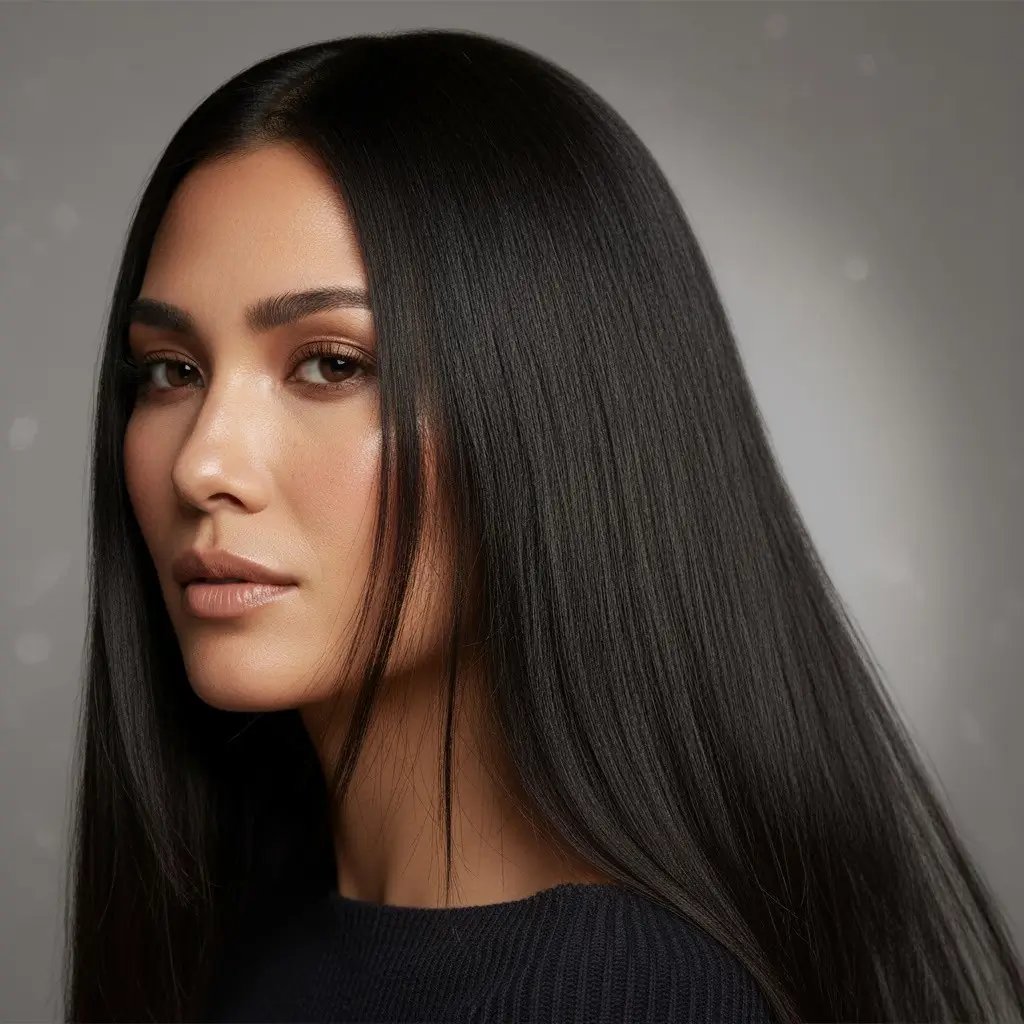
Sleek, straight hair gives a glassy finish that reads refined. Women pick it for events and work settings. It suits oval and heart faces; round faces add a center part to elongate the look.
Curly & Textured Hairstyles for Women
Defined curls show the natural pattern with clear ringlets and low frizz. More women choose it as curl care improves. It suits all faces when volume sits at or below the cheekbone. Curl “shrinkage” hides true length, so many stylists cut curls dry at their resting length for accuracy.
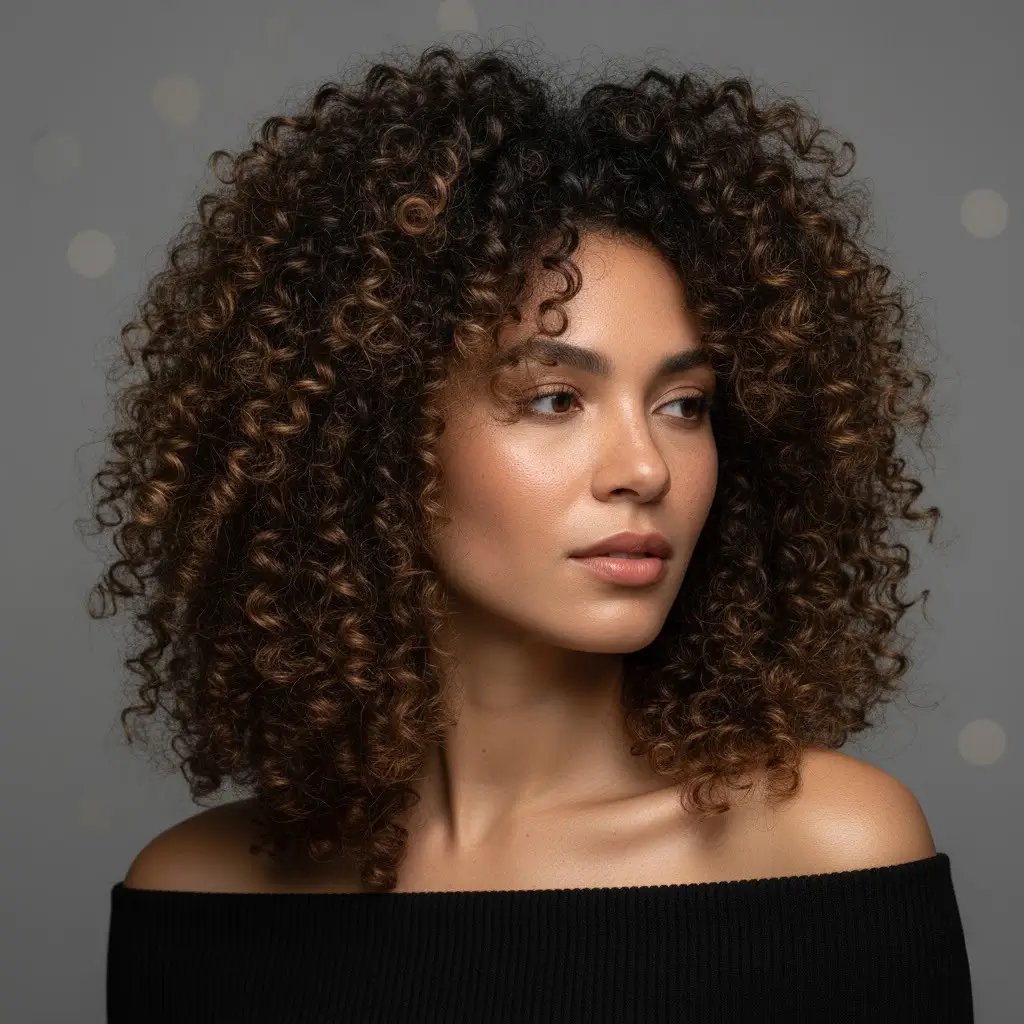
A rounded Afro celebrates tight coils with a balanced silhouette. It stays iconic and looks striking in photos. It suits oval and heart faces and balances long faces by setting width near the temples. A well-hydrated coil reflects more light than a dry coil, which makes the shape look fuller without adding size.
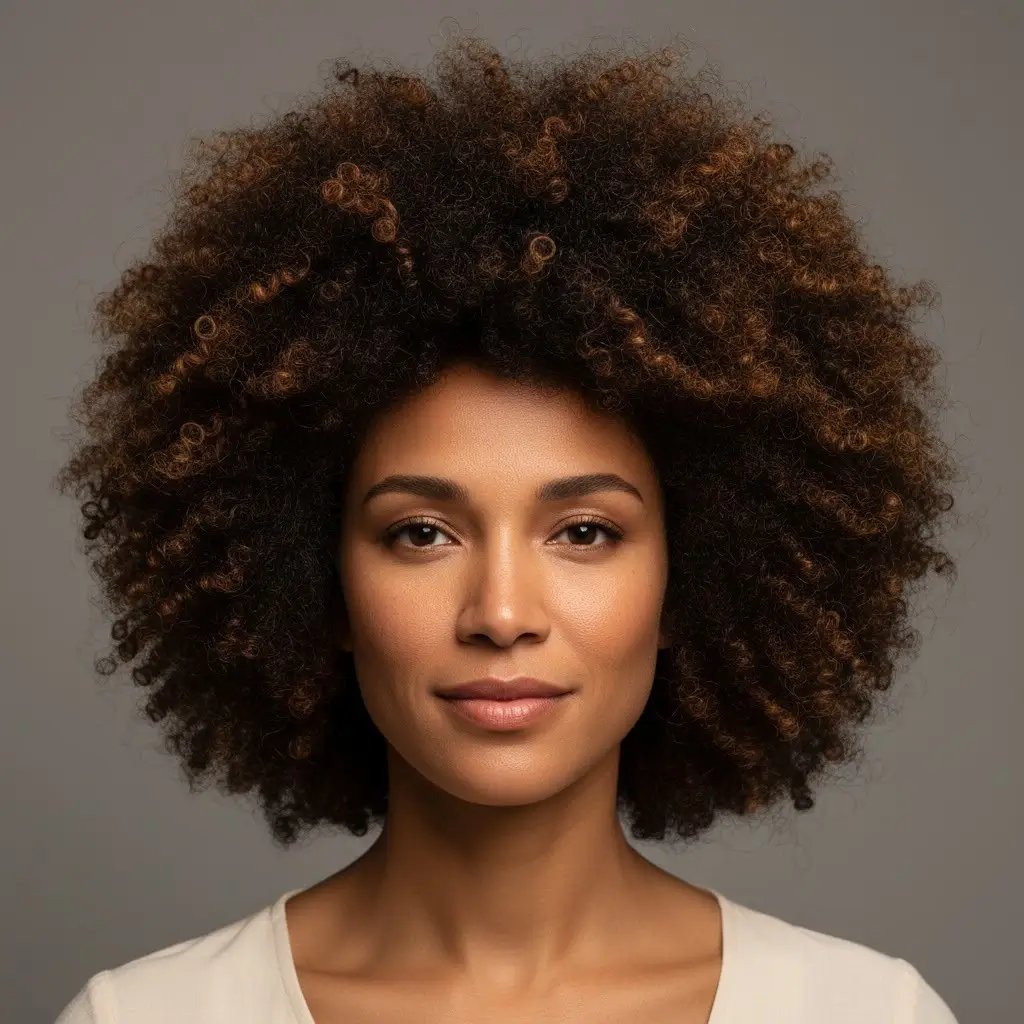
A wavy shag uses layered, piecey lengths to amplify natural waves and frame the face. Women like it because it air-dries with character. It flatters square and round faces by breaking up straight lines at the cheeks and jaw.

Braided Hairstyles for Women
Box braids are individual plaits divided into small squares that protect the lengths. They remain a favorite for longevity and styling freedom. They suit most faces because you control parting, size, and length. Medium-width braids balance scalp comfort with styling options and reduce tension along the hairline.
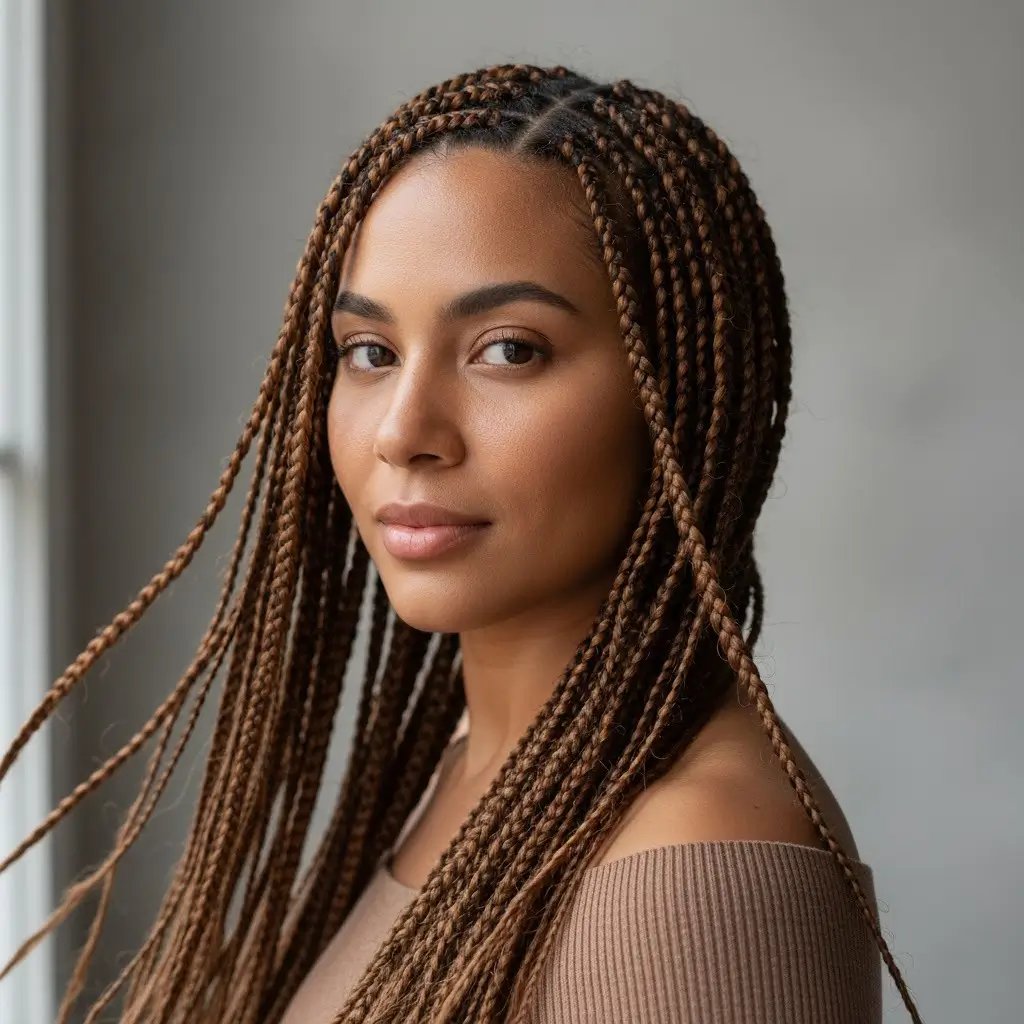
Cornrows braid close to the scalp in straight lines or patterns. They are popular because they last, fit under headwear, and simplify routines. They suit all faces when you place the part to complement features. Curved “S” parts soften features on round faces, while straight rows sharpen and narrow.

A crown braid wraps around the head to form a soft halo. Women choose it for events and casual days alike. It suits oval and heart faces and narrows wide foreheads when you set the braid slightly back from the hairline.

Updo Hairstyles for Women
A classic chignon gathers hair into a smooth bun at the nape and gives instant polish. It remains a wedding and red-carpet staple. It suits oval and heart faces and softens square jaws when you leave light tendrils at the sides. The nape placement follows natural growth direction, so the finish needs fewer pins and holds longer.
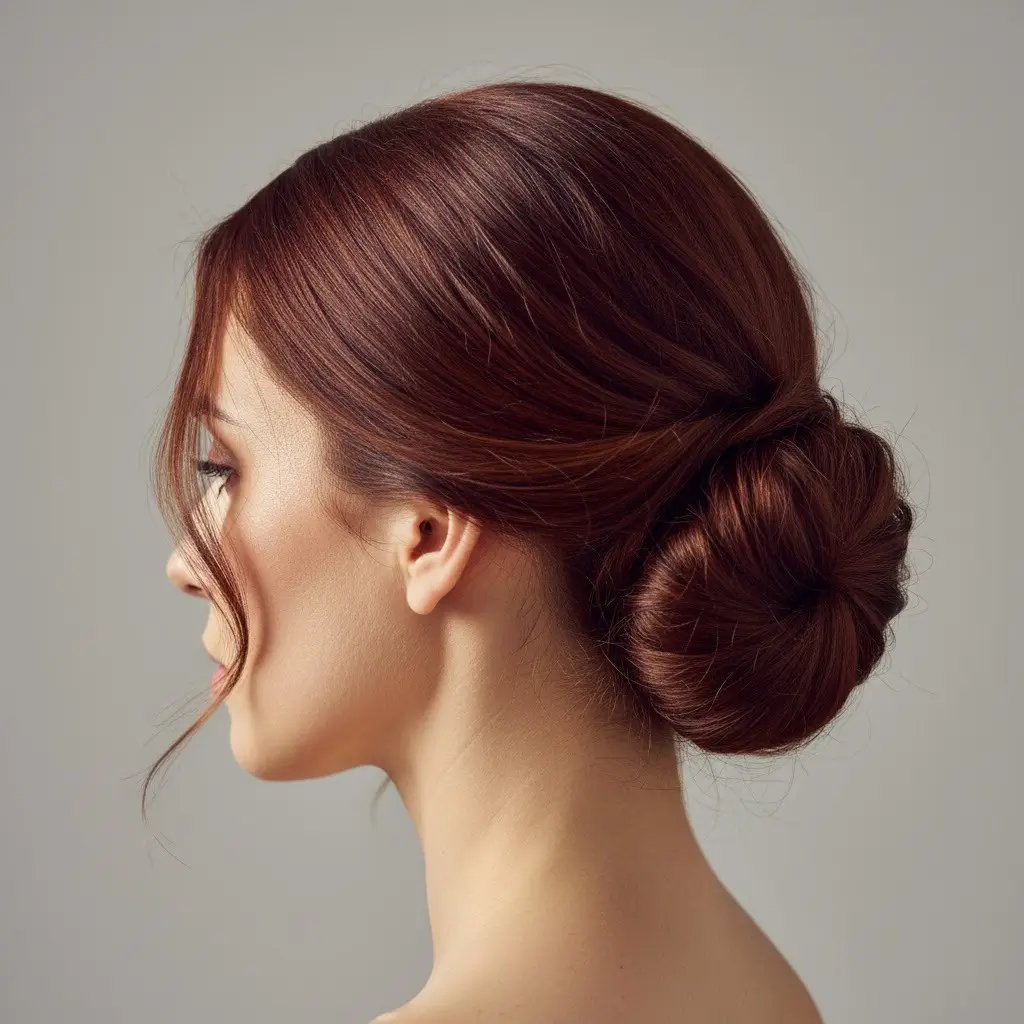
A messy bun creates an undone knot that reads effortless. It stays popular because it builds fast and works on day-two hair. It suits most faces; a few loose pieces at the temples balance strong features. Natural oils give better grip than fresh wash days, which is why this style looks best the day after.

A high ponytail lifts the face and shows cheekbones and eyes. It lives in gym and night-out routines. It flatters oval and heart faces and elongates round faces when you set the crown slightly higher. Rotate placement and use snag-free ties to avoid repeated tension spots at the same follicles.

Bangs and Fringe Hairstyles for Women
Curtain bangs part in the middle and sweep to the sides for a soft frame. They stay popular because they grow out gracefully. They suit most faces and shorten a high forehead without closing the face. The open center keeps light on the eyes, so you avoid the “shadowed” look some full fringes create.

Blunt bangs cut straight across the forehead for a strong, graphic line. They trend because they change a look in one visit. They suit oval and long faces and balance bigger foreheads. They need frequent micro-trims, which is why at-home fringe guides exist in most pro salons.

Wispy bangs use feathered pieces that sit lightly on the forehead. They remain common because they need less styling than thick fringes and grow out softly. They suit delicate features and soften round or square faces.

How Much Is a Hair Transplant for Women?
Female hair transplant prices vary widely depending on the country, clinic, technique, and graft amount. Below is a breakdown of what affects the cost and where patients find more affordable yet high-quality options.
- Average Price Range: Female hair transplant procedures range from €2,000 to €14,000, depending on the region and method used.
- Country-Based Price Differences: Prices change drastically depending on where patients go. Countries with strong medical tourism programs offer considerably more affordable options without compromising results, and the hair transplant Turkey cost reflects high-value results through affordable, all-inclusive fixed packages.
- Technique-Based Cost Variations: Some techniques, like DHI, no-shave FUE, or long-hair FUE, are more expensive due to time intensity and surgical complexity.
- Hair Density and Shape Considerations: Women frequently request specific hairline designs or high-density transplants, which increase the cost compared to male procedures.
- Post-Surgery Inclusions: In Turkey and other medical tourism hubs, the price includes accommodation, transfers, and aftercare, whereas in the U.S. or UK, these are charged separately.
| Country | Cost Range (EUR) | Package Inclusions |
|---|---|---|
| Turkey (Istanbul) | €2,000 to €6,000 | All-inclusive: surgery, hotel, VIP transfers, medications, aftercare |
| United Kingdom | €8,000 to €14,000 | Surgery only; accommodation separate |
| United States | €8,000 to €14,000 | Surgery only; ancillary costs additional |
| Germany | €6,000 to €12,000 | Surgery; limited packages |
Why is Turkey the Most Popular Country for Female Hair Transplants?
Female hair transplant in Turkey dominates the market due to its affordable pricing, highly skilled surgeons, modern facilities, and bundled packages. Clinics in Istanbul offer female-specific hairline design and no-shave protocols as part of standard practice for female patients, where female hair transplant statistics show cost savings of 60 to 70% compared with the UK and US.
Which Insurance Plans Cover Hair Restoration Procedures?
Most insurance plans do not cover hair restoration surgery for women because it is considered a cosmetic procedure, not a medically necessary one. Coverage is only granted in specific cases under reconstructive benefits; when hair loss results from burns, trauma, congenital conditions, or surgical scarring. These exceptions meet medical-necessity criteria, which allow some public or private insurance providers to authorize reimbursement.
In dermatology literature, female hair transplantation is recognized as a valid treatment for androgenetic alopecia. However, this medical acknowledgment does not influence insurance classifications. Both private plans and public systems like the UK’s NHS clearly state that cosmetic procedures, including hair transplant for women, are excluded unless linked to injury or congenital defects.
Hair transplant insurance does not generally apply to women seeking treatment for standard pattern hair loss, making most cases out-of-pocket.
How Long Does It Take to Recover from a Female Hair Transplant?
Most women clear the early recovery from a female hair transplant in about 7 to 10 days as redness and scabs resolve, and many feel comfortable returning to desk work within 2 to 5 days; scabs commonly wash off around day 7 under clinic guidance. Transplanted hairs shed between weeks 2 and 8 (normal 'shock' shedding), first new sprouts appear around month 3 to 4, and the full cosmetic result arrives between 12 and 18 months, depending on hair caliber and curl. These time points match dermatology guidance and patient timelines reported by professional bodies and clinics.
Recovery time varies from person to person. Technique and case size matter: FUE-based procedures (including no-shave and sapphire variants) have small dotted wounds that settle quickly, so social downtime is short, while FUT adds linear donor healing that feels tight for longer; either way the biologic growth phase still follows the same months-long cycle. Donor quality, scalp health, and systemic factors such as thyroid status or iron stores slow or smooth the visible timeline, and meticulous aftercare reduces crusting and irritation that prolongs redness. Real-world timelines show some patients back at light work within 2 to 3 days, yet the grafts still shed on schedule and regrow over months. (StatPearls, 2025).
What factors affect the recovery time from female hair transplant?
The factors that affect female hair transplant recovery time include the technique used, the number of grafts and density targets, donor-zone limits and hair caliber, scalp condition and any coexisting shedding (for example, localized telogen effluvium peaks about a month post-op), and adherence to aftercare such as gentle washing, sun avoidance, and delayed high-intensity exercise. These variables change how fast the scalp looks normal and how soon the new growth becomes obvious, but they do not change the core biology that places most visible thickening between months 6 and 9 and final refinement by 12 to 18 months.
What Does a Female Hair Transplant Look Like Before and After?
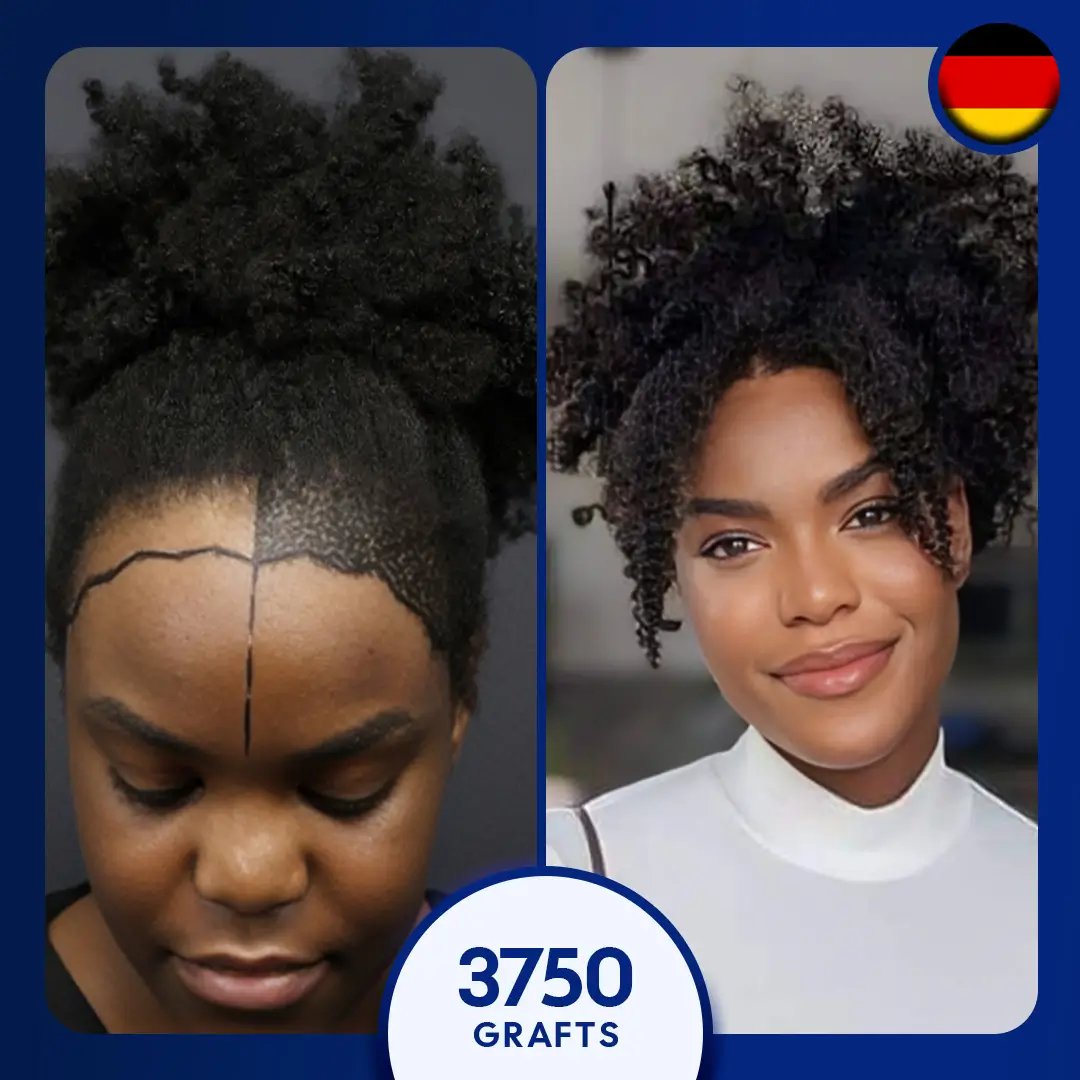
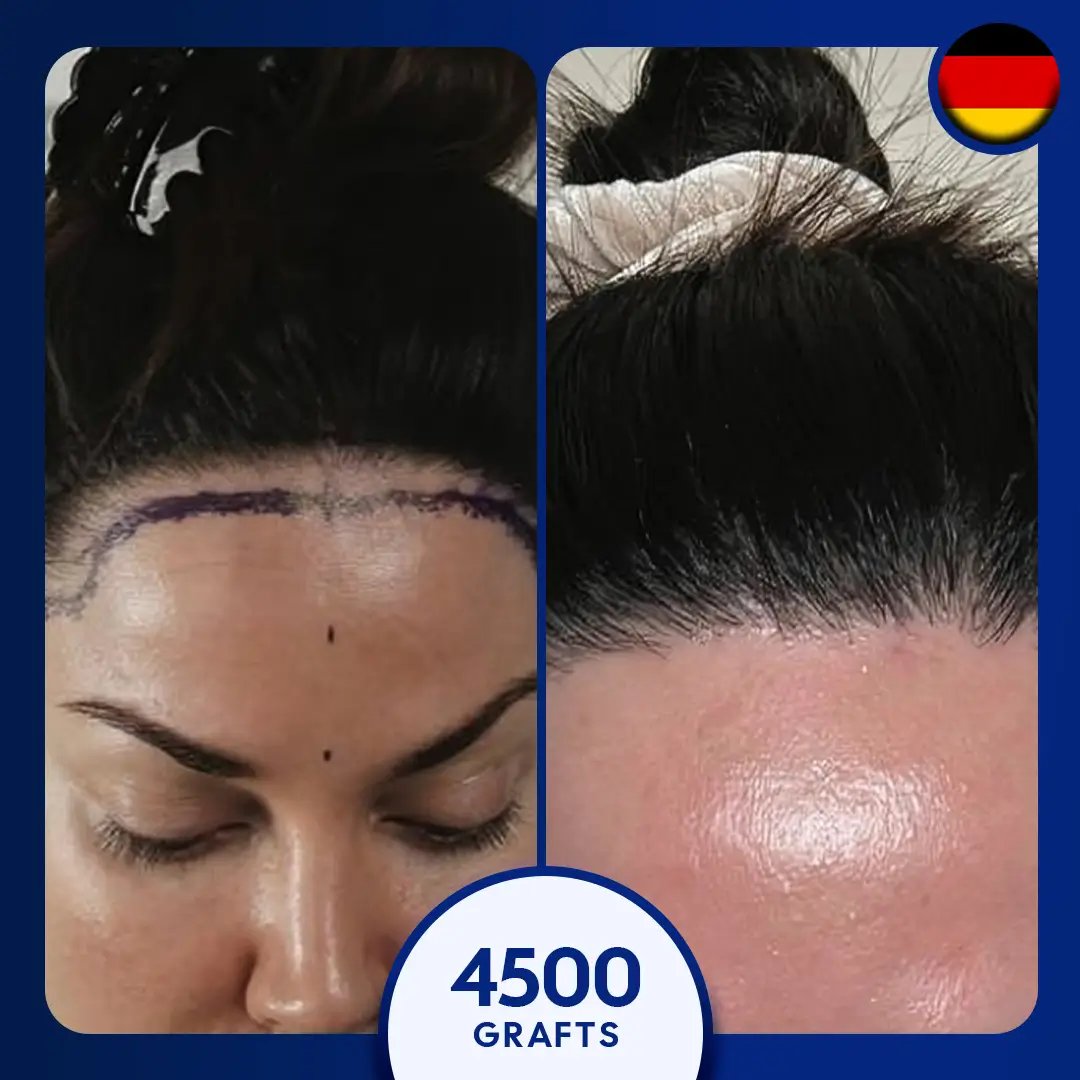
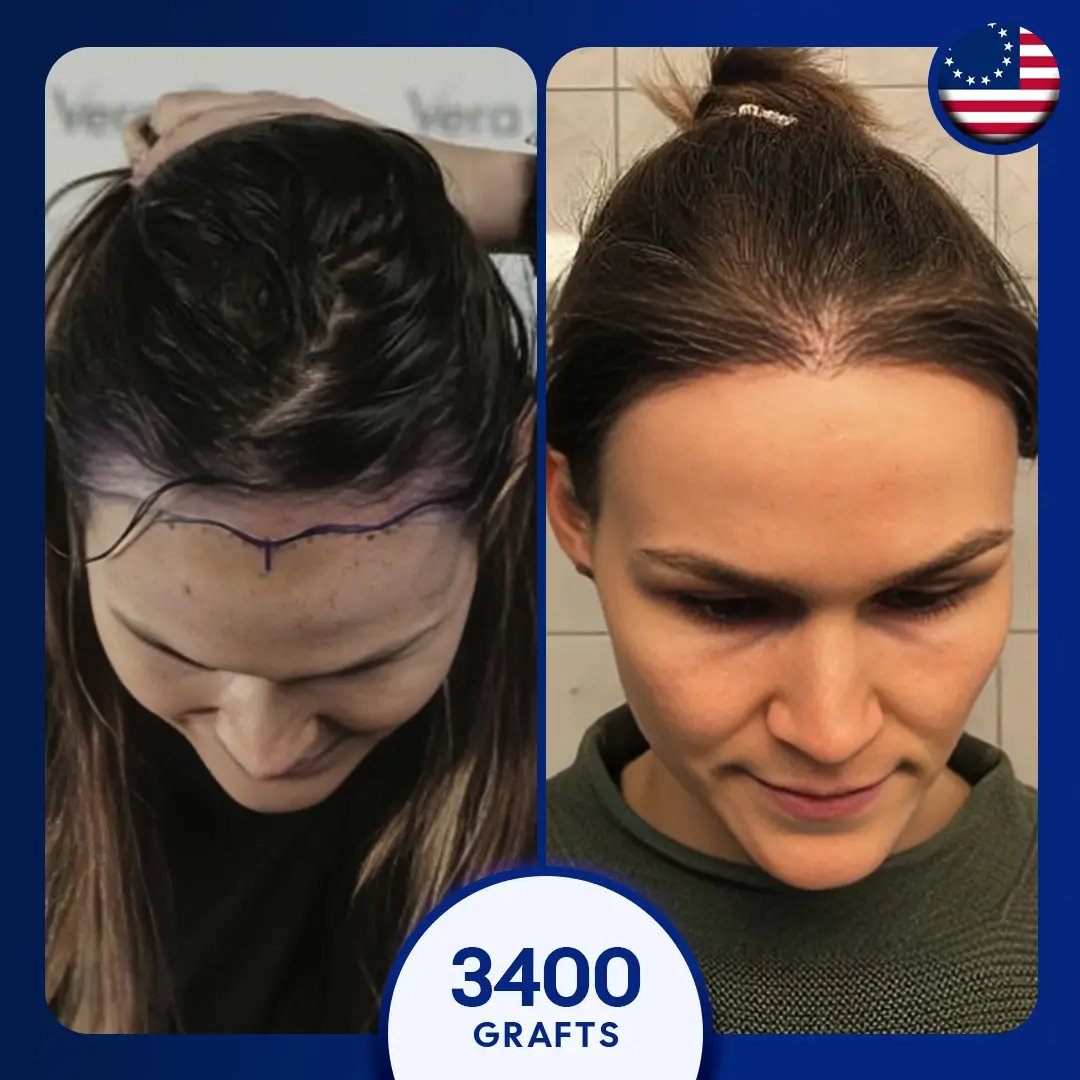
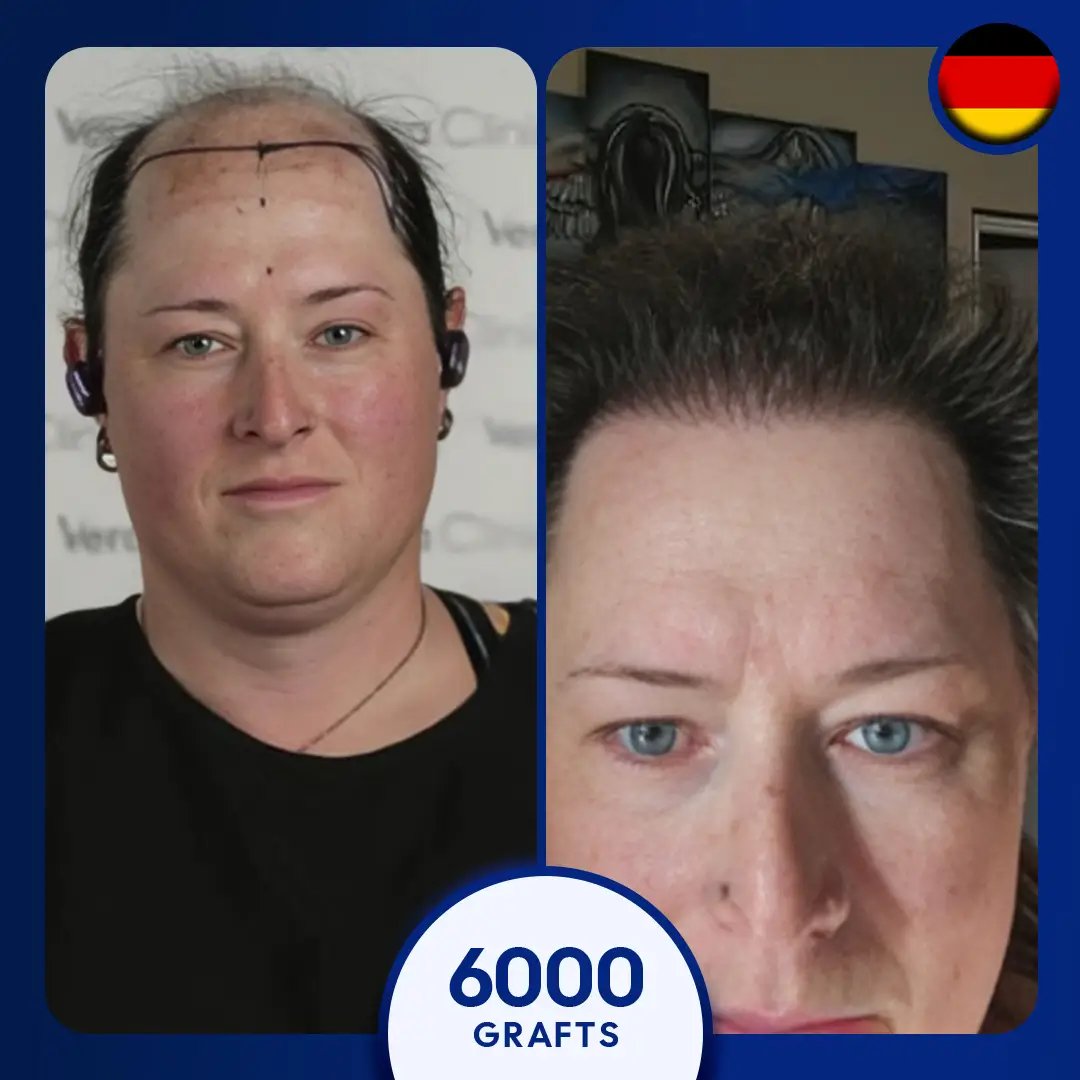
Before surgery, the clinic confirms diagnosis, maps donor density, and reviews basics like ferritin and thyroid. On the day, patients receive local anesthesia, the team performs FUE or FUT, creates sites to match natural direction, and places grafts to frame the face. Aftercare is simple: gentle washing starts at 24 to 48 hours, scabs clear by days 7 to 10, and most women return to desk work in 2 to 5 days. Transplanted hairs shed in weeks 2 to 8, new growth appears around month 3 to 4, density builds through months 6 to 9, and full results land between 12 and 18 months. Timelines vary with technique, case size, scalp health, and adherence to aftercare, but the hair transplant before and after progression follows this same cycle for female patients.
What Are the Potential Risks and Side Effects of Hair Transplant in Women?
A female hair transplant is safe in qualified hands, but every procedure carries risks. Most side effects are temporary; redness, swelling, scabs, and shedding, while rarer problems involve growth, scarring, or an unnatural look. The technique, donor quality, scalp health, and aftercare habits largely determine how mild or severe these risks and side effects of hair transplant in women are.
- Pain and Tenderness: The scalp feels sore for a few days after anesthesia wears off.
- Swelling: The forehead and eyelids puff for 1 to 3 days after surgery.
- Redness and Scabbing: Small crusts form around grafts and clear in 7 to 10 days with washing.
- Itching: Healing skin itches; gentle cleansing and spray reduce it.
- Bleeding or Oozing: Pinpoint bleeding occurs on day one and stops with pressure.
- Infection: Folliculitis or cellulitis is uncommon but needs prompt treatment.
- Shock Loss of Native Hair: Surrounding hairs shed in weeks 2 to 8 and regrow.
- Temporary Numbness or Tingling: Sensation changes near donor or recipient zones fade over weeks.
- Folliculitis or Pimples: Ingrown hairs or inflamed follicles appear during regrowth and resolve with care.
- Dandruff-like Flaking: Healing triggers scale that improves with gentle shampoos.
- Color or Texture Mismatch: Transplanted hair looks thicker or curlier than native hair.
- Unnatural Direction or Hairline: Poor angle or design causes a pluggy look and needs revision.
- Cobblestoning or Pitting: Skin looks bumpy or indented if sites are too shallow or deep.
- Overpacking or Necrosis (rare): Excess density starves skin and damages grafts.
- Poor Growth or Graft Failure: Dehydration, trauma, or disease lowers survival and density.
- Donor Over-Harvesting: Taking too many grafts creates visible thinning in the donor area.
- Linear Scar (FUT): A strip scar widens if tension is high or healing is poor.
- Dot Scars (FUE): Tiny hypopigmented dots remain and show with very short hair.
- Hypertrophic or Keloid Scarring: Scar-prone patients form raised scars.
- Post-Inflammatory Hyperpigmentation: Darker skin types darken at incision sites for months.
- Cysts (Epidermal Inclusion): Trapped keratin forms small, removable bumps.
- Allergic Reactions: Dressings, antibiotics, or minoxidil trigger contact dermatitis.
- Drug and Anesthesia Events: Nausea, dizziness, vasovagal episodes, or rare lidocaine toxicity occur.
- Disease Reactivation (scarring alopecias): Active FFA, LPP, or CCCA attack new grafts if not controlled.
- Persistent Shock Loss (uncommon): Fragile native hairs do not return in high-risk zones.
- Unsatisfactory Density: Limited donor supply, fine hair caliber, or diffuse loss cap the final look.
What Is the Difference Between Hair Transplant and Hair Implants for Women?
A hair transplant for women moves patients’ own permanent follicles from a safe donor zone to thinning areas, so the hair keeps growing, is cut or dyed, and ages like normal hair; by contrast, hair implants for women (commonly called synthetic fiber implants) place artificial fibers into the scalp to mimic hair, which do not grow and need periodic top-ups. Transplants deliver the most natural and durable result because they use living hair and follow a stable growth cycle; implants give instant coverage, but fibers shed over time, look uniform on close view, and require maintenance to hold density. Transplants are more effective when the diagnosis is stable and donor hair is strong, while synthetic women hair implants are a fallback in poor-donor cases and carry higher risks, which is why they are restricted or banned in some countries.
In longevity, transplanted hair lasts for many years with ongoing medical care for native hair, whereas synthetic fibers lose a measurable share each year, so clinics plan regular re-implant sessions. In cost and procedure, a transplant is a single surgical day under local anesthesia (FUE, Sapphire FUE, or DHI) priced by grafts and surgeon time, while implants are billed per fiber across multiple sessions and the running cost rises with annual maintenance.
If a patient has a healthy donor area, choose a hair transplant for better, longer-lasting results and value; consider synthetic implants only when donor supply is inadequate and patients accept ongoing upkeep and a higher complication profile.
How Do Women's Hair Transplants and Hair Plugs Differ?
Women’s hair transplants use follicular unit grafting (FUE or FUT), moving natural 1 to 4 hair “micrografts” that match native growth; hair plugs for women are the older punch-graft method that removes and inserts 3 to 4 mm round plugs, which create a tufted, “pluggy” look and visible circular scarring.
In outcomes, modern female hair transplants look more natural, allow precise hairline design, and achieve better density with fewer complications. Women’s hair plugs rarely meet today’s cosmetic standards and frequently need corrective work, so hair transplants have better results and are more effective when the diagnosis and donor density are appropriate. Longevity is tied to the permanence of donor hairs in both methods, but micrografting ages far better because units are distributed to blend with future thinning, whereas plugs tend to look worse over time.
Procedurally, FUE uses tiny punches (0.7 to 0.9 mm) under local anesthesia, takes about half a day, leaves dot-sized scars in the donor, and heals in 7 to 10 days; FUT uses a thin strip and a fine linear scar. Plugs use large punches, risk cobblestoning and patchy spacing, and have more noticeable scarring. On cost, contemporary transplants are priced per graft and scale with the number of grafts needed in women, while women’s hair plugs are largely obsolete; any lower upfront price is offset by inferior aesthetics and later revisions. In short: for women, choose modern follicular-unit hair transplantation for the most natural, durable, and cost-rational result over women’s hair plugs.
Can Hair Plugs for Women Look Natural After Healing?
No. After healing, women hair plugs almost never look convincingly natural because the old plug technique uses large 3 to 4 mm punch grafts that heal as round tufts with visible spacing, cobblestoning, and mismatched hair angles. Female patterns are diffuse, so as native hair thins the plug islands become even more obvious and “doll’s hair” appears. A natural female hairline needs single hairs, tight density gradients, and precise direction control, which plugs cannot deliver. The few cases that look acceptable have undergone corrective work such as plug reduction or excision, FUE micrograft camouflage with single-hair units, and sometimes SMP or laser to blend texture. For natural, durable results, modern follicular unit transplantation outperforms women’s hair plugs in both appearance and aging.