

Washing after a hair transplant starts with no water at all for the first 24–48 hours, moves to gentle cup-poured rinses through the first week to ten days, and returns to a normal shower routine by roughly the two-week mark, with the exact pace shaped by how quickly scabs clear. Crusts form within 2–3 days and resolve on their own by day 7–10 when washing is done correctly, while early gentle cleansing in the first 24–72 hours has been shown to speed re-epithelialization and reduce bacterial colonization (Romera de Blas et al., 2026). In a Vera Clinic Academy cohort of 612 patients, adherence to washing and handling instructions was independently linked to higher 12-month graft survival. The technique itself is simple: pour rather than spray, pat rather than rub, though timing shifts slightly by technique, FUE, FUT, or DHI. Getting familiar with each stage before surgery makes the routine easier to follow once grafts are in place, and it fits into the broader hair transplant aftercare routine alongside diet, medication, and activity timing.
Key Points
- Crusts form within 2–3 days after a hair transplant and resolve on their own by day 7–10 with correct washing technique (Romera de Blas et al., 2026).
- In a Vera Clinic Academy cohort of 612 patients, hair-care adherence, covering compliance with washing and handling instructions, was independently linked to higher 12-month graft survival (β = 0.94, 95% CI 0.25–1.63, p = 0.007).
- A multicenter pilot study found that a keratolytic shampoo used from 48–72 hours after FUE reduced scab severity scores from 2.67 to 1.76 with no adverse events (Meyer et al., 2026).
- A sulfate-free, fragrance-free, pH-balanced shampoo is the safest choice throughout recovery, ideally one provided or approved by the clinic.
- FUT patients need extra care around the suture line for about two weeks, while DHI grafts are more sensitive to angle disruption during the same early window.
- Normal shower pressure and shampoo become safe again around two weeks after a hair transplant, once scabs have fully cleared and the scalp barrier has recovered.
- Grafts complete the anchoring process that protects them from water pressure by around day 10, when neovascularization to the graft is largely established (Garg & Garg, 2006).
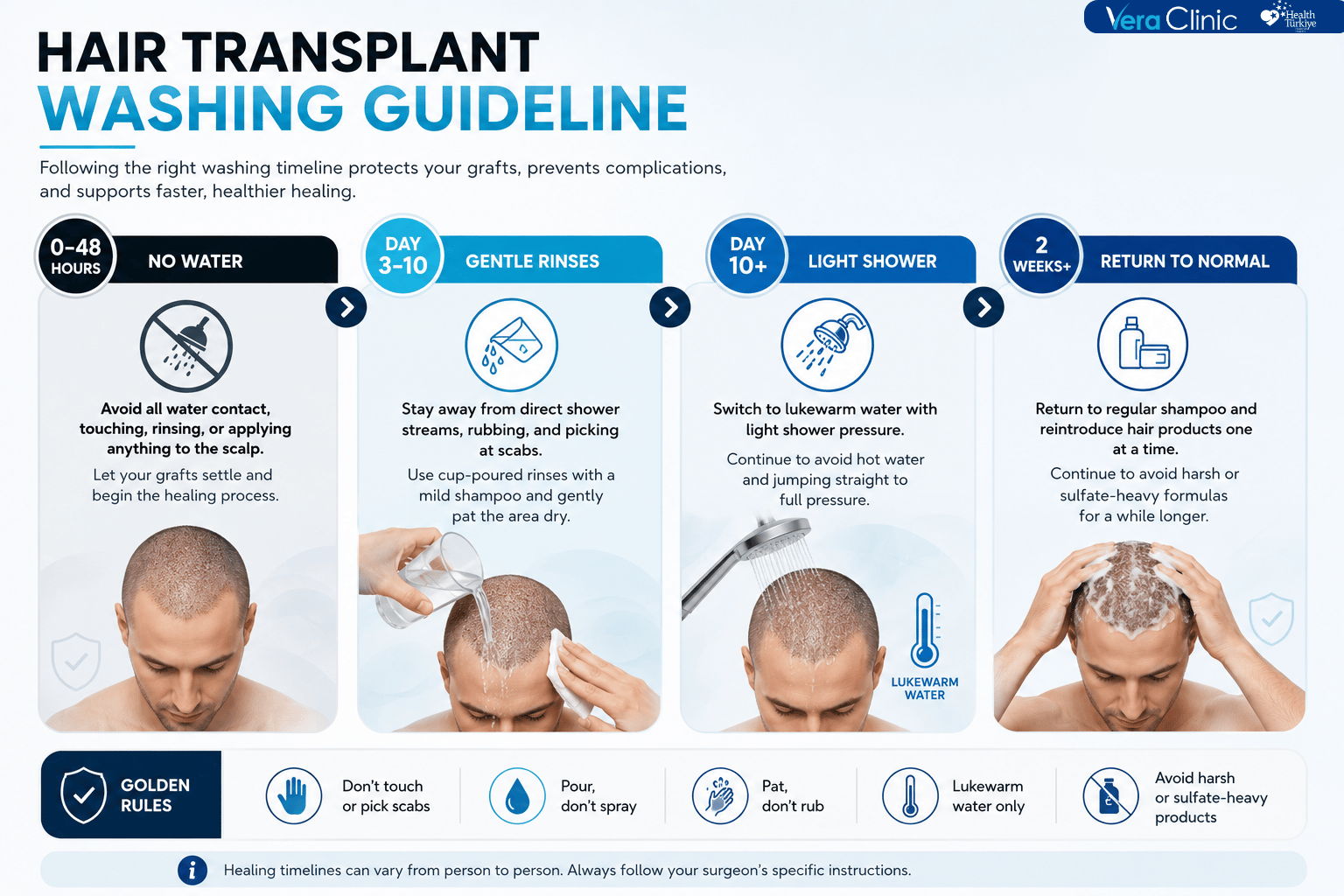
Washing Timeline After a Hair Transplant
Washing after a hair transplant moves through four distinct stages, from complete water avoidance in the first two days to a fully normal routine by around two weeks, with each stage calling for a different level of caution.
| Stage | What to Do | What to Avoid |
|---|---|---|
| First 24–48 Hours | No water contact at all | Touching, rinsing, or applying anything to the scalp |
| Day 3–10 | Cup-poured rinses, mild shampoo, pat dry | Direct shower stream, rubbing, picking at scabs |
| Day 10 Onward | Light shower pressure, lukewarm water | Hot water, jumping straight to full pressure |
| 2 Weeks+ | Regular shampoo, one product at a time | Harsh or sulfate-heavy formulas too soon |
Each stage builds on the one before it, and rushing ahead of schedule is the most common way patients put their own results at risk.
How Should You Wash Your Hair in the First 24–48 Hours After a Hair Transplant?
No washing at all is the right approach for the first 24 to 48 hours after a hair transplant, since grafts are still in the ischemic phase and have not yet formed a stable blood supply.
- Avoid All Water Contact With the Scalp: Even light rinsing risks dislodging grafts before they’ve formed a stable blood supply.
- Let the Clinic Perform the First Rinse: At Vera Clinic, the surgical team performs this first wash, using a controlled technique that avoids direct pressure on the recipient area while walking the patient through what to expect next.
- Don’t Rush Crust Formation: Crusts begin forming within the first 2–3 days as part of normal healing, and starting cleansing too early can disrupt this process rather than help it (Romera de Blas et al., 2026).
- Avoid Touching or Scratching the Area: Any contact, even without water, carries dislodgement risk during this window.
Once the clinic’s first professional wash is done, or once the 48-hour mark has passed, gentle at-home washing can begin following the same cautious approach.
How Should You Wash Your Hair From Day 3 to Day 10 After a Hair Transplant?
Washing from day 3 to day 10 after a hair transplant means pouring water gently rather than showering directly, since grafts are still anchoring and cannot tolerate pressure yet. This is also the window when crusts naturally soften and begin shedding, so the goal is to support that process without disturbing it.
- Pour Water With a Cup, Not the Shower Head: Direct streams create pressure that can dislodge grafts before they’ve stabilized.
- Use Mild or Clinic-Provided Shampoo Once Daily: A multicenter pilot study found that a keratolytic shampoo used from 48–72 hours after FUE reduced scab severity scores from 2.67 to 1.76 within days, with high patient satisfaction and no adverse events, supporting the case for gentle, consistent washing over skipping it out of caution (Meyer et al., 2026).
- Apply Shampoo by Patting, Never Rubbing: Circular rubbing motions risk catching and pulling at grafts still settling into place.
- Dry by Patting or Air-Drying: A soft towel used gently, or letting hair air-dry, avoids the same friction that rubbing can cause during washing itself.
- Let Scabs Fall Off on Their Own: Picking or scrubbing at scabs disrupts healing and raises the risk of scarring or infection.
By the end of this window, most scabs have cleared naturally, consistent with the 7–10 day resolution timeline reported in the FUE complications literature (Romera de Blas et al., 2026), which is a more reliable signal that the scalp is ready for the next stage than the day count alone.
How Should You Wash Your Hair From Day 10 Onward?
Washing from day 10 onward means gradually returning to normal shower pressure, since most grafts have completed the neovascularization process that anchors them to the scalp’s blood supply by this point (Garg & Garg, 2006).
- Reintroduce Light Shower Pressure First: Rather than switching abruptly to full pressure, easing into it over a few days protects any grafts still finishing their anchoring.
- Watch for Full Scab Clearance as Your Signal: Complete crust resolution by day 7–10 is the marker clinical literature points to for safe progression, more reliable than the calendar alone (Romera de Blas et al., 2026).
- Keep Water Lukewarm: Even with normal pressure restored, hot water still increases blood flow and can prolong any lingering redness.
- Gentle Massage Becomes Safe, Not Mandatory: Once scabs are gone and the surgeon has given clearance, light massage supports circulation without the risk it carried earlier in recovery.
Once shower pressure feels comfortable and no scabs remain, the scalp has cleared the two conditions that mattered most early on: graft anchoring and surface healing.
How Should You Wash Your Hair From Two Weeks Onward?
Washing from two weeks onward means returning to regular shampoo and shower pressure, since the scalp barrier has recovered enough by this point to tolerate stronger formulas and normal frequency.
- Switch to Regular Shampoo Gradually: Reintroducing shampoo, conditioner, or styling products one at a time makes it easier to spot any irritation early.
- Stick With Sulfate-Free a Little Longer: Sulfates and harsh cleansers can still irritate skin that is finishing its healing process, even after shower pressure feels normal.
- Drop Down to a Normal Washing Frequency: Daily washing was a scab-management routine, not a permanent requirement; two to three times a week, or whatever the patient’s usual pre-surgery habit was, is enough once scabs are gone.
Comfort matters more than the calendar at this stage: a scalp that still feels sensitive at two weeks may simply need a few extra days on gentler products before the rest of the routine, cup-pouring, patting, avoiding pressure, is fully behind it.
Does Washing Technique Differ by Hair Transplant Technique?
Washing technique differs slightly by procedure, mainly because FUT involves a healing incision and DHI grafts sit at more delicate angles than FUE’s punch sites.
- FUE: Follows the standard timeline, no washing for 24–48 hours, cup-poured rinses through day 10, since the punch sites used in a FUE hair transplant heal quickly without an incision to protect.
- FUT: Needs extra care around the linear donor-site closure for about two weeks, avoiding direct pressure or scrubbing near the suture line even after the recipient area of a FUT hair transplant allows normal washing.
- DHI: Requires a gentler touch during rinsing for the first week, since the shallow implanter-pen angles used in a DHI hair transplant make grafts more easily disturbed by pressure or friction than punched grafts.
- Micro FUE: Follows the same washing timeline as standard FUE, since a Micro FUE hair transplant refines extraction precision rather than changing how grafts sit in the scalp afterward.
- Sapphire FUE: Also follows the standard FUE timeline, since the sharper blade used in a Sapphire FUE hair transplant affects incision precision during surgery rather than how grafts heal afterward.
These differences mostly affect pace rather than the core technique, and a surgeon’s specific instructions should take priority over any general timeline whenever the two differ. Choosing between hair transplant techniques in the first place often comes down to factors well beyond washing routine, including cost, scarring, and recovery time.
What Products Should You Use When Washing?
The right products for post-transplant washing are defined by what they leave out, since a gentle, unreactive formula matters more than any specific brand.
- Sulfate-Free Shampoo: Sulfates strip natural oils and can irritate skin that’s still healing.
- Fragrance-Free Formulas: Added fragrance is a common source of unnecessary irritation on sensitive, healing skin.
- pH-Balanced Products: A formula close to the scalp’s natural pH, generally around 5.5, supports rather than disrupts the healing barrier.
- Alcohol-Free Options: Alcohol-based ingredients dry out and irritate skin that’s already working to repair itself, even in small amounts.
- Antibacterial or Anti-Inflammatory Formulas, If Prescribed: Some clinics prescribe a medicated formula for the first stretch; this should replace, not supplement, a regular shampoo during that period.
Beyond these basics, the specific brand matters far less than sticking with whatever the clinic provides or approves for the first two weeks.
Why Does Washing Technique Matter for Graft Survival?
Washing technique matters for graft survival because grafts are physically vulnerable to water pressure, heat, and friction until they’ve fully anchored, and both the data and the most common mistakes point to the same handful of habits making the difference. A Vera Clinic Academy cohort measured this directly and found a real, independent effect tied to how closely patients followed washing instructions, while a handful of common habits work directly against that outcome (Vera Clinic Academy, Dietary, Medical and Hair-Care Adherence Graft Survival Study, 2026).
“Patients often assume the surgery itself determines the outcome, but I remind every patient that the first two weeks of washing are just as much a part of the procedure as anything done in the operating room. Grafts that survive the surgery can still be lost to a rushed shower.”
— Dr. Emin Gül, Vera Clinic Surgeon
What Are the Benefits of Washing Correctly After a Hair Transplant?
Washing correctly supports graft survival directly, since it clears the blood clots and crust that would otherwise trap debris and delay healing, while also easing the itching that tempts patients into scratching.
- Removes Blood and Crust Buildup Around Grafts: Left in place too long, this buildup can trap bacteria and slow the healing underneath.
- Lowers the Urge to Scratch: Clean, moisturized skin itches less, reducing the risk of accidentally dislodging a graft.
- Supports Circulation to the Healing Scalp: Gentle water contact and light massage, once safe, encourage blood flow without adding mechanical stress.
- Helps Scabs Shed on Their Own Schedule: Consistent gentle washing softens crusts just enough to let them fall away naturally rather than being picked off.
None of these benefits require anything beyond correct timing and a gentle touch, which is most of the difference between smooth healing and avoidable setbacks.
What Mistakes Should You Avoid When Washing After a Hair Transplant?
The most common washing mistakes after a hair transplant involve rushing the timeline or using too much force before grafts have anchored.
- Using Direct Shower Pressure Too Early: Even a gentle showerhead can dislodge grafts that haven’t stabilized yet.
- Washing With Hot Water: Heat increases blood flow to the scalp and can worsen swelling and irritation during early healing.
- Scrubbing or Picking at Scabs: This disrupts the natural healing process and raises the risk of scarring or infection.
- Switching to Harsh or Anti-Dandruff Shampoo Too Soon: These formulas often contain ingredients that irritate skin still healing.
- Skipping Washes Altogether: Underwashing lets oil and debris build up around grafts, which can also slow healing.
These missteps are exactly the kind of physical trauma identified in international consensus guidelines on post-transplant care as a leading cause of preventable graft loss (Vañó-Galván et al., 2023).
Which Tools Should You Avoid Early in Recovery?
Certain tools work against gentle healing regardless of good intentions, since they reintroduce exactly the friction, heat, or pressure that early washing is meant to avoid.
- Loofahs, Brushes, or Combs: Any tool with bristles or texture risks catching on grafts before they’ve anchored.
- High-Pressure or Massage Showerheads: These deliver far more force than a cup-pour, even on a low setting.
- Hair Dryers on a Hot Setting: Heat can irritate healing skin and encourage swelling; a cool setting is safer once drying is needed at all.
- Styling Products of Any Kind: Gels, waxes, and sprays introduce chemicals and residue the healing scalp doesn’t need.
Sticking to hands, a cup, and clinic-approved products covers everything the scalp actually needs during this window.
How to Avoid Infection While Washing
Avoiding infection while washing comes down to basic hygiene, since a healing scalp is more vulnerable to bacteria than intact skin.
- Wash Your Hands First: Clean hands before any contact with the scalp reduce the risk of introducing bacteria to open follicular sites.
- Use a Clean Towel Every Time: A fresh, soft towel avoids reintroducing bacteria from previous use.
- Stick to Clinic-Approved Products Only: Unapproved shampoos or lotions in the first two weeks can irritate healing skin and raise infection risk.
- Combine Hygiene With Correct Timing and Technique: Clean hands and towels reduce bacterial risk, but washing too early or too roughly can cause the same graft loss that infection does, just through a different mechanism.
Most infections are preventable with consistent hygiene rather than anything specific to the surgery itself, though any spreading redness, pus, or fever is worth checking with the surgeon rather than waiting, since this can be an early sign of hair transplant infection.
What Does the Vera Clinic Academy Data Show About Washing and Graft Survival?
How closely patients followed washing and handling instructions was measured directly in a Vera Clinic Academy cohort, using a five-item self-report scale scored on compliance with post-operative washing technique. Patients who scored higher on this hair-care adherence measure had independently higher 12-month graft survival (β = 0.94, 95% CI 0.25–1.63, p = 0.007), an effect that held even after accounting for diet, supplements, medication use, and how soon patients returned to physical activity.
This finding sits alongside two larger effects measured in the same cohort, for diet adherence and for adjuvant medication, though hair-care adherence stands on its own as an independent, statistically significant factor rather than simply riding along with better overall compliance. In practical terms, patients who paid closer attention to cup-pouring, gentle handling, and avoiding early pressure saw a small but real benefit that added to whatever gains came from diet or medication rather than duplicating them.
This finding comes from the Dietary, Medical and Hair-Care Adherence Graft Survival Study, which followed 612 patients for 12 months after FUE at Vera Clinic and assessed hair-care adherence alongside four other aftercare domains in the same model.
Why Choose Vera Clinic for Hair Transplant in Turkey?
Vera Clinic is recognized as one of Turkey’s leading hair transplant centers by European Awards in Medicine, reflecting its surgeon expertise, technique specialization, and consistent natural outcomes across thousands of procedures. The clinic’s medical team performs Sapphire FUE, DHI, and Stem Cell–supported treatments, with structured aftercare, including the in-clinic first wash and step-by-step guidance built into every patient’s recovery from day one.
Vera Clinic provides an all-inclusive medical-tourism package covering hotel accommodation, VIP airport and clinic transfers, pre-operative assessment, the selected surgical technique, postoperative medications, an aftercare kit, and digital follow-up. This structured, surgeon-led pathway, from the first consultation through the final wash of the recovery timeline, is why international patients consistently choose Vera Clinic for reliable, natural results in Turkey.
Frequently Asked Questions
Dry shampoo isn’t recommended in the first week after a hair transplant, since the powder can settle around fragile grafts and is difficult to remove without the scrubbing motion that’s meant to be avoided. Waiting until gentle wet washing has started is the safer approach.
Missing an occasional day isn’t likely to cause lasting harm, though a longer gap can allow scabs and oil to build up more than usual. Returning to the normal gentle routine the next day, rather than washing more aggressively to compensate, is the better approach.
A mild stinging or tingling sensation can happen as the scalp heals and generally isn’t cause for concern. Persistent burning, redness, or pain is different and worth mentioning to the surgeon.
Swimming is best avoided until normal washing has resumed, generally around two weeks, since pool chemicals and open water raise infection risk for grafts that haven’t fully settled.
Washing is done once daily from day 3 through about day 10 to manage scab shedding, then eases to two or three times a week once the scalp has fully healed and no special technique is needed anymore.
Lukewarm water is the safest choice throughout recovery, since hot water increases blood flow and can worsen swelling, while cold water tends to cause discomfort without any healing benefit.
Regular shower pressure isn’t safe until around day 10, since even a gentle showerhead can dislodge grafts before they’ve anchored; light pressure can be reintroduced gradually from that point, with full pressure safe by around two weeks.
A mild, sulfate-free, and fragrance-free shampoo, ideally the one provided by the clinic, is the safest choice for the first two weeks, since sulfates and fragrances can irritate skin that’s still healing.
Most patients return to a fully normal routine, regular shampoo, full shower pressure, and their usual washing frequency, around two weeks post-surgery, though comfort and scab clearance matter more than the exact date.
- Garg, A. K., & Garg, S. (2006). Graft anchoring in hair transplantation. Dermatologic Surgery, 32(2), S119–S123.
- Meyer, T., Fernández-González, P., Shafiq-Sánchez, A., & Gómez-Zubiaur, A. (2026). Early removal of post-operative scabs after follicular unit extraction using a 2% salicylic acid keratolytic shampoo: A multicentre descriptive pilot study. Frontiers in Medicine, 13, 1741064.
- Romera de Blas, C., Vega Díez, D., Ricart Vayá, J. M., & Gómez Zubiaur, A. (2026). Complications in follicular unit excision hair transplantation: Current evidence and practical approaches. Frontiers in Medicine, 13, 1750989.
- Vañó-Galván, S., Bisanga, C. N., Bouhanna, P., Farjo, B., Gambino, V., Meyer-González, T., Silyuk, T., & Hair Transplant Surgery Expert Group. (2023). An international expert consensus statement focusing on pre and post hair transplantation care. Journal of Dermatological Treatment, 34(1), 2232065.
- Vera Clinic Academy. (2026). Dietary, medical, and hair-care adherence in relation to graft survival after follicular unit extraction: A prospective cohort study at Vera Clinic. https://www.veraclinic.net/wp-content/uploads/2026/07/Dietary-Medical-and-Hair-Care-Adherence-in-Relation-to-Graft-Survival-After-Follicular-Unit-Extraction-A-Prospective-Cohort-Study-at-Vera-Clinic.pdf