
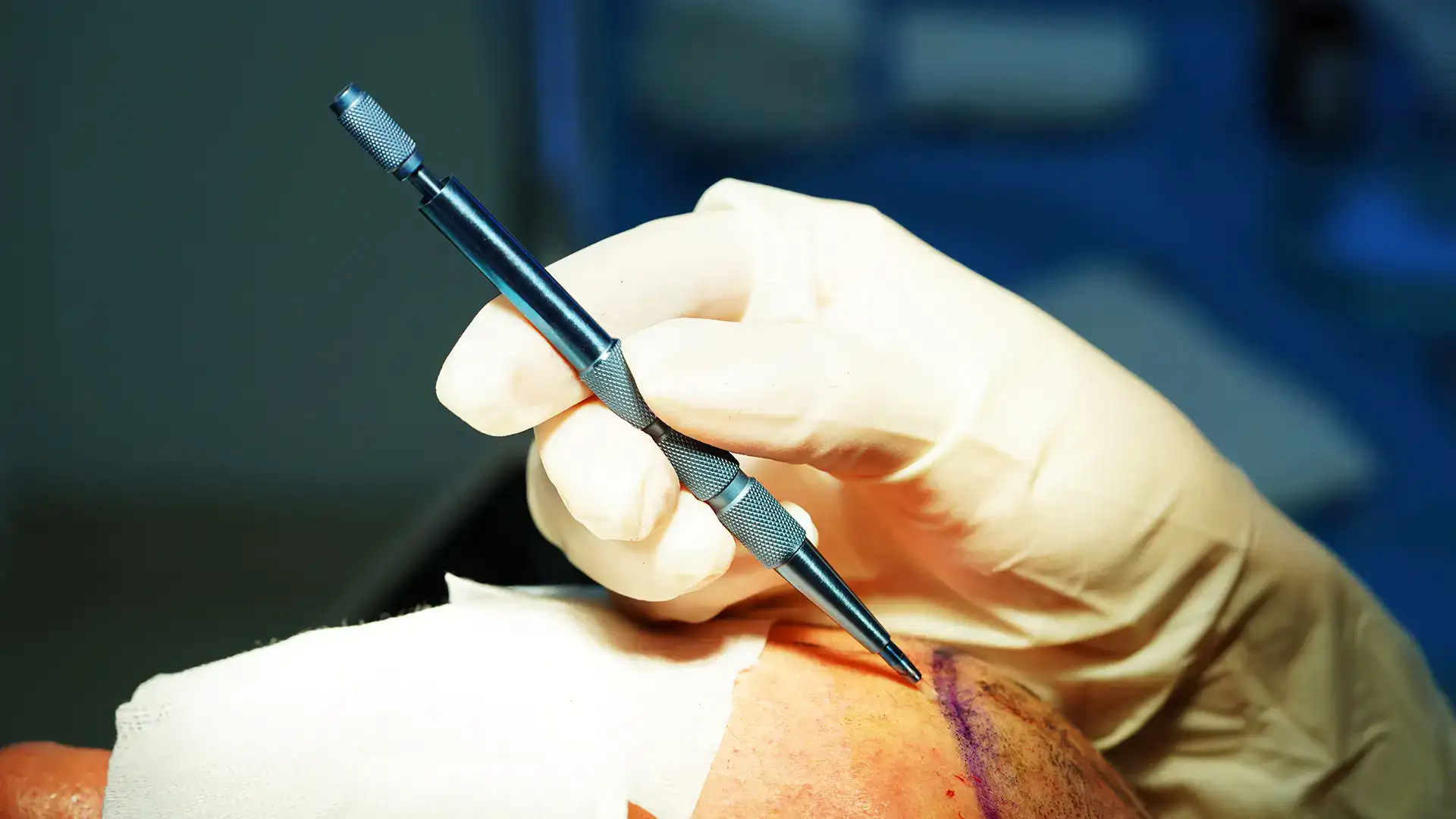

Hair loss affects millions worldwide, often impacting self-esteem and confidence. Fortunately, modern hair restoration techniques offer highly effective solutions and one of the most advanced among them is the Sapphire FUE hair transplant.
Sapphire FUE is a refined version of the traditional Follicular Unit Extraction method. What makes it unique is the use of sapphire blades instead of steel to create tiny incisions in the scalp. These ultra-sharp blades allow for more precise cuts, less tissue damage, and faster healing. The result is denser, more natural-looking hair with minimal scarring.
The procedure involves extracting individual hair follicles from a donor area, usually the back of the scalp, and implanting them into thinning or bald areas. Thanks to the precision of sapphire blades, surgeons achieve higher graft density and better alignment with natural hair growth.
Among the main benefits of Sapphire FUE are reduced recovery time, minimal scarring, a natural appearance, and high graft survival rates. Side effects are temporary and include redness, swelling, or slight discomfort, all of which resolve within a week or two (Vera Clinic Academy Database, 2026).
Sapphire FUE hair transplants in Turkey range from €2,500 to €5,990 for all-inclusive packages covering accommodation, transfers, and aftercare, a 60 to 70% saving compared to equivalent procedures in the UK (€8,000 to €15,000) or the United States ($10,000 to $15,000) (Vera Clinic Academy Database, 2026; Statista, 2025). This offers affordable and effective options, especially for international patients.
Vera Clinic introduced the Sapphire FUE technique in Istanbul in 2017, becoming the first institution globally to use sapphire blades for recipient site channel creation. Since then, Vera Clinic has completed over 40,000 procedures under the supervision of board-certified surgeons (Vera Clinic Academy Database, 2026).
What Is Sapphire FUE Hair Transplant?
Sapphire FUE hair transplant is a modern, minimally invasive method that uses precision-engineered sapphire blades instead of traditional steel tools to open micro-channels in the scalp for follicle implantation. Sapphire blades create smaller incisions, allowing for a higher graft count and a more natural-looking hairline. The V-shape of the sapphire blade causes less tissue damage, allowing for faster healing, reduced scarring, and fewer issues with the procedure. For patients seeking a permanent solution to hair loss with minimal downtime, Sapphire FUE addresses both clinical and aesthetic requirements within a single session. Sapphire FUE hair transplant technique achieves a graft survival rate of 90 to 95% at accredited clinics, with patients returning to light daily activity within 2 to 3 days and reaching full final density between 12 and 18 months post-procedure (Vera Clinic Academy Database, 2026).
How Does Sapphire FUE Hair Transplant Work?
Most hair transplant techniques involve extracting healthy hair follicles from a donor area (usually the back of the scalp) and implanting them into areas affected by hair loss. What makes Sapphire FUE distinct is the use of ultra-sharp, V-shaped sapphire blades to create recipient site incisions, instead of the traditional steel tools used in standard FUE or FUT techniques. These sapphire blades allow for more precise, denser, and cleaner incisions, which not only reduce tissue trauma but support faster healing and more natural-looking results. Unlike standard FUE, which uses U-shaped steel incisions, Sapphire FUE enables sub-millimetre control over the depth, angle, and direction of each channel, supporting graft densities of up to 40 to 55 follicular units per cm2 compared with 30 to 40 for steel-blade instruments (Vera Clinic Academy Database, 2026). This level of channel control reduces post-operative tissue trauma and supports a return to light daily activity within 2 to 3 days (Vera Clinic Academy Database, 2026).
What Role Do Sapphire Blades Play in Sapphire FUE Hair Transplants?

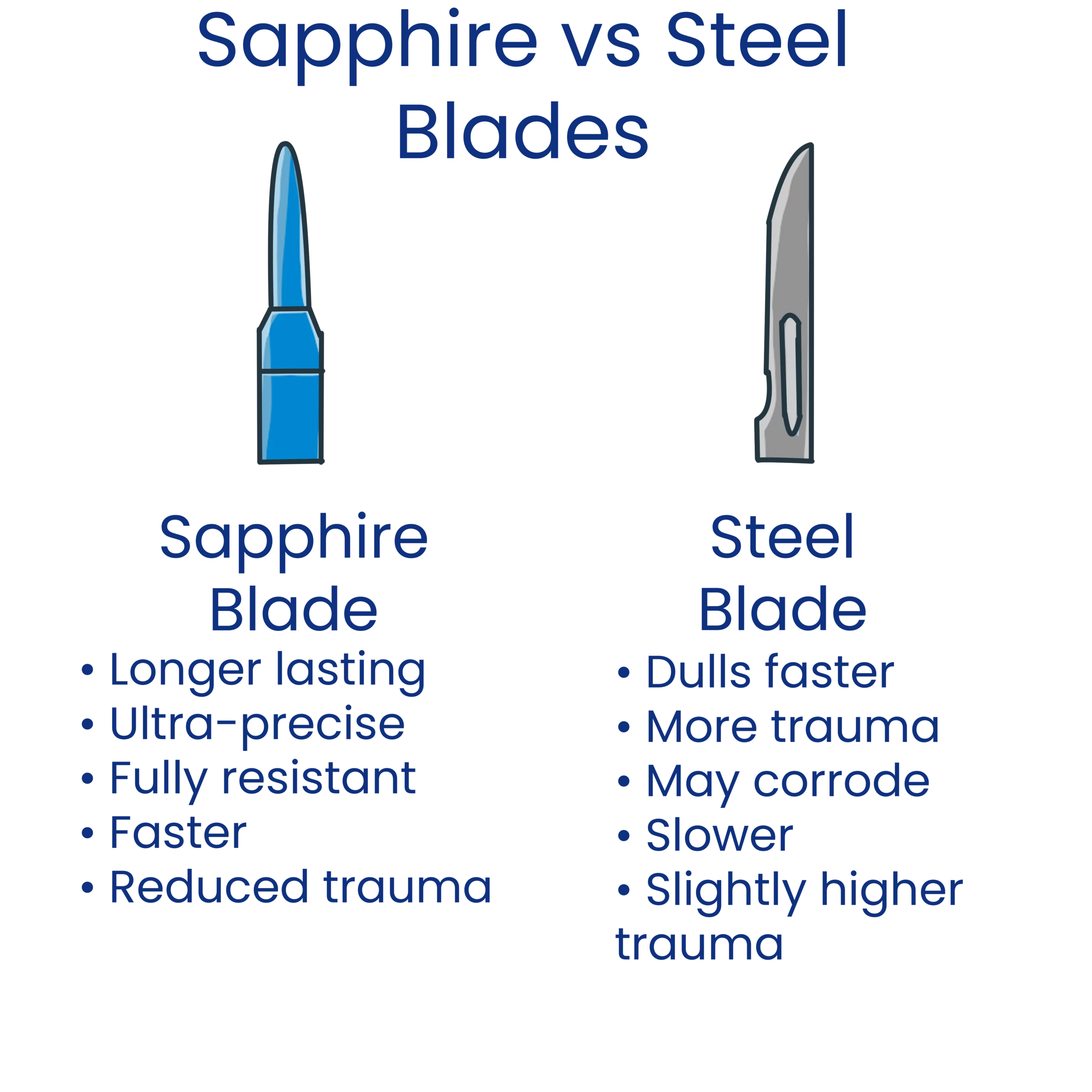
Sapphire blades are central to the Sapphire FUE technique. They are manufactured from medical-grade synthetic corundum (Al2O3), the same crystalline compound as natural sapphire, with a Mohs hardness rating of 9 compared with stainless steel at 6 to 7. This hardness allows the blade to maintain its sharpness throughout the entire session without deformation under repeated cutting pressure (Vera Clinic Academy Database, 2026).
Patients who underwent FUE with sapphire blades healed up to 25% faster than those treated with steel blades according to the study Effect of Different Shapes of Recipient Site Creation Micro-Blades at Varying Angles and Wound Injury (2021). This is due to reduced tissue trauma and lower post-operative swelling, leading to a cleaner and more efficient healing process.
These properties combine to reduce epithelial damage at the incision site. Histopathological analysis confirms that the 30-degree sapphire blade configuration causes the least tissue injury of all blade types tested (Aslam & Ahmed, 2021).
| Attribute | Sapphire Blade | Steel Blade |
|---|---|---|
| Material | Synthetic corundum (Al2O3), Mohs 9 | Stainless steel, Mohs 6-7 |
| Incision geometry | V-shaped micro-channel | U-shaped or linear slit |
| Sharpness retention | Maintained throughout session | Dulls after repeated strokes |
| Biocompatibility | Non-metallic; hypoallergenic | Metallic; minimal reaction risk |
| Max graft density | Up to 40-55 follicular units/cm2 | 30-40 follicular units/cm2 |
Source: Vera Clinic Academy Database, 2026
How Are Hair Grafts Implanted After Extraction in Sapphire FUE Hair Transplants?

In Sapphire FUE hair transplants, the implantation of extracted hair grafts is a critical step that determines the final appearance. After individual follicles are extracted from the donor site, they are stored in a specialized solution to maintain their viability.
Ultra-precise sapphire blades create fine, V-shaped incisions in the recipient area, guiding the depth, angle, and direction of each graft for a seamless, natural result. Sapphire blades support a graft survival rate of 90 to 95% at 12 months, compared with 88 to 92% for standard steel-blade FUE, leading to denser and more natural outcomes (Aslam & Ahmed, 2021; Vera Clinic Academy Database, 2026).
Surgeons then use fine forceps to implant each graft carefully, mimicking the natural growth pattern of hair. The smooth surface of sapphire blades allows for denser graft placement and accelerates epithelial closure, reducing infection risk and supporting earlier graft anchoring (Vera Clinic Academy Database, 2026).
When Can I see Visible Hair Growth After a Sapphire FUE Hair Transplant?
Visible hair growth after a Sapphire FUE hair transplant follows a structured timeline. Most patients experience “shock loss” between weeks 2 and 4, where newly implanted hairs shed temporarily before regrowth begins. Initial growth becomes apparent between months 3 and 4, with noticeable density improvement by months 6 to 9. Around 80% of transplanted follicles enter active growth (anagen phase) by month 12, with full final density achieved between 12 and 18 months post-procedure (Vera Clinic Academy Database, 2026; Journal of Cutaneous and Aesthetic Surgery, 2019).
What are sapphire blades made of, and why are they better than steel blades?
Sapphire blades are manufactured from medical-grade synthetic corundum (Al2O3) with a Mohs hardness of 9, allowing them to maintain sharpness throughout the session without dulling under repeated cutting pressure. This results in cleaner incisions with less tissue trauma at each channel site and faster healing compared with steel blades (Vera Clinic Academy Database, 2026).
How does the use of sapphire blades affect the healing process?
The V-shaped incisions made by sapphire blades cause less tissue disruption than traditional U-shaped cuts from steel tools. This leads to reduced swelling, minimal scarring, and quicker healing. Patients treated with sapphire blade incisions heal up to 25% faster than those treated with steel blades, with reduced post-operative swelling and a lower risk of inflammation (Aslam & Ahmed, 2021).
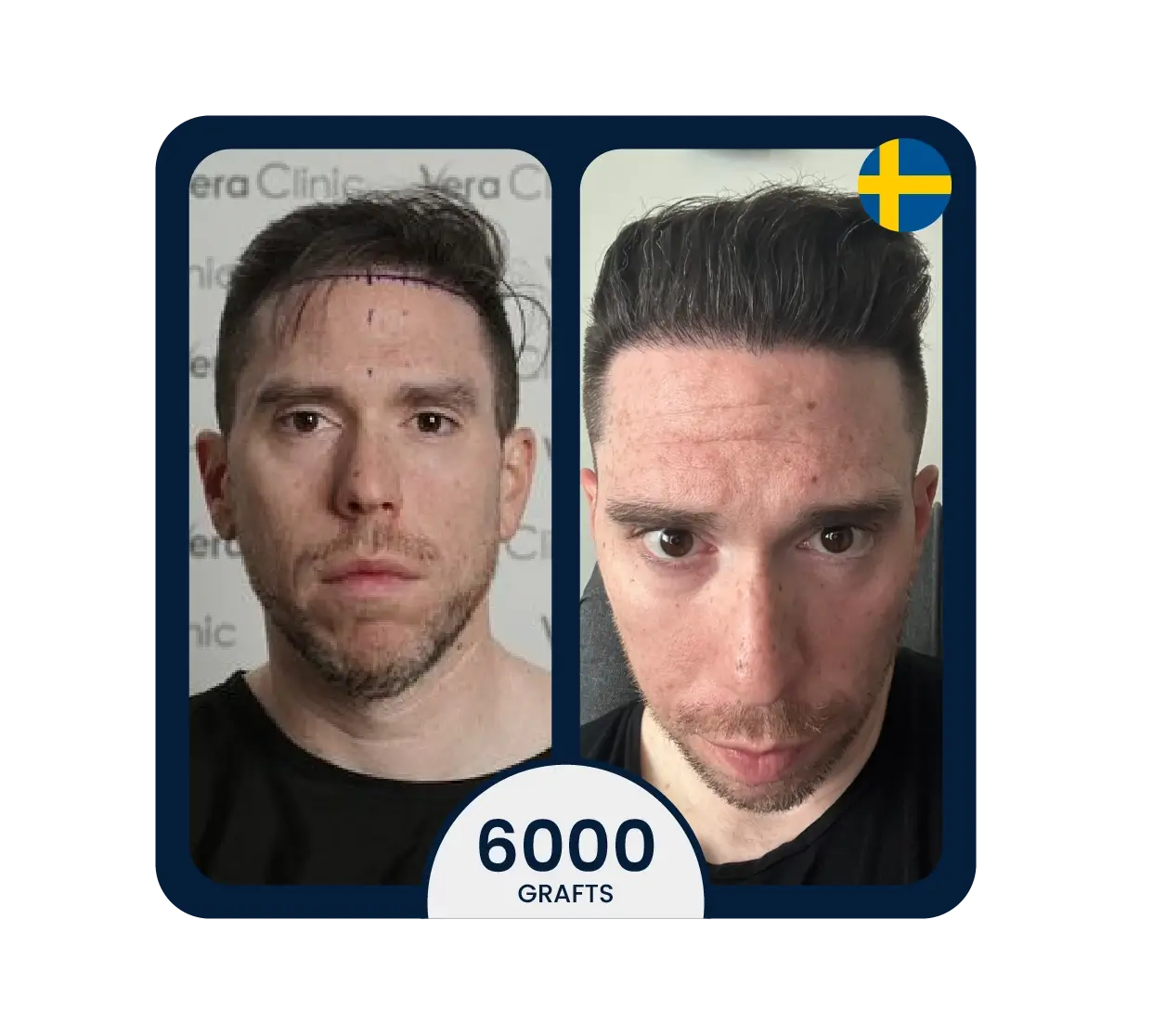
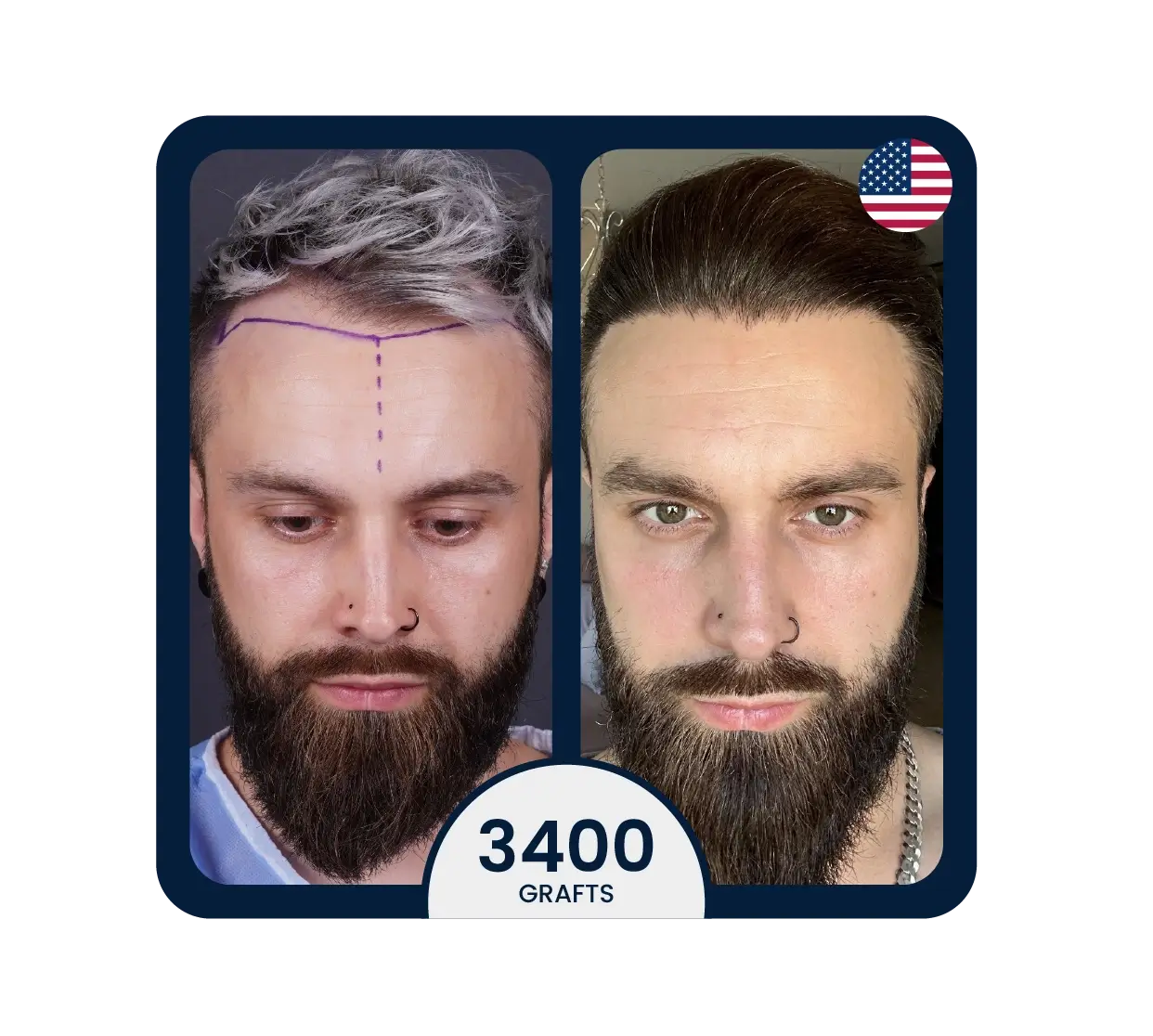
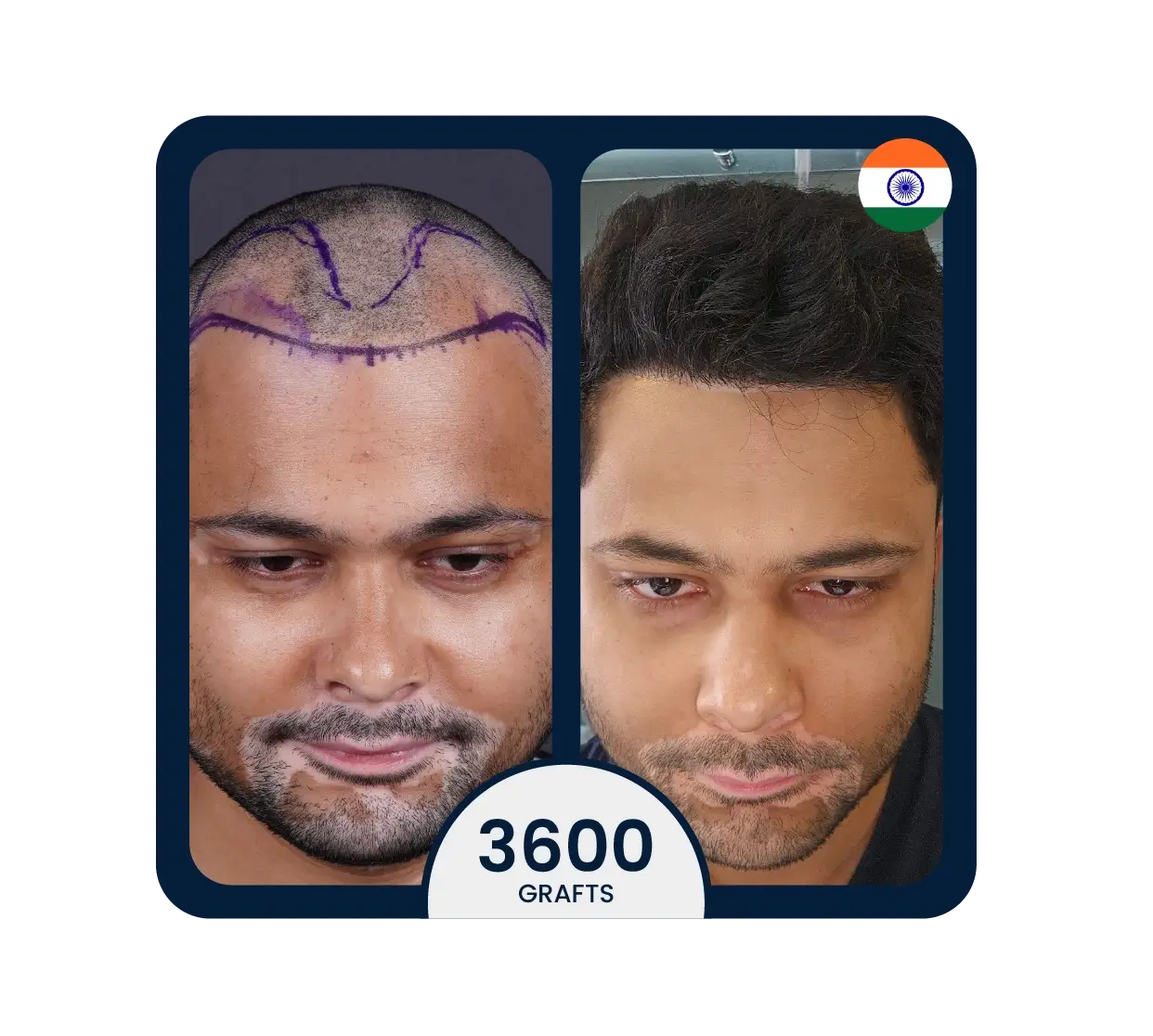
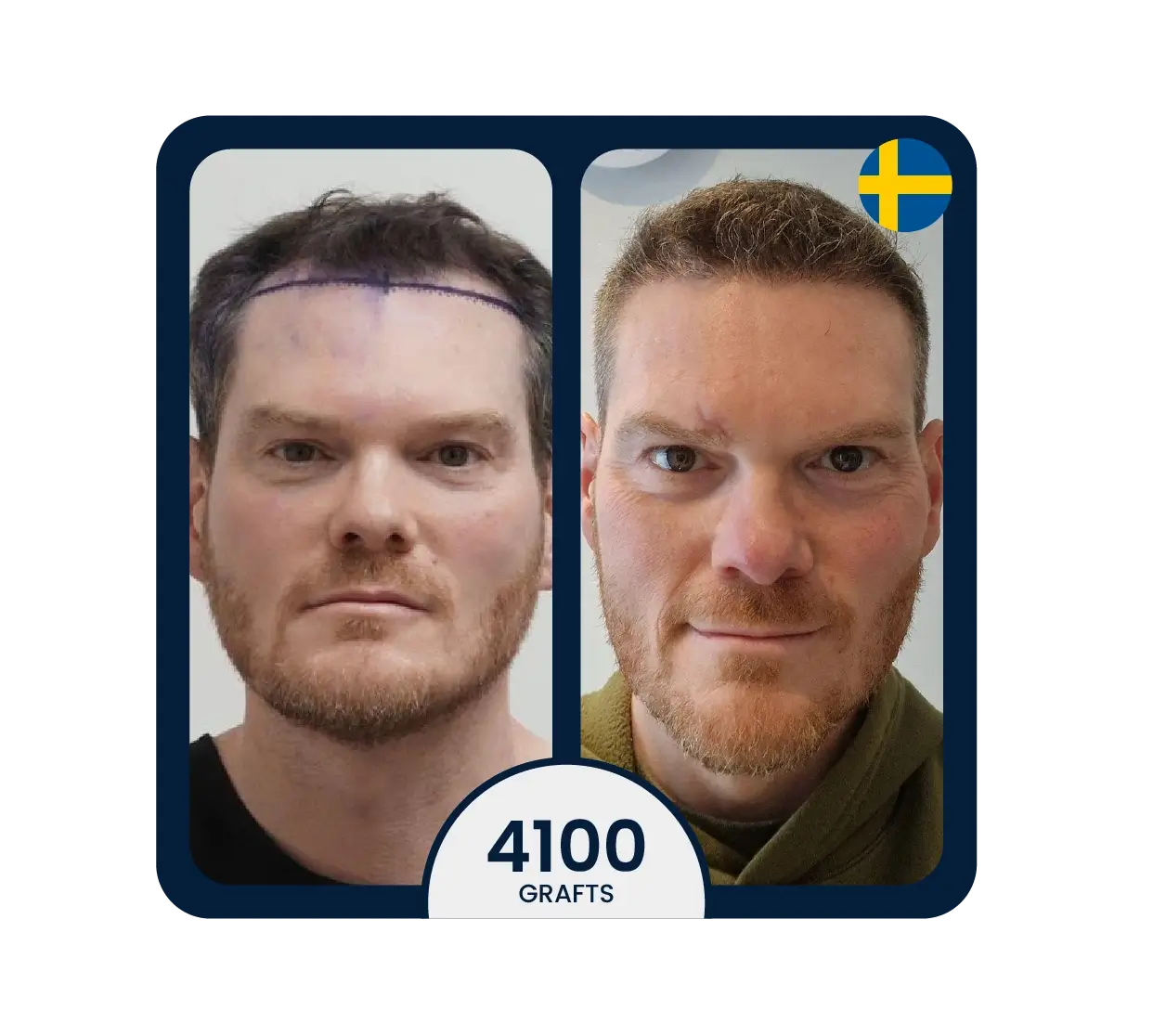
How Does Sapphire FUE Hair Transplant Look Like Before and After?
The Sapphire FUE before after results show a noticeable transformation, with fuller, natural-looking hair replacing thinning or bald areas. Before the procedure, patients present with receding hairlines or areas of thinning. After full recovery, between 12 and 18 months post-procedure, transplanted hair grows at natural density and direction, with minimal visible scarring at the recipient site. The hair transplant before and after result is a well-defined hairline achieved through sub-millimetre channel precision and up to 40 to 55 follicular units per cm2 graft density (Vera Clinic Academy Database, 2026).
Is Sapphire FUE Hair Transplant Derived from FUE Hair Transplant?
Yes, Sapphire FUE hair transplant is derived from the traditional FUE technique. It is considered an advanced version of FUE, as both techniques share the same fundamental process, extracting individual hair follicles from a donor area and implanting them into thinning or bald areas.
The main distinction lies in the tools used. While standard FUE relies on steel blades for recipient site incisions, Sapphire FUE utilizes ultra-sharp, V-shaped sapphire blades, which allow for greater precision and cleaner incisions. This results in denser graft placement, a more natural-looking hairline, and faster healing with minimal scarring. The material difference underpins this clinical gap. Sapphire blades carry a Mohs hardness rating of 9, compared with stainless steel at 6 to 7, allowing the blade to maintain its sharpness throughout the session without deformation. This sustained sharpness supports a graft survival rate of 90 to 95% at 12 months, compared with 88 to 92% for traditional steel-blade FUE hair transplant, and patients treated with sapphire blade incisions heal up to 25% faster than those treated with steel blades (Aslam & Ahmed, 2021; Vera Clinic Academy Database, 2026).
What Are the Benefits of Sapphire FUE Hair Transplants?
Sapphire FUE delivers measurable clinical advantages over standard steel-blade FUE across healing speed, graft density, and scarring outcomes (Vera Clinic Academy Database, 2026). Below are the key benefits of this method:
- Minimally Invasive Procedure: The use of sapphire blades ensures cleaner, smaller incisions, reducing overall trauma to the scalp and resulting in a gentler experience.
- Faster Healing Time: Sapphire blades cause less tissue damage, with patients healing up to 25% faster than those treated with steel blades due to reduced tissue trauma and lower post-operative swelling (Aslam & Ahmed, 2021).
- Higher Graft Density: The V-shaped micro-channel geometry of sapphire blades supports placement of up to 40 to 55 follicular units per cm2, compared with 30 to 40 units achievable with steel-blade instruments (Vera Clinic Academy Database, 2026).
- Natural Hairline Design: Sapphire FUE allows for highly detailed hairline work, matching the natural direction and angle of your original hair growth for seamless, natural results.
- Minimal Scarring: The ultra-fine incisions made with sapphire tools leave almost no visible scarring, even with short hair.
- Reduced Risk of Complications: Sapphire blades are non-metallic and hypoallergenic, lowering the risk of infection, irritation, or allergic reaction.
- Long-Lasting, Permanent Results: Once the transplanted follicles settle, the hair continues to grow naturally for life, offering a permanent solution to hair loss.
How Does the Sapphire FUE Technique Minimize Scarring?
The Sapphire FUE technique minimizes scarring primarily through the use of ultra-sharp, V-shaped sapphire blades instead of traditional steel instruments. These sapphire blades allow surgeons to create smaller, cleaner incisions with greater precision, which causes less trauma to the surrounding tissue. Because the incisions are narrower and more refined, epithelial closure is faster and the risk of visible scarring is lower than with steel-blade instruments. Histopathological analysis confirms that the 30-degree sapphire blade configuration causes the least tissue injury of all blade types tested (Aslam & Ahmed, 2021).
Who Are Good Candidates for Sapphire FUE Hair Transplants?
Sapphire FUE is a precise technique in modern hair restoration, however, as with any medical procedure, not everyone is an ideal candidate. Below are the key traits that define a good match for this method:
- Individuals with Mild to Moderate Hair Loss: Those experiencing early to moderate stages of hair thinning or pattern baldness are ideal candidates, as they generally present with sufficient donor density for successful transplantation. Approximately 65% of Sapphire FUE patients at consultation present at Norwood Stage III to V (ISHRS Practice Census, 2025).
- Patients with Strong Donor Areas: A healthy, dense donor area—usually the back or sides of the scalp—is crucial for extracting viable follicles that are implanted elsewhere.
- Men and Women Seeking Natural Hairlines: Sapphire FUE allows for highly detailed hairline design, making it ideal for individuals who want a seamless, undetectable result.
- Those Looking for Minimal Scarring: Because sapphire blades create smaller, cleaner incisions, this technique suits patients concerned about visible scarring, especially if they prefer shorter hairstyles.
- People Who Prefer a Faster Recovery: Sapphire FUE causes less trauma to the scalp, which translates to quicker healing and less post-operative discomfort, ideal for busy individuals.
Who May Not Be a Good Candidate?
At Vera Clinic, patients are not accepted for Sapphire FUE when donor area density is insufficient to achieve the target coverage, when active scalp conditions such as alopecia areata or scarring alopecia are present in the recipient zone, or when hair loss progression has not stabilised. A proportion of consultations result in a recommendation to delay or decline surgery pending further assessment (Vera Clinic Academy Database, 2026). A personalised consultation with the surgical team establishes suitability and determines the appropriate treatment plan.
Eyebrow transplants are used to restore shape, fullness, and symmetry. Sapphire FUE is well-suited for eyebrow transplants, as the V-shaped sapphire blade allows for precise incision angle control and dense single-follicle placement in a small surface area, with minimal scarring at the recipient site.
Yes, Sapphire FUE is well-suited for sideburn transplants due to its ability to create clean, small incisions in delicate facial areas, allowing for accurate graft placement and natural-looking results. Sideburn restoration helps enhance facial symmetry and thickness.
Yes, Sapphire FUE is a suitable method for moustache transplants because the sub-millimetre depth and angle control of sapphire blades supports precise single-follicle placement, which is critical for a well-defined, natural moustache.
Afro transplants involve unique challenges due to tightly curled follicles. Yes, Sapphire FUE is effective for Afro transplants when performed by experienced surgeons, as the technique supports precise incision control and better handling of curved grafts, supporting natural regrowth patterns for Afro-textured hair.
Beard transplants are ideal for enhancing facial hair density and shape. Yes, Sapphire FUE is a suitable option for beard transplants, offering clean, scar-minimizing incisions and precise graft placement to match the natural growth direction of facial hair.
Are Sapphire FUE Hair Transplants Permanent?
Yes, Sapphire FUE hair transplants are permanent but like all medical procedures, their long-term success depends on several key factors. The procedure involves transplanting healthy hair follicles from the donor area (the back of the scalp, which is genetically resistant to balding) to the thinning or bald areas. Once implanted and fully healed, these follicles continue to grow hair naturally and permanently, just like they would in their original location.
However, the permanency of hair transplants is influenced by the patient’s overall health, genetics, post-operative care, and the progression of natural hair loss in untreated areas. For example, if hair loss continues in non-transplanted zones and maintenance treatments aren’t followed, additional sessions might be needed to maintain aesthetic balance. Factors such as smoking, poor scalp hygiene, and underlying medical conditions impact the longevity of results.
How Is the Procedure for Sapphire FUE Hair Transplants?
The Sapphire FUE procedure is a carefully planned, minimally invasive process designed to ensure maximum graft survival and faster healing. Here’s a breakdown of how the hair transplant procedure works:
- Consultation and Hair Analysis: At Vera Clinic, the pre-procedure assessment is conducted under the supervision of board-certified surgeons, who determine graft count, donor zone mapping, and hairline design before any extraction begins (Vera Clinic Academy Database, 2026).
- Local Anesthesia Application: Local anesthesia is applied to ensure a painless experience throughout the procedure without the risks associated with general anesthesia.
- Follicle Extraction: Using a micro punch tool, individual hair follicles are extracted from the donor area, usually the back or sides of the scalp.
- Sapphire Blade Incision: Ultra-sharp sapphire blades are used to create tiny, V-shaped incisions in the recipient area. These incisions are smaller, cleaner, and more precise than those made with steel blades.
- Graft Implantation: Extracted follicles are carefully implanted into the incisions, following the natural angle and direction of hair growth to ensure a natural look.
- Post-Procedure Care: After the surgery, patients receive detailed aftercare instructions, including how to wash the scalp, manage any swelling, and support the healing process for optimal results.
How long does the procedure take?
A standard Sapphire FUE session delivers 2,500 to 4,500 grafts within 6 to 8 hours under local anaesthesia. Cases requiring more than 4,500 grafts are split across two consecutive days to preserve graft viability and surgeon precision. Patients return to non-strenuous daily activity within 2 to 3 days (Vera Clinic Academy Database, 2026).
How to Prepare for a Sapphire FUE Hair Transplant Surgery
Proper hair transplant preparation plays a crucial role in ensuring a smooth procedure and optimal results. While many guidelines apply to all hair transplant methods, there are specific tips to follow for the Sapphire FUE technique as well. Here’s a step-by-step guide:
- Stop Blood Thinners and Certain Medications
Avoid medications like aspirin, ibuprofen, or any blood-thinning supplements (vitamin E, omega-3s) at least 7–10 days before surgery, unless advised otherwise by your doctor. - Avoid Alcohol and Smoking
Refrain from alcohol and tobacco use for at least 3–5 days before surgery, as both can restrict blood flow and slow down healing. - Wash Your Hair Thoroughly the Night Before
Use a gentle, sulfate-free shampoo the evening before your surgery to cleanse the scalp and reduce bacterial presence. - Don’t Cut Your Hair Short
Unlike traditional methods, Sapphire FUE benefits from visible hair length in both donor and recipient areas for better incision planning and precision placement. - Eat a Light, Healthy Meal on the Day of Surgery
Arrive with a full stomach, preferably after a light, protein-rich meal to keep your energy levels stable throughout the procedure. - Wear Comfortable, Button-Down Clothing
Avoid clothes that need to be pulled over your head; opt for something that opens in the front to prevent disturbing the treated area post-op. - Avoid Caffeine on the Day of Surgery
Caffeine can increase blood pressure and sensitivity. Skipping your morning coffee can help minimize bleeding and discomfort during the procedure. - Follow Vera Clinic’s Pre-Procedure Instructions
Vera Clinic provides specific instructions regarding scalp care and pre-treatment protocols to optimise incision quality and graft survival. Follow them exactly as prescribed (Vera Clinic Academy Database, 2026).
What Potential Side Effects Can Occur After a Sapphire FUE Hair Transplant?
While Sapphire FUE is a minimally invasive procedure with a well-documented safety profile, it is still a medical treatment and minor side effects can occur. Most hair transplant side effects are temporary and manageable, especially when aftercare instructions are followed properly:
- Temporary Swelling: Mild swelling around the forehead or eyes is common during the first few days after surgery and resolves within 48 to 72 hours.
- Redness and Sensitivity: The scalp appears slightly red and feel sensitive or tight for up to a week post-procedure, especially around the implant and donor areas.
- Scabbing and Crusting: Tiny scabs form where each follicle was implanted. This is a normal part of healing and should not be picked at. These fall off naturally within 7 to 10 days.
- Itching: As the scalp heals, itching occurs. It’s a sign of recovery but should not be scratched to avoid disturbing grafts.
- Shock Loss: Temporary shedding of both transplanted and surrounding hair occur within 2 to 4 weeks. This is called shock loss and is a natural, short-term phase before regrowth begins.
- Mild Numbness or Tingling: Some patients report a numb or tingling sensation around the donor or recipient areas, which fades as nerves heal over a few weeks.
- Folliculitis (Minor Inflammation): Small pimples or bumps appear during new hair growth. This is mild in most cases and treatable with topical solutions if needed.
What Is the Average Cost of a Sapphire FUE Hair Transplant?
In Istanbul, Turkey, Sapphire FUE packages range from €2,500 to €5,990, including accommodation, transfers, and aftercare. In Europe, the average cost rises to €8,000 to €15,000. In Australia, patients expect to pay €12,000 to €18,000. In the United States, the average cost ranges from $10,000 to $15,000 (Vera Clinic Academy Database, 2026; Statista, 2025).
| Country | Cost Range | Typical Package Inclusions |
|---|---|---|
| Turkey (Istanbul) | €2,500 to €5,990 | Hotel (3-5 nights), VIP transfers, surgery, aftercare kit, PRP, OxyCure |
| United Kingdom | €8,000 to €15,000 | Surgery only |
| United States | $10,000 to $15,000 | Surgery only |
| Germany | €6,000 to €15,000 | Surgery; limited packages |
| UAE (Dubai) | €4,100 to €9,000 | Surgery; limited packages |
| Australia | €12,000 to €18,000 | Surgery only |
Source: Vera Clinic Academy Database, 2026; Statista, 2025; sapphire fue hair transplant statistics.
Factors that influence the hair transplant cost include the number of grafts needed, the surgeon’s experience, clinic reputation, technology used (such as sapphire blades versus steel), and whether the package includes additional services like accommodation or post-operative care. While pricing varies, it’s essential to prioritize quality, safety, and natural-looking results over cost alone.
Is It Better to Get Sapphire FUE Hair Transplants in Turkey?
Yes, it can be better to get a Sapphire FUE hair transplant in Turkey when considering the balance between quality, results, and cost.
Istanbul, Turkey alone accounts for approximately 65 to 75% of Turkey’s national procedure volume, with over 360 Ministry of Health-certified clinics among more than 500 operating facilities. Turkey performs an estimated 25 to 35% of the world’s hair transplant procedures annually, generating approximately $2 billion from hair transplant tourism in 2024 to 2025 (Turkish Ministry of Health, 2024; Turkish Healthcare Travel Council, 2025).
From a financial perspective, Sapphire FUE hair transplant in Turkey range from €2,500 to €5,990 and include accommodation, transfers, and aftercare, compared with surgery-only pricing of €8,000 to €15,000 in Europe and $10,000 to $15,000 in the United States (Vera Clinic Academy Database, 2026; Statista, 2025). Additionally, Turkey’s medical tourism sector operates under Turkish Ministry of Health certification requirements, with 360 Ministry-certified clinics in Istanbul alone maintaining standardised hygiene and patient care protocols (Turkish Ministry of Health, 2024).
For international patients, Turkey’s all-inclusive packages represent a 60 to 70% cost saving compared to equivalent procedures in the UK or United States, while maintaining a 90 to 95% graft survival rate at accredited clinics (Vera Clinic Academy Database, 2026; Statista, 2025).
How to Do Proper Aftercare for Sapphire FUE Hair Transplants
Proper post-op care is essential to ensure successful healing, high graft survival, and optimal results after your Sapphire FUE procedure. The days and weeks following the surgery are just as important as the procedure itself. Below is a step-by-step guide to help you do your hair transplant aftercare:
- Follow Vera Clinic’s Aftercare Instructions Closely: Vera Clinic provides a personalised aftercare kit and written guidelines covering scalp washing, swelling management, and graft protection. Follow them exactly as prescribed.
- Keep Your Head Elevated: Sleep with your head elevated at a 45-degree angle for the first 3–4 nights to reduce swelling and pressure on the grafts.
- Avoid Touching or Scratching the Transplanted Area: The grafts are delicate in the first week. Avoid rubbing, scratching, or any direct pressure to prevent dislodging them.
- Use the Recommended Shampoo and Washing Technique: Scalp washing begins 48 hours after the procedure using a special lotion and shampoo provided in the aftercare kit. Pat dry gently; never rub.
- Avoid Sweating and Intense Physical Activity: Refrain from gym workouts, heavy lifting, or sauna use for at least 10–14 days to prevent sweating and inflammation.
- Stay Out of Direct Sunlight: Sun exposure damages the healing scalp. Wear a loose-fitting hat or avoid outdoor activities during peak sunlight hours.
- Don’t Smoke or Drink Alcohol: Both impair blood flow and delay healing. Avoid them for at least a week or as advised by your clinic.
- Be Patient During the Shedding Phase: Transplanted hair sheds within the first 2 to 4 weeks post-procedure. This is a normal part of the hair growth cycle and does not affect final graft survival.
What Is the Timeline of Recovery for Sapphire FUE Hair Transplants?
The recovery timeline for Sapphire FUE is structured and predictable, supported by the reduced tissue trauma of sapphire blade incisions.
In the immediate post-procedure phase, the first 48 to 72 hours, patients experience mild swelling, redness, and tiny scabs around the grafts. This is normal and subsides quickly with proper care.
The early recovery phase, which lasts up to 10 days, involves healing of the incisions and scab shedding. During this period, it’s essential to follow your clinic’s washing instructions and avoid any pressure or friction on the scalp.
Moving into the mid-recovery phase (weeks 2 to 8), most patients notice the “shock loss” stage, where transplanted hairs temporarily shed. While this might seem concerning, it’s a completely natural part of the hair growth cycle.
Finally, in the long-term healing and hair growth phase (months 3 to 18), new hair begins to grow steadily, becoming thicker and denser over time. By the 6-month mark in the hair transplant recovery timeline, noticeable improvement is visible, while full results appear between 12 and 18 months post-procedure (Vera Clinic Academy Database, 2026).
What Activities Should I Avoid After a Sapphire FUE Transplant?
Following a Sapphire FUE procedure, your scalp and newly implanted grafts need time to heal and settle. Avoiding certain activities during the early stages of recovery is crucial to protect the grafts and support healthy hair regrowth. Below are the key activities to avoid after your hair transplant.
- Intense Physical Exercise: Avoid high-intensity workouts, weightlifting, or cardio for at least 10–14 days. Exercise increases blood flow and sweating, which causes graft dislodgement or infection. (Source: Hair Transplant: Challenges, Solutions and Guideline for Beginners, 2021)
- Smoking and Alcohol Consumption: Both constrict blood vessels and interfere with oxygen supply to the scalp, slowing down healing and increasing the risk of graft failure. Smokers experience delayed recovery and reduced graft survival rates compared with non-smokers (Kumaresan & Subburathinam, 2021).
- Scratching or Rubbing the Scalp: Even if itching occurs, avoid scratching or rubbing the transplanted area. This dislodges grafts and damages healing tissues. Let scabs fall off naturally.
- Sun Exposure: Avoid direct sunlight on the scalp for at least 2–3 weeks. UV rays irritate the healing skin and affect pigmentation in the recipient area. Wearing a loose-fitting hat is recommended if going outdoors.
- Swimming in Pools or the Sea: Stay away from pools, hot tubs, and the sea for at least 3 weeks. Chlorine, salt, and bacteria interfere with healing and increase the risk of infection.
- Wearing Tight Hats or Helmets: Compression and friction from tight headwear damage the grafts. If you must wear a hat, ensure it’s soft, loose, and approved by your surgeon.
- Sleeping Flat: Lying completely flat causes swelling. For the first few nights, sleep with your head elevated at a 45-degree angle to reduce inflammation.
- Hair Styling and Chemical Products: Avoid using gels, sprays, hair dryers, or chemical treatments until your surgeon gives the green light, after 3–4 weeks.
How Soon Can I Return Normal Activities After a Sapphire FUE Hair Transplant?
Returning to daily activities after a Sapphire FUE hair transplant is a structured process, with patients resuming light routines within 2 to 3 days post-procedure. A study published in the International Journal of Trichology (2020) found that patients who underwent Sapphire FUE were able to return to non-strenuous daily activities within 2 to 3 days, thanks to the reduced trauma and faster healing associated with sapphire blade technology. Physical activities such as exercising, swimming, or heavy lifting should still be avoided for at least 10 to 14 days to prevent complications. Patients describe the recovery as manageable rather than painful. For example, Marco, a Vera Clinic patient, shared: “I experienced some swelling and tightness the first few days, but I was able to go back to my desk job by the fifth day. As long as I followed the care instructions, everything healed on track.” Dr. Saim Nedim Ecevit emphasizes that rest, scalp care, and avoiding risky activities in the early recovery phase are essential for long-term graft survival.
Should You Sleep with Head Elevated After a Sapphire FUE Hair Transplant?
Yes, you should sleep with your head elevated after a Sapphire FUE hair transplant, especially during the first few nights of recovery. Elevating your head at a 45-degree angle helps reduce post-operative swelling and prevents unnecessary pressure on the newly transplanted grafts. According to Hair Transplant: Challenges, Solutions and Guideline for Beginners (2021), patients who maintained head elevation for at least three nights post-surgery experienced less edema around the forehead and eyes compared to those who slept flat.
Patient experiences reflect this recommendation. Ryan, a patient from Vera Clinic, noted: “I used two pillows to keep my head up for the first few nights, it really helped with the swelling and made sleeping more comfortable than I expected.” Dr. Saim Nedim Ecevit stresses that head elevation is a critical part of early aftercare, supporting faster healing and graft protection in the first 72 hours post-procedure.
What Foods or Supplements Can Help Improve Hair Growth in Sapphire FUE Hair Transplants?
Certain foods and supplements help strengthen the newly transplanted hair follicles and encourage healthy regrowth. According to a 2020 study in the Dermatology and Therapy Journal, nutrients such as biotin, zinc, iron, vitamin D, and omega-3 fatty acids have a direct impact on hair follicle function and post-transplant hair quality. Foods like eggs, salmon, spinach, avocados, and nuts are rich in these nutrients and should be part of your recovery diet. Many patients choose to support their healing with supplements as well.
Josip, a Vera Clinic patient, shared: “I added biotin and zinc to my daily routine, along with more leafy greens and fish. I started noticing my new hair growing stronger by the third month.” Dr. Saim Nedim Ecevit emphasizes that a nutrient-dense diet accelerates healing and supports long-term graft survival and thickness. While supplements are helpful, a balanced diet rich in essential vitamins and minerals remains the primary dietary recommendation during the recovery period.
What Are the Do’s and Don’t’s After a Sapphire FUE Hair Transplant Surgery?
Proper care after your Sapphire FUE procedure is just as important as the surgery itself. Following the right post-operative steps helps ensure healthy graft survival, smooth healing, and optimal hair growth. Below is a clear breakdown of essential do’s and don’ts after a hair transplant every patient should follow during the recovery phase:
| ✅ Do’s | ❌ Don’ts |
|---|---|
| Sleep with your head elevated for the first 3–4 nights to reduce swelling. | Don’t sleep flat or face down, as it can increase pressure and damage grafts. |
| Follow your clinic’s washing instructions carefully using the recommended shampoo. | Don’t use harsh shampoos or scrub the scalp during the first 10 days. |
| Stay hydrated and eat a nutrient-rich diet including biotin, zinc, and protein. | Avoid alcohol, smoking, and junk food, which impairs healing. |
| Wear a loose, breathable hat (if needed) to protect from sun and dust. | Don’t wear tight hats or helmets that cause friction on the transplanted area. |
| Rest and avoid strenuous activity for at least 10–14 days post-surgery. | Don’t go to the gym, swim, or engage in contact sports during the early healing phase. |
| Take prescribed medications (antibiotics, anti-inflammatory, etc.) as directed. | Don’t skip or self-medicate without your doctor’s guidance. |
| Be patient with the shedding phase; it’s part of the natural cycle. | Don’t panic if transplanted hairs fall out in the first few weeks; it’s expected. |
What Is the History of Sapphire FUE Hair Transplants?
Vera Clinic introduced the Sapphire FUE technique in 2017, becoming the first in the industry to use sapphire blades for cleaner incisions, higher graft density, and nearly scarless healing. What began as a precision upgrade to steel-blade FUE has since been adopted across hundreds of clinics worldwide. In the history of hair transplants, the introduction of sapphire blades in 2017 marks a turning point in channel-creation methodology, documented and published by Vera Clinic Academy, which holds certification from both the Turkish Ministry of Health and the Ministry of Education (Vera Clinic Academy Database, 2026).
What Is CVD Lab-Grown Diamond Blades (Vector-10™) and How Does It Differ from Standard Sapphire Blades?
Vera Clinic introduced Sapphire FUE in 2017 using synthetic corundum blades rated at Mohs 9. That precision standard held for nearly a decade. The next development came through a partnership with Appsilon Enterprise, a material science company with aerospace and defense-grade engineering experience.
The result is CVD Lab-Grown Diamond Blades (Vector-10™) , manufactured using Chemical Vapor Deposition (CVD) technology. CVD diamond rates at Mohs 10, the highest point on the hardness scale, and maintains structural integrity across up to 150,000 repeated incisions without measurable dulling, as confirmed by independent testing conducted by Çınar Validation and Test Laboratories (CinarLabs Validation Report, 2025).
The performance difference over standard sapphire blades is material. Within the first 1,000 incisions, the CVD lab-grown diamond blades demonstrated twice the cutting sharpness of sapphire. At the 6,000-incision mark, sapphire blades show sharpness degradation equivalent to a diamond blade at 90,000 incisions, a 15-fold difference in edge durability (CinarLabs Validation Report, 2025).
At the microscopic scale, the CVD lab-grown diamond blades achieves an edge radius measured at the Ångström level. This allows tissue separation with minimal mechanical resistance, more predictable channel geometry, and reduced friction during incision, each of which supports consistent graft placement across large-session procedures.
Vera Clinic is the first clinic globally to apply Vector-10™ CVD lab-grown diamond blade technology in hair transplant surgery. While Appsilon engineered the diamond platform, blade angle calibration, channel depth precision, grip ergonomics, and scalp tissue response parameters were all optimised through Vera Clinic’s clinical protocols (Vera Clinic Academy Database, 2026).