
Direct Hair Implantation (DHI) is one of the most precise methods available for hair restoration. Hair loss affects millions of people worldwide, and hair transplants remain one of the most effective permanent solutions. Out of all the methods, Direct Hair Implantation (DHI) stands out for its ability to deliver natural-looking results, satisfactory thickness, and faster recovery, achieving graft survival rates of 90 to 97% at accredited clinics (Vera Clinic Academy Database, 2026; Kwack et al., Dermatologic Surgery, 2021).
DHI Hair Transplant is an advanced variation of FUE that uses the Choi Implanter Pen, a specialized device that allows physicians to plant hair follicles directly into the scalp without pre-made incisions. Each follicle is placed with precise control over its angle, depth, and direction, resulting in a dense and natural hairline. As a minimally invasive technique, DHI offers faster recovery times, with most patients returning to daily activities within 5 to 7 days and full results achieved at 12 to 18 months (Vera Clinic Academy Database, 2026).
The benefits of DHI include a higher graft survival rate, reduced scarring, and suitability for both men and women experiencing hair loss. Its no-shave protocol has driven a 16.5% increase in female surgical hair restoration patients globally between 2021 and 2024 (ISHRS Practice Census, 2025). Temporary side effects such as swelling, itching, or shock loss occur in the early post-operative period and resolve within 2 to 4 weeks on average (Vera Clinic Academy Database, 2026).
Costs vary by location, ranging from €3,000 to €6,000 in Istanbul to $8,500 to $15,000 in the USA, due to the specialized tools and expertise required (Vera Clinic Academy Database, 2026; Bookimed, 2026).
Vera Clinic is a trusted destination for DHI hair transplants in Istanbul, with procedures performed in JCI-accredited hospital settings by an experienced surgical team. Alongside competitive pricing, the clinic provides comprehensive medical tourism services including airport transfers and accommodation, and reports a patient satisfaction rate of 98% at 12-month follow-up (Vera Clinic Academy Database, 2026).
What Is DHI Hair Transplant?
Direct Hair Implantation (DHI) is an advanced hair restoration method that enhances precision, density, and natural-looking results.
DHI is unique in that it does not require pre-made cuts in the recipient area. Instead, it utilizes the Choi Implanter Pen, a hollow-needle instrument with a diameter of 0.5 to 1.5 mm first developed at Kyungpook National University in South Korea in 1992, to place hair follicles directly into the scalp with precise control over depth, angle, and direction. A 2021 comparative study confirmed that intact grafts produced by this hair transplant technique show significantly higher survival rates, with accredited DHI procedures reporting 90 to 97% graft survival at 12 months (Kwack et al., Dermatologic Surgery, 2021).
At Vera Clinic, each DHI session uses 3 to 8 Choi implanter pens per patient, rotated during the procedure to maintain needle sharpness and minimize mechanical trauma to grafts. Donor area analysis is carried out pre-operatively using FotoFinder Trichoscale AI to map follicular density and determine optimal extraction zones, as documented by Vera Clinic Academy (2026).
How Does DHI Hair Transplant Work?
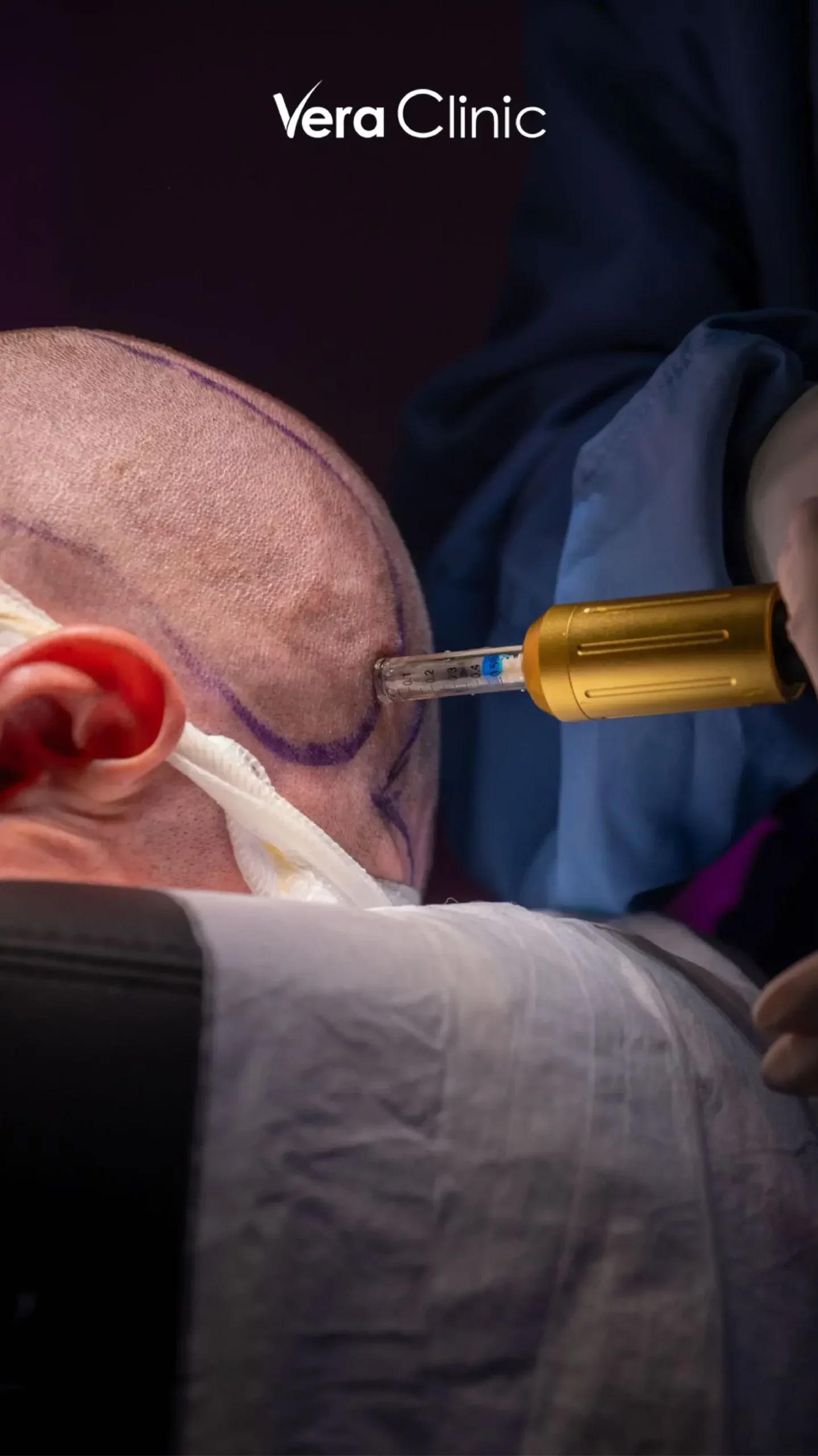


DHI differs from other techniques in that it does not require pre-made incisions. Instead, hair follicles are placed directly into the scalp through the Choi Implanter Pen in a single continuous motion, combining channel creation and graft insertion into one step.
The DHI technique differs from other hair transplant methods in several key ways. Hair follicles are extracted individually, similar to the extraction process used in traditional hair transplants. However, unlike FUE and Follicular Unit Transplantation (FUT), DHI does not require pre-made incisions in the recipient area. The Choi Implanter Pen allows for the direct implantation without creating channels in the scalp first, preserving blood flow to the recipient area and reducing the time each graft spends outside the body. This approach facilitates a more streamlined process. That’s how do hair transplants work.
DHI delivers denser, more natural results with less downtime. The technique achieves an implantation density of 45 to 60 follicular units per cm², compared to 30 to 40 units per cm² with standard FUE (Vera Clinic Academy Database, 2026).
What Type of Anesthesia Is Used During a DHI Hair Transplant?
During a DHI (Direct Hair Implantation) hair transplant, local anesthesia is administered to ensure the patient’s comfort throughout the procedure. This approach numbs only the targeted areas, the donor and recipient sites, allowing patients to remain awake and responsive, yet free from pain. Some clinics offer mild sedation alongside local anesthesia to help alleviate anxiety and enhance relaxation during the surgery.
Choi Implanter Pen is a unique instrument utilized in the DHI method. It is accurate and faster for hair transplant procedures, as the study titled “Advancements in Graft Placement Techniques“ (2023) explains. The instrument resembles a pen and features a hollow needle of 0.5 mm to 1.5 mm in width. It enables physicians to insert hair follicles directly into the scalp without incisions initially.
How Does DHI Ensure a Natural-Looking Hairline?
DHI achieves a natural-looking hairline through precise control of angle, depth, and direction at each graft site. The technique allows placing one to four hairs into a single follicular unit, mimicking the density and structure of natural hair growth. Single hairs are placed at the frontal hairline for a soft, gradual transition, while two to four hair units are used further back for fullness. Surgeons implant grafts at a 40 to 45 degree angle to replicate natural hair direction (Journal of Cutaneous and Aesthetic Surgery, 2022).
What Factors Determine the Number of Grafts Needed for a DHI Transplant?
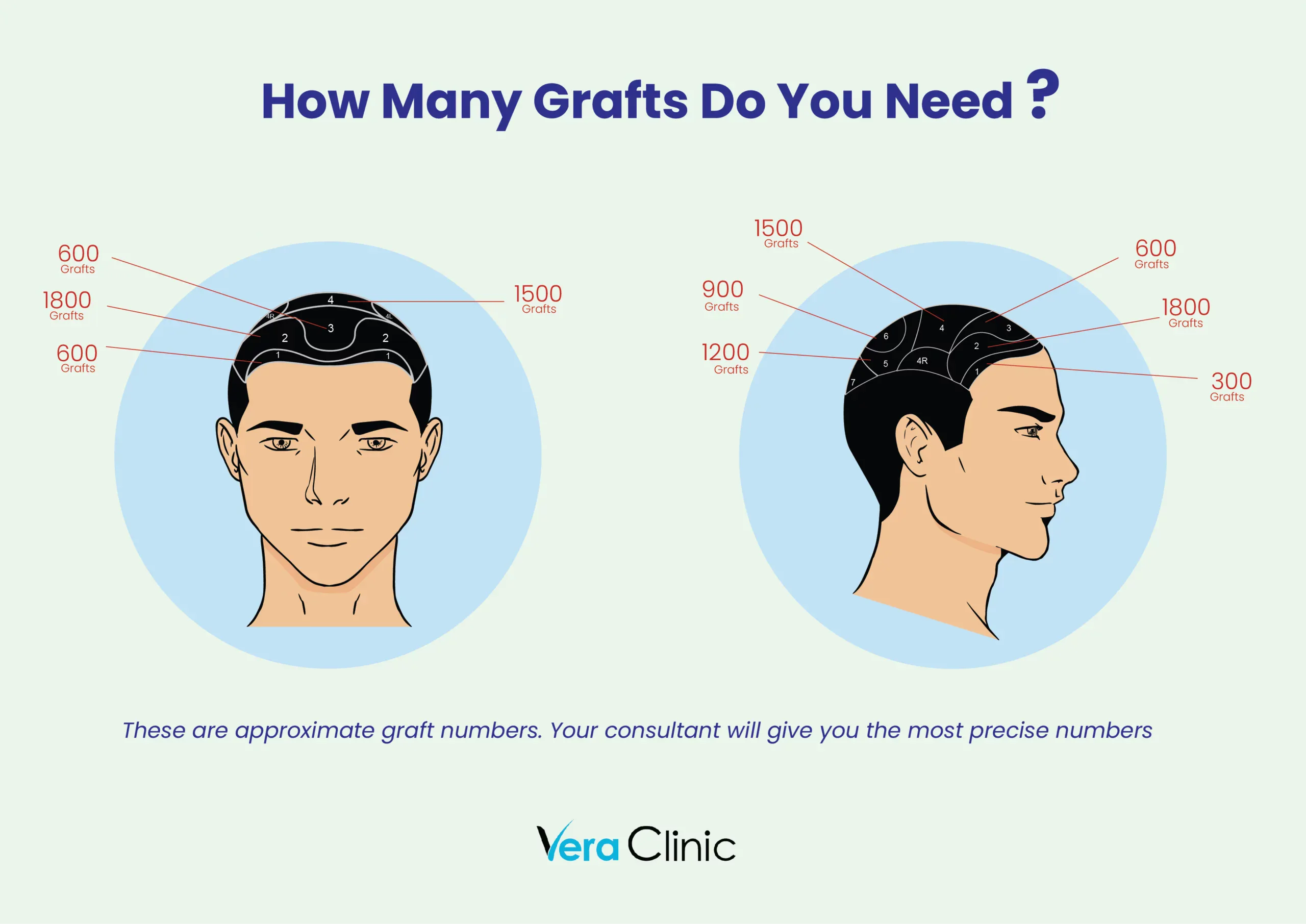
DHI achieves an implantation density of 45 to 60 follicular units per cm², compared to 30 to 40 units per cm² with standard FUE (Vera Clinic Academy Database, 2026). The average first-time hair restoration procedure in 2024 required 2,347 grafts across all techniques (ISHRS Practice Census, 2025), with standard DHI sessions covering 2,000 to 3,500 grafts depending on the extent of hair loss and donor area density.
The exact number depends on several factors. The extent of hair loss plays a big role. Patients at Norwood Stage 2 need around 500 grafts, while Stage 7 requires over 4,500. Desired density matters; the thicker you want your hair, the more grafts you’ll need for full coverage.
Your donor site strength is key. A healthy, dense donor area allows more high-quality grafts. Hair texture influences graft count. Thicker or curlier hair covers more scalp, reducing the number of grafts needed. The size of the bald area impacts totals too; larger areas naturally require more grafts. Finally, surgical technique and careful planning help use grafts efficiently, often leading to better results with fewer grafts.
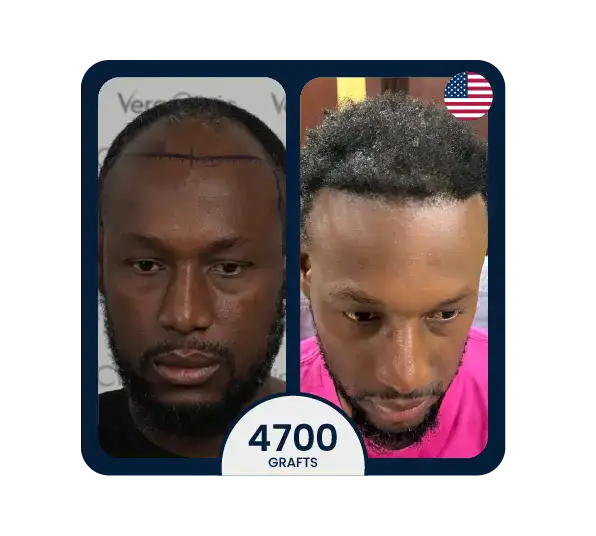
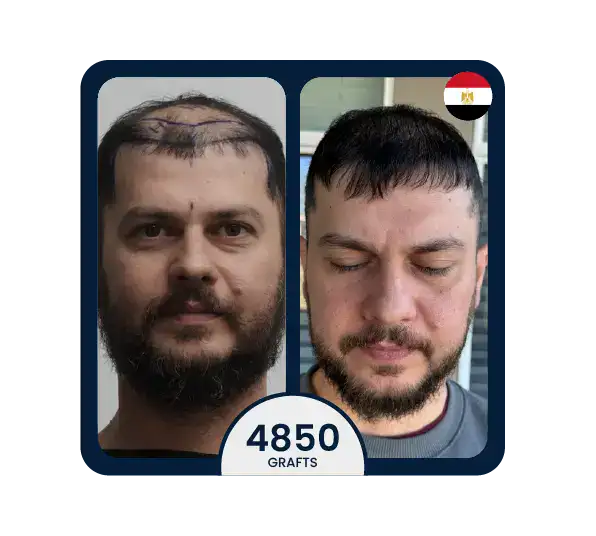
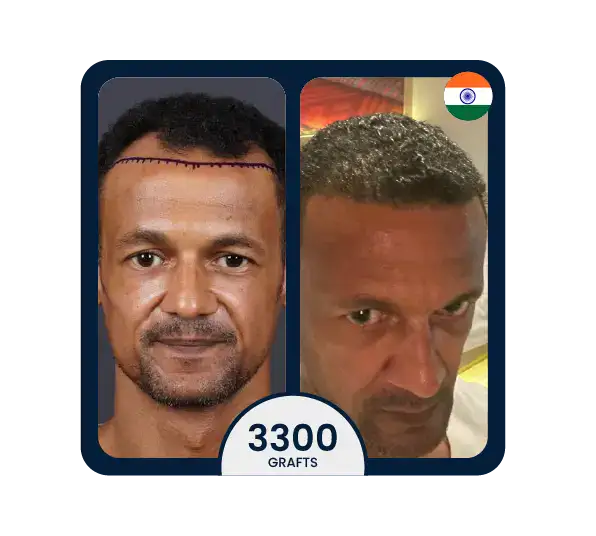
How Does DHI Hair Transplant Look Like Before and After?
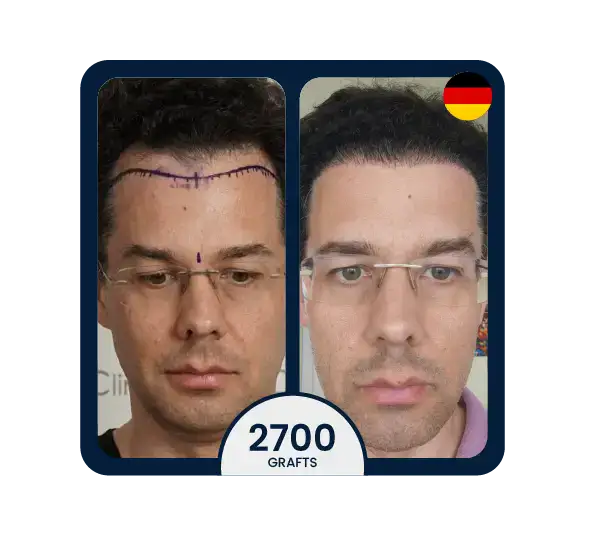
DHI (Direct Hair Implantation) provides excellent results that appear natural due to its meticulous implantation technique. Hair transplant before and after results show a significant improvement in hair thickness, a renewed hairline, and improved scalp coverage, giving the appearance fuller and younger.
Is DHI Hair Transplant Derived from FUE Hair Transplant?
Yes, DHI is an advanced and unique variant of FUE. Both procedures employ the same method to extract hair, but DHI is enhanced by utilizing a Choi Implanter Pen for hair placement, enabling more precise and direct hair placement without creating cuts beforehand. DHI is considered a subtype of FUE hair transplant, as both techniques involve individual follicle extraction rather than the strip harvesting method used in FUT.
The key difference lies in how the follicles are implanted: in FUE, tiny incisions are made in the recipient area before manually placing the grafts, while in DHI, the Choi Implanter Pen is used to implant grafts directly into the scalp. This eliminates the need for pre-made cuts, making the process more precise and allowing for quicker healing.
How Does DHI Differ from FUE Hair Transplant?
DHI (Direct Hair Implantation) and FUE (Follicular Unit Extraction) are both popular hair transplant techniques, but they differ in key aspects: procedure method, precision, healing, and cost.
Both techniques involve extracting individual hair follicles. The differences of DHI and FUE hair transplant lie in implantation. In FUE, small incisions are made in the recipient area after extraction, and grafts are placed manually. In DHI, the Choi Implanter Pen implants grafts directly, eliminating pre-made cuts and allowing precise control over depth, angle, and direction. DHI achieves an implantation density of 45 to 60 follicular units per cm², compared to 30 to 40 units per cm² with standard FUE, representing up to a 50% increase in achievable density (Vera Clinic Academy Database, 2026).
In terms of scarring, DHI leaves minimal marks due to the absence of incisions, while FUE leave tiny dot scars. Recovery is faster with DHI, with most patients returning to daily activities within 5 to 7 days, compared to 7 to 10 days for standard FUE (Vera Clinic Academy Database, 2026).
Graft survival is higher in DHI, with accredited clinics reporting 90 to 97%, compared to 88 to 92% for standard FUE (Journal of Cosmetic Dermatology, 2020; BMC Surgery, 2024). DHI is the preferred choice for precise hairline work, eyebrow, and beard transplants. For large-scale coverage requiring 4,000 or more grafts in a single session, FUE or Sapphire FUE is more practical due to DHI’s longer operative time, averaging 7 to 8 hours per session, as documented in the Dhi hair transplant statistics (Vera Clinic Academy Database, 2026).
In terms of cost, DHI ranges from €3,000 to €15,000 depending on the clinic and graft count, while FUE costs between €2,500 and €12,000.
| Metric | DHI | Sapphire FUE | Classic FUE |
|---|---|---|---|
| Graft survival rate | 90 to 97% | 90 to 95% | 88 to 92% |
| Density achievable (units/cm2) | 45 to 60 | 40 to 55 | 30 to 40 |
| Recovery to daily activities | 5 to 7 days | 7 to 10 days | 7 to 10 days |
| Pre-made recipient channel | No | Yes (sapphire) | Yes (steel) |
| No-shave protocol | Yes | Partial | Partial |
| Best fit for | Hairline detail, no-shave | Large area, density | Large area, budget |
| Cost in Turkey (EUR) | 3,000 to 6,000 | 2,500 to 5,990 | 1,500 to 3,500 |
Source: Vera Clinic Academy Database, 2026; ISHRS Practice Census, 2025; Bookimed, 2026
What Are the Benefits of DHI Hair Transplants?
DHI is a precise hair transplant procedure that delivers natural-looking results and faster recovery. The Choi Implanter Pen allows hair follicles to be implanted directly into the scalp without pre-made incisions, reducing mechanical trauma to grafts and contributing to graft survival rates of 90 to 97% at accredited clinics (Kwack et al., Dermatologic Surgery, 2021). At Vera Clinic, the graft wastage ratio is under 2.5%, compared to an industry average of 7% cited by ISHRS data (Vera Clinic Academy Database, 2026).
- Natural-Looking Hairline: The Choi Implanter Pen gives surgeons precise control over the angle, depth, and direction of each graft, producing a hairline that blends naturally with existing hair.
- Increased Graft Survival Rate: Because DHI eliminates pre-made channel incisions, grafts spend less time outside the body. Accredited clinics report graft survival rates of 90 to 97% with this method (Kwack et al., Dermatologic Surgery, 2021).
- No Scarring Visible: Both the extraction and implantation steps leave only micro-dot marks, which become virtually invisible within 3 months of the procedure (Vera Clinic Academy Database, 2026).
- Quick Recovery Time: Most patients return to normal daily activities within 5 to 7 days, faster than the 7 to 10 days associated with standard FUE (Vera Clinic Academy Database, 2026; Bookimed, 2026).
- Thicker Hair Growth: DHI achieves an implantation density of 45 to 60 follicular units per cm², compared to 30 to 40 units per cm² with standard FUE, resulting in visibly fuller coverage (Vera Clinic Academy Database, 2026).
- Minimally Invasive: No pre-made incisions are required in the recipient area, reducing trauma to the scalp and surrounding tissue.
- Long-Lasting Results: Transplanted follicles are taken from the permanent donor zone and continue to grow naturally. Full density results are visible at 12 to 18 months post-procedure (Vera Clinic Academy Database, 2026).
- Excellent for Sensitive Areas and Hairlines: DHI’s single-follicle implantation process makes it particularly well suited for delicate areas such as the frontal hairline, eyebrows, beard, and sideburns, where directional precision matters most.
Who Are Good Candidates for DHI Hair Transplants?
DHI provides natural-looking results, minimal scarring, and strong graft survival outcomes. However, like all hair transplant methods, it is not suitable for every patient. The ideal candidates for DHI share certain clinical characteristics that make the procedure effective and the results long-lasting.
- Individuals with Pattern Baldness (Norwood 2-5): Individuals with male or female pattern baldness but yet possess sufficient donor hair.
- Individuals with a Healthy Donor Site: The patients should possess thick and healthy hair at the sides or back of the head for the transplant.
- Those Seeking a Natural-Looking Hairline: If you desire a natural hairline, DHI is excellent to place hair follicles carefully.
- Patients Seeking a Quick Procedure: DHI does not require cutting, so it is a suitable option for individuals concerned about pain or scarring.
- Individuals who have to recover quickly: DHI assists in recovering faster with less time off, and that is perfect for busy people.
- High-Density Candidates: DHI’s technique allows us to place hair follicles in closer proximity, which makes the hair appear thicker and fuller.
- Those Interested in Beard, Eyebrow, or Scar Coverage: If you wish to cover your scar, eyebrows, or beard, DHI is an ideal option for hair restoration in these delicate areas.
DHI is less suitable in certain cases. Patients at Norwood Stage 6 or 7 often lack sufficient donor density for full coverage, making FUE or Sapphire FUE a more practical choice for large-scale sessions requiring 4,000 or more grafts. Active scalp conditions such as alopecia areata, psoriasis, or dermatitis reduce transplant success and require resolution before surgery. Chronic conditions including poorly controlled diabetes or blood disorders affect healing and graft survival. At Vera Clinic, the surgical team assesses each patient’s Norwood stage, donor density, and coverage goals to determine whether DHI, Sapphire FUE, or a combined approach delivers the best outcome (Vera Clinic Academy Database, 2026).
An eyebrow transplant is a cosmetic procedure that involves transplanting hair follicles (from the scalp) into the brow area to enhance shape, density, and fullness.
Yes, the DHI technique is considered an excellent option for eyebrow transplants, especially for those seeking natural-looking, fuller brows with precise shape and direction.
DHI is an excellent option for eyebrow transplants due to its precision and ability to create natural-looking results. The technique allows surgeons to control the direction and angle of each implanted hair, ensuring a realistic arch and flow. It is minimally invasive, requiring no pre-cut incisions, which leads to faster healing and minimal scarring. Since follicles are implanted immediately after extraction, the graft survival rate is higher, improving long-term outcomes. DHI offers customized eyebrow design, tailored to each person’s facial features and aesthetic goals, and in most cases, doesn’t require shaving of the donor or recipient area.
Yes, DHI is a suitable and viable option for sideburn transplants, particularly for individuals who want natural-looking results with minimal downtime. Sideburn Transplants offer a precise and minimally invasive solution for those looking to restore sideburns after surgery, trauma, or patchy facial hair growth.
The high level of precision provided by the Choi implanter pen ensures that the hair follows the natural growth pattern of the face, preventing an unnatural or “pluggy” appearance. Unlike older techniques, DHI does not require pre-made incisions, reducing trauma, minimizing scarring, and promoting faster healing. Patients do not need to shave their entire donor area, making the procedure more discreet.
Yes, DHI is a suitable option for mustache transplants, particularly for those seeking a full, well-shaped moustache with minimal scarring and fast recovery. A mustache transplant is a procedure designed to restore or enhance facial hair in individuals with patchy or thin growth due to genetics, scarring, or hormonal factors.
The procedure involves extracting individual follicles, from the back or sides of the scalp, and implanting them directly into the moustache area using a Choi implanter pen. This tool enables the surgeon to control the depth, angle, and direction of each follicle, ensuring that the transplanted hair mimics natural facial hair growth.
Since DHI does not require pre-made incisions, it reduces trauma, speeds up healing, and enhances graft survival rates for moustache transplants.
Afro transplants are specialized hair restoration procedures designed to address hair loss in individuals with Afro-textured hair, which presents unique challenges due to its tightly coiled curl pattern and curved follicles.
Yes, DHI is a viable option for Afro transplants, often preferred over traditional methods like FUE or FUT. The procedure involves extracting individual follicles (from the back of the scalp) and implanting them directly into the recipient area using a Choi implanter pen. This method eliminates the need for pre-made incisions, reducing trauma to the scalp, minimizing scarring, and preserving the delicate structure of Afro-textured follicles.
DHI allows surgeons to replicate the natural curl pattern, ensuring seamless integration with existing hair.
Beard transplants are a popular solution for men looking to fill in patchy areas, restore lost facial hair, or achieve a fuller, well-defined beard.
Yes, DHI is a viable option for beard transplants, often preferred by those who want a seamless and natural-looking outcome. The procedure involves extracting individual follicles (usually from the scalp) and implanting them directly into the beard area using a Choi implanter pen. This method allows for precise control over the angle, depth, and direction of each follicle, ensuring that the transplanted hair mimics natural beard growth.
Since DHI eliminates the need for pre-made incisions, it reduces trauma, minimizes scarring, and speeds up recovery compared to traditional methods.
Are DHI Hair Transplants Permanent?
Yes, DHI hair transplants are permanent. Vera Clinic reports a patient satisfaction rate of 98% and a DHI graft survival rate of 95 to 98% at 12-month follow-up (Vera Clinic Academy Database, 2026). The transplanted hair follicles are taken from the permanent donor zone at the back and sides of the head, where hair is genetically resistant to loss, so they continue to grow naturally for many years. However, the permanency of hair transplants is determined by several key factors, including donor area health, surgical precision, post-operative care, and overall scalp health. Caring for yourself and maintaining a healthy lifestyle are critical to the long-term success of the procedure.
The success and longevity of a hair transplant depend on several key factors. A healthy donor area ensures natural and lasting results, while poor donor hair leads to uneven growth. The surgeon’s expertise, particularly in using the Choi Implanter Pen, plays a crucial role in preserving follicle health and preventing shock loss.
Proper post-procedure care, including avoiding smoking, excessive sun exposure, and stress, is essential for optimal healing. Medical conditions such as hormonal imbalances or autoimmune disorders affect hair retention. While DHI transplants restore bald areas, ongoing hair loss in untreated regions require future touch-ups. Lastly, maintaining a balanced diet, managing stress, and practicing good scalp care contribute to the long-term health of transplanted hair.
“Three years passed since my DHI procedure. The transplanted hair kept growing like normal hair, no sudden loss, no thinning patches. Following the aftercare plan mattered more than I expected. Knowing which areas needed monitoring helped me avoid panic and unnecessary touch-ups.”
– Nuala Gilmore, Vera Clinic Patient
How Is the Procedure for DHI Hair Transplants?
DHI is a minimally invasive technique that delivers natural-looking results with minimal scarring. Using the Choi Implanter Pen, hair follicles are extracted and implanted directly in a single continuous process, with each graft placed at a controlled angle, depth, and direction. That’s how the hair transplant procedure works.
- Consultation and Planning: The surgeon examines the donor area, the hair loss pattern, and the desired results, designing a personalized hairline.
- Use of Local Anesthesia: Ensures there is no pain by applying local anesthesia on the areas where we extract and insert.
- Follicle Extraction: One healthy follicle is removed at a time using a small motorized device from the donor site.
- Choi Implanter Pen Loading:The grafts which are harvested are loaded into the Choi Pen in a careful manner for instant implanting, eliminating the necessity of cutting first.
- Direct Implantation: Every graft is placed individually in the recipient area, ensuring it appears natural and is properly aligned.
- Post-Procedure Care & Recovery: Patients receive explicit aftercare directions. These inform them how to care for the transplanted hair and heal properly.
A standard DHI session for 2,000 to 3,500 grafts takes 7 to 8 hours under local anesthesia, longer than standard FUE due to the single-follicle implantation process. Most patients return to normal daily activities within 5 to 7 days (Vera Clinic Academy Database, 2026).
How to Prepare for a DHI Hair Transplant Surgery
Proper preparation before a DHI procedure is important for achieving optimal results and a smooth recovery. The following steps apply to all hair transplant procedures, with DHI requiring particular attention due to the precision instrument involved.
- Avoid blood thinners and certain medicines (consult your doctor)
- No caffeine on surgery day
- Wash your hair with a mild shampoo
- Wear comfortable, loose clothing
- Avoid haircuts prior to surgery
- Moisturize the scalp (if instructed by your doctor)
- Consume more protein and vitamins
- Avoid having any hair treatment or hair coloring
- Eat a light breakfast on surgery day
- Stay hydrated
- Get a good night’s sleep
DHI requires more preparation than the other hair transplant preparation since it involves the use of a special instrument called the Choi Implanter Pen for precise implantation of hair.
What Potential Side Effects Can Occur After a DHI Hair Transplant?
DHI is one of the most minimally invasive hair transplant procedures available. As with any medical procedure, there are risks involved, and patients should be aware of the potential side effects that may follow.
Here are some potential side effects that you can experience following a DHI hair transplant:
- Swelling
- Redness and itching
- Temporary shock loss
- Scabbing and crusting
- Numbness or tingling sensation
- Folliculitis (inflammation of hair follicles)
- Infection (rare)
Most side effects are mild and resolve within 2 to 4 weeks. Being aware of potential hair transplant side effects allows you to make informed decisions and take good care of yourself for optimal outcomes (Vera Clinic Academy Database, 2026).
What Is the Average Cost of a DHI Hair Transplant?
DHI hair transplant costs vary by location and graft count. The procedure costs more than standard FUE because it requires specialized Choi implanter pens and a longer operative session. In Istanbul, all-inclusive packages start from €3,000, while prices in the US reach €15,000 or more (Vera Clinic Academy Database, 2026; Bookimed, 2026).
The cost varies significantly by country. In the United States, DHI hair transplant range from $8,500 to $15,000. In the UK, costs range from £6,000 to £12,000. In Germany, the range is €6,000 to €12,000, and in Australia €7,000 to €13,000. Istanbul, Turkey remains the most affordable destination, with all-inclusive packages ranging from €3,000 to €6,000, covering the procedure, anesthesia, hotel accommodation, airport transfers, medications, and aftercare (Vera Clinic Academy Database, 2026; Bookimed, 2026).
| Country | DHI Cost Range (EUR) | Grafts Included | Approx. Cost per Graft (EUR) |
|---|---|---|---|
| Turkey (Istanbul) | €3,000 to €6,000 | 2,000 to 4,000 | €0.90 to €1.60 |
| United Kingdom | €7,000 to €14,000 | 2,000 to 3,500 | €2.80 to €5.50 |
| United States | €8,500 to €15,000 | 2,000 to 3,500 | €4.00 to €6.50 |
| Germany | €6,000 to €12,000 | 2,000 to 3,500 | €2.50 to €4.80 |
| Australia | €7,000 to €13,000 | 2,000 to 3,500 | €3.00 to €5.20 |
Kaynak: Vera Clinic Academy Database, 2026; Bookimed, 2026
Several factors influence the cost of a DHI hair transplant. The number of grafts required plays a key role, as a higher graft count increases the time, effort, and overall price. The reputation of the clinic and the surgeon’s expertise affect costs, with highly regarded specialists charging more for their experience and proven success rates.
Location is another major factor, as prices vary significantly between countries and even cities. The technology and equipment used, such as advanced implanter pens, further impact pricing. Some clinics offer after-surgery services, including accommodation, transportation, and follow-up care, which are included in the total hair transplant cost. Hair density objectives influence pricing, as individuals seeking a fuller look require more grafts or multiple sessions.
Finally, personalized treatment plans tailored to a patient’s specific needs often come at a higher cost due to the additional attention and customization involved.
Is It Better to Get DHI Hair Transplants in Turkey?
Yes, getting a DHI hair transplant in Turkey is a practical choice for many international patients, particularly when considering the combination of clinical expertise, affordability, and all-inclusive treatment packages.
Turkey is one of the leading destinations for DHI (Direct Hair Implantation) globally. In 2024, Turkey performed an estimated 1.1 to 1.5 million hair transplant procedures in total, with Istanbul-based clinics among the highest-volume providers worldwide (Vera Clinic Academy Database, 2026). Clinics specialize in DHI using precision Choi implanter pen protocols, and international patients consistently report high satisfaction rates. DHI performed at accredited Istanbul clinics delivers graft survival rates of 95 to 98%, a natural hairline, and faster recovery compared to many Western providers (Vera Clinic Academy Database, 2026).
DHI in Istanbul costs 60 to 70% less than equivalent procedures in the US or UK, with all-inclusive packages ranging from €3,000 to €6,000 covering accommodation, airport transfers, medications, and aftercare (Bookimed, 2026). Turkey hosted 1.5 million medical tourists in 2024, generating $3 billion in healthcare revenue, with hair transplantation among the primary drivers of this growth (Bookimed, 2026).
For many international patients, Istanbul offers a practical combination of clinical quality and cost efficiency for a DHI hair transplant in Turkey.
How to Do Proper Aftercare for DHI Hair Transplants
Proper post-op care plays a vital role in the success of your DHI procedure. A few simple steps make a big difference in healing and long-term results. here’s a quick aftercare checklist:
- Follow Clinic Instructions: Always stick to your surgeon’s personalized care plan.
- Gentle Washing: Wait 24 hours, use a mild shampoo, and avoid rubbing the scalp. It is better to get your first wash at the clinic.
- Sleep Elevated: Use a pillow to keep your head at a 45° angle for the first few nights.
- Avoid Exercise: No heavy activity or sweating for at least a week.
- Protect from Sun: Use a loose hat or stay indoors for 2 weeks.
- No Hair Products: Avoid styling products for 2–4 weeks.
- Don’t Pick Scabs: Let them fall off naturally to avoid damaging grafts.
- Attend Follow-Ups: Stay on track with your clinic’s post-op checks.
Following these hair transplant aftercare steps consistently is one of the most important factors in achieving smooth healing and long-lasting results from your DHI hair transplant.
What Is the Timeline of Recovery for DHI Hair Transplants?
Recovery after a DHI procedure is generally smooth, with most patients resuming normal activities within 5 to 7 days (Vera Clinic Academy Database, 2026). Within the first 48 to 72 hours, minimal swelling, redness, and scabbing occur at both the donor and recipient sites. This is normal and resolves within a few days for most patients.
Between weeks 2 to 4, some implanted hairs shed. This temporary phase, known as shock loss, is a normal part of the hair growth cycle and resolves within 3 to 6 months on average (Vera Clinic Academy Database, 2026).
From 3 months onward, new hair grows gradually and thickens over time. Most patients notice significant density at 9 to 12 months, with full results visible at 12 to 18 months post-procedure (Vera Clinic Academy Database, 2026). Consistent care during each phase of the hair transplant recovery timeline is essential for healthy and permanent results.
What Are the Do’s and Don’t’s After a DHI Hair Transplant Surgery?
These simple guidelines help safeguard your new grafts, recover quicker, and assist further hair growth. The following is a basic dos and don’ts after a hair transplant list of dos and don’ts following your operation:
| Do’s | Don’ts |
|---|---|
| Follow all aftercare instructions from your clinic | Don’t touch, scratch, or pick at the grafted area |
| Sleep with your head elevated (45°) for a few days | Don’t wash your hair for the first 48 hours |
| Use a mild, sulfate-free shampoo after 2–3 days | Don’t use hair dryers or styling tools early on |
| Keep the scalp clean and moisturized as advised | Don’t expose your scalp to direct sunlight |
| Stay hydrated and eat a balanced diet | Don’t smoke or drink alcohol during recovery |
| Attend follow-up appointments | Don’t engage in heavy physical activity or sweating |
| Wear a loose hat to protect from UV exposure | Don’t apply any hair products unless approved |
How Should a Patient Wash Their Hair After a DHI Transplant?
Washing your hair properly after a DHI transplant is one of the most important steps in the recovery process. Done correctly, it helps prevent infection, protects the implanted grafts, and promotes a healthy scalp environment. Done incorrectly, it risks dislodging grafts and delaying healing.
Gentle scalp hygiene after hair transplantation significantly reduces post-op complications like folliculitis and accelerates epithelial healing, especially within the first 7–10 days according to a study published in the International Journal of Trichology in 2020.
Most clinics recommend waiting 24 to 48 hours before the first wash, and getting the first wash done at the clinic. When washing at home, always use lukewarm water, apply a mild sulfate-free shampoo recommended by your surgeon, pat the scalp gently without rubbing or scrubbing, and let water flow over your head rather than using direct showerhead pressure.
Fred, 39, a DHI patient from London, shared his experience: “I was terrified of washing my hair at first, but the clinic helped me to get my first wash. They used a foam shampoo, waited 30 minutes, and rinsed my head. It felt weird at first, but after a week, it became part of my routine. My grafts stayed perfectly intact.”
Dr. Emin Gül, Vera Clinic, emphasizes: “The first 10 washes are critical. We always guide our patients with detailed instructions and advise against using nails or pressure. A gentle wash protects grafts and prevents scab buildup, which hinders oxygen flow to the follicles.”
Post-transplant hair washing is a vital step in ensuring graft survival and optimal hair growth. Taking it slow, staying gentle, and following professional advice are essential for the best results.
Are There Any Dietary or Lifestyle Restrictions After a DHI Procedure?
Yes, after a DHI hair transplant, dietary and lifestyle habits have a direct impact on healing and final results. A diet rich in antioxidants, lean proteins, biotin, zinc, and vitamins A, C, D, and E supports post-transplant hair growth and scalp health (Journal of Clinical and Aesthetic Dermatology, 2019).
From a real patient’s perspective, Andrew, 34, who had a DHI hair transplant at Vera Clinic, shares: “I quit smoking for a month and focused on eating whole foods, especially leafy greens, eggs, and salmon. I genuinely believe it made my healing faster, I barely had any scabbing, and I started seeing baby hairs around month three.”
The Vera Clinic surgical team emphasize lifestyle factors. “We always advise our patients to avoid alcohol, smoking, junk food, and strenuous workouts during the first few weeks,” says Dr. Emin Gül, a leading hair restoration specialist. “These factors disrupt blood flow to the scalp, reduce graft survival, and delay healing.”
Supporting your recovery with a healthy lifestyle is not just a suggestion, it is part of your investment. Your scalp has just received thousands of new follicles, and the better you treat them, the better they will grow.
What Is the History of DHI Hair Transplants?
The first successful hair transplant procedure was done in the 1950s with FUT, which allowed hair restoration but left visible linear scars. From the 1970s to the 1990s, FUT remained dominant despite these drawbacks. In the 2000s, FUE became the preferred technique, reducing scarring but still lacking consistency in density and control.
To address these gaps, the Choi Implanter Pen was developed in 1992 by Dr. J.C. Choi and his team at Kyungpook National University in South Korea, enabling direct implantation without pre-made incisions and giving surgeons full control over depth, angle, and direction for each graft (Choi and Kim, 1992).
This advancement in history of hair transplants resulted in denser hair, faster healing, and more natural hairlines. DHI achieves up to 50% higher implantation density compared to standard FUE, reaching 45 to 60 follicular units per cm² against FUE’s 30 to 40 units per cm², with most patients returning to daily activities within 5 to 7 days (Vera Clinic Academy Database, 2026).
Get a Free Hair Transplant Consultation