


La caída del cabello en los hombres se define como la reducción gradual o repentina de la densidad capilar del cuero cabelludo, resultado de una alteración en el ciclo de crecimiento del cabello, la sensibilidad de los folículos o afecciones médicas o genéticas subyacentes. Reconocer esta afección es fundamental, ya que la caída del cabello en los hombres afecta a algo más que al aspecto físico. Influye en la identidad, la confianza y la calidad de vida. Los varones pueden experimentar malestar psicológico, como ansiedad y baja autoestima, cuando el adelgazamiento del cabello se inicia de forma prematura o avanza rápidamente. La caída del cabello en los hombres no es un signo de mala salud y, aunque es muy frecuente, en la mayoría de los casos es tratable.
Los distintos tipos de pérdida de cabello en los hombres (alopecia androgenética, efluvio telógeno, alopecia areata, alopecia por tracción y alopecia cicatricial) presentan causas, patrones y pronósticos específicos. Entre las causas más frecuentes se encuentran la miniaturización folicular inducida por la dihidrotestosterona, las alteraciones del ciclo piloso tras una enfermedad y los ataques autoinmunes contra los folículos. Los síntomas de la caída del cabello en los hombres incluyen exposición visible del cuero cabelludo, ensanchamiento de la raya y pérdida excesiva durante el lavado o el peinado. Las soluciones eficaces en el tratamiento de la caída del cabello en hombres incluyen el minoxidil tópico, la finasterida oral y opciones quirúrgicas como el trasplante capilar, junto con ajustes en el estilo de vida y la alimentación. La predisposición genética y la interacción hormonal desempeñan un papel predominante en la mayoría de los casos masculinos, según la investigación titulada «Male Pattern Hair Loss: Current Understanding» (Caída del cabello de patrón masculino: conocimientos actuales), del Dr. Rodney Sinclair, de 1998. Comprender este fenómeno enpérdida de cabello los hombres garantiza una detección precoz, un tratamiento específico y mejores resultados a nivel emocional.
¿Es frecuente la caída repentina del cabello en los hombres?
La pérdida súbita de cabello en los varones es menos frecuente que la calvicie de patrón masculino gradual. En la mayoría de los casos se observa un adelgazamiento progresivo en la coronilla o en la línea frontal a lo largo de los años. La pérdida rápida se asocia con mayor frecuencia al efluvio telógeno, desencadenado por estrés físico o emocional, procesos febriles o fármacos, y se diagnostica con menor asiduidad en el ámbito clínico. La caída repentina del cabello es más frecuente en hombres adultos que en niños. Los adultos experimentan más cambios hormonales, alteraciones inmunitarias y exposición acumulada al estrés, que son desencadenantes habituales de la caída brusca del cabello. La pérdida repentina se asocia a trastornos específicos, como la alopecia en los hombres o las infecciones del cuero cabelludo en los niños, que son menos frecuentes.
El efluvio telógeno afecta a aproximadamente el 30 % de los pacientes de dermatología con pérdida temporal de cabello, según la investigación titulada «Telogen Effluvium: A Comprehensive Review», del Dr. Jerry Shapiro, publicada en 2010. Los varones adultos constituyen una proporción notable de este grupo debido al estrés crónico y a factores relacionados con la edad. La caída del cabello afecta a unos 7 de cada 10 hombres. El proceso de adelgazamiento del cabello comienza en aproximadamente el 25 % de los hombres a los 30 años. Los hombres muestran signos significativos de pérdida de cabello a los 50 años.
Los varones entre 30 y 60 años son especialmente vulnerables a una pérdida de cabello repentina y difusa, franja que coincide con el pico de incidencia de la alopecia androgenética, el estrés laboral y diversas comorbilidades. Los casos en hombres suelen aparecer o agravarse a partir de la tercera década de vida, si bien la pérdida de cabello puede manifestarse a edades más tempranas. La mayor frecuencia en adultos frente a niños se explica por la madurez biológica, la exposición acumulada a factores estresantes y la carga genética. Los casos en la infancia son poco frecuentes y suelen asociarse a enfermedades autoinmunes o dermatológicas, más que al envejecimiento o a las hormonas.
¿Por qué los hombres son más propensos a la caída del cabello?
Los varones presentan un mayor riesgo de caída del cabello debido a que producen niveles más elevados de dihidrotestosterona (DHT). Esta hormona, derivada de la testosterona, se une a los folículos pilosos, provocando su miniaturización, acortando la fase anágena y dando lugar a cabellos más finos. El organismo masculino genera más testosterona, lo que incrementa la actividad de la DHT y provoca un daño más frecuente en los folículos a lo largo del tiempo. La calvicie de patrón masculino, o alopecia androgenética, es la principal causa de pérdida de cabello en los varones. Esta afección sigue un patrón genético claro y suele iniciarse en la línea frontal del cabello o en la coronilla. La pérdida se vuelve más evidente porque los patrones masculinos presentan zonas de calvicie bien delimitadas, a diferencia del adelgazamiento difuso observado en las mujeres. Según el estudio «Androgenetic Alopecia: An Update», de las Dras. Rachita Dhurat y Shilpi Sharma (2014), el 80 % de los varones presenta signos de alopecia androgenética al llegar a los 70 años. Esta misma afección se observa en el 40 % de las mujeres y suele presentarse de forma menos agresiva. Una mayor sensibilidad a la DHT, la influencia hormonal y los factores hereditarios explican por qué la caída del cabello es más común y perceptible en los varones. Los folículos masculinos son más reactivos a los cambios internos, lo que provoca una pérdida de cabello más precoz y visible en comparación con las mujeres.
¿Qué cantidad de caída del cabello se considera normal en los hombres? La pérdida normal de cabello en los varones oscila entre 50 y 100 cabellos al día, lo que refleja la fase natural de caída del ciclo de crecimiento piloso. En cualquier momento, el 10 % de los cabellos del cuero cabelludo se encuentran en la fase telógena, lo que da lugar a una pérdida diaria que no se considera un problema médico. La caída se vuelve anómala cuando la tasa de pérdida de cabello supera la de recrecimiento, lo que provoca un adelgazamiento visible o zonas calvas. La pérdida diaria dentro de este rango es habitual en los varones adultos y se ve influida por la edad, la genética y el estilo de vida, según la investigación titulada «Hair Follicle in Aging» (El folículo piloso en el envejecimiento), realizada por el Dr. Y. Kwon y el Dr. R. P. Patel en 2018.
¿Cuáles son los signos y síntomas de la caída del cabello en los hombres?
A continuación se enumeran los signos y síntomas de la caída del cabello en los hombres.
- Retroceso de la línea del cabello: El retroceso de la línea del cabello comienza en las sienes y avanza hacia atrás, formando un patrón en forma de M a lo largo de la frente. La retrocesión de la línea del cabello es un signo temprano de la calvicie de patrón masculino. Afecta a la parte frontal del cuero cabelludo y se aprecia más fácilmente al arreglarse o en una fotografía que el adelgazamiento en la coronilla. Se distingue porque indica el inicio de la alopecia androgenética en hombres jóvenes. Una vez que el patrón se ha estabilizado, el trasplante capilar esTrasplante capilar para la línea de cabello en retroceso la opción que restaura la línea frontal de forma permanente, en lugar de seguir dependiendo únicamente de la medicación.
- Pérdida de densidad en la coronilla: La pérdida de densidad en la coronilla comienza en el vértice o parte superior de la cabeza y se extiende hacia fuera en un área circular. Este signo es menos visible en las primeras etapas sin el uso de espejos. La pérdida de densidad en la coronilla avanza y se hace más evidente cuando la zona calva se expande, a diferencia de lo que ocurre con la línea frontal en retroceso. Se distingue por afectar al punto más alto del cuero cabelludo.
- Ensanchamiento de la raya: El ensanchamiento de la raya aparece cuando la línea entre las dos partes del cabello se hace más ancha, lo que indica una pérdida gradual de densidad en todo el cuero cabelludo. Este signo es común en los patrones de pérdida difusa del cabello. A diferencia de la línea de cabello que retrocede, no afecta a la frente ni a las sienes. Se distingue porque refleja un adelgazamiento uniforme a lo largo de la línea media del cuero cabelludo.
- Adelgazamiento general del cabello: El adelgazamiento general del cabello reduce la densidad de manera uniforme en todo el cuero cabelludo. El cabello se vuelve más fino y carece de volumen. El adelgazamiento general del cabello afecta a todas las regiones y no solo a una zona, a diferencia del adelgazamiento en la coronilla. Se distingue porque apunta a un efluvio telógeno o a una nutrición deficiente, más que a la calvicie hereditaria.
- Pérdida repentina de cabello: Consiste en una caída rápida y brusca del cabello, evidente en almohadas, suelos o peines. Esta pérdida suele estar provocada por el estrés, una enfermedad o cambios hormonales. Afecta a todo el cuero cabelludo y no se limita a una zona concreta, a diferencia de lo que ocurre con la pérdida en la línea frontal. Se distingue porque ocurre de forma acelerada y en grandes cantidades.
- Pérdida de cabello en parches: La pérdida de cabello en parches forma zonas calvas redondas o irregulares en el cuero cabelludo. Está relacionada con enfermedades autoinmunes como la alopecia areata. Afecta a zonas aisladas, a diferencia del adelgazamiento general del cabello. Se distingue porque crea huecos evidentes en la cobertura, en lugar de una reducción uniforme.
- Crecimiento capilar más lento: Un crecimiento capilar más lento significa que el cabello nuevo tarda más en volver a crecer tras la caída. Este crecimiento más lento refleja una alteración del ciclo folicular. La atención no se centra en la pérdida, sino en el retraso en el recrecimiento, en comparación con la caída repentina. Se distingue porque indica un estado de latencia o baja actividad de los folículos.
¿Cuáles son los primeros signos de la caída del cabello en los hombres?
A continuación se enumeran los primeros signos de la caída del cabello en los hombres.
- Retroceso gradual de la línea del cabello: El retroceso gradual de la línea del cabello comienza en las sienes y avanza hacia atrás, formando un contorno en forma de M en la frente. El retroceso gradual de la línea del cabello es uno de los primeros signos, ya que comienza a finales de la adolescencia o a los veinte años. El retroceso de la línea del cabello es más visible y se produce en la parte frontal, en comparación con el adelgazamiento en la coronilla. Se distingue porque modifica la forma de la frente, mientras que otros signos afectan al volumen o a la textura.
- Adelgazamiento leve en la coronilla: El adelgazamiento leve en la coronilla muestra una ligera reducción de la densidad capilar en el vértice. Este adelgazamiento aparece en las primeras fases de la alopecia androgenética. El adelgazamiento de la coronilla es más difícil de detectar sin un espejo en comparación con el retroceso de la línea del cabello. Se distingue por comenzar en la parte superior central del cuero cabelludo y expandirse hacia afuera.
- Aumento de pelo en la almohada o el peine: Aparecen más cabellos de lo habitual en las almohadas, los peines o los desagües de la ducha, lo que indica que el cuero cabelludo está perdiendo pelo a un ritmo mayor. Este síntoma refleja un cambio en el ciclo capilar hacia la fase de caída. La caída es uniforme y no crea zonas calvas, a diferencia de la pérdida de pelo en parches. Se distingue porque indica un efluvio telógeno provocado por el estrés o problemas de salud.
- Cambios en la textura del cabello: El cabello se percibe más fino, más suave o más débil que antes, lo que indica una miniaturización temprana de los folículos pilosos. El cambio de textura es un signo temprano de miniaturización folicular. Este cambio es sutil, pero refleja un debilitamiento del ciclo de crecimiento en comparación con el retroceso visible de la línea del cabello. Se distingue porque afecta a la calidad de los cabellos existentes más que a su número.
- Tiempo de recuperación del cabello más prolongado: El cabello tarda más en volver a crecer tras un corte o una caída natural, lo que indica que los folículos pilosos permanecen más tiempo en la fase de reposo o telógena. Este signo refleja una menor actividad folicular en comparación con la fase anágena. Se distingue porque refleja una ralentización del ciclo más que una pérdida efectiva.
¿Cuáles son los signos tardíos de la caída del cabello en los hombres?
A continuación se enumeran los signos tardíos de la caída del cabello en los hombres.
- Calvicie localizada visible: Aparecen zonas claramente calvas en el cuero cabelludo en áreas donde antes el cabello era denso, alrededor de la coronilla o las sienes. La calvicie localizada visible es un signo tardío porque se produce como resultado de un adelgazamiento prolongado y la inactividad de los folículos. Las zonas calvas crean huecos definidos sin crecimiento visible, a diferencia del adelgazamiento general. Se distingue por dejar al descubierto áreas de la piel que antes estaban completamente cubiertas.
- Retroceso extenso de la línea del cabello: La línea del cabello se desplaza hacia atrás a lo largo de la frente, llegando a veces hasta la mitad del cuero cabelludo. Un retroceso extenso de la línea del cabello es un signo tardío porque indica una pérdida frontal continua que ha superado la forma inicial de «M». Un retroceso extenso altera el contorno del rostro, a diferencia del retroceso leve que se observa en las primeras etapas. Se caracteriza por crear una frente alta y suele ir acompañado de un adelgazamiento en la coronilla.
- Fusión de las zonas calvas: Las regiones de clareo separadas, como la coronilla y la línea del cabello, se unen para formar una gran zona calva. La fusión de las zonas calvas es un signo tardío, ya que indica una pérdida progresiva sin un recrecimiento efectivo entre ellas. Las zonas calvas fusionadas cubren superficies más amplias en comparación con el clareo aislado. Se caracteriza por la fusión de los patrones iniciales en una exposición generalizada del cuero cabelludo.
- Cuero cabelludo brillante o liso: La superficie del cuero cabelludo adquiere un aspecto brillante, lo que indica que los folículos ya no producen pelo. Un cuero cabelludo brillante o liso es un indicador de fase avanzada de inactividad permanente de los folículos. Un cuero cabelludo brillante carece de actividad de crecimiento visible en comparación con las zonas con adelgazamiento o cabellos débiles. Se distingue porque muestra la inactividad a largo plazo del propio folículo.
- Ausencia de regeneración: El cabello perdido no vuelve a crecer tras varios meses, ni siquiera en zonas que anteriormente mostraban signos de regeneración. La ausencia de regeneración es un signo avanzado, ya que sugiere que los folículos han entrado en un estado no funcional o atrófico. La ausencia total con el paso del tiempo indica una pérdida irreversible, en comparación con la regeneración retardada observada en las primeras fases. Se distingue por indicar un fallo a largo plazo en el ciclo capilar.
¿Es una calva en la cabeza un signo de pérdida de cabello?
Sí, una calva en el cuero cabelludo constituye un signo inequívoco de pérdida de cabello. Una calva indica que los folículos pilosos de esa zona han dejado de producir nuevos cabellos o están produciendo un cabello más fino y débil. Una calva comienza en la coronilla y se va agrandando con el tiempo, mostrando una pérdida evidente de densidad. La pérdida de cabello es desigual en todo el cuero cabelludo, a diferencia del adelgazamiento general. Se distingue del retroceso de la línea del cabello, que afecta a la parte frontal de la cabeza. Una calva refleja una pérdida de cabello más avanzada y señala que los folículos afectados ya no están activos.
¿La caída repentina del cabello indica calvicie en los hombres?
Sí, la caída repentina del cabello indica calvicie en los hombres. Este tipo de efluvio es una señal de alarma de que el ciclo piloso se ha alterado; si bien no todos los episodios evolucionan hacia una pérdida permanente, sí desencadenan o revelan patrones de calvicie subyacentes. La pérdida brusca pone de manifiesto una alopecia androgenética en fase inicial que, en muchos casos, había pasado desapercibida. Además, acelera la miniaturización de los folículos pilosos en varones genéticamente predispuestos a la calvicie. El tipo más frecuente de calvicie asociado a la pérdida súbita de cabello es el efluvio telógeno, el cual puede evolucionar hacia la calvicie de patrón masculino. El efluvio telógeno actúa como un desencadenante secundario que pone de manifiesto o agrava la pérdida de cabello mediada por andrógenos en los varones, según la investigación titulada «Telogen Effluvium: A Comprehensive Review», realizada por el Dr. Jerry Shapiro en 2010. La pérdida repentina de cabello resulta especialmente preocupante cuando la fase de recrecimiento se ralentiza o no se produce en las zonas afectadas.
¿A qué edad comienza la caída del cabello en los hombres?
La caída del cabello en los hombres comienza entre los 20 y los 35 años. Los primeros signos de calvicie aparecen a finales de la adolescencia o principios de la veintena en los hombres con predisposición genética. La caída del cabello a los 14 años en los chicos es poco frecuente y está relacionada con problemas médicos u hormonales ajenos a la calvicie de patrón masculino típica. La caída del cabello a los 16 años en los chicos indica una alopecia androgenética de aparición temprana en casos con fuertes antecedentes familiares. La caída del cabello a los 17 años comienza con un ligero adelgazamiento en la línea del cabello o en la coronilla en los chicos genéticamente propensos. La caída del cabello a los 20 años marca el inicio de una pérdida notable para la mayoría, ya que los niveles de dihidrotestosterona (DHT) afectan a la actividad folicular. La caída del cabello a los 21 años continúa la progresión de la calvicie de patrón masculino precoz observada a finales de la adolescencia. La caída del cabello a los 23 años refleja un inicio precoz en la edad adulta, en el que la densidad capilar comienza a disminuir en las sienes. La caída del cabello a los 24 años muestra signos claros de retroceso de la línea del cabello o adelgazamiento en la coronilla en hombres con patrones hereditarios. La caída del cabello a los 25 años se sitúa dentro del rango habitual en el que comienza a hacerse visible la reducción permanente de los folículos. La caída del cabello a los 30 años muestra signos avanzados de miniaturización, con áreas más extensas de cobertura reducida. La edad influye en la caída del cabello porque los niveles de testosterona aumentan durante la edad adulta, lo que conduce a una mayor producción de DHT. Esta hormona se une a los folículos y acorta la fase anágena. Como resultado, más cabellos entran en la fase telógena, lo que aumenta la cantidad que se cae diariamente con el paso del tiempo. El impacto se hace más visible a medida que el ciclo capilar se ralentiza con la edad, lo que hace que el recrecimiento sea menos eficaz.
¿En qué zona del cuero cabelludo aparece primero el adelgazamiento capilar en los hombres?
El adelgazamiento del cabello en los hombres se produce primero en las sienes y en la coronilla. Estas zonas se ven afectadas en las primeras etapas de la alopecia androgenética debido a su alta sensibilidad a la dihidrotestosterona (DHT). Las sienes comienzan a retroceder, configurando el característico patrón en M, mientras que la coronilla empieza a perder densidad en una zona circular que se va ampliando. Estas dos regiones presentan una mayor concentración de receptores de andrógenos, lo que las hace más vulnerables a la miniaturización folicular inducida por la DHT. Los folículos de estas zonas se encogen y producen cabellos más finos hasta que la producción capilar se ralentiza o se detiene por completo. El resto del cuero cabelludo, los lados y la parte posterior, se ven menos afectados porque estas zonas son menos sensibles a los cambios hormonales. Este adelgazamiento precoz se inicia en las regiones bitemporales y en el vértice debido a los factores genéticos y hormonales específicos de las zonas afectadas del cuero cabelludo, tal como demuestra la investigación titulada «Male Pattern Hair Loss: Current Understanding» (Pérdida de cabello de patrón masculino: conocimientos actuales), del Dr. Rodney Sinclair, de 2005.
¿Se puede revertir el adelgazamiento capilar masculino en la coronilla?
Sí, el adelgazamiento del cabello en la coronilla puede revertirse si se interviene en las primeras etapas. La posibilidad de recuperación depende de que los folículos pilosos permanezcan activos y capaces de generar nuevo crecimiento. Al iniciarse el adelgazamiento, dichos folículos producen cabellos más débiles y finos, en lugar de detener completamente su actividad. Los tratamientos que reducen la acción de la dihidrotestosterona o estimulan el cuero cabelludo ayudan a recuperar el grosor en esta fase. La probabilidad de que el cabello vuelva a crecer es baja una vez que la coronilla queda lisa y no presenta cabellos visibles, ya que los folículos se han vuelto inactivos. La intervención temprana es esencial, ya que la reversión es menos probable una vez que el cuero cabelludo entra en una fase avanzada de pérdida de cabello de patrón masculino en la coronilla.
¿Es el cabello fino un signo de calvicie en los hombres?
Sí, el cabello fino constituye un indicador precoz de la calvicie en los varones. Este adelgazamiento marca el inicio de la miniaturización folicular, proceso en el que los cabellos se vuelven más finos y débiles por la acción de la dihidrotestosterona (DHT). El fenómeno reduce gradualmente la densidad capilar hasta que la pérdida total se vuelve evidente. Los cabellos finos aparecen primero en las sienes o en la coronilla, que son las zonas más precoces de la alopecia androgenética. Este adelgazamiento refleja una alteración del ciclo de crecimiento, de modo que los folículos permanecen menos tiempo en la fase anágena y producen cabellos menos robustos, a diferencia de la caída temporal. Como resultado, se observan claros en la densidad capilar y pueden surgir áreas de calvicie. Detectar el adelgazamiento de forma precoz es fundamental, ya que el tratamiento resulta eficaz antes de que los folículos dejen de producir cabello por completo.
¿Cuáles son las diferentes etapas de la caída del cabello en los hombres?
A continuación se enumeran las diferentes etapas de la caída del cabello en los hombres.
- Etapa 1: Considerada como punto de referencia con cobertura capilar completa, esta fase no presenta retroceso visible de la línea del cabello ni adelgazamiento en la coronilla. Dado que no hay signos activos de calvicie, la escala de Norwood comienza aquí para comparar los cambios futuros.
- Etapa 2: Se observa un ligero retroceso de la línea frontal en las sienes, configurando una letra M poco pronunciada, mientras que la coronilla permanece intacta. Este momento marca el inicio clínico de la calvicie de patrón masculino, dado que los cambios estructurales en la línea frontal se vuelven evidentes.
- Etapa 3: Se considera el primer nivel de calvicie evidente en la escala. Muestra un retroceso más pronunciado en las sienes y la frente, donde la línea del cabello adquiere una forma de «M» marcada y la pérdida de cabello frontal se hace claramente visible.
- Etapa 3 (vértice): Al combinar una línea del cabello de etapa 2 o 3 con un adelgazamiento en la coronilla, esta pérdida de patrón dual indica que la calvicie está avanzando tanto desde la parte frontal como desde la parte posterior del cuero cabelludo. Sigue existiendo una separación clara entre las dos zonas afectadas.
- Etapa 4: Con una progresión moderada, esta fase muestra un retroceso más severo de la línea del cabello y una zona calva cada vez mayor en la coronilla. Ambas regiones están claramente afectadas, pero aún no se han fusionado, permaneciendo separadas por una franja visible de cabello.
- Etapa 5: Marca la transición hacia una pérdida de cabello avanzada; las zonas calvas en la coronilla y las sienes se expanden aún más. La franja de cabello que las une se vuelve notablemente más estrecha y rala, a medida que el espacio entre la parte frontal y la coronilla comienza a cerrarse.
- Etapa 6: La inactividad generalizada de los folículos en la parte superior del cuero cabelludo provoca la pérdida total del puente capilar. Una zona calva amplia y continua se extiende ahora por toda la parte superior de la cabeza, dejando cabello únicamente en los laterales y la parte posterior.
- Etapa 7: Se trata de la fase más avanzada de la calvicie de patrón masculino, con una pérdida de cabello casi total. Toda la parte superior de la cabeza, desde la línea frontal hasta la coronilla, queda completamente calva, preservándose únicamente una estrecha franja de cabello alrededor de los lados y la parte posterior del cuero cabelludo.
La Academia de la Clínica VeraEstudio sobre la caída del cabello mediante tricoscopia digital asistida por IA, basándose en 631 pacientes evaluados entre enero de 2024 y mayo de 2026, cuantifica la progresión de Norwood con datos objetivos sobre la densidad capilar y el índice de miniaturización. El índice de miniaturización mide el porcentaje de tallos capilares de menos de 40 micrómetros, el punto en el que un pelo terminal se convierte en una hebra fina, similar al vello.
| Etapa de Norwood | Pacientes (n) | Densidad media (cabellos/cm²) | Calibre medio del cabello (µm) | Índice de miniaturización (%) |
|---|---|---|---|---|
| Estadios II-III (temprano) | 154 | 190 ± 20 | 68,4 ± 4,2 | 24,2 ± 3,1 |
| Etapa IV–V (moderada) | 168 | 130 ± 15 | 51,2 ± 5,1 | 48,7 ± 4,9 |
| Etapa VI–VII (Avanzada) | 70 | 74 ± 12 | 34,1 ± 3,8 | 76,1 ± 5,4 |
El patrón observado en las tres filas refleja numéricamente las fases descritas con anterioridad. En las primeras etapas de Norwood II–III, la densidad se mantiene cercana al valor normal (190 cabellos/cm²), pero casi una cuarta parte de los tallos ya se han miniaturizado, lo que indica que el adelgazamiento folicular ya está en marcha antes de que se hagan evidentes los cambios en la línea del cabello descritos en las fases II o III. En las etapas IV–V, la densidad se ha reducido aproximadamente un tercio y la miniaturización casi se ha duplicado, lo que coincide con la fusión de las áreas de calvicie descritas previamente. En las etapas avanzadas VI–VII, la densidad ha descendido más del 60 % respecto al valor basal y más de tres cuartas partes de los tallos remanentes están miniaturizados, hallazgo que concuerda con el cuero cabelludo brillante y liso y con la presencia de folículos no funcionales descritos como signos tardíos.
¿Cuáles son las causas y los motivos de la caída del cabello en los hombres?
Las causas de la caída del cabello en los hombres son una combinación de afecciones comunes y trastornos poco frecuentes que afectan a la función folicular y a la salud del cuero cabelludo. La causa más extendida es la alopecia androgenética, que produce un adelgazamiento gradual siguiendo un patrón predecible debido a factores hormonales y genéticos. Las causas de la alopecia en los hombres incluyen la combinación de una sensibilidad hereditaria a la dihidrotestosterona y factores externos (estrés o afecciones médicas). El efluvio telógeno y las deficiencias nutricionales constituyen otros desencadenantes frecuentes que provocan una caída difusa del cabello tras situaciones de estrés o una ingesta dietética inadecuada. Los trastornos autoinmunes, las afecciones del cuero cabelludo y los desequilibrios hormonales representan causas menos frecuentes, que producen una pérdida de cabello irregular o en parches relacionada con alteraciones inmunitarias o metabólicas. La alopecia androgenética sigue un patrón estable, mientras que los trastornos autoinmunes muestran ciclos impredecibles de pérdida y recrecimiento. Comprender por qué los hombres pierden el cabello exige identificar el tipo, el momento y la causa de la alteración en el ciclo de crecimiento del cabello. Esta distinción permite determinar si la afección será reversible, temporal o avanzada.
A continuación se enumeran las causas y los motivos de la caída del cabello en los hombres.
- Alopecia androgenética: La alopecia androgenética es una causa frecuente de pérdida de cabello en los hombres. Se debe a una sensibilidad genética a la dihidrotestosterona (DHT), que reduce el tamaño de los folículos pilosos y acorta su ciclo de crecimiento. Esta afección provoca una pérdida gradual y con un patrón definido que comienza en las sienes o en la coronilla y avanza con el tiempo.
- Efluvio telógeno: El efluvio telógeno se produce cuando el estrés físico o emocional hace que un gran número de folículos pilosos entren en la fase de reposo. El efluvio telógeno provoca una caída generalizada del cabello en todo el cuero cabelludo. La pérdida de cabello es repentina y temporal, pero se hace notable cuando la recuperación se retrasa o se producen episodios repetidos.
- Deficiencia nutricional: La deficiencia nutricional compromete la estructura y la resistencia de los tallos pilosos. Niveles bajos de hierro, zinc, proteínas o vitamina D limitan la capacidad del cuero cabelludo para sostener un crecimiento saludable. Esta carencia provoca un adelgazamiento difuso, en lugar de calvicie localizada, y se corrige una vez que se restablecen los niveles de nutrientes.
- Afecciones del cuero cabelludo: Las afecciones del cuero cabelludo (dermatitis seborreica, psoriasis o infecciones fúngicas) dañan la superficie del cuero cabelludo y afectan a la salud de los folículos. Estos problemas provocan inflamación, descamación e irritación, lo que conduce a una pérdida de cabello localizada o en parches si no se tratan.
- Trastornos autoinmunes: Los trastornos autoinmunes (alopecia areata) provocan que el sistema inmunitario ataque a los folículos pilosos, lo que origina una calvicie en parches de aparición súbita. La pérdida puede manifestarse en cualquier zona del cuero cabelludo y sigue un ciclo impredecible de caída y recrecimiento.
- Desequilibrio hormonal: El desequilibrio hormonal derivado de una disfunción tiroidea o de trastornos endocrinos altera la regulación normal del ciclo capilar. Las fluctuaciones en los niveles hormonales modifican la actividad folicular, lo que provoca un adelgazamiento del cabello o su caída, dependiendo de la gravedad del desequilibrio.
- Medicamentos y tratamientos: Los fármacos indicados para el cáncer, la hipertensión o los trastornos psiquiátricos pueden interferir en la actividad celular del folículo piloso. La quimioterapia es un ejemplo paradigmático, ya que provoca una caída del cabello rápida y uniforme debido a su efecto sobre las células de división rápida.
- Predisposición genética: La predisposición genética incrementa el riesgo de sufrir pérdida de cabello a una edad más temprana. Los varones con antecedentes familiares de calvicie presentan una mayor probabilidad de heredar un patrón similar y una tasa comparable de miniaturización folicular.
- Envejecimiento: El envejecimiento ralentiza de forma natural el ciclo de crecimiento del cabello y reduce la función folicular. Las hebras se vuelven más finas y la densidad capilar disminuye con el tiempo, incluso en ausencia de enfermedades o estrés. Este cambio refleja el desgaste a largo plazo del rendimiento folicular.
¿Cuáles son las causas más comunes de la caída del cabello en los hombres?
Las causas más comunes de la caída del cabello en los hombres son la alopecia androgenética, el efluvio telógeno y las deficiencias nutricionales. La alopecia androgenética es la causa principal, responsable de más del 90 % del adelgazamiento permanente del cabello en los hombres adultos. Se desarrolla debido a una sensibilidad genética a la dihidrotestosterona (DHT), que encoge los folículos pilosos y acorta la fase de crecimiento. La afección sigue un patrón predecible, que comienza en las sienes o en la coronilla. El 58 % de los hombres de entre 30 y 50 años presentan signos clínicos de alopecia androgenética, y el riesgo aumenta a partir de los 30 años, según el estudio titulado «A Study of Pattern of Androgenetic Alopecia in Males» (Estudio sobre el patrón de la alopecia androgenética en hombres), realizado por el Dr. Shankarling D. Kuchake en 2015.
El efluvio telógeno se considera una causa secundaria y se debe al estrés, una enfermedad o un cambio importante en la vida que altera el ciclo capilar, provocando una caída repentina y difusa del cabello. La deficiencia nutricional se presenta en situaciones de carencia de hierro, proteínas o vitaminas esenciales que sostienen la actividad folicular. Estas afecciones suelen ser temporales y reversibles. Las causas más frecuentes varían según la edad y el estado de salud. Los varones más jóvenes se ven más afectados por la calvicie hereditaria, mientras que los de mayor edad experimentan un adelgazamiento progresivo debido al deterioro asociado a la edad. Las tasas son más elevadas en la población caucásica, seguida de los grupos asiáticos y africanos, en los que la aparición es más lenta y menos grave. Los trastornos tiroideos o las enfermedades autoinmunes son menos comunes, pero ambos provocan patrones específicos de pérdida del cabello en parches o de forma irregular. La predisposición genética, los niveles hormonales y el estado de salud general influyen en el tipo, el momento de aparición y la gravedad de la calvicie masculina.
¿Es el estrés la principal causa de la caída del cabello en los hombres?
No, el estrés no es la principal causa de la caída del cabello en los hombres. La causa principal de la pérdida de cabello en los hombres es la alopecia androgenética, que viene determinada por factores genéticos y hormonales. El estrés sí provoca una caída temporal del cabello a través de una afección denominada «efluvio telógeno», en la que un gran número de folículos entran prematuramente en la fase de reposo. Este tipo de pérdida es reversible una vez que desaparece el factor estresante. La caída del cabello inducida por el estrés afecta al cuero cabelludo de forma difusa y suele aparecer entre dos y tres meses después del evento desencadenante, según la investigación titulada «Efluvio telógeno: una revisión exhaustiva», realizada por el Dr. Jerry Shapiro en 2010. No provoca la calvicie progresiva y con patrón característico que se observa en la mayoría de los hombres adultos, aunque el estrés es un factor contribuyente conocido. La causa persistente y visible de la caída del cabello en los pacientes varones es la sensibilidad hereditaria a la dihidrotestosterona. El estrés desempeña un papel secundario en comparación con las causas genéticas y hormonales de la caída del cabello en los casos masculinos.
¿Cuáles son las causas poco frecuentes de la caída del cabello en los hombres?
Las causas poco frecuentes de la caída del cabello en los hombres son los trastornos autoinmunes, las infecciones crónicas del cuero cabelludo, las enfermedades endocrinas y los síndromes genéticos no relacionados con la alopecia androgenética. La alopecia areata afecta a un pequeño porcentaje de la población masculina y no está relacionada con las hormonas ni con el envejecimiento. Se produce cuando el sistema inmunitario ataca los folículos pilosos sanos, lo que da lugar a parches redondos y repentinos de pérdida de cabello. Esta afección se considera poco frecuente porque afecta a alrededor del 2 % de la población mundial. Es más común en hombres jóvenes y se presenta sin un patrón predecible, según la investigación titulada «Alopecia areata: características clínicas y diagnóstico», realizada por la Dra. Maria Hordinsky en 2013. La alopecia areata aparece rápidamente y sin una progresión constante, a diferencia de la alopecia androgenética.
La tiña del cuero cabelludo o tinea capitis es otra causa poco frecuente que se observa sobre todo en niños. Cuando aparece en adultos, la tinea capitis provoca cabellos rotos, descamación de la piel y zonas de calvicie localizadas. Esta infección es infrecuente en hombres después de la adolescencia. Los trastornos endocrinos, como la enfermedad de Addison o la disfunción hipofisaria, constituyen causas poco frecuentes de caída del cabello y suelen acompañarse de síntomas sistémicos evidentes, como fatiga o desequilibrio hormonal. Los síndromes genéticos, entre ellos la hipotricosis simple, son igualmente infrecuentes y se manifiestan al nacer o en la primera infancia con una pérdida progresiva de cabello que no sigue los patrones típicos.
Las causas poco frecuentes de la caída del cabello en los hombres varían según la edad, la región y el estado de salud. Las enfermedades autoinmunes, como la alopecia areata, suelen manifestarse antes de los 30 años. Las infecciones fúngicas son más frecuentes en climas tropicales. Los síndromes genéticos guardan relación con los antecedentes familiares, si bien no muestran un patrón étnico consistente. La pérdida de cabello de origen endocrino se observa con mayor frecuencia en adultos mayores con enfermedades crónicas. Estas afecciones se diferencian de las causas comunes por su aparición impredecible, su rápida progresión y su origen no hormonal. La complejidad de estas enfermedades requiere un diagnóstico especializado.
¿Cuáles son los factores relacionados con el estilo de vida que pueden provocar la caída del cabello en los hombres?
A continuación se enumeran los factores relacionados con el estilo de vida que pueden provocar la caída del cabello en los hombres.
- Estrés crónico: El estrés crónico altera el ciclo capilar normal al empujar a los folículos hacia la fase telógena o de reposo. El estrés crónico provoca el efluvio telógeno, que causa una caída generalizada del cabello en todo el cuero cabelludo. El estrés psicológico prolongado eleva los niveles de cortisol, altera la función de los folículos y aumenta el riesgo de caída prematura del cabello, según la investigación titulada «Stress and Hair Loss: A Review» (Estrés y caída del cabello: una revisión), del Dr. J.E. Arck, de 2006.
- Mala alimentación: Una dieta pobre en proteínas, hierro, zinc o vitaminas esenciales debilita los folículos y reduce el crecimiento del cabello. El desequilibrio nutricional provoca que los cabellos se vuelvan más finos y que disminuya la densidad capilar. Los niveles bajos de vitamina D, ferritina y biotina se asocian con un mayor adelgazamiento del cabello en los hombres, según el estudio titulado «El papel de las vitaminas y los minerales en la caída del cabello: una revisión», del Dr. Almohanna, de 2019.
- Tabaquismo: Fumar perjudica la circulación del cuero cabelludo y eleva los niveles de estrés oxidativo, dañando los folículos pilosos y alterando el ciclo de crecimiento. El tabaquismo está relacionado con la aparición precoz y la progresión de la alopecia androgenética en los hombres, según el estudio titulado «Association between Smoking and Hair Loss: Another Opportunity for Health Education» (Asociación entre el tabaquismo y la caída del cabello: otra oportunidad para la educación sanitaria), del Dr. Ralph Trüeb, de 2003.
- Consumo excesivo de alcohol: Un consumo elevado de alcohol interfiere en la absorción de zinc y compromete la función hepática, lo que favorece una producción capilar poco saludable. El alcohol desestabiliza los niveles hormonales, lo que afecta al entorno del folículo con el paso del tiempo. El consumo crónico de alcohol altera la función endocrina y el equilibrio de micronutrientes implicados en el crecimiento capilar, según el estudio titulado «Alcohol y función reproductiva masculina», del Dr. M. Emanuele, de 2001.
- Falta de sueño: La privación de sueño reduce la producción de melatonina y altera la regulación hormonal, lo que afecta a los ciclos de crecimiento del cabello. La melatonina influye en el ciclo folicular y en la protección antioxidante, y la privación del sueño altera sus niveles, lo que contribuye al adelgazamiento del cabello, según la investigación titulada «El efecto de la melatonina en el crecimiento capilar en humanos», realizada por el Dr. E. Fischer en 2004.
- Estilo de vida sedentario: La escasa actividad física reduce el flujo sanguíneo al cuero cabelludo y aumenta la inflamación sistémica. La mala circulación y el desequilibrio metabólico debilitan la actividad folicular. El ejercicio regular mejora el flujo sanguíneo del cuero cabelludo y favorece el mantenimiento de la densidad capilar, según un estudio titulado «Efectos de la actividad física en la salud de los folículos pilosos», realizado por el Dr. G. Nakamura en 2012.
- Uso frecuente de productos capilares agresivos: La exposición continua a champús con base química, productos de peinado y tratamientos térmicos daña el tallo capilar e irrita el cuero cabelludo. Los productos capilares agresivos contribuyen a la rotura del tallo, a la irritación del cuero cabelludo y al debilitamiento crónico de la estructura folicular, según el estudio titulado «Cosméticos capilares: una visión general», del Dr. R. Gavazzoni Dias, de 2015.
¿Cómo desencadena la pérdida de cabello en los hombres el efluvio telógeno?
La pérdida de cabello en los varones puede desencadenar efluvio telógeno al generar estrés físico o emocional que altera el ciclo natural de crecimiento del cabello. El adelgazamiento capilar produce un estrés fisiológico en las primeras etapas de la alopecia androgenética, ya que la preocupación asociada a la pérdida visible de cabello somete al organismo a una presión interna. El resultado es una caída generalizada en todo el cuero cabelludo, dado que un gran número de folículos pilosos ingresan prematuramente en la fase de reposo o telógena. El efluvio telógeno representa el 30 % de los casos de pérdida de cabello no cicatricial registrados en entornos dermatológicos, según la investigación titulada «Telogen Effluvium: A Comprehensive Review», realizada por el Dr. Jerry Shapiro en 2010. Aparece junto con la calvicie genética y empeora la densidad capilar general en los hombres. El efluvio telógeno masculino es frecuente en varones menores de 40 años que experimentan tensión emocional, procesos febriles, pérdida de peso o modificaciones abruptas en su estilo de vida durante las primeras etapas del adelgazamiento capilar hereditario. Esta forma de efluvio añade una capa secundaria de pérdida de cabello que potencia el impacto visual de la calvicie y prolonga el tiempo necesario para la recuperación. Se trata de una de las afecciones temporales más prevalentes asociadas a estrés, procesos febriles o alteraciones hormonales, y se clasifica médicamente como efluvio telógenoEfluvio telógeno.
¿Cuáles son los mejores tratamientos y soluciones contra la caída del cabello para los hombres?
A continuación se enumeran los mejores tratamientos y soluciones contra la caída del cabello para hombres.
- Minoxidil: El minoxidil es un tratamiento tópico que mejora la circulación sanguínea alrededor de los folículos pilosos y reactiva las raíces inactivas. La solución de minoxidil actúa alargando la fase anágena y aumentando el tamaño de los folículos, lo que da lugar a cabellos más gruesos. Se utiliza en las fases tempranas a moderadas de la alopecia androgenética, cuando se observa un adelgazamiento en la coronilla o el vértice. Los efectos comienzan a notarse tras 3 meses y se estabilizan a los 6 meses con un uso constante. El 60 % de los usuarios notificó una mayor densidad capilar y una reducción de la caída del cabello tras la aplicación diaria, según el estudio titulado «Minoxidil tópico en el tratamiento de la alopecia androgenética», realizado por la Dra. Vera Price en 1999.
- Finasterida: La finasterida es un fármaco oral que trata la caída del cabello inhibiendo la enzima 5-alfa-reductasa, lo que reduce la producción de dihidrotestosterona. La finasterida contribuye a la reducción del tamaño de los folículos en la alopecia androgenética. Está indicado en hombres que presentan un retroceso visible de la línea capilar o un adelgazamiento difuso. El recrecimiento se observa tras 4 a 6 meses, con una reversión notable al cabo de un año. El 83 % de los hombres experimentó una detención de la caída del cabello y un recrecimiento parcial tras dos años de tratamiento, según el estudio titulado «La finasterida en el tratamiento de hombres con alopecia androgenética», realizado por el Dr. Marty Sawaya en 1997.
- Trasplante capilar: El trasplante capilar consiste en extraer unidades foliculares resistentes de la zona donante e implantarlas en las áreas afectadas por la calvicie. Esta técnica ofrece una solución definitiva cuando los tratamientos tópicos y orales resultan insuficientes o cuando la calvicie se encuentra en una fase avanzada. Funciona al trasladar folículos activos a zonas inactivas, lo que garantiza una densidad natural. La cicatrización comienza a las dos semanas, mientras que el crecimiento completo se observa entre 9 y 12 meses. La extracción moderna de unidades foliculares ofrece resultados duraderos con una supervivencia de los injertos superior al 90 %, según la investigación titulada «Trasplante capilar para la alopecia androgenética», del Dr. James Harris, de 2010.
- Plasma rico en plaquetas (PRP): La terapia con PRP consiste en extraer sangre del paciente, concentrar los factores de crecimiento e inyectarlos en el cuero cabelludo. El PRP estimula la regeneración folicular y mejora la calidad del tallo capilar. Se recomienda en casos de pérdida de densidad capilar leve o moderada y se asocia con minoxidil. Los resultados se observan tras tres sesiones mensuales, con mejoras continuas a partir de los 6 meses. La terapia con PRP aumentó la densidad folicular y el diámetro de los cabellos en hombres tras 90 días, según el estudio titulado «Plasma rico en plaquetas para el tratamiento de la alopecia androgénica», realizado por el Dr. Pietro Gentile en 2015.
- Terapia con láser de baja intensidad (LLLT): La LLLT emplea longitudes de onda de luz roja para estimular la actividad mitocondrial en las células del folículo piloso. Se trata de una opción no invasiva para la caída del cabello en varones, ya que incrementa el aporte energético y reduce la inflamación perifolicular, lo cual ayuda a revertir el adelgazamiento en fases iniciales. Se indica en estadios leves a moderados y requiere de 3 a 4 sesiones semanales. Se observa una mejora visible tras 16 a 24 semanas. La LLLT aplicada de forma constante mejoró el recuento capilar y el grosor del tallo capilar en todos los sujetos sometidos a prueba con alopecia androgenética, según la investigación titulada «Terapia con láser de baja intensidad para el tratamiento de la caída del cabello», del Dr. Michael Hamblin, de 2016.
- Dutasterida: La dutasterida es un inhibidor dual de la 5-alfa-reductasa que bloquea las enzimas de tipo I y II, reduciendo la dihidrotestosterona de forma más eficaz que la finasterida. La dutasterida forma parte del mejor tratamiento contra la caída del cabello en hombres cuando la finasterida no da resultados o en casos más graves de caída del cabello. La respuesta clínica se inicia alrededor del tercer mes y se consolida al noveno mes. La dutasterida mostró un recrecimiento superior y un mejor control a largo plazo de la progresión en comparación con la finasterida, según el estudio titulado «La dutasterida en el tratamiento de hombres con alopecia androgenética», realizado por el Dr. Shigeki Inui en 2013.
- Champú de ketoconazol: El ketoconazol es un champú antifúngico que se utiliza para tratar la inflamación del cuero cabelludo y reducir la sensibilidad folicular a los andrógenos. El ketoconazol se prescribe en casos de dermatitis seborreica, adelgazamiento capilar asociado a la caspa y como terapia de apoyo junto con finasterida o minoxidil. La mejoría comienza tras 6 semanas de 2 a 3 aplicaciones semanales. Según el estudio «Champú de ketoconazol: efectos sobre la alopecia androgénica» del Dr. Rafi Ahmad (1998)tratamientos contra la caída del cabello, los usuarios observaron una mejora en el estado del cuero cabelludo y una reducción de la caída del cabello al combinarlo con otros tratamientos.
- Microagujas: El tratamiento con microagujas estimula la cicatrización de las heridas al provocar microlesiones controladas en el cuero cabelludo. Este método complementa el tratamiento para el recrecimiento capilar en hombres al desencadenar la liberación de factores de crecimiento naturales y mejorar la absorción de los tratamientos tópicos. Se utiliza junto con el minoxidil en las fases tempranas e intermedias de la calvicie de patrón masculino. Se observa un crecimiento notable tras 8 semanas de sesiones semanales. La microaguja combinada con minoxidil resultó el doble de eficaz a la hora de aumentar el recuento capilar en comparación con el minoxidil solo, según un estudio titulado «Estudio aleatorizado, ciego para el evaluador, sobre el efecto de la microaguja en la alopecia androgenética», realizado por el Dr. Dhurat en 2013.
- Terapia nutricional: La corrección nutricional aborda las deficiencias que contribuyen a la caída del cabello, como los niveles bajos de hierro, vitamina D, zinc y biotina. La corrección nutricional actúa restaurando el apoyo metabólico a los folículos pilosos en los casos en que la malnutrición o el estrés merman el crecimiento. Los efectos son visibles en un plazo de 3 a 4 meses, dependiendo de la gravedad de la deficiencia. Los suplementos específicos mejoraron la densidad capilar en pacientes con niveles bajos confirmados de micronutrientes, según la investigación titulada «Factores nutricionales y caída del cabello en hombres», realizada por el Dr. Ralph Trüeb en 2009.
¿Qué medicamentos funcionan mejor para la calvicie de patrón masculino?
A continuación se enumeran los fármacos más eficaces para la alopecia androgénica.
- Minoxidil: El minoxidil es una solución tópica que aumenta el flujo sanguíneo al tejido del cuero cabelludo y prolonga la fase anágena del folículo. El minoxidil es eficaz para la calvicie de patrón masculino en la coronilla o el vértice, donde los folículos están activos. Los resultados comienzan a observarse alrededor del tercer mes y se estabilizan a los seis meses. El 60 % de los usuarios mostró una mayor densidad capilar y una reducción de la caída del cabello, y el minoxidil aumentó el crecimiento capilar en hombres con adelgazamiento en el vértice, según la investigación titulada «Minoxidil tópico en el tratamiento de la alopecia androgenética», de la Dra. Vera Price, de 1999.
- Finasterida: La finasterida es un fármaco oral que inhibe la enzima 5-alfa-reductasa, reduciendo los niveles de dihidrotestosterona, responsables de la atrofia folicular. La finasterida se utiliza cuando la alopecia androgenética se presenta con un retroceso visible de la línea capilar o un adelgazamiento difuso. El recrecimiento clínicamente significativo se observa entre los 4 y 6 meses y se mantiene hasta los 12 meses. Según el estudio «La finasterida en el tratamiento de hombres con alopecia androgenética» del Dr. Marty Sawaya (1997), el 83 % de los varones interrumpió la pérdida de cabello y el 66 % presentó un recrecimiento en un plazo de dos años.
- Dutasterida: La dutasterida es un inhibidor oral más potente que bloquea las enzimas 5-alfa-reductasa de tipo I y tipo II. Se prescribe en la calvicie de patrón masculino cuando la finasterida produce una respuesta limitada o cuando la pérdida de cabello es agresiva. El recrecimiento del cabello comienza al cabo de 3 meses, y el efecto completo se alcanza alrededor del mes 9. La dutasterida produjo un mayor aumento del recuento capilar que la finasterida a lo largo de 24 semanas, según el estudio titulado «La dutasterida en el tratamiento de hombres con alopecia androgenética», realizado por el Dr. Shigeki Inui en 2013.
- Champú de ketoconazol: El ketoconazol es un tratamiento antifúngico para el cuero cabelludo que reduce la inflamación y disminuye la actividad androgénica alrededor de los folículos. El ketoconazol complementa el tratamiento de la alopecia androgénica masculina al mejorar la salud del cuero cabelludo y reducir la caída del cabello provocada por la dermatitis seborreica. Funciona mejor en combinación con minoxidil o finasterida y muestra una mejora visible del cuero cabelludo en 6 semanas con un uso regular. El ketoconazol mejoró la densidad capilar cuando se utilizó junto con terapias estándar, según un estudio titulado «Champú de ketoconazol: efectos sobre la alopecia androgénica», realizado por el Dr. Rafi Ahmad en 1998.
- Espironolactona: La espironolactona es un antiandrógeno que se emplea fuera de indicación en casos de alopecia androgénica resistente a los tratamientos estándar, aunque su uso es más habitual en mujeres. La espironolactona bloquea los receptores de andrógenos a nivel folicular. Su eficacia se observa tras un periodo de entre 6 y 9 meses, aunque su uso está limitado debido a los posibles efectos secundarios en los hombres. La espironolactona redujo la miniaturización capilar en determinados casos masculinos, según el estudio titulado «Uso de la espironolactona en la alopecia androgenética: mecanismos y resultados», realizado por la Dra. Antonella Tosti en 2012.
- Minoxidil oral: El minoxidil oral constituye una vía alternativa para los pacientes que no responden al minoxidil tópico. Se administra a bajas dosis y estimula la vasodilatación sistémica, favoreciendo el flujo sanguíneo en el cuero cabelludo. Se prescribe en la calvicie de patrón masculino cuando las vías tópicas provocan irritación o problemas de cumplimiento terapéutico. La mejoría en el crecimiento piloso se observa entre los 2 y 4 meses, con mayores tasas de regeneración cuando se asocia a otros agentes. El minoxidil oral demostró un aumento del recuento de cabellos sin efectos adversos graves, según el estudio «Minoxidil oral en dosis bajas para la alopecia androgenética», del Dr. Rodney Sinclair, de 2020.
¿Puede volver a crecer el pelo tras la calvicie de patrón masculino?
Sí, el cabello puede volver a crecer tras la calvicie de patrón masculino si el tratamiento se inicia a tiempo y los folículos están vivos. El adelgazamiento del cabello significa que los folículos se están reduciendo, pero aún no están muertos. Los medicamentos y los procedimientos estimulan los folículos para que reanuden el crecimiento, lo que conduce a la regeneración capilar en hombres en las fases tempranas a moderadas. La regeneración se vuelve difícil cuando la calvicie alcanza fases más avanzadas y el cuero cabelludo se vuelve liso. La restauración capilar vuelve a ser posible mediante opciones quirúrgicas como los trasplantes. Actuar a tiempo mejora los resultados de la regeneración capilar en los hombres y frena la pérdida adicional.
¿Qué eficacia tiene el trasplante capilar como solución para la pérdida de cabello en los hombres?
El trasplante capilar constituye una solución muy eficaz para la pérdida de cabello permanente en varones cuando los tratamientos orales o tópicos dejan de mostrar mejoría. El procedimiento consiste en trasladar folículos pilosos sanos de la zona donante —la región posterior o los lados de la cabeza— a las áreas calvas o con menor densidad capilar. El trasplante capilar se convierte en una opción viable una vez que el patrón de pérdida de cabello se ha estabilizado y se ha reducido la caída inducida por los fármacos. Los folículos trasplantados son resistentes a las hormonas y siguen creciendo de forma natural, lo que hace que los resultados sean duraderos. Someterse a un trasplante capilar en Turquía es habitual debido a sus precios asequibles, a la experiencia de los cirujanos y a la moderna infraestructura médica. Las clínicas ofrecen paquetes que incluyen alojamiento, transporte y cuidados posoperatorios. Vera Clinic está reconocida como una de las clínicastrasplante capilar líderes en Turquía por los European Awards in Medicine, y ofrece técnicas avanzadas de extracción de unidades foliculares (FUE) e implantación capilar directa (DHI), con una tasa de supervivencia de los injertos del 91,9 % a los 12 meses, según la Vera Clinic AcademySupervivencia de los injertos según un estudio de los estadios de Norwood-Hamilton., además de un diseño natural de la línea del cabello.
Qué esperar antes y después de un trasplante capilar masculino
Antes de un trasplante capilar masculino, se lleva a cabo una evaluación preoperatoria completa, que incluye un examen del cuero cabelludo, un mapeo detallado de la zona donante y una clasificación precisa del patrón de pérdida. El cirujano determina la densidad folicular y valora la idoneidad de la extracción de unidades foliculares (FUE) y del implante capilar directo (DHI) para cada caso. Esta evaluación incorpora una tricoscopia digital asistida por IA para definir con precisión la fase de Norwood del paciente mediante datos objetivos de densidad y miniaturización, en lugar de basarse únicamente en una clasificación visual. Se solicitan análisis de sangre para descartar contraindicaciones, mientras que se recomienda a los pacientes que dejen de consumir alcohol, nicotina y anticoagulantes una semana antes de la intervención. El día de la intervención, hay que lavarse el pelo y recortárselo. Las fotografías previas al trasplante documentan el aspecto inicial para futuras comparaciones.
Es normal que aparezcan edema leve, eritema y costras tras el trasplante, que ceden entre 7 y 10 días. Los folículos trasplantados entran en una fase de reposo durante la cual se desprenden temporalmente entre la segunda y la cuarta semana. Los nuevos cabellos comienzan a crecer en el tercer mes y siguen madurando en textura y grosor. Los resultados alcanzan su punto álgido entre los meses nueve y doce. Los cuidados posteriores incluyen el uso de champús suaves, evitar la fricción y dormir con la cabeza elevada. Los plazos de crecimiento varían según la recuperación de cada paciente, pero los folículos trasplantados se vuelven permanentes una vez que se han establecido. La imagen reflejaTrasplante capilar: antes y después los cambios visibles en la densidad y la cobertura del cuero cabelludo a lo largo del tiempo.

La imagen muestra una comparación del antes y el después de un trasplante capilar en un hombre. El lado izquierdo muestra un adelgazamiento y una retroceso de la línea frontal del cuero cabelludo. El lado derecho muestra una densidad recuperada, cabellos más gruesos y una línea de cabello natural tras 10 a 12 meses, lo que pone de relieve la mejora en el volumen y la cobertura
¿Cuándo acudir al dermatólogo por la caída del cabello en los hombres?
Consulte a un dermatólogo cuando el cabello se caiga a mechones, forme placas alopécicas redondas o deje al descubierto un cuero cabelludo eritematoso o descamativo. La pérdida repentina no hereditaria, acompañada de prurito, ardor, dolor o secreción purulenta, sugiere infección, respuesta autoinmune o desequilibrio sistémico. Un adelgazamiento notable en las sienes y la coronilla que progresa en cuestión de semanas, en lugar de años, sugiere un patrón agresivo. La pérdida de cabello tras una enfermedad grave, una intervención quirúrgica o un trauma emocional sugiere un efluvio telógeno. El diagnóstico clínico se vuelve urgente cuando la visibilidad del cuero cabelludo se extiende de forma generalizada, la cantidad diaria de cabellos en la almohada o en el peine supera los 100, o el cabello deja de responder al tratamiento. Seconsulta sobre trasplante capilar recomienda acudir a un especialista tras una evaluación dermatológica que confirme un daño folicular permanente o el fracaso del tratamiento farmacológico.
¿Existen remedios caseros para frenar la caída del cabello en los hombres?
Sí, existen remedios caseros para frenar la caída del cabello en los hombres. Los aceites naturales, los productos tópicos a base de plantas y los cambios en la dieta son remedios caseros que tienen como objetivo mantener la salud de los folículos. El jugo de cebolla aplicado tópicamente se ha asociado a un ligero recrecimiento en casos de alopecia areata. Los pacientes mostraron recrecimiento capilar en el 74 % de los casos tras cuatro semanas de aplicación, según la investigación titulada «El jugo de cebolla (Allium cepa L.) como terapia para la alopecia areata», realizada por el Dr. Sharquie en 2002. El aceite de romero, aplicado dos veces al día, indujo un crecimiento piloso comparable al del minoxidil tras seis meses, según el estudio «Eficacia comparativa del aceite de romero y el minoxidil al 2 % en el tratamiento de la alopecia androgenética», liderado por el Dr. Panahi en 2015.
Los tratamientos para la caída del cabello en varones, como la palma enana americana o el aceite de semillas de calabaza, han mostrado en estudios preliminares una capacidad para inhibir la dihidrotestosterona (DHT), según el trabajo «Estudio piloto para evaluar el efecto del aceite de semillas de calabaza en el crecimiento capilar», del Dr. Cho en 2014. Los pacientes presentaron un aumento del 40 % en el recuento capilar tras 24 semanas de suplementación oral. El extracto de té verde ha sido estudiado por sus efectos antioxidantes, si bien los resultados aún no son concluyentes. Otros abordajes incluyen técnicas de masaje y dietas ricas en proteínas, destinadas a reducir la inflamación y mejorar el flujo sanguíneo; no obstante, estas medidas actúan como coadyuvantes. Los tratamientos caseros resultan útiles en la caída del cabello no cicatricial en fase inicial, aunque no reactivan los folículos inactivos ni revierten la calvicie de patrón masculino. Su papel se limita a ralentizar la pérdida o a optimizar el entorno del cuero cabelludo, no a inducir por sí solos el recrecimiento.
A continuación se enumeran los remedios caseros para frenar la caída del cabello en los hombres.
- Masaje del cuero cabelludo: El masaje del cuero cabelludo aumenta el flujo sanguíneo hacia el mismo y estimula las células de la papila dérmica responsables del crecimiento capilar. El masaje del cuero cabelludo prolonga la fase anágena y mejora el grosor del cabello. Según un estudio titulado «El masaje estandarizado del cuero cabelludo da lugar a una mejora del grosor del cabello», realizado por el Dr. Koyama en 2016, un masaje regular del cuero cabelludo de cuatro minutos al día durante 24 semanas aumentó el grosor del cabello en hombres japoneses.
- Aplicación de zumo de cebolla: El zumo de cebolla presenta un alto contenido en azufre, lo que estimula la producción de colágeno y favorece la salud folicular. El zumo de cebolla favorece el recrecimiento en zonas con calvicie parcial. El 86,9 % de los participantes notificaron un recrecimiento tras dos semanas de uso tópico, según la investigación titulada «El zumo de cebolla como tratamiento tópico para la alopecia areata», realizada por el Dr. Sharquie en 2002.
- Gel de aloe vera: El aloe vera calma la piel inflamada, reduce la acumulación de sebo y favorece unas condiciones del cuero cabelludo propicias para los folículos. Sus enzimas y compuestos antiinflamatorios mejoran la salud del cuero cabelludo y ayudan a aliviar la caída del cabello provocada por la caspa, según la investigación titulada «Propiedades curativas del aloe vera en la piel y el cabello», realizada por el Dr. Surjushe en 2008.
- Aceite de coco: El aceite de coco protege las proteínas del cabello y penetra en el tallo capilar para reducir el daño. Favorece la fortaleza de los folículos y la hidratación. El aceite de coco fue el único aceite probado que minimizó la pérdida de proteínas tanto en el cabello dañado como en el sano, según la investigación titulada «Efecto del aceite mineral, el aceite de girasol y el aceite de coco en la prevención del daño capilar», realizada por el Dr. Rele en 2003.
- Enjuague de té verde: El té verde contiene epigalocatequina-3-galato (EGCG), un polifenol que inhibe la actividad de la 5-alfa-reductasa, reduciendo así la DHT en el tejido del cuero cabelludo. El extracto tópico de té verde aumentó la actividad folicular en ratones y se mostró prometedor en estudios con células humanas, según la investigación titulada «Efectos promotores del crecimiento de la epigalocatequina-3-galato», del Dr. Kwon, de 2007.
- Aceite de semillas de calabaza: El aceite de semillas de calabaza contiene delta-7-sterina, que impide que la DHT se una a los receptores foliculares. El 76 % de los usuarios mostró una mejoría tras 24 semanas de suplementación oral, según la investigación titulada «Efecto del aceite de semillas de calabaza sobre el crecimiento capilar en hombres con alopecia androgenética», realizada por el Dr. Cho en 2014.
- Aceite de romero: El aceite de romero mejora la circulación sanguínea y reduce la sensibilidad folicular a la DHT. Ambos tratamientos mostraron un recrecimiento capilar similar al cabo de seis meses, aunque el aceite de romero presentó menos efectos secundarios, según la investigación titulada «Aceite de romero frente a minoxidil al 2 % para el tratamiento de la alopecia androgenética», realizada por el Dr. Panahi en 2015.
- Dieta equilibrada: Una ingesta adecuada de hierro, zinc, vitamina D y biotina favorece la producción de queratina y el ciclo folicular. Las deficiencias de micronutrientes están relacionadas con la caída difusa del cabello en hombres jóvenes que siguen dietas restrictivas, según el estudio titulado «El papel de las vitaminas y los minerales en la caída del cabello», realizado por el Dr. Almohanna en 2019.
- Aclarado con agua fría: El agua fría ayuda a mantener los aceites naturales y cierra las cutículas a lo largo del tallo capilar. Los beneficios del agua más fría se han estudiado de forma indirecta; según la investigación titulada «Hidratación de la piel y función de barrera en respuesta a la temperatura del agua», del Dr. Muizzuddin, en 2010, el agua más fría preserva las capas lipídicas, lo que contribuye indirectamente a la salud del cuero cabelludo y reduce la sequedad superficial.
Cómo controlar la caída del cabello en los hombres
Para controlar la caída del cabello en los hombres, es fundamental seguir cinco pasos. En primer lugar, limpiar el cuero cabelludo con un champú suave o medicado (ketoconazol) para reducir la acumulación de residuos, la caspa y la inflamación microbiana. En segundo lugar, aplicar minoxidil tópico para mejorar la circulación y estimular los folículos inactivos en las primeras fases del adelgazamiento capilar. En tercer lugar, tomar fármacos orales (finasterida o dutasterida) para reducir los niveles de dihidrotestosterona y prevenir una mayor miniaturización de los folículos. En cuarto lugar, optimizar la ingesta de nutrientes corrigiendo las deficiencias de hierro, vitamina D, zinc y biotina mediante una dieta equilibrada o la toma de suplementos. Por último, controle el estrés crónico mediante el sueño, la actividad física o prácticas terapéuticas para evitar desencadenar el efluvio telógeno. Estos pasos estructurados ofrecen un enfoque fiable para controlar la caída del cabello en los hombres y favorecen la recuperación de los folículos a lo largo de varios meses.
¿Cómo ayudan las vitaminas al crecimiento del cabello en hombres con pérdida de densidad capilar?
Las vitaminas favorecen el crecimiento del cabello en hombres con pérdida de densidad capilar al promover la salud de los folículos, la renovación celular y el equilibrio hormonal. La vitamina D influye en el ciclo de los folículos pilosos, mientras que las vitaminas del complejo B mejoran la estructura de la queratina y el metabolismo energético de las células del cuero cabelludo. El hierro facilita el suministro de oxígeno a la matriz folicular, y el zinc mantiene la síntesis proteica y la respuesta inmunitaria en torno a los folículos. La biotina favorece la formación de proteínas estructurales y reduce la rotura del cabello en caso de deficiencia. Los niveles séricos bajos de vitamina D, hierro y zinc se asocian con frecuencia a la pérdida de densidad capilar difusa y al efluvio telógeno crónico en los hombres, según la investigación titulada «El papel de las vitaminas y los minerales en la caída del cabello: una revisión», realizada por el Dr. Ralph Trüeb en 2009. La suplementación resulta beneficiosa cuando los análisis de laboratorio confirman déficits nutricionales o cuando la ingesta dietética no satisface las necesidades básicas. Es imprescindible consultar a un médico para evitar una suplementación innecesaria y garantizar un diagnóstico preciso cuando el crecimiento capilar en los hombres sigue disminuyendo a pesar de haber corregido el estilo de vida.
Cómo prevenir la caída del cabello en los hombres
Para prevenir la caída del cabello en los hombres, siga los diez pasos que se indican a continuación.
- Mantén una dieta equilibrada. Asegúrate de incluir hierro, zinc, proteínas, biotina y vitaminas A, D y E para fortalecer los folículos y contrarrestar la caída asociada a déficits nutricionales.
- Lávate el cuero cabelludo con regularidad. Utiliza un champú suave y sin sulfatos para eliminar el exceso de grasa, la caspa y los residuos que interfieren en la función de los folículos y provocan inflamación del cuero cabelludo.
- Evita los tratamientos agresivos. Limita el uso de decolorantes, permanentes y aparatos de calor para peinar, pues dañan la cutícula y provocan el debilitamiento estructural del cabello.
- Reduzca el estrés crónico. Recurra a técnicas de relajación para normalizar los niveles de cortisol y minimizar el efluvio telógeno asociado a estrés físico o emocional.
- Utiliza tratamientos clínicamente probados. Aplica minoxidil tópico o toma finasterida por vía oral bajo supervisión profesional durante las primeras fases del adelgazamiento androgenético.
- Controla el estado del cuero cabelludo. Comprueba si hay caspa, eritema o descamación y acude al dermatólogo si los síntomas persisten o empeoran.
- Protégete de los rayos UV y de los contaminantes. Cúbrete el cuero cabelludo cuando el sol sea intenso o en entornos con mucho smog para prevenir el estrés oxidativo y la degradación de los folículos.
- Evita los peinados tirantes. Afloja las trenzas o las colas de caballo que, si se llevan durante mucho tiempo, provocan alopecia por tracción y daños permanentes en los folículos.
- Haga ejercicio con regularidad. Favorece la circulación sanguínea en el cuero cabelludo mediante la actividad aeróbica, lo que favorece el aporte de oxígeno y nutrientes a las raíces.
- Consulte a un dermatólogo cuanto antes. Identifique los factores genéticos, autoinmunes o endocrinos antes de que los folículos entren en una miniaturización irreversible.
¿Cuáles son los tipos más comunes de pérdida de cabello en los hombres?
A continuación se enumeran los tipos más comunes de pérdida de cabello en los hombres.
- Alopecia androgenética: La alopecia androgenética es una afección genética causada por la sensibilidad a la dihidrotestosterona. Comienza con la retracción de la línea del cabello o el adelgazamiento en la coronilla y avanza por etapas. La caída del cabello sigue un patrón reconocible y tiende a empeorar con la edad.
- Efluvio telógeno: El efluvio telógeno se desencadena cuando el estrés, una enfermedad, la medicación o una deficiencia nutricional hacen que los folículos pilosos entren en la fase de reposo. El efluvio telógeno provoca un adelgazamiento generalizado en todo el cuero cabelludo. La caída del cabello se produce de forma repentina y se hace perceptible entre dos y tres meses después del evento desencadenante.
- Alopecia areata: La alopecia areata es una enfermedad autoinmune que provoca la aparición repentina de parches redondos de calvicie. El sistema inmunitario ataca los folículos pilosos, lo que provoca la caída del cabello en zonas localizadas. En casos graves, la alopecia areata puede progresar hasta la pérdida total del cabello del cuero cabelludo o del vello corporal.
- Alopecia por tracción: La alopecia por tracción se produce por un tirón o tensión constantes sobre el cabello debido a peinados muy tirantes. La línea del cabello y las sienes suelen verse afectadas. El daño se vuelve permanente debido a la cicatrización de los folículos si el tirón continúa durante un periodo prolongado.
- Alopecia cicatricial: La alopecia cicatricial es un grupo de trastornos que destruyen los folículos pilosos a través de la inflamación o la infección, lo que conduce a la pérdida permanente del cabello. La piel de la zona afectada se vuelve lisa, brillante y con cicatrices. La detección precoz es esencial para evitar daños irreversibles.
1. Alopecia androgenética en hombres
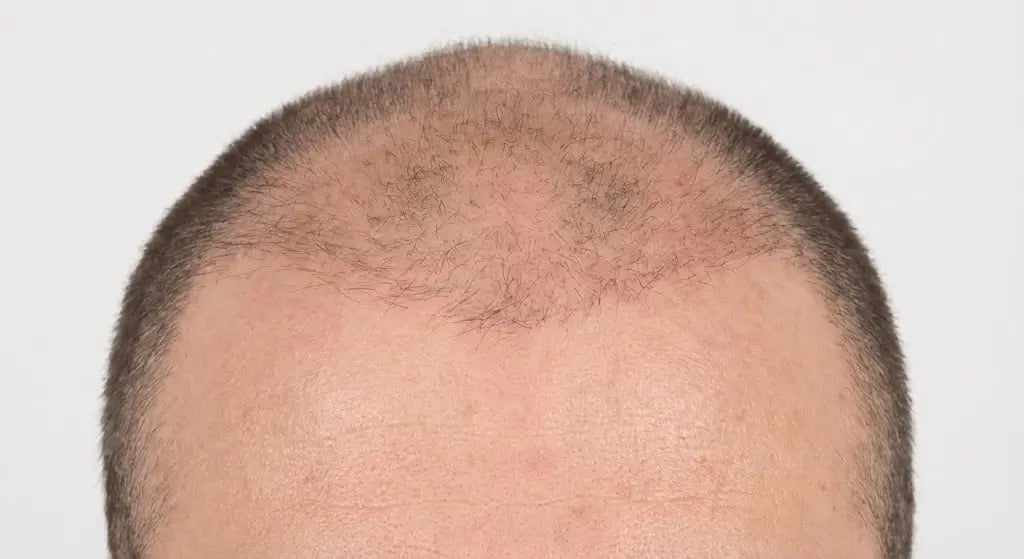
La alopecia androgenética en hombres es la forma más común de pérdida de cabello debido a su estrecha relación con las hormonas masculinas y la predisposición genética. La alopecia androgenética afecta a más del 50 % de los hombres a los 50 años, lo que la convierte en la principal causa de pérdida de cabello en el sexo masculino. Entre los pacientes que acudieron a Vera Clinic con problemas de pérdida de cabello, el registro de tricoscopia digital asistida por IA detectó AGA en el 87,1 % de los pacientes masculinos, y la AGA fue el diagnóstico más frecuente en el conjunto de la cohorte (el 62,1 % de los 631 pacientes). El patrón se caracteriza por un retroceso progresivo de la línea frontal del cabello, seguido de un adelgazamiento en la coronilla, lo que conduce a una calvicie parcial o total. La alopecia androgenética se debe a una mayor sensibilidad de los folículos pilosos a la dihidrotestosterona, un subproducto de la testosterona, que acorta la fase anágena y provoca la miniaturización folicular. La progresión del patrón de Norwood es exclusiva de los varones, en los que la pérdida de cabello adopta una forma de «M» y se extiende con el tiempoAlopecia androgenética. La alopecia androgenética rara vez sigue este patrón en las mujeres. A diferencia de otras formas, la alopecia androgenética no presenta inflamación ni cicatrices, y su herencia genética se transmite principalmente por vía materna, según la investigación titulada «Male Pattern Hair Loss: Current Understanding» (Pérdida de cabello de patrón masculino: conocimientos actuales), del Dr. Rodney Sinclair, de 1998.
2. Efluvio telógeno en hombres
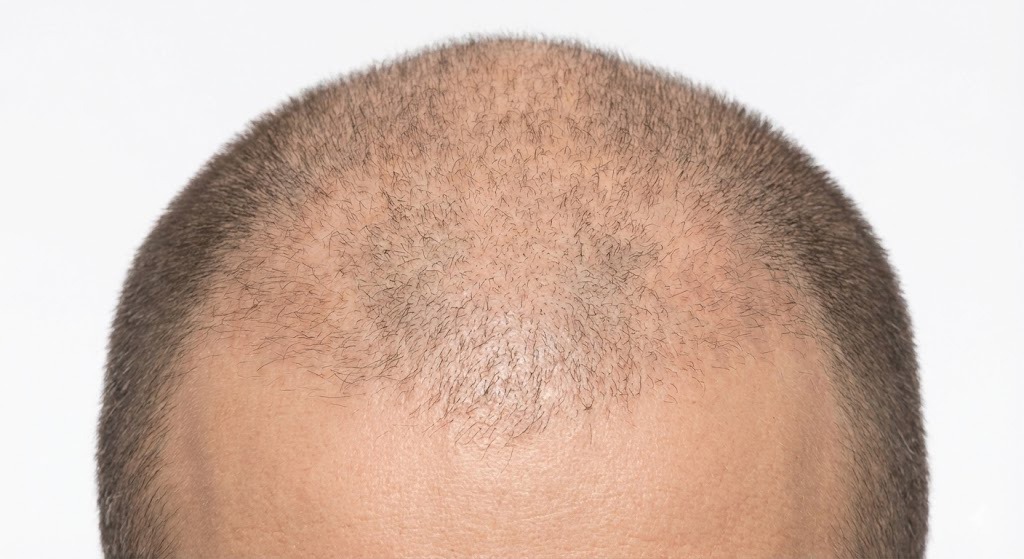
El efluvio telógeno en varones es una forma temporal y no cicatricial de caída del cabello provocada por un estrés interno que altera el ciclo de crecimiento capilar. El efluvio telógeno se considera una de las causas más frecuentes de pérdida difusa del cabello, después de la alopecia androgenética, en varones menores de 40 años. Esta afección provoca que un gran número de folículos pilosos pasen de la fase de crecimiento (anágena) a la fase de reposo (telógena), lo que da lugar a una caída excesiva en todo el cuero cabelludo. El efluvio telógeno en varones suele asociarse a tensión emocional, trastornos nutricionales, procesos febriles intensos o cambios bruscos de peso, circunstancias frecuentes en la adultez temprana y la mediana edad. El paciente percibe una mayor caída al peinarse o durante la ducha, sin evidenciar retroceso de la línea frontal ni áreas de calvicie definidas. La recuperación depende de la eliminación del factor desencadenante y se produce en un plazo de 6 a 9 meses si se trata a tiempo. El 30 % de los pacientes varones en la práctica clínica dermatológica presentan síntomas compatibles con el efluvio telógeno, según la investigación titulada «Telogen Effluvium: A Comprehensive Review», del Dr. Jerry Shapiro, de 2010. En un registro de la Vera Clinic Academy con 631 pacientes con pérdida de cabello, se documentó el efluvio telógeno en 78 pacientes (el 12,4 % de la cohorte) y se observó con una frecuencia sustancialmente menor en hombres que en mujeres (una diferencia de 3,4 veces, p < 0,01), lo que concuerda con el patrón androgenético más común descrito anteriormente. Se solapa con el adelgazamiento hereditario y empeora la densidad percibida en las primeras etapas de la Efluvio telógeno.
3. Alopecia areata en hombres
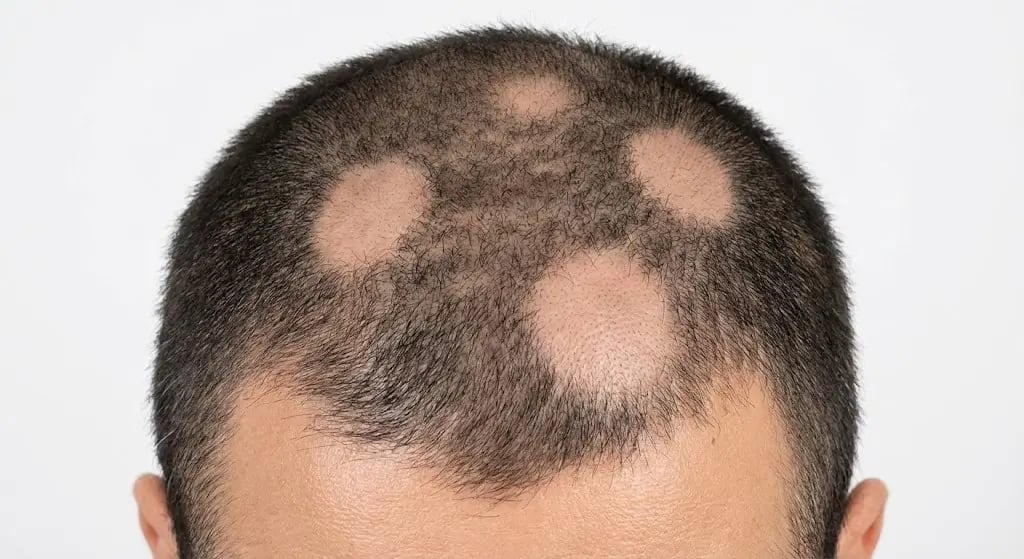
La alopecia areata en hombres es un trastorno autoinmune que provoca una pérdida de cabello repentina y en parches, y que difiere de la calvicie genética común. La alopecia areata afecta a alrededor del 2 % de la población general, y los hombres presentan formas más graves y extensas, que incluyen la calvicie total del cuero cabelludo o la pérdida del vello corporal. La afección comienza cuando las células inmunitarias atacan los folículos pilosos, obligándolos a entrar en una fase de reposo prematura y deteniendo su producción. La alopecia areata en hombres se manifiesta como áreas alopécicas redondas u ovaladas, bien delimitadas, en el cuero cabelludo, la barba o las cejas, sin que se haya producido previamente un adelgazamiento ni una miniaturización del cabello. Su evolución es impredecible y suele presentarse junto con otras enfermedades autoinmunes. Se distingue de la calvicie de patrón masculino por su aparición rápida, su forma irregular y la ausencia de un patrón específico como el de la escala de Norwood. El estrés psicológico y los antecedentes familiares son factores desencadenantes observados, con una tasa de recurrencia superior al 30 % en los hombres. En los varones, la enfermedad puede progresar hasta la pérdida total del cabello en el cuero cabelludo, entidad conocida como alopecia total. Con el tiempo es posible que el cabello vuelva a crecer parcialmente, si bien las recaídas son frecuentes. La presentación clínica distintiva y el mecanismo autoinmune hacen que el diagnóstico y el tratamiento Alopecia areatadifieran de los de otros trastornos de pérdida de cabello en varones durante la adolescencia y la edad adulta temprana, según la investigación titulada «Alopecia areata: características clínicas y tratamiento», del Dr. Andrew G. Messenger, de 2009.
4. Alopecia por tracción en hombres
La alopecia por tracción en hombres es una forma mecánica de pérdida de cabello provocada por una tensión prolongada o un tirón repetitivo sobre los folículos pilosos. Se han descrito casos de alopecia por tracción en hombres que llevan peinados ajustados, gorros, cascos o que utilizan extensiones y trenzas en contextos culturales o deportivos. La alopecia por tracción se manifiesta con un retroceso de la línea del cabello alrededor de las sienes y la zona frontal del cuero cabelludo, dejando mechones rotos o desiguales en los bordes. Se distingue de otros tipos de pérdida de cabello en varones por la ausencia de miniaturización y por su patrón de daño localizado. Son vulnerables los hombres que se recogen el pelo con fuerza, llevan pañuelos para el cabello o mantienen rastas y trenzas africanas durante largos periodos. La afección es reversible en las primeras etapas, aunque tras un estrés folicular prolongado se producen cicatrices y pérdida permanente. La alopecia por tracción representa un porcentaje cada vez mayor de las consultas por pérdida de cabello en varones menores de 35 años en las poblaciones africanas y del sur de Asia. Los patrones clínicos incluyen la caída folicular, el eritema perifolicular y la sensibilidad en el cuero cabelludo. Las estrategias preventivas se centran en evitar los peinados que generen tensión y en alternar los peinados con regularidad. El origen mecánico, el patrón marginal y el vínculo con las costumbres culturales hacen que esta afección sea identificable y prevenible si se detecta a tiempo. El diagnóstico y la concienciación al respecto estánAlopecia por tracción aumentando debido a los cambios en las prácticas modernas de peinado masculino, según la investigación titulada «Alopecia por tracción: perspectivas clínicas y culturales», realizada por la Dra. Angela Kyei en 2011.
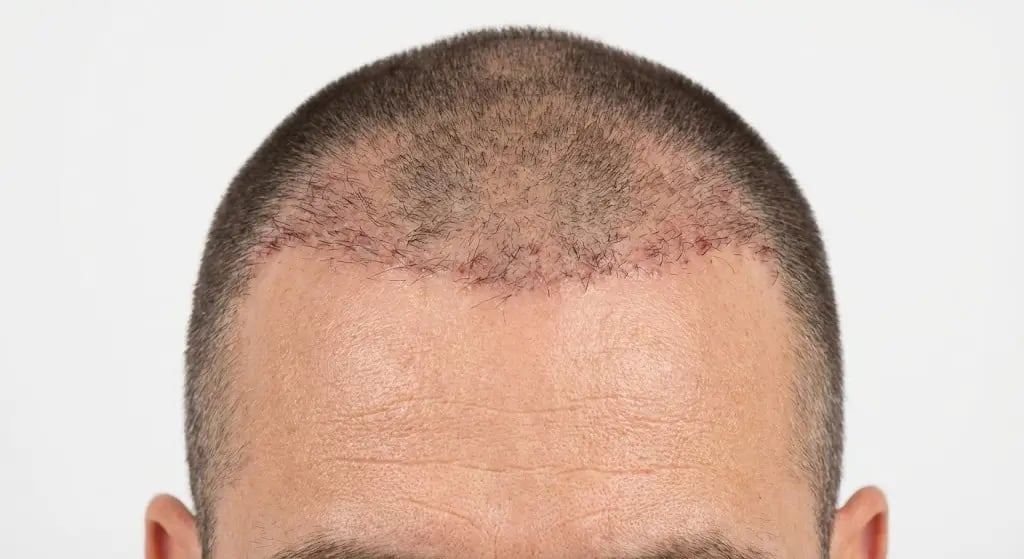
5. Alopecia cicatricial en hombres
La alopecia cicatricial en varones constituye una forma poco frecuente pero grave de pérdida de cabello, provocada por la destrucción permanente de los folículos pilosos debido a la inflamación. Si bien es menos prevalente que los tipos androgenéticos o relacionados con la fase telógena, conlleva consecuencias irreversibles una vez que se activa. Incluye entidades como el liquen plano pilar, la alopecia fibrosante frontal y la alopecia cicatricial centrífuga central, que conducen a la sustitución de las estructuras foliculares por tejido fibrótico. La enfermedad se inicia con ardor, picor y eritema visible, seguidos de áreas de calvicie irregulares o en parches con piel lisa y brillante, en las que ya no se observan aberturas foliculares en los varones. El curso de la enfermedad es agresivo y su diagnóstico precoz resulta difícil sin biopsia. Se ha documentado que la afectación facial o la pérdida simultánea de vello en la zona de la barba son características exclusivas de los hombres. La tirantez del cuero cabelludo, la ulceración y la formación de costras son otros rasgos distintivos en los casos masculinos. Su prevalencia estimada es inferior al 3 % entre los varones que consultan por pérdida de cabello, si bien los errores diagnósticos son frecuentes. Los dermatólogos enfatizan que un tratamiento antiinflamatorio precoz es esencial para detener la destrucción folicular antes de que se instale la fibrosis. La naturaleza progresiva, los síntomas dolorosos y el resultado cicatricial definen esta entidad Alopecia cicatricialen los pacientes varones, según la investigación titulada «Alopecia cicatricial en hombres: patrones diagnósticos y características clínicas», de la Dra. Lynne Goldberg, de 2013.
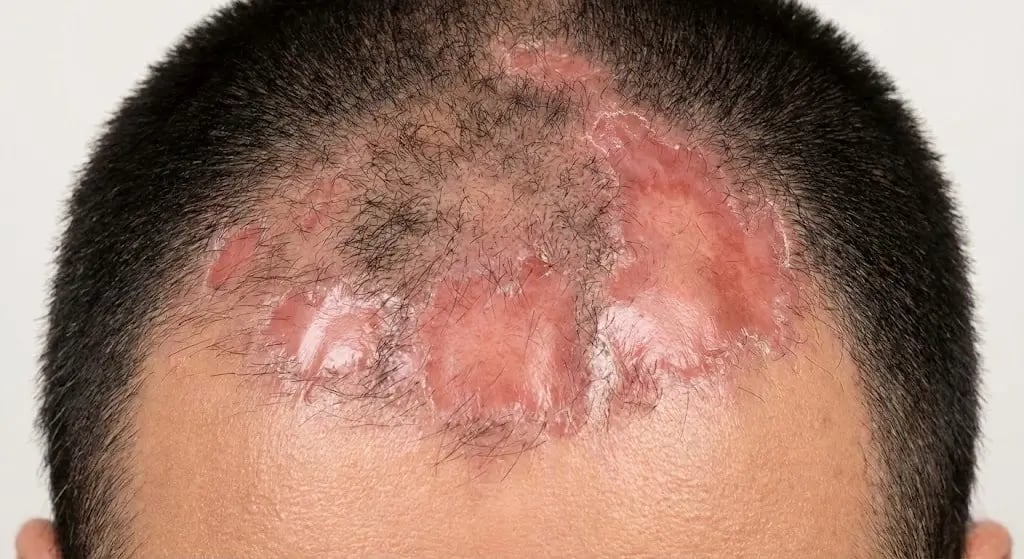
¿Cuáles son los tipos poco frecuentes de pérdida de cabello en los hombres?
A continuación se enumeran los tipos poco frecuentes de pérdida de cabello en los hombres.
- Alopecia fibrosante frontal: La alopecia fibrosante frontal se presenta en hombres con retroceso progresivo de la línea capilar frontal, pérdida de cejas e inflamación perifolicular. La alopecia fibrosante frontal es poco frecuente en hombres, ya que afecta de forma desproporcionada a las mujeres posmenopáusicas. Representa menos del 0,5 % de los casos de alopecia en hombres. Con frecuencia se diagnostica erróneamente como calvicie de patrón masculino, pero se caracteriza por eritema perifolicular y cicatrices permanentes. La diferenciación clínica con respecto a la alopecia androgenética es esencial, según la investigación titulada «Alopecia fibrosante frontal en hombres: un estudio retrospectivo de 7 casos», realizada por la Dra. Maria Miteva en 2013.
- Liquen planopilar: El liquen planopilar es una alopecia cicatricial autoinmune caracterizada por descamación perifolicular, pérdida de cabello en parches y una sensación de ardor en el cuero cabelludo. El liquen planopilar se considera poco frecuente en los hombres debido a una menor incidencia de afecciones inflamatorias del cuero cabelludo de origen inmunitario. Afecta a menos del 1 % de los hombres adultos y provoca la pérdida permanente del cabello en las zonas afectadas. En los varones suele presentar un curso más resistente y los resultados terapéuticos son limitados, según el estudio «Lichen planopilaris: A retrospective study of 80 patients» (Líquen planopilar: un estudio retrospectivo de 80 pacientes), realizado por el Dr. Jerry Shapiro en 2000.
- Foliculitis decalvante: La foliculitis decalvante provoca inflamación pustulosa alrededor de los folículos pilosos, lo que da lugar a mechones de pelo dolorosos, formación de costras y cicatrices centrales. La foliculitis decalvante se considera poco frecuente en los hombres debido a su patogénesis poco clara y a las bajas tasas de detección, estimadas entre el 0,1 % y el 0,5 % de los casos de pérdida de cabello. La afección implica la colonización por Staphylococcus aureus y una actividad bacteriana crónica. La alopecia de tipo foliculitis decalvante suele ser recurrente y resistente al tratamiento con antibióticos a largo plazo, según un estudio titulado «Folliculitis decalvans: A review of 82 patients» (Foliculitis decalvante: revisión de 82 pacientes), realizado por el Dr. Nigel V. Curtis en 2006.
- Alopecia cicatricial centrífuga central (CCCA): La CCCA se inicia en la coronilla y se expande hacia el exterior, generando una zona brillante y lisa de alopecia cicatricial. La CCCA es poco frecuente en hombres y prácticamente exclusiva de varones de ascendencia africana. Se estima que su prevalencia en hombres es inferior al 0,05 % de los diagnósticos de alopecia cicatricial. La CCCA provoca fibrosis folicular e inflamación en las capas profundas de la dermis. En los varones, la CCCA suele aparecer a una edad más avanzada y progresa de forma más lenta que en las mujeres, según el estudio «Alopecia cicatricial centrífuga central en hombres: una revisión retrospectiva de historias clínicas», de la Dra. Lynn McKinley-Grant (2011).
- Aplasia cutis congénita: La aplasia cutis congénita es una entidad congénita en la que una zona del cuero cabelludo carece de piel y folículos pilosos. Se trata de la forma más infrecuente de alopecia, con una prevalencia estimada de 1 caso por cada 10 000 nacidos vivos. Se diagnostica al nacer y la zona afectada del cuero cabelludo permanece permanentemente desprovista de cabello. Esta afección conlleva riesgo de infección y, en algunos casos, de exposición del hueso craneal, según la investigación titulada «Aplasia cutis congénita: revisión de 94 casos», realizada por la Dra. Heather L. Bree en 2019.
- Lupus eritematoso discoide (LED): El LED se manifiesta con placas eritematosas y escamosas que provocan obstrucción folicular, atrofia y cicatrices hipopigmentadas. El LED es poco frecuente en hombres, dado que el lupus eritematoso sistémico es más prevalente en mujeres. El LED aparece en entre el 0,03 % y el 0,2 % de los hombres con enfermedades autoinmunes. La afectación del cuero cabelludo en el LED provoca cicatrices irreversibles y la pérdida definitiva de folículos pilosos, según la investigación titulada «Lupus eritematoso discoide: características clínicas y evolución en 64 pacientes», del Dr. James Gilliam, de 1975.
La manifestación y la frecuencia de estos tipos raros de pérdida de cabello en los hombres dependen de la edad, los datos demográficos, el perfil genético y las afecciones de salud subyacentes. La pérdida de cabello de origen autoinmune (lupus eritematoso discoide y liquen plano pilar) suele aparecer con mayor frecuencia a partir de los 30 años, debido a una desregulación inmunitaria acumulada. El origen étnico desempeña un papel fundamental en afecciones como la alopecia cicatricial centrífuga central, que se da predominantemente en hombres de ascendencia africana. Las mutaciones genéticas y los antecedentes familiares aumentan la susceptibilidad a trastornos congénitos (aplasia cutis congénita), en los que el desarrollo del cuero cabelludo es incompleto. Las enfermedades crónicas (diabetes, lupus o trastornos tiroideos) incrementan el riesgo de desarrollar formas de alopecia inflamatoria. Los cambios hormonales y la exposición prolongada a la medicación influyen en la estabilidad folicular del cuero cabelludo, lo que hace que algunas afecciones poco frecuentes sean más comunes en poblaciones específicas. Los factores desencadenantes ambientales, los riesgos laborales y las prácticas de aseo personal agravan la variabilidad de la alopecia por tracción y la foliculitis decalvante, que se desarrollan a raíz de traumatismos repetitivos o de la colonización microbiana.
¿En qué se diferencia la caída del cabello en los hombres de la de las mujeres?
La caída del cabello en los hombres se basa en el patrón, la influencia hormonal y la velocidad de progresión, que difieren de los de la caída del cabello en las mujeres. Los hombres experimentan retroceso de la línea del cabello y adelgazamiento en la coronilla que siguen un patrón predecible conocido como la escala de Norwood. Las mujeres desarrollan un adelgazamiento difuso en la coronilla, al tiempo que mantienen la línea frontal del cabello, una afección que se clasifica mediante la escala de Ludwig. La pérdida de cabello masculina está determinada por la sensibilidad a la dihidrotestosterona (DHT), que provoca la miniaturización folicular. La pérdida de cabello femenina tiene un trasfondo hormonal más complejo, relacionado con la disminución de los estrógenos y afecciones subyacentes como el síndrome de ovario poliquístico. Los hombres suelen empezar a perder cabello antes y la pérdida progresa más rápidamente, lo que facilita su diagnóstico. Esta distinción en la respuesta hormonal y el patrón visual establece una clara diferencia clínica entre ambos sexosLa caída del cabello en las mujeres, tal como concluye la investigación titulada «El diagnóstico y el tratamiento de la alopecia de patrón masculino y femenino», realizada por el Dr. Ralph M. Trüeb en 2005.